2025 Turnings

It's January 2026, and I am trying to put up the page for 2025 before 2 years roll by - as has happened before.

I'm getting older and a bit less ambitious than I used to be. There's a couple of valid reasons. One - the process of aging reduces one's energy levels. Two - I have more inventory in the crawl space than I can possibly sell or give away, and the house shelves are full of the best work I have. Three- the muse (whoever that is) seems to be less communicative than it once was. Little jerk seems to have moved - temporarily, I hope.

But I am thankful for all the wonderful years that muse hung around. After losing my singing voice and a large part of my identity almost 25 years ago, the muse stepped in and said, "you are not a one show pony. Try this show," and steered me into the shop/studio. What a great time I had, all by myself much of the time, with just sawdust and the smell of wood. Hours of pleasurable contentment. I am a lucky man, and everlastingly grateful. I've had my "happy place" like Karen has her "happy places" in her flowers, birds and library. Really, life is good and I am not complaining.

I do have one over-riding sense of loss though, and that is the loss of our friendship with our southern neighbor. That relationship has been damaged beyond belief, and I know that in my lifetime it will not be restored. It is not something we wanted, or something we caused, but we feel the pain. Me, more than many because I spent so many years in the U.S. My prayers are with those who have the courage to stand up to monsters and evil people, and for our societies to emerge from this stronger, nicer, more tolerant and more giving.

As usual, I love hearing from you, so feel free to let me know you were here.


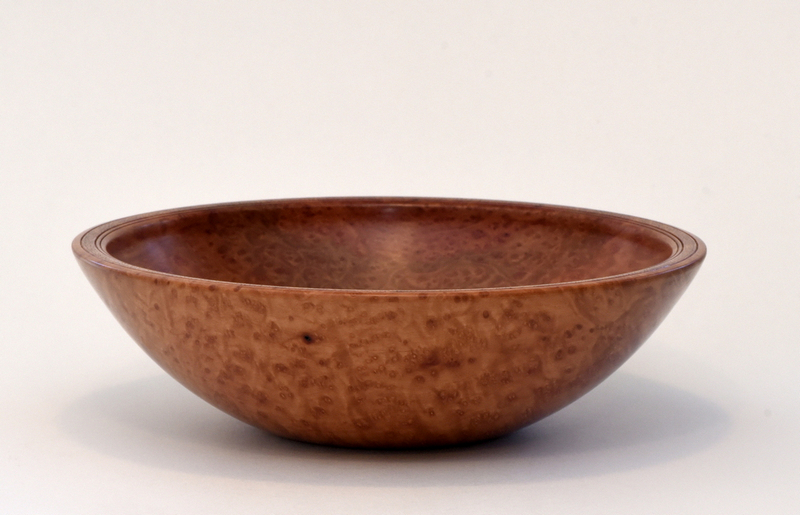
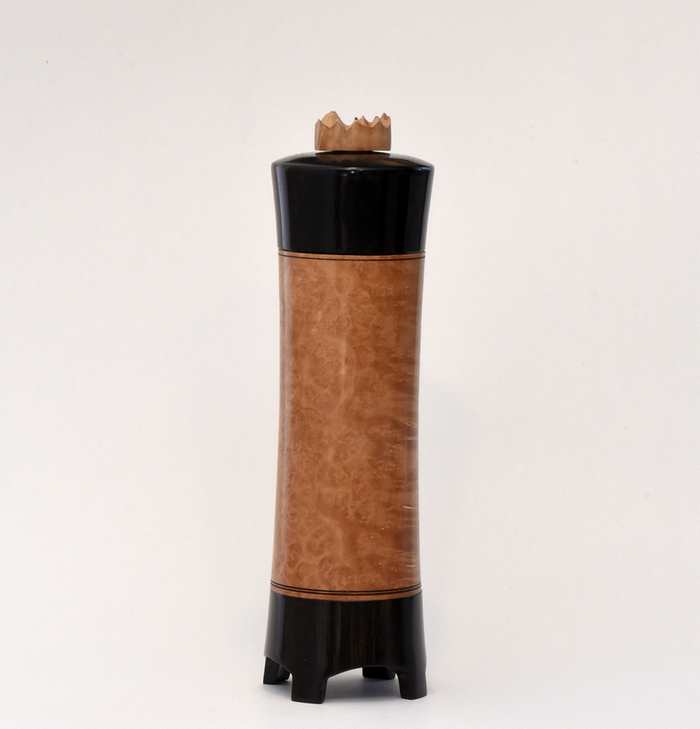
I received a surprise package one day and when I opened it I found two pieces of wood. One was bowl size and the other was long and square, just the right size for a peppermill. And the note said it was because I had been on a peppermill journey for a long time and the sender thought this might make a nice mill.

The wood was arbutus burl (madrone in the U.S.), and it came from Dave Roberts in British Columbia. In his note, he said he knew that I had no opportunity to turn wood like this, living in Manitoba, and he had recently harvested some wood from a large arbutus tree in the mountains. On the World of Woodturners he posted some photos of the wood being harvested, and I can only imagine the amount of effort it must have taken to get it. Dave, my gratitude could not be greater, and I hope the pieces I was able to produce come even close to what you might have expected.

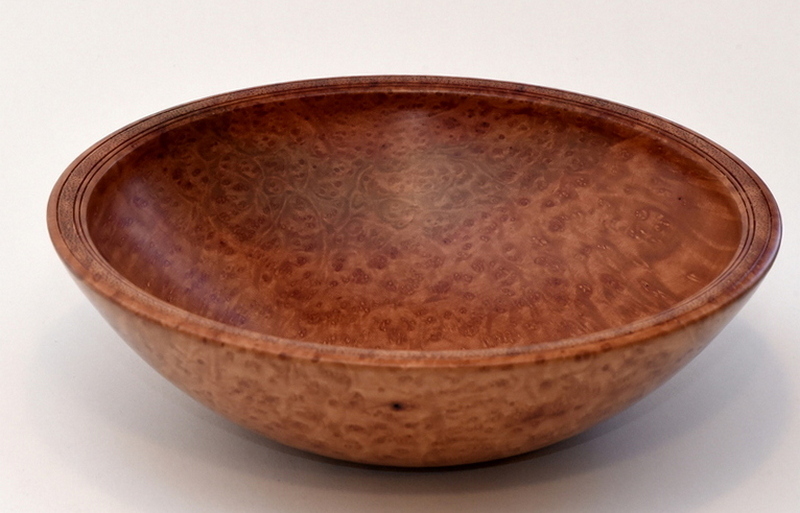
To the right is a photo of the bowl. It is about 9.25 inches in diameter and 3 inches deep. Finished with tung oil and buffed with carnauba wax. Beneath it is a photo looking in from the top to see the incredible figure in the burl.

The photo below is the peppermill, 10 inches tall. The cap and base are made of ebony and the knob is a bit of the natural outer surface of the burl.

I still have a little piece left and that is being turned into a funky little bowl in 2026. Dave, thank you.


Sometimes, believe it or not, I have been accused of being wrong.

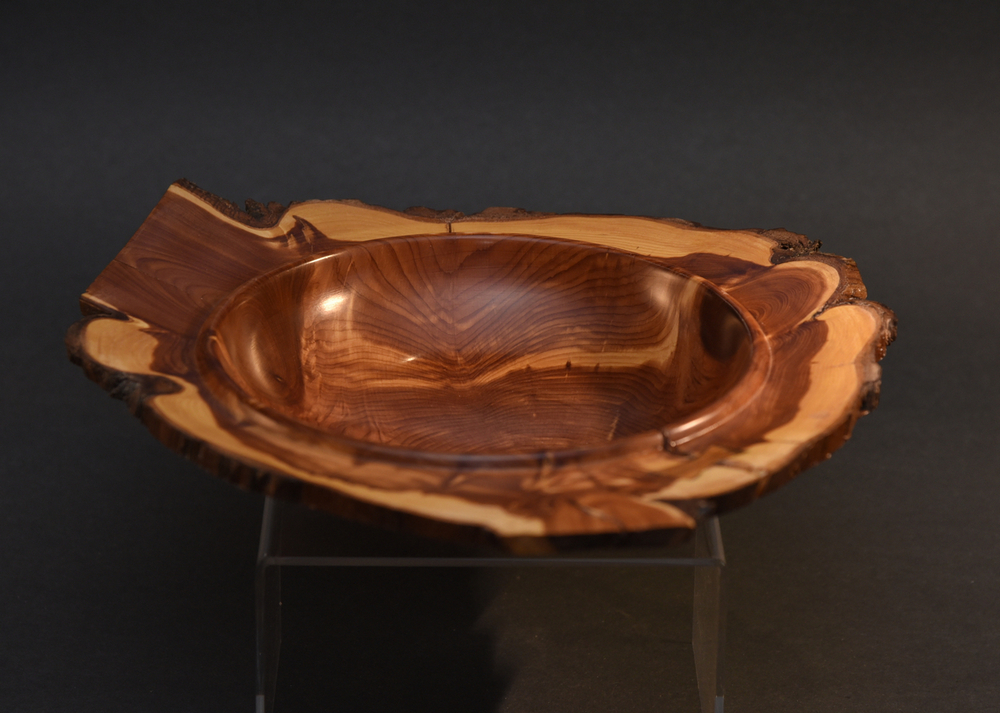
I know, for a fact, that when I got this wood from someone, at least 18 years ago, that they told me it was juniper. But after finding it on a shelf in the garage after all these years that conversation is no longer fresh in my mind. But that is what I scribbled on it (could hardly read it anymore), so my recollection is not entirely without basis.

Nevertheless, I had this piece on my sale table at the 2025 "Crafted" sale at the Winnipeg Art Gallery. A woman and her husband stopped by and she immediately gravitated to the piece. She wanted it, but her husband was dead set against it, insisting it was mis-identified (inscribed as "juniper" on the bottom), and he indignantly insisted it was cedar. I am not exactly a shrinking violet, and I insisted he could call it what he wanted, but since I was told it was juniper and that is what I had pyrographed on the bottom, I could not change it. He said he was a "wood" man so he knew. (Actually, I think he was right but because he came on so aggressively I could not bear to give in and agree).

His wife said it did not matter and took it anyway. She had a place for it in her house.

It is important to have wood correctly identified, but I have seen videos of internationally known masters struggling to identify wood and end up just calling it something. Unless one is very diligent to mark everything (and I am not), it is easy to, years later, mistake one wood for another.

Regardless, this was an exceptionally difficult piece to turn and finish, and it is beautiful to hold and look at.

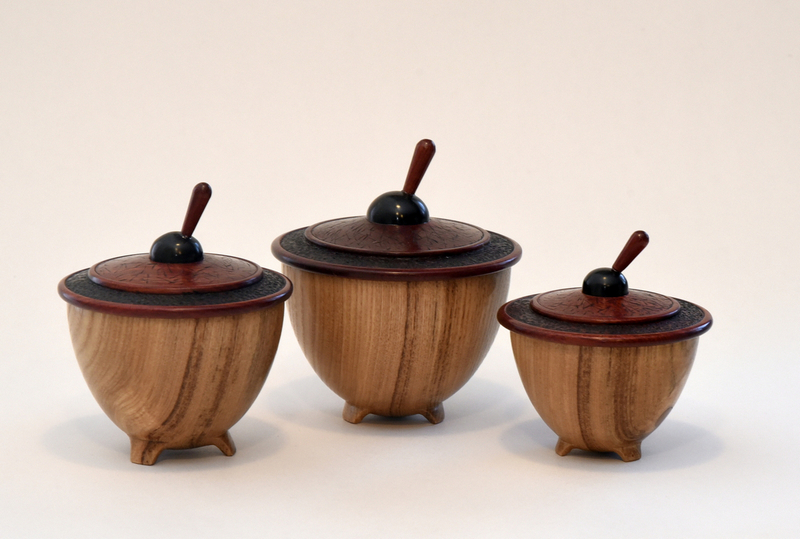
I made a set of boxes several years ago, found here, and Karen has not forgiven me for sending the set to the gallery for sale. She said I had to make her a set for herself.

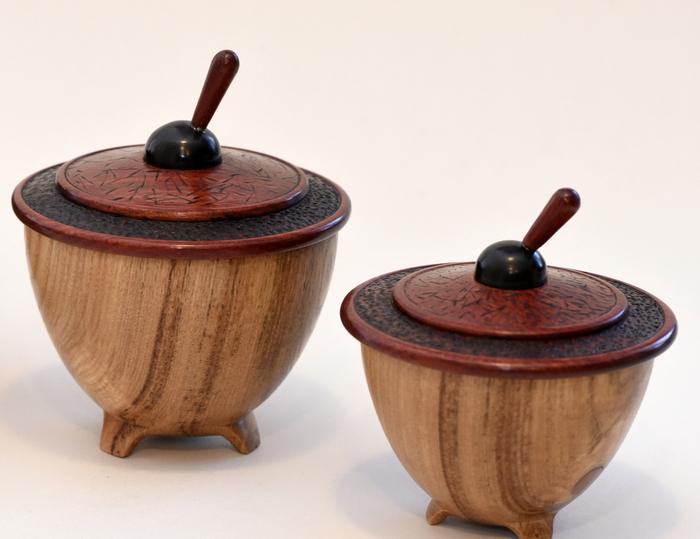
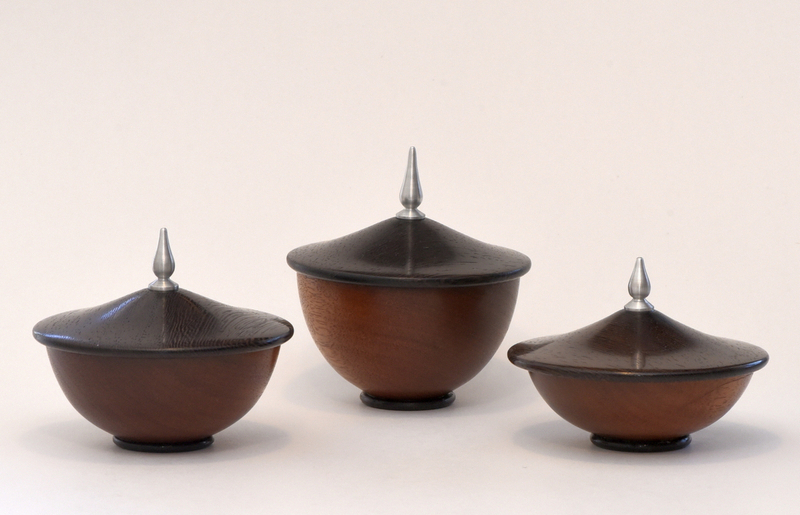
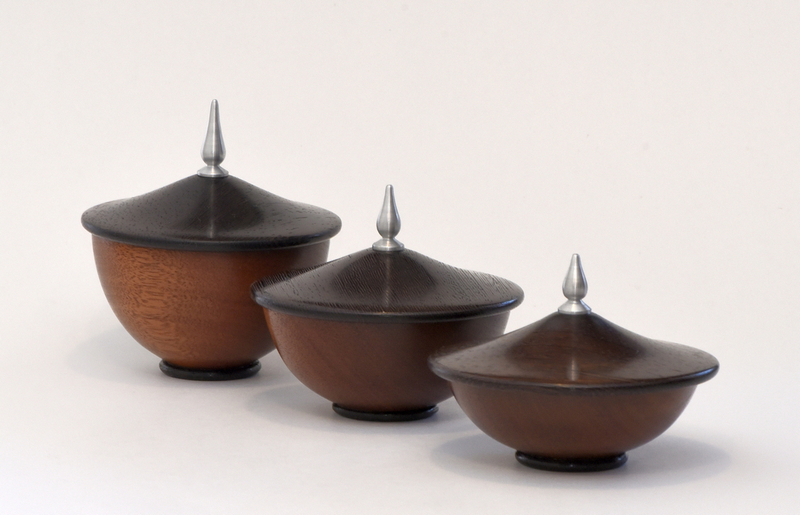
So I tried, and these two sets are the result. As you can see, they are totally different from the previous set but she loves them, so here they will remain. For sure, the bottom set will stay, even though I personally favor the top set.

The set on top (just two different views), are of elm with purpleheart lids. The lids have some texture and a pyrographed ring on the lids. Additionally, they come with an ebony knob and little purpleheart finials set at a jaunty angle. And - they have tiny feet. Small, from 2.5 to 1.75 inches without the lids.

The old saying is "happy wife, happy life", and I think Karen is happy. The bottom set is her favorite, is made of sapele (a species of mahogany) with wenge lids and feet. I love working with black woods like wenge and ebony, since they are both striking accent woods. But neither one is easy to work because they are hard and splintery and cover everything with black dust. A mask is always needed to turn them. But they cannot be beat for finishing and striking contrast woods.

I decided to turn some finials from some pieces of aluminum, and that is always an interesting experience. Must be very careful with those long sharp shavings and make sure to sweep them up immediately.


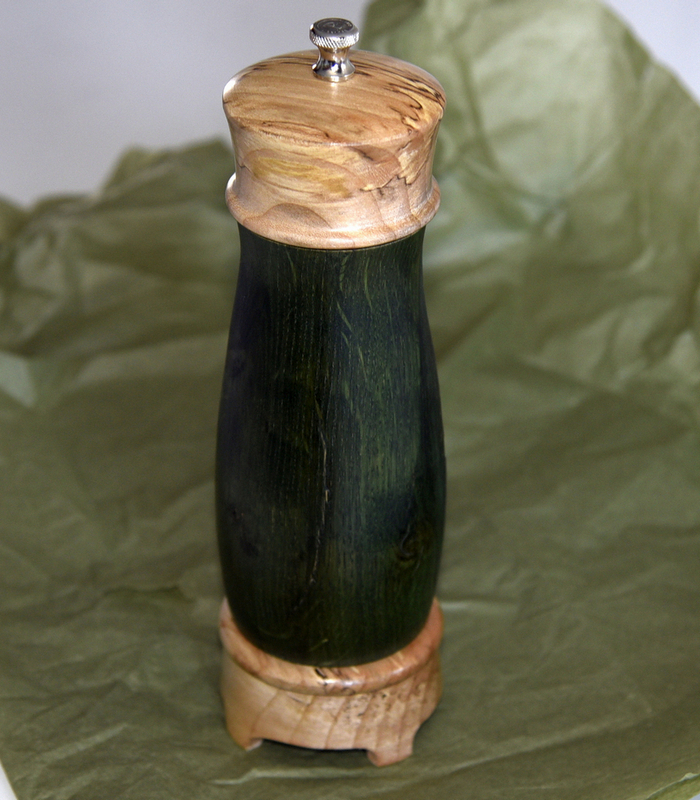
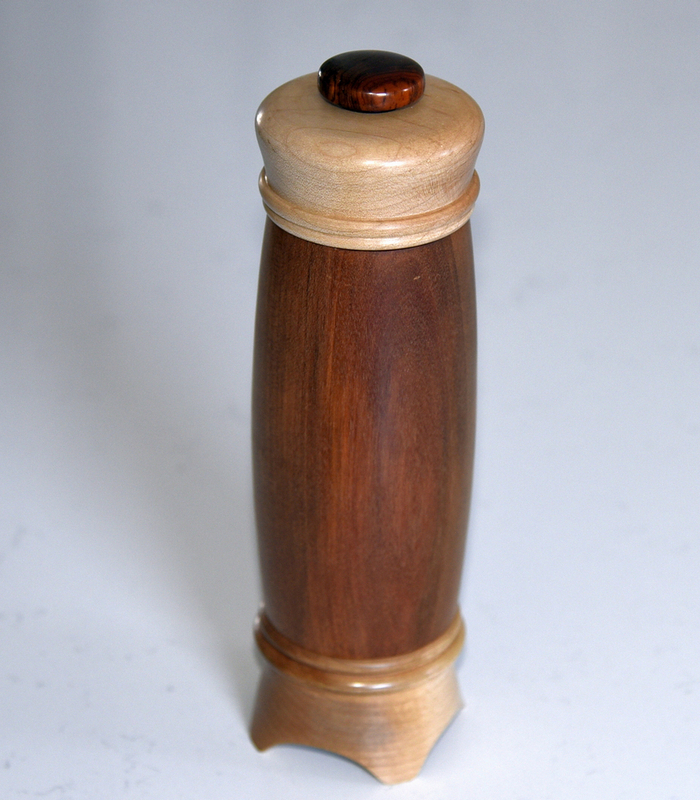
I have given away many peppermills to people as a means of thanking them for a service they provided or as a memento. I gave some to my family doctors in the past, and this time I made a couple for my dentist and his assistant who guided and helped me through a very complicated dental procedure and implants.

The one on the left is an old oak fencepost mill that I dyed a dark green and gave a base and top of spalted elm. I gave my dentist first choice, and he picked this one because of the color and the fencepost history (from the farm where I was raised).

The one on the right went to his assistant, and it is made of sapele with a top and base of maple. The knob on top is hidden in a cap of cocobolo. I do not like the shiny screw tops that come with peppermill mechanisms and try to hide them most of the time. It also gives me a way to make a 10-inch-tall peppermill using only an 8-inch mechanism.

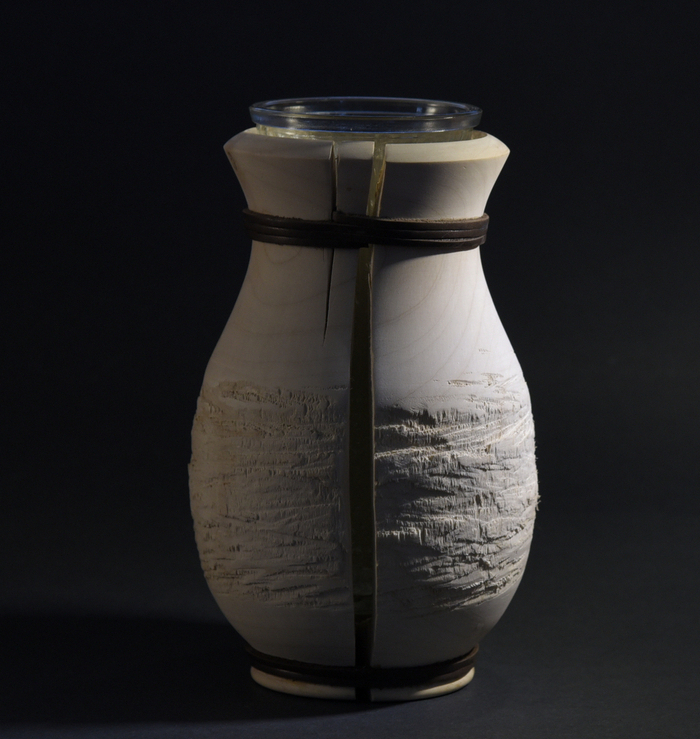
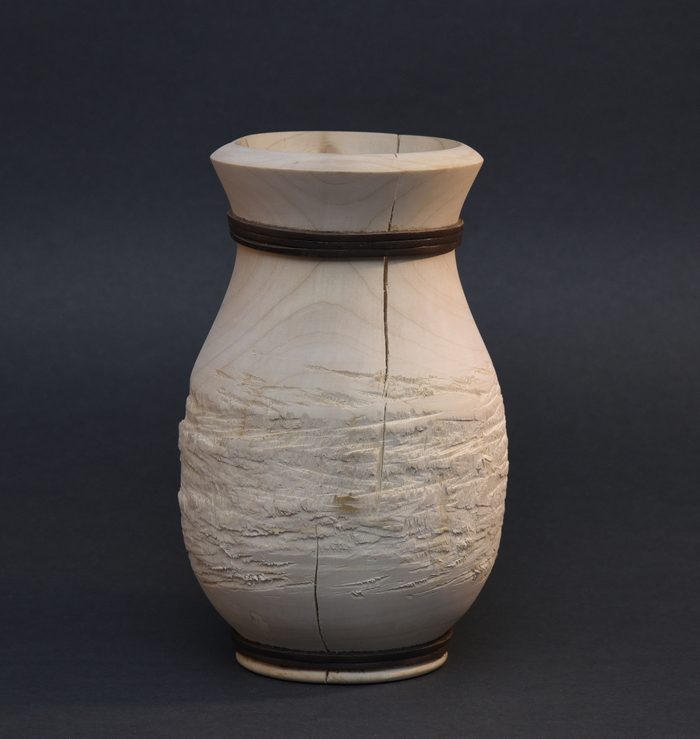
A vase of silver maple from a neighbor's tree. The vase was rough turned just hours after the tree came down and was left to dry for years on my drying shelf in the garage. Sometimes the drying process causes wood to split, as was the case here. So, when I picked it up years later, I needed to decide if I wanted to try to save it with the split in it or burn it.

Although I have done it, I don't like to burn something I have already worked on, especially wood that has remained as pristine white as this one. Therefore, I decided to complete the vase with some creative ways to keep it from flying apart while spinning. The wood was quite solid despite the crack down the side. I figured, after it was turned, I would use leather lacing as a contrast to finish off the piece

After turning it and giving it a smooth finish, I wrapped leather around the top and did not like the way it looked. So, I stuck it back on the lathe and let it turn slowly while I used a chain saw to scar up the lower portion of the vase. That seemed perfect to me, so I completed the leather wrapping at the top. But it still seemed out of balance until I leather wrapped the base, too. That made all the difference.

I gave the 10-inch vase several coats of matte finish to keep the nice white color. The glass insert just happened to fit perfectly, so that is why it is there in case someone wants to use the vase with real flowers.

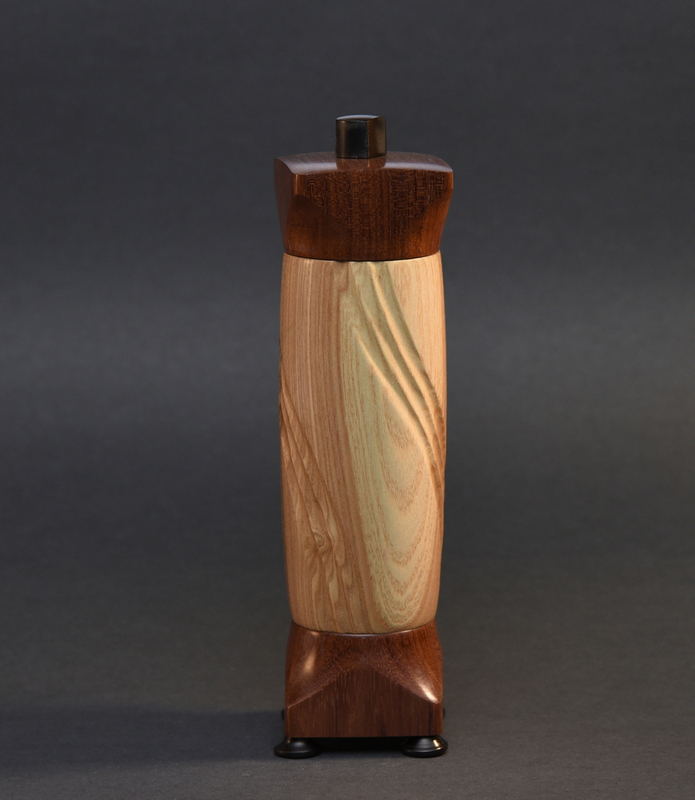
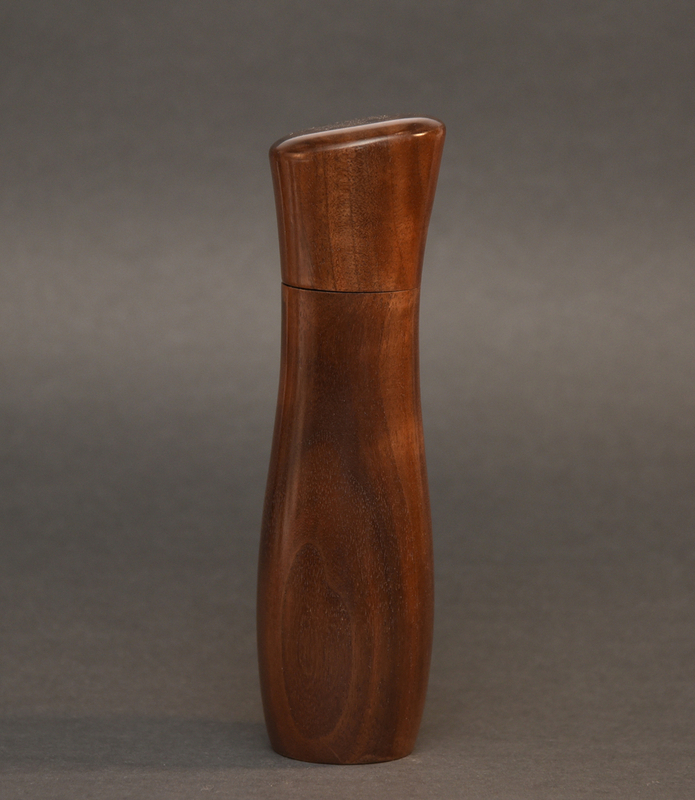
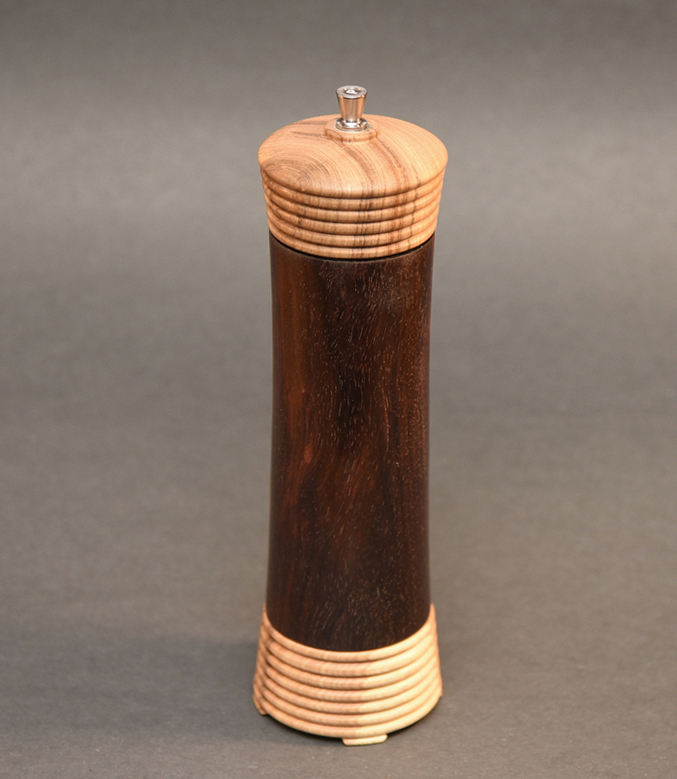
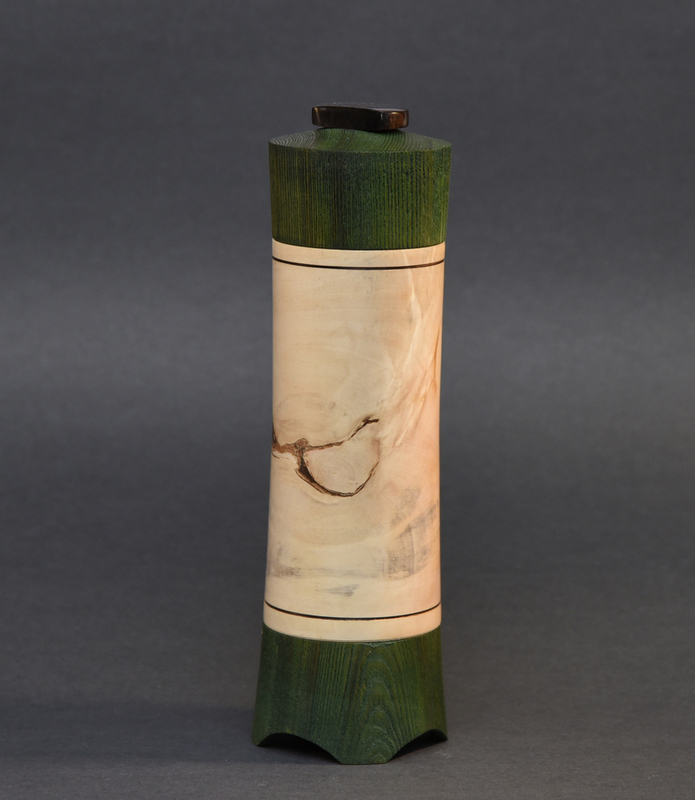
More peppermills. Four of them, all about 10 inches tall.

The top left is ash with a spiral twist carving on it. The base and top are sapele and there are four tiny turned feet of ebony. The screw at the top is also ebony.

The top right is sapele, a variety of mahogany. I love everything about this wood. It turns beautifully, takes on a beautiful finish, and has a color that just speaks to me. I thought to try a sensual or sinuous form with this, and it took awhile to get it right. The slant at the top did the trick. This is only possible with a mechanism in which the top simply pulls off instead of being held on with a screw cap. The mechanism is ceramic and is adjusted from the bottom. I love the ability for more freedom with the form (without the screw on top) but the pull-off top is fundamentally weak. The mill is for special dinner occasions instead of daily use.

Bottom left is a walnut and ash peppermill. The body is walnut and I used ash with a beading texture to give it a unique look. This is also a ceramic mechanism and is therefore also suitable as a salt mill.

The piece on the bottom right is made of local woods, Manitoba Maple and ash. I rather liked the bark inclusions on the side of the maple body and thought that two burned rings at top and bottom added a nice contrast. Those who have scrolled through these pages will also recognize that I, again, used a favorite color, forest green, on the base and the top of the peppermill. But I gave the ash a vertical texture with a wire wheel before dying them. The screw at the top is hidden in cocobolo wood.


One more little peppermill I could not resist showing you.

By now you know that I have a brother who is still farming the old homestead. The farm bears no resemblance at all to the place where I grew up, and my brother recently retired from 52 years of dairy farming. One of his favorite activities in the wintertime is ice fishing.

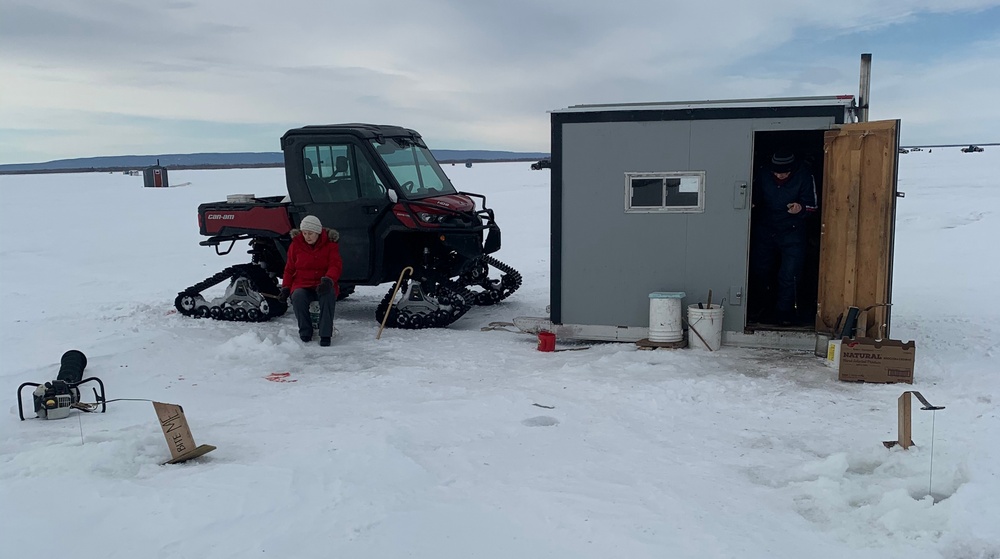
The photo below, on the left, clearly shows this no longer involves a cold trek across a mile of ice to reach a good spot and sit in the wind to fish through a hole in the ice. No siree. It now involves a comfortable shack and a four tracked ATV. And firewood, of course, to keep the shack warm. Oh yes, and a battery powered by a solar panel.

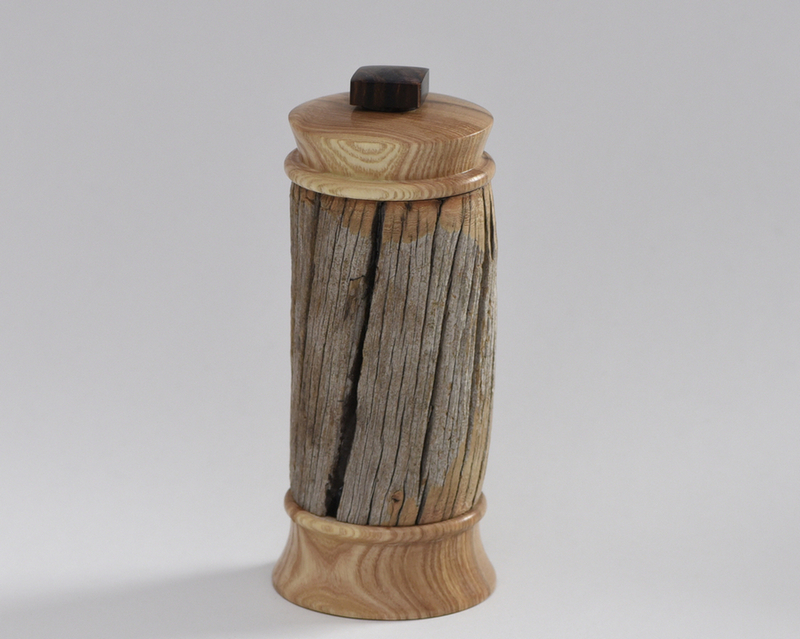
So, I am throwing wood into the stove and pick up a chunk. "Hey, Tom -what is this?" "Oh, just an old chunk of tamarack fencepost I dug up."

Well, tamarack lasts forever in the dirt, so this was one old chunk of wood, likely planted in the ground by dad a half century ago, or more. I immediately saw another peppermill, of course, and this little 7 inch "jewel" is the result. It now belongs to my brother's grandson, a piece of the old farm.

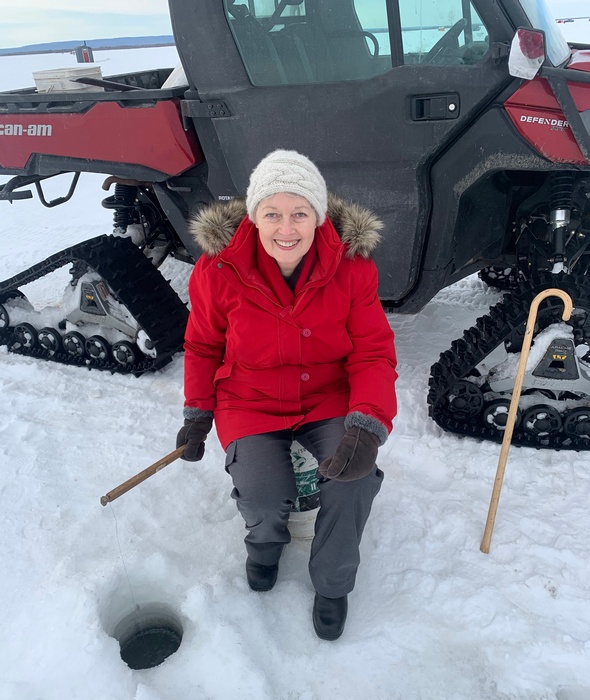
Relative to the photo above, I have to show you what ice fishing is like in Manitoba. As you look at these two photos, keep in mind that it was -32 Celsius with a wind chill of almost -40 while we were out there.

The left photo shows the basic setup of the ice shack. The shack is getting on in years and will likely be replaced soon. The ATV has also since been replaced with a fancy new one. It has GPS in it, and just a few weeks ago my brother and a friend were out there when a storm suddenly blew up. They could not see the shore as everything was completely obscured. They were able to get back to shore and their truck by following the trail he had laid out in the GPS on the way onto the lake. I've been out there when the wind suddenly picks up, and it is not a safe place to be. Sometimes modern technology can really make a difference.

The photo on the right is of a very enthusiastic Karen, my darling wife, fishing in the lee of the ATV. The big smile is an indication of how much fun she was having. I am not kidding as she loves to ice fish. Me? I was in the warmth of the shack fishing through a hole in the floor. Probably also cooking up the fish we had caught along with baking the potatoes. Half the fun out there is eating out there.

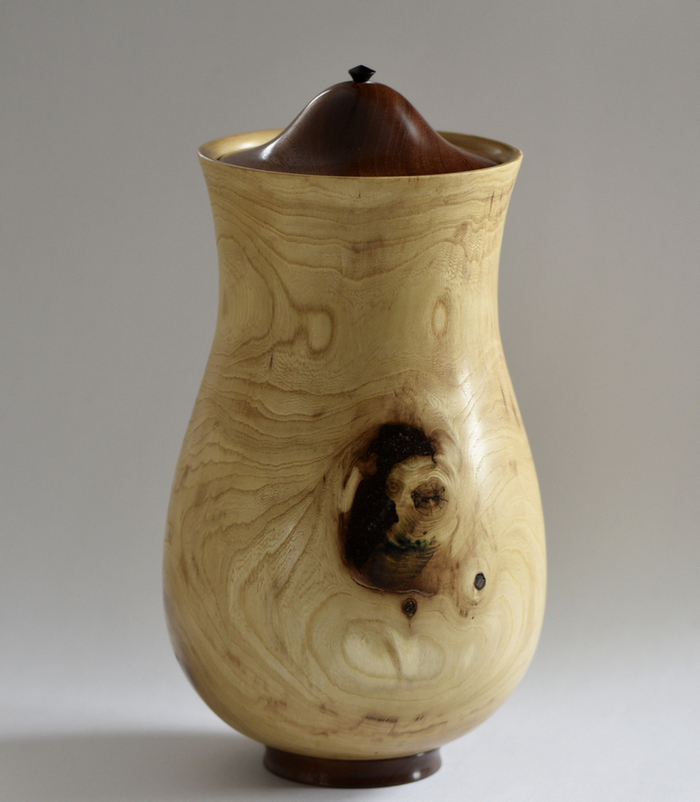
This urn is just a bit different. I had an urgent call from a customer who had some other work of mine, and she needed an urn for a family member who had passed away suddenly. I invited her and her daughter over to see what I had.

She spotted a vase and asked, "Why could that not be an urn?" I replied that it had no lid and would require some internal treatment to seal it. However, it had enough thickness so I told her I could probably adapt it in a day or so, and that was what she wanted.

So, I re-mounted the vase with a cone in the opening and the tailstock pin in the bottom and turned a small tenon on the base. Turned it around in the chuck, used my steady rest and put a dado into the inside a little way into the vase. Then I turned a lid and a foot of sapele and a tiny little knob. Then treated the inside to a coat of epoxy.

She brought the ashes to me the next day and while they had coffee in the kitchen, I transferred the remains (inside a plastic liner as well) and glued on the top and the base with epoxy. They loved it, and now I have another style of urn to work with.

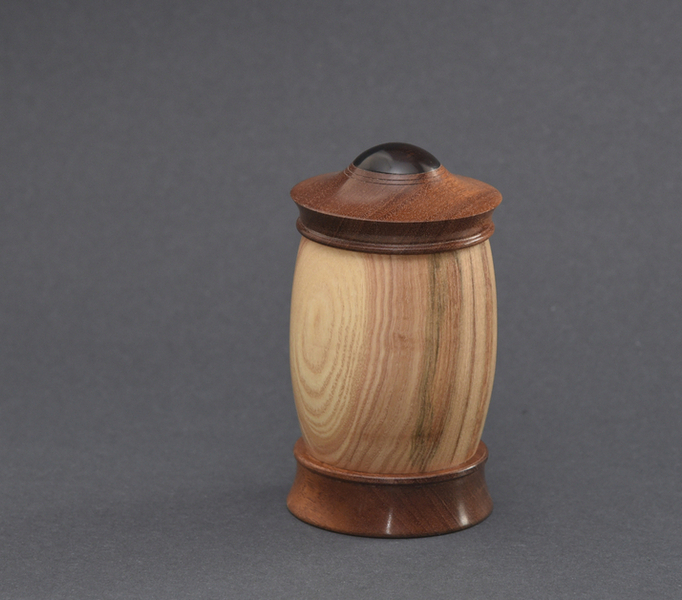
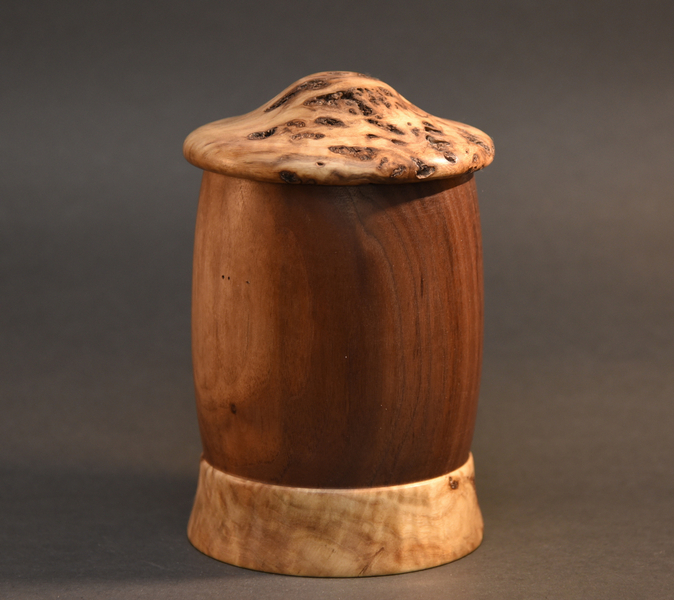
A couple of little boxes, similar in style to the urns posted earlier.

The upper one has a body of local ash with a lid and base of sapele. The little cabochon on the lid is ebony. The box is 4 inches tall.

The lower one is made of walnut with some local cottonwood burl as a lid and a foot. It is also about 4 inches tall.

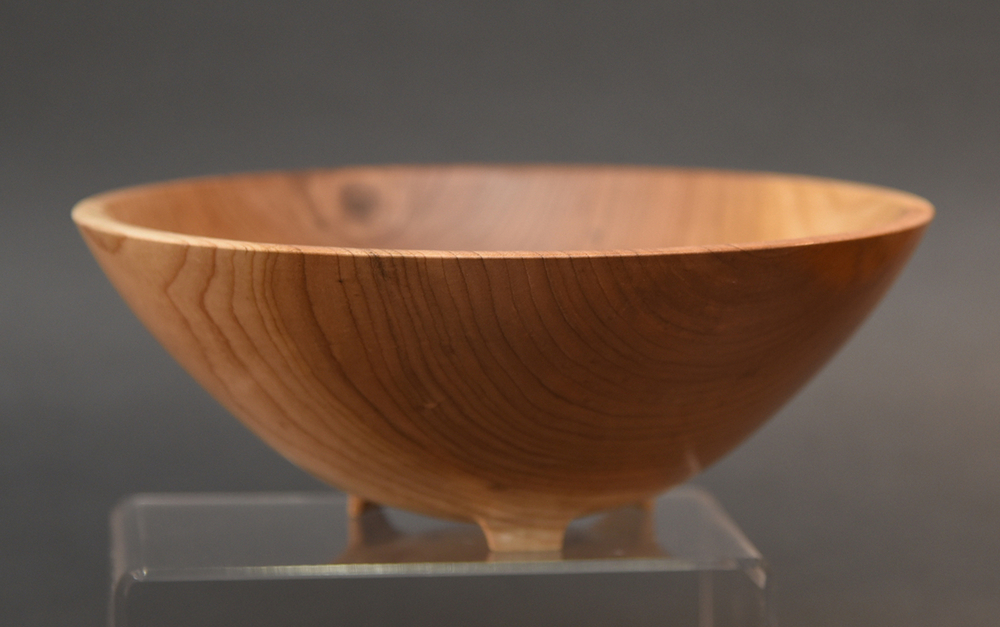
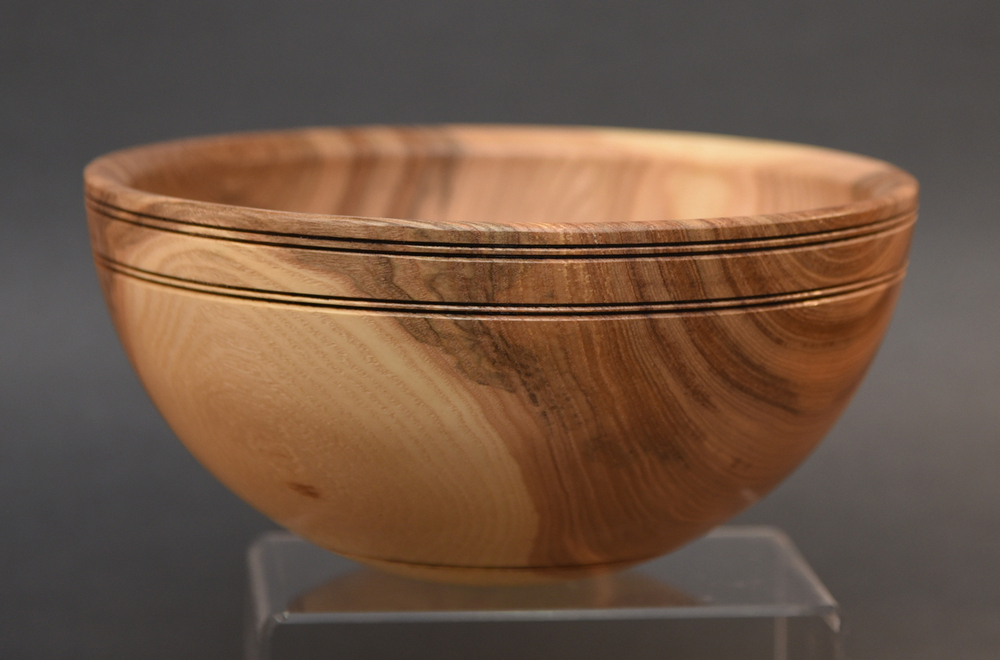
A pair of bowls.

The upper photo is of chokecherry with three little feet carved into the base. With three feet the bowl will always sit steady on the table. Although it is more difficult to make a bowl this way, people like the feet. The most challenging part, during the carving process, is to ensure that the flow of the curve down the side of the bowl to the bottom remains consistent. A "fair" curve, as defined by boat builders.

The bowl is 9 inches in diameter.

The lower photo is local ash and is also about 8 inches in diameter.

This bowl is a bit deeper and enhanced with four burned rings at the top and one near the base. I have always favored a little bit of extra touch to a bowl of common wood to add some interest and contrast. But I don't often do it with a highly figured or burl wood that needs no enhancement.

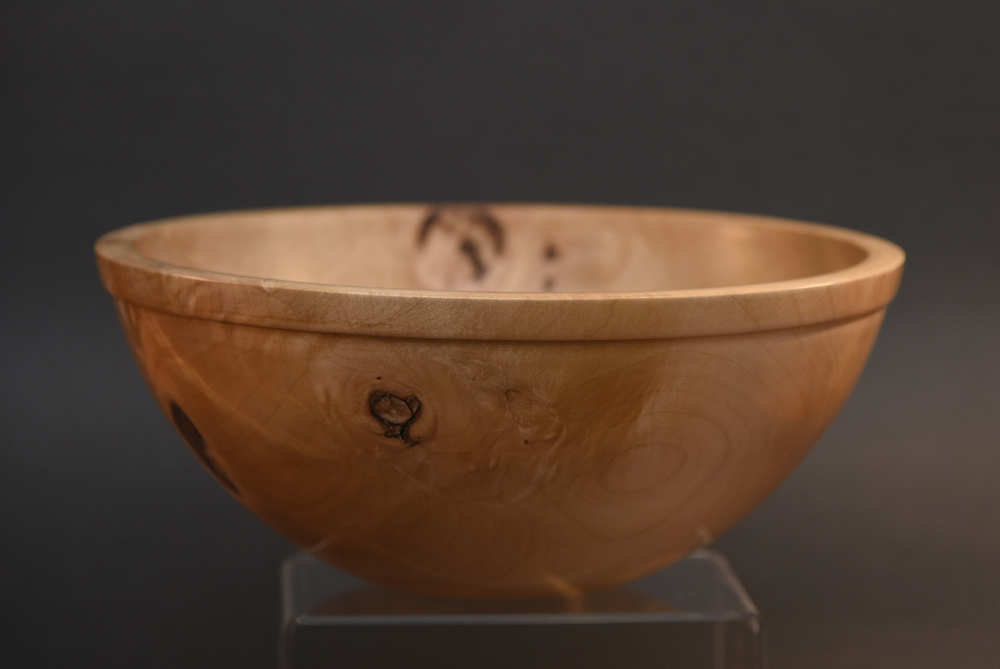
The upper bowl is made of maple. It was a local tree and had some little inclusions of bark on the side, and a tiny bit of natural swirls in the grain. I put a thicker rim on this 11-inch bowl for two reasons. One is just for design - I like the effect, and secondly, as a salad bowl it is easier to pick up and hold securely because of the ring.

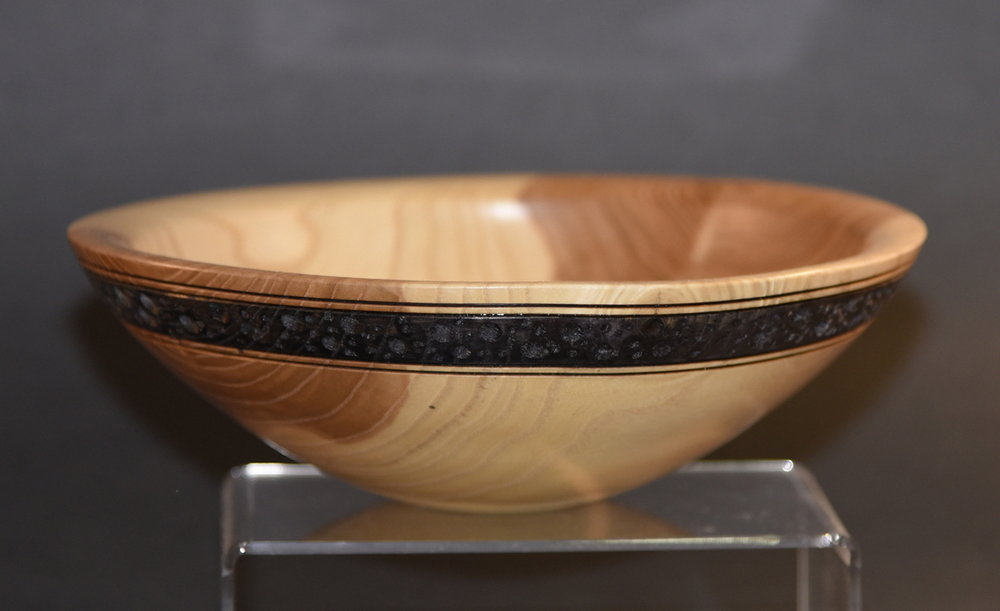
The lower photo is of local ash and is also about 11 inches in diameter.

This bowl is a shallower salad bowl and enhanced with a textured and dyed rings at the top for contrast.

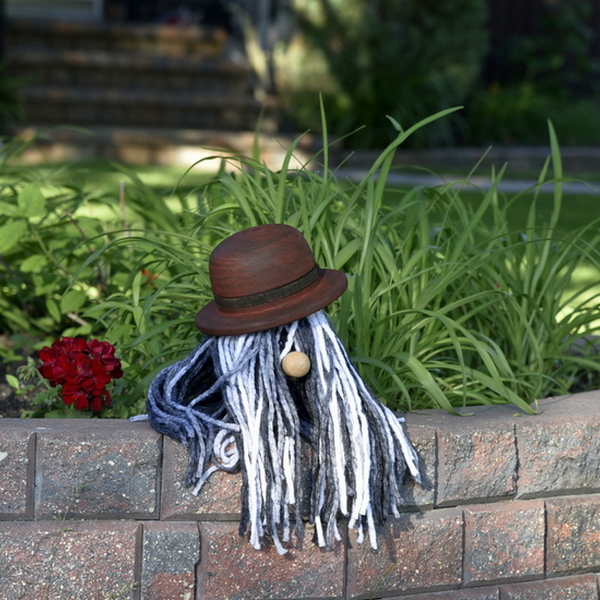
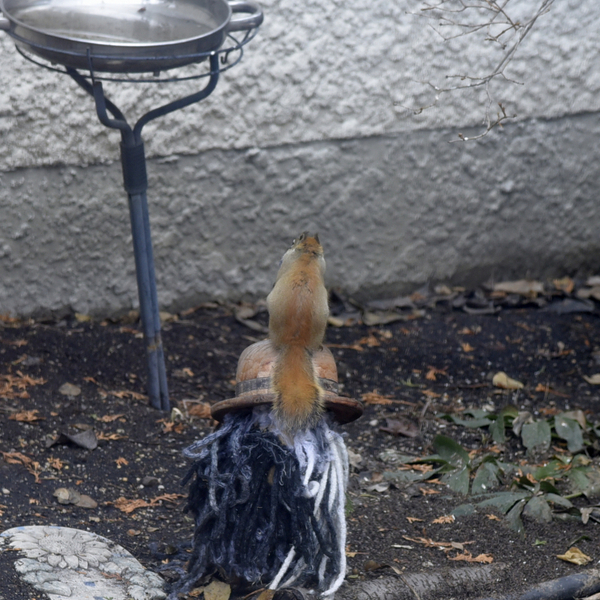
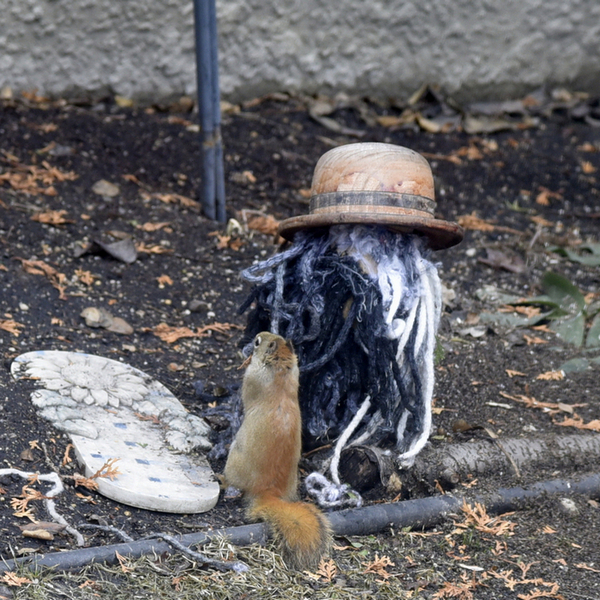
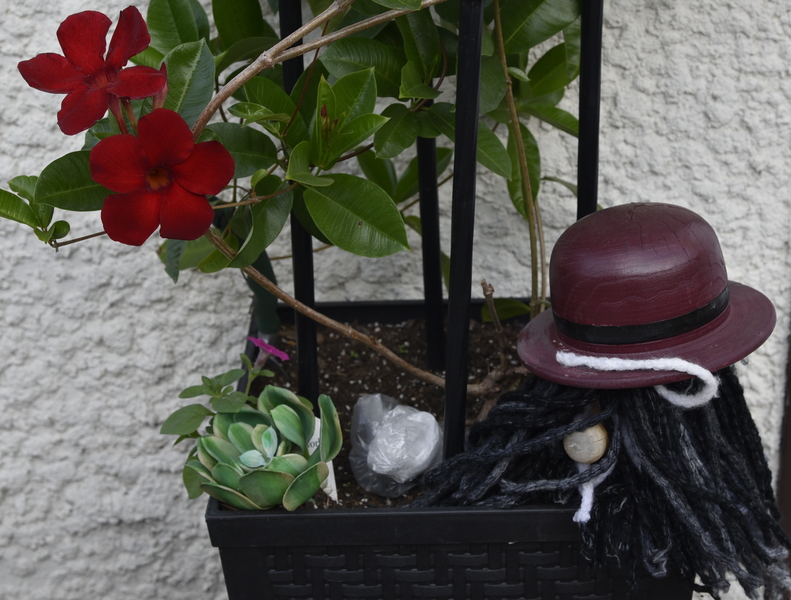
Poor Mr. Candyman.

This is a photo from five years back when he first showed up in the front flowerbed. Because he might get stolen, he was moved to the back yard flowerbeds where he could be with the family as we used the back yard a lot more.

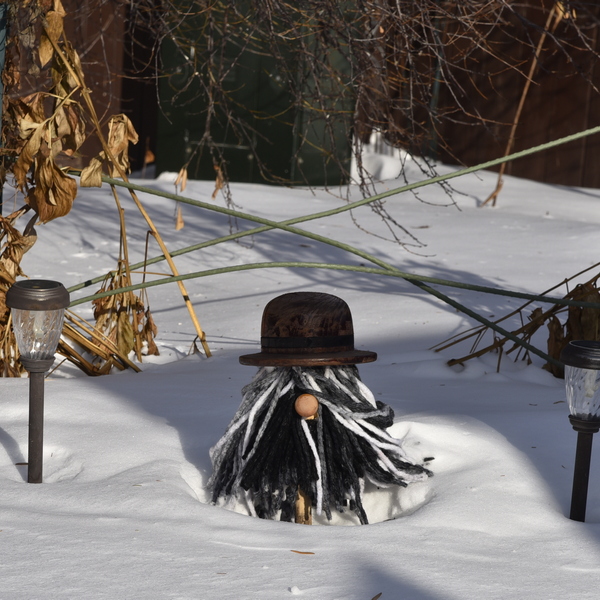
He said he was tough and wanted to stay outside in our hard Manitoba winters, so we obliged, and the photo just below shows him doing very well his first couple of years.

But, as time wore on, his hat got a bit dull and rain, snow, sun and aging started in with slow decline. Wrinkles emerged, cracks began to show. And then, adding insult to injury, he was assaulted.

Karen called me for help as she observed the assault but was afraid to go out in case the intruder had a gun. I pooh-poohed that idea since a squirrel has no place to hide a weapon and even if he did it would be too small to hurt me.

So, I went out, taking the risk, and shooed him away. Poor Mr. Candyman lay in a heap, hair gone, broken and bleeding. I rushed him to emergency care in the shop, where he recovered after a long and difficult surgery.

To make a long story short - he is now resting comfortably among the flowers again. And after some begging, I made him a nice box with pillows where he spends the winter in a warm garage.


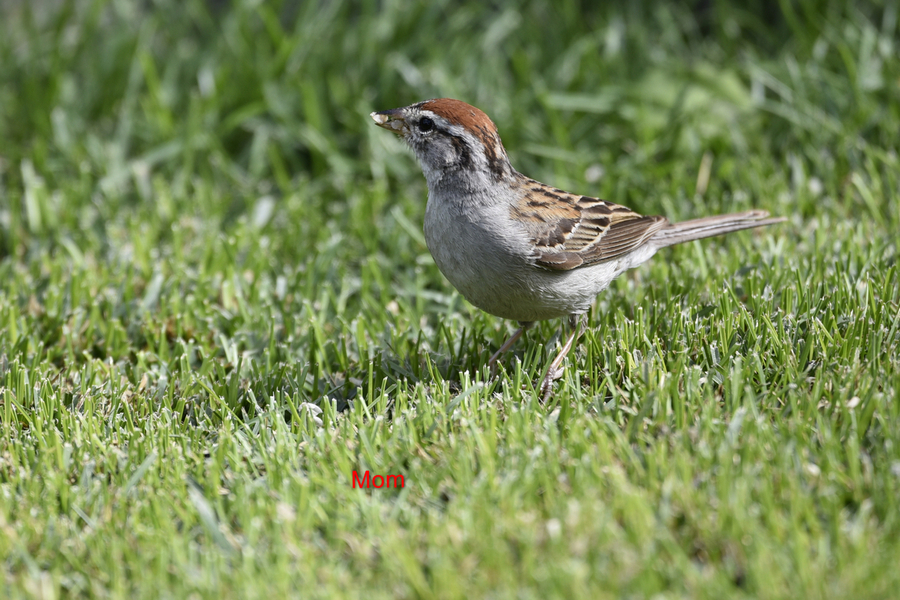
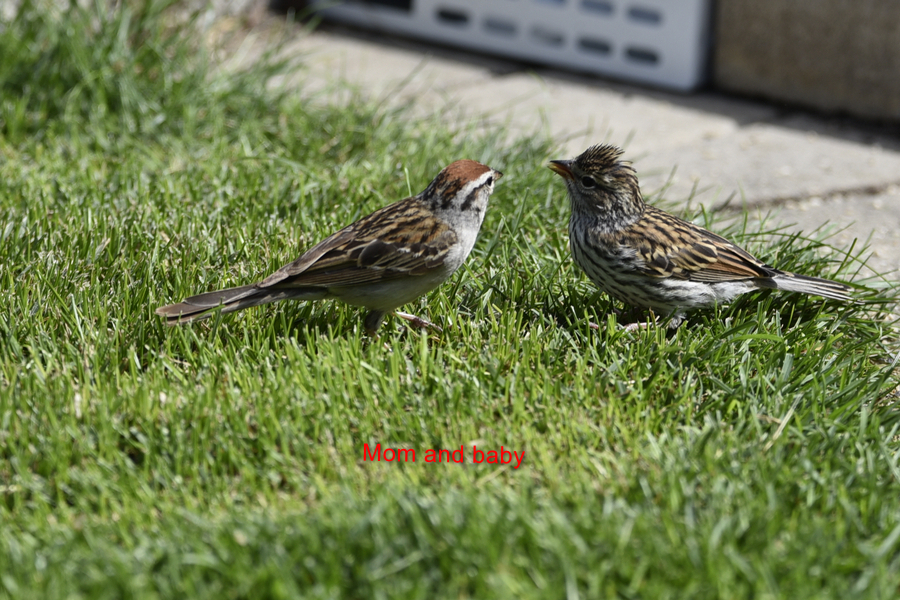
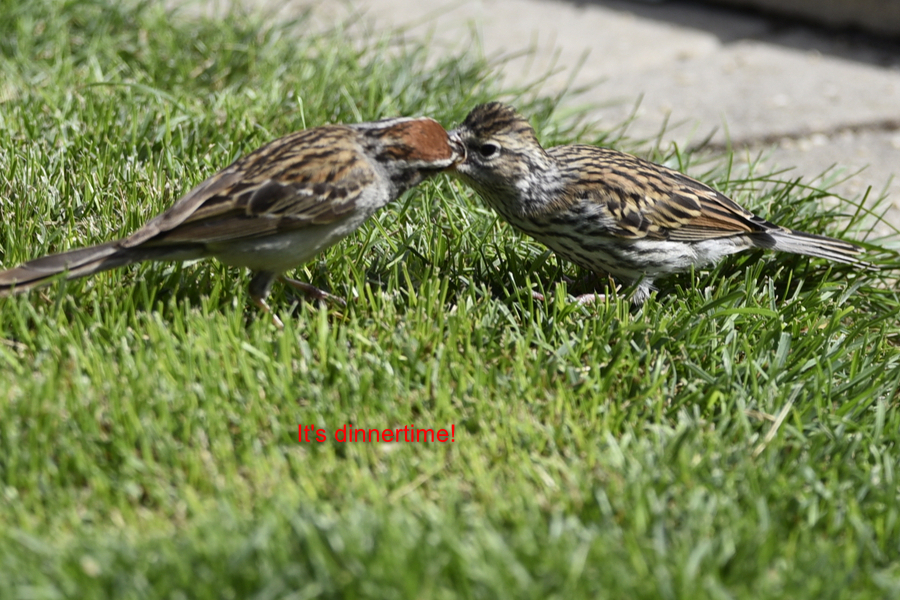
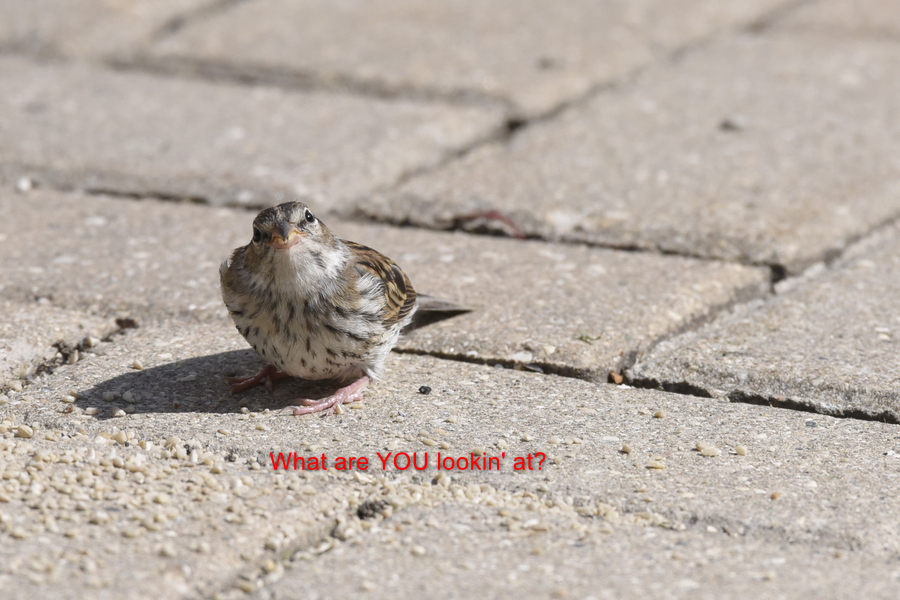
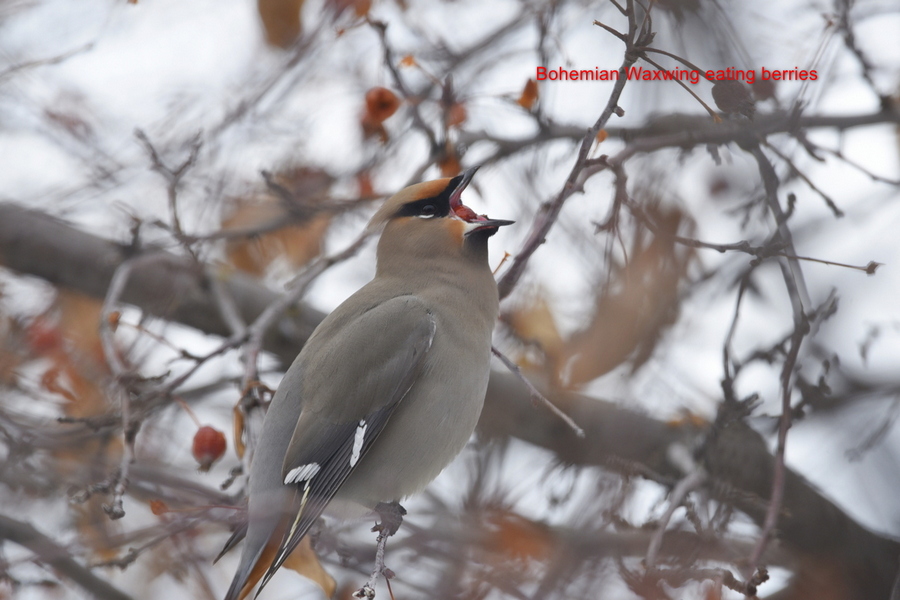
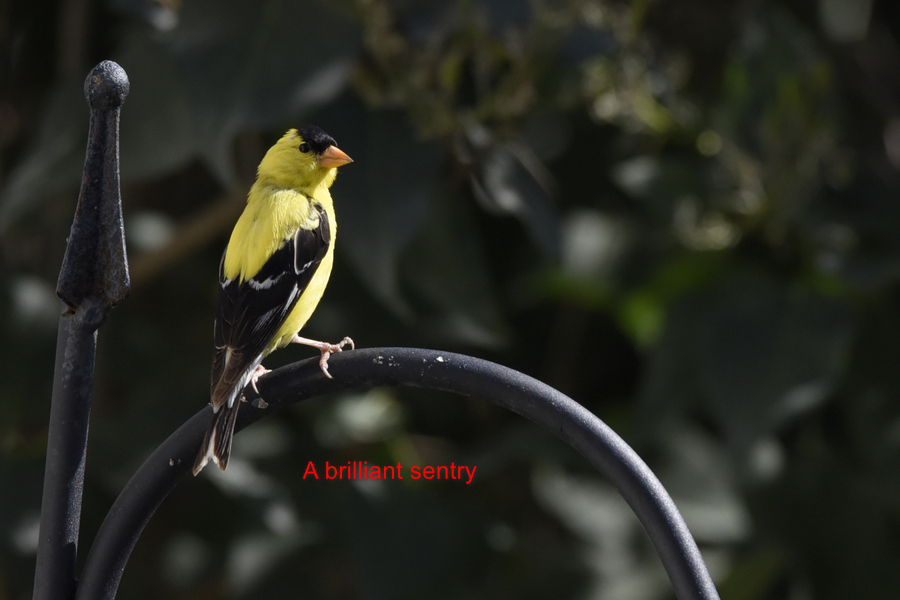
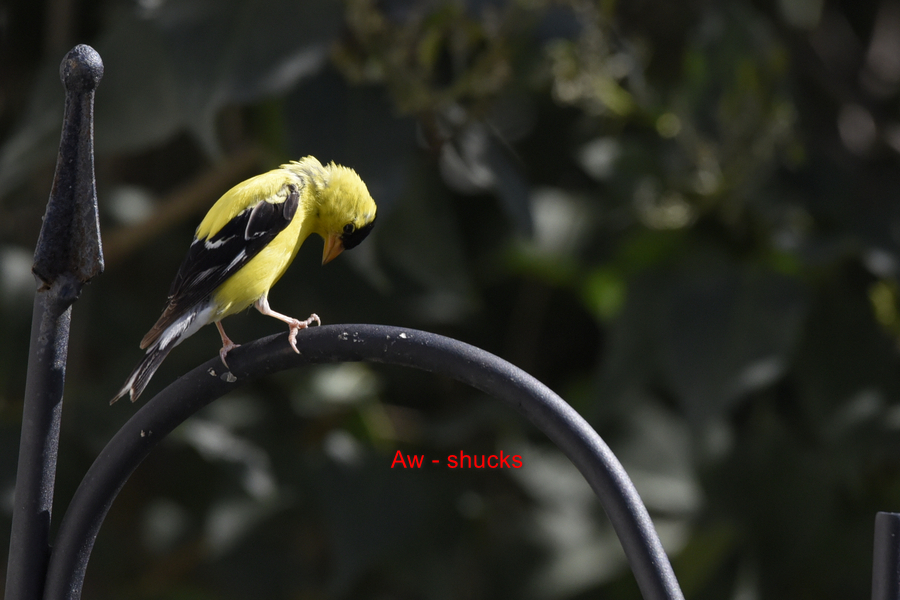
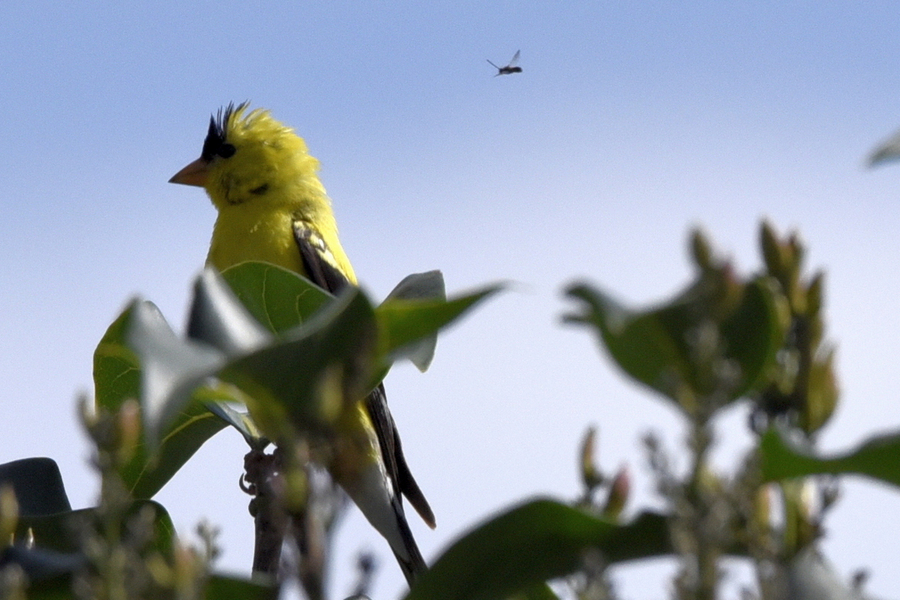
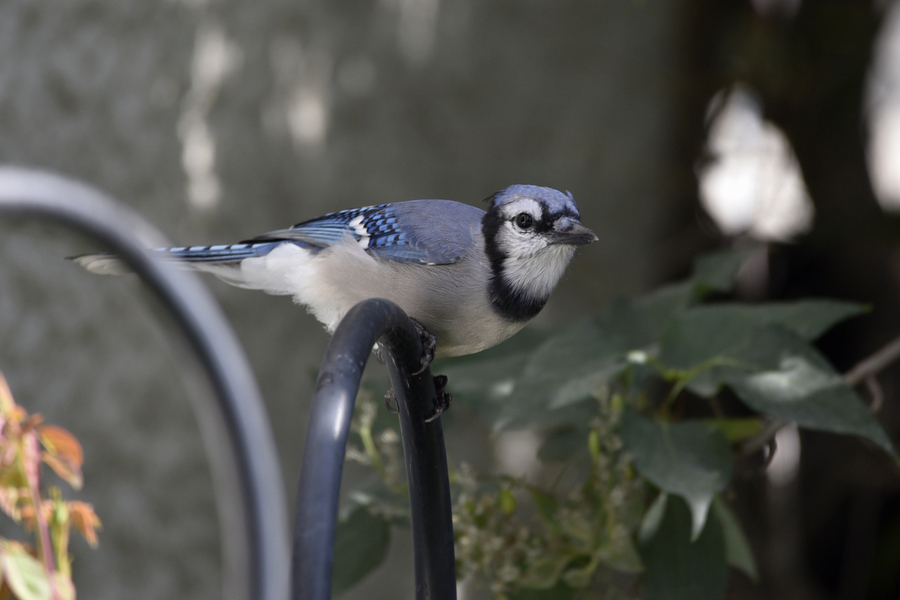
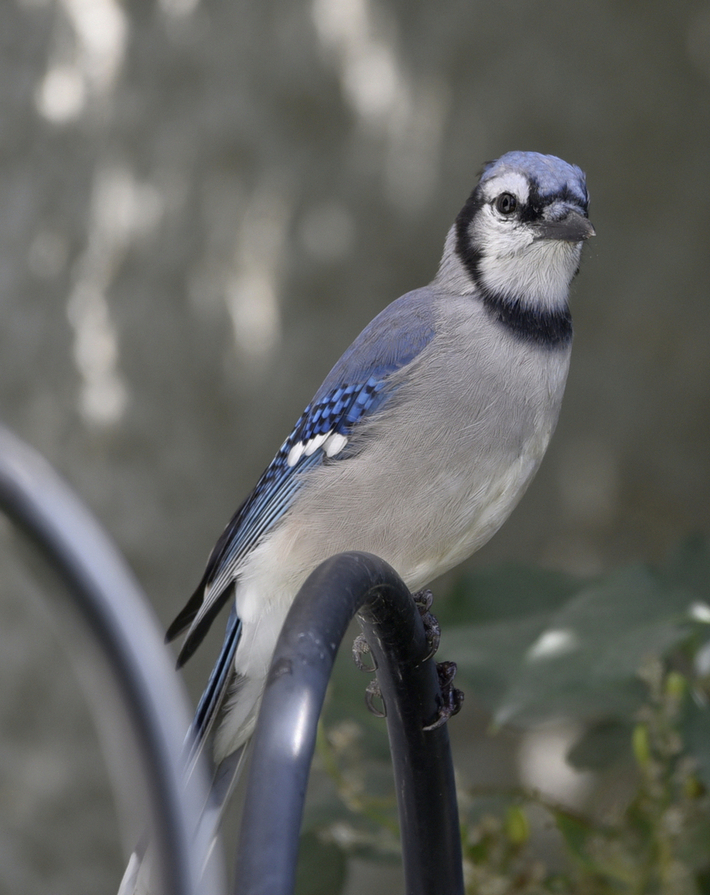
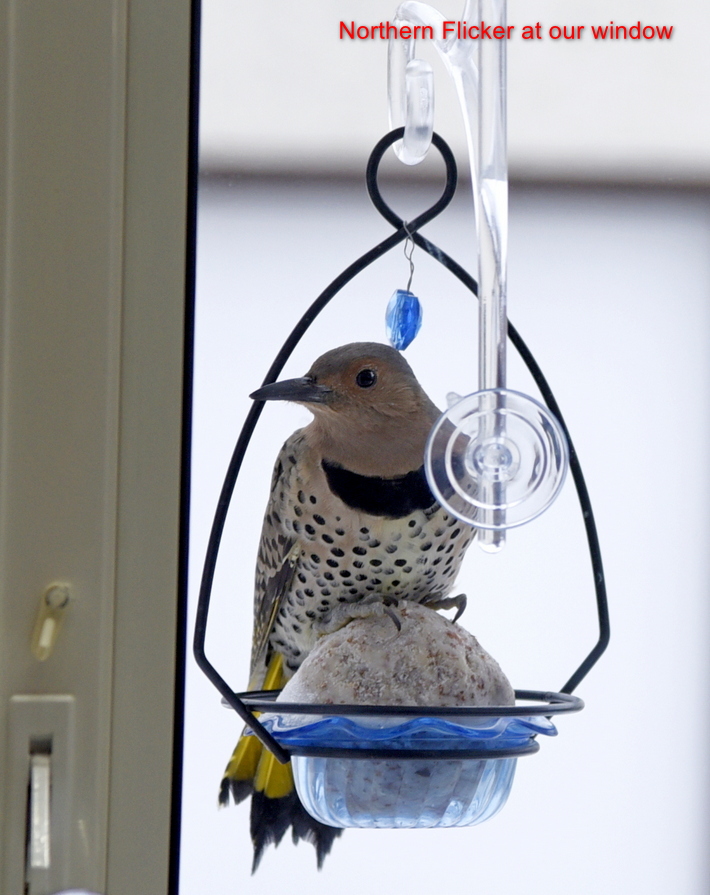
Just want to finish off with a few bird photos. Capturing photos of the birds in our yard is a great pastime, and we have hundreds that come and visit our feeders, drink at the fountain (which we keep ice free in the winter) and which use our juniper as an apartment house in wintertime. We have so many that we cherish, but mostly the chickadees, chipping sparrows, jays, woodpeckers, and many others that only Karen can identify.

Do not ask me what we spend a year on suet, seeds, etc. for our feathered friends. But it is all worth it to see their beauty and hear their song (except for the wren incessantly yapping at 4:00 am. Horrible song that drives me crazy, but worst of all he's a mean little bugger that drives other birds away).

So, that is it for 2025. Hope you enjoyed the visit.