2024 Turnings


Wow, am I ever late with this. It is now January 2026, and I am trying to catch up with what I have done for 2024. For anyone who visited and wondered, I apologize.

Not an excuse, but things sort of got screwed up around the whole world with the COVID pandemic, and nothing has seemed right since. Our woodturning club basically shut down and is slowly starting to build again but it has taken a long time, and the old enthusiasm seems to be missing. The sales dropped right off and, while I don't turn for sales, I still end up with a lot of inventory. The display space in our home is limited, and the storage space is filling up. Even with the club, our public demos have had to be curtailed because liability insurance is so prohibitive we can't afford to do free public demonstrations anymore.

And there is the age thing. Darn. I am now 82 and my energy levels are not where they used to be. Sometimes, the muse is just not there, and I find reasons to stay out of the shop (studio). I am simply doing a lot less turning these days.

But I will show you some of what I did in 2024 and then try to move on to the 2025 page as well. I hope you enjoy looking at the pictures and reading a bit of how the pieces were produced.

Thank you for looking. I love hearing from you, so feel free to let me know you were here.


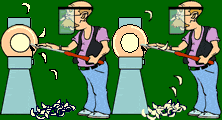
This is something new for me, and I thought I would share it with you - a short video of me doing some turning. In all these years I have very few videos of me turning, so here you get to watch my hands actually doing some work.

A woodturner friend was having some difficulty with a bowl he needed to make for someone. He had a nice piece of ash wood and had turned it round but was having great difficulty with the wood. He asked if I could do a rough turning for him and then help him with the finishing of the bowl. I agreed to do that but leave the bowl thick enough so he could put his own shape to the bowl.

I found the wood quite easy to cut and you can see from the video that it cleaned up pretty well. I did not try to do the usual fine finishing with the gouge since he was going to do some turning and sanding on it himself.

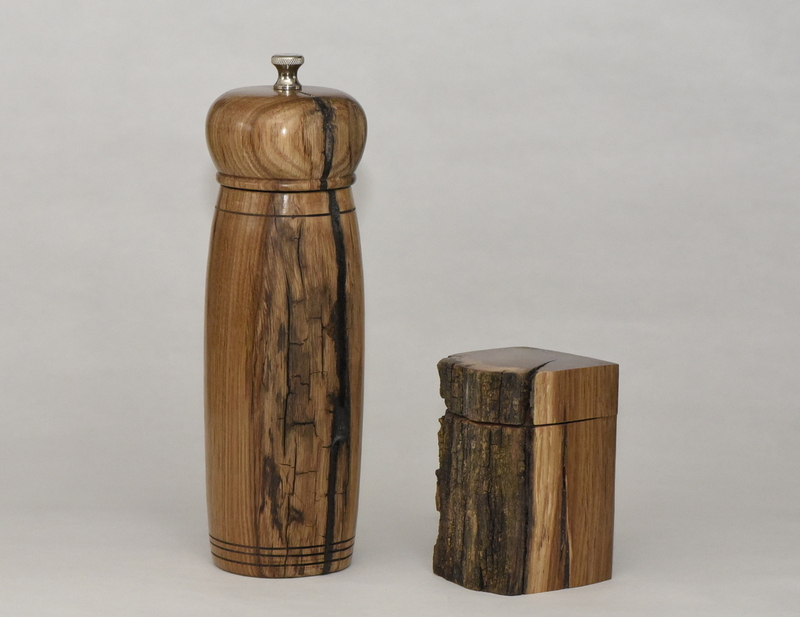
I got some old oak fencepost wood from my brother's farm that he was going to use for firewood. This is a peppermill turned from that old post, and I decided to make a funky little salt box to accompany it.

The peppermill is about 9" tall and was left with a little of the burned exterior to give a clue to its age. I'm sure that our Dad likely pounded in that fencepost more than 50 years ago. That Manitoba scrub oak lasts forever, and at this age it is almost impossible to pound a nail into it. It is hard as a rock, but cuts beautifully on the lathe.

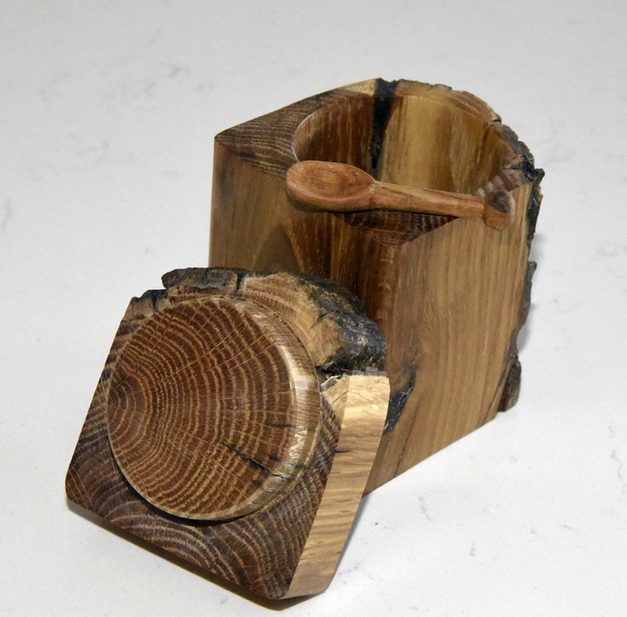
The little salt box is about 2.5 inches tall, and I left on the burned bark. The little spoon was actually turned on my big lathe and hand carved. A bit silly, but kind of cute.

These are now in the possession of Karen's brother.


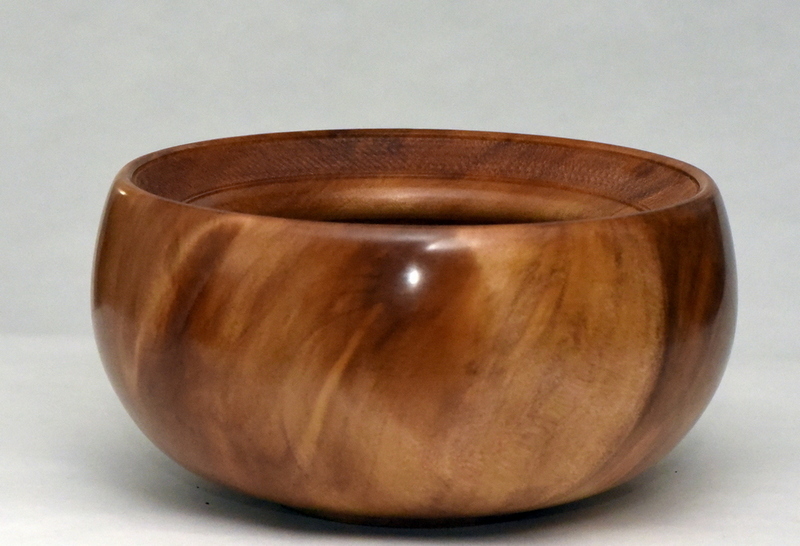
A few years ago, I got a delightful surprise from Terry Scott in New Zealand when he sent me some chunks of ancient kauri wood. Kauri still grows in New Zealand, but the ancient kauri is reclaimed from bogs after the huge trees are located underground with modern means, like ground penetrating radar. Some of the logs are more than 20 feet in diameter, and some have been carbon dated at 50,000+ years old. So, it was a rare privilege for me to hold some of this wood in my hands.

This bowl is about 8 inches in diameter and feels like silk in your hands. Everyone who picks it up is surprised at the beautiful feel of the wood.

Kauri has a reputation for being hard to turn but I found it very easy to get a clean cut. It has only one coat of tung oil on it and then has been buffed with carnauba wax.

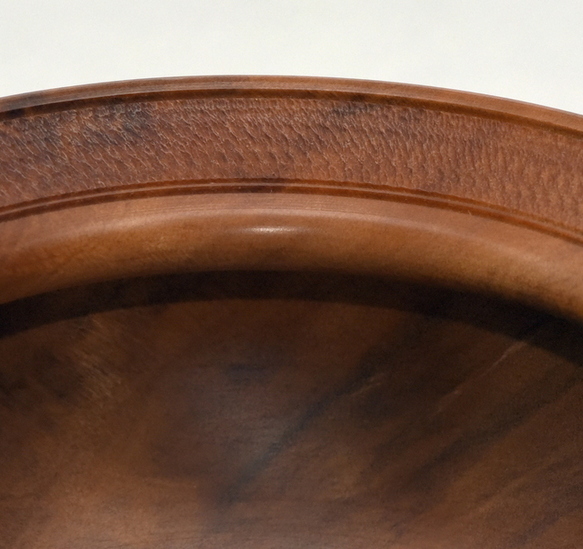
The photo on the right is to show how I treated the inner edge of the rim. The rim is dramatically undercut (the interior follows the exterior of the bowl) which required a special homemade tool to do.

This is a treasured bowl, not only for its rarity and its beauty, but for what it meant to get the wood as a special gift from Terry. It will always be in our home.


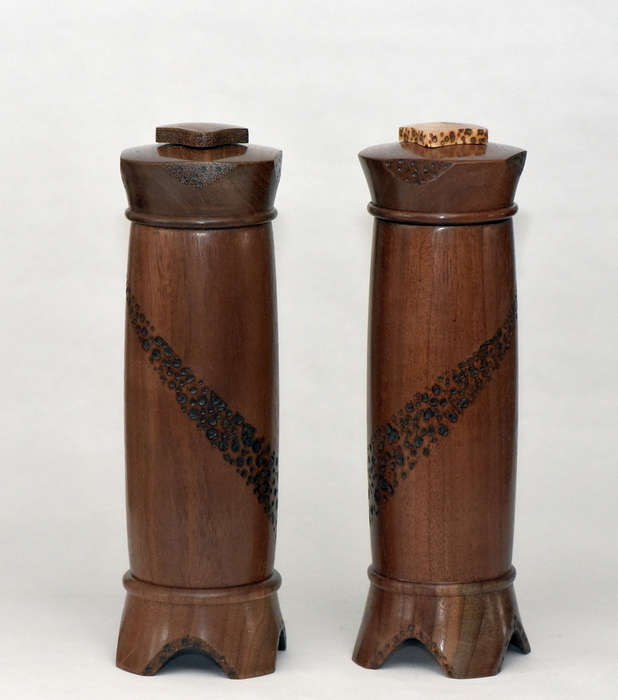
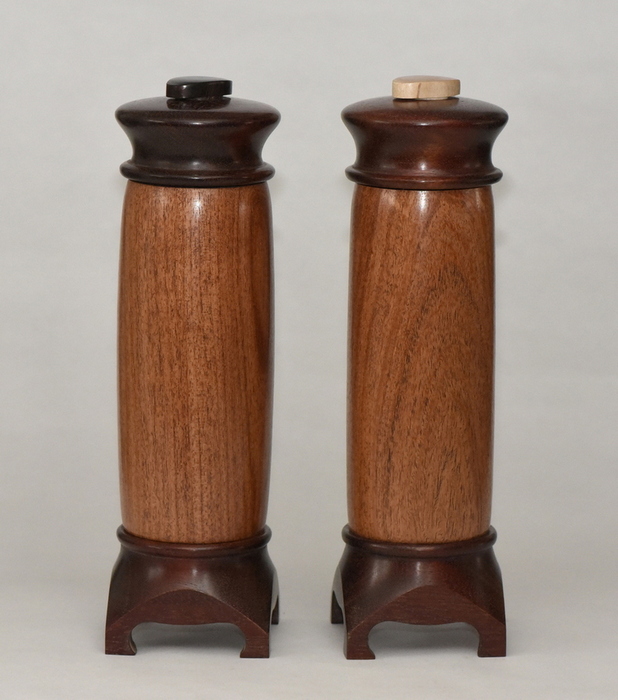
Two sets of pepper and salt mills. I have literally made hundreds of mills and enjoy the challenge of finding new and interesting shapes and forms so the mills are not only functional but can be seen as a bit of a conversation piece when placed on the dining table. I like to mix woods and various tops and feet to turn them into little art pieces.

The mills on the left are walnut with a little spiral texture on the body with some matching pyrographed texture on the squared foot and the lid. The mills on the right are of sapele for the body and purpleheart for the foot and lid. Sapele is a variety of mahogany and is a beautiful wood to turn and finish.

I am pretty well known for my dislike of the silver knurled knobs that come with the mill mechanisms, so most of the time I try to hide them, as I did with these. The knobs are embedded in the wooden knobs on top, and the wooden knobs are elongated into the lids by up to 3/4 of an inch. That allows me to get a 9 inch mill out of an 8" mechanism. And all of my pepper and salt mills are not just drilled out in the center. The interiors are actually turned to match the shape of the outside, which also gives them far more capacity. It takes a lot longer to make a mill with separate carved feet and turned interiors, but it gives me pleasure to make each one special.


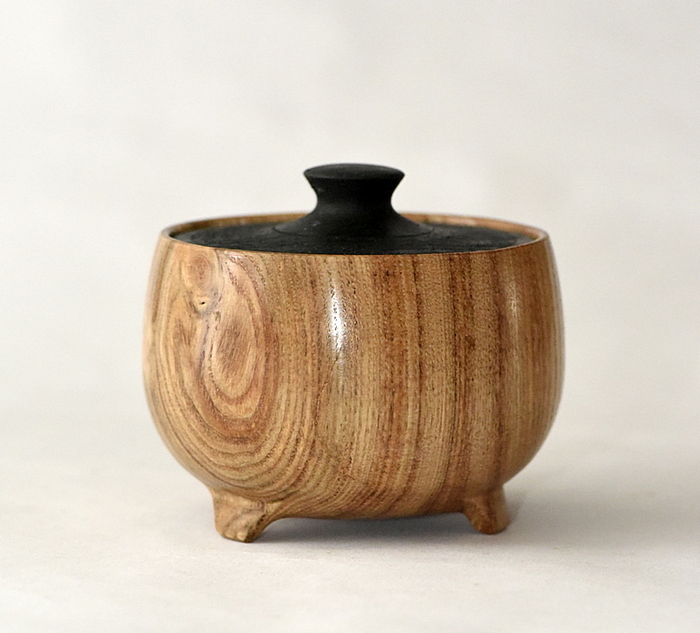
Top left is a little bowl or a box of ash with a small textured and dyed cherry lid. About 3.5 inches in diameter. I like small items with little feet, but they take a bit more time.

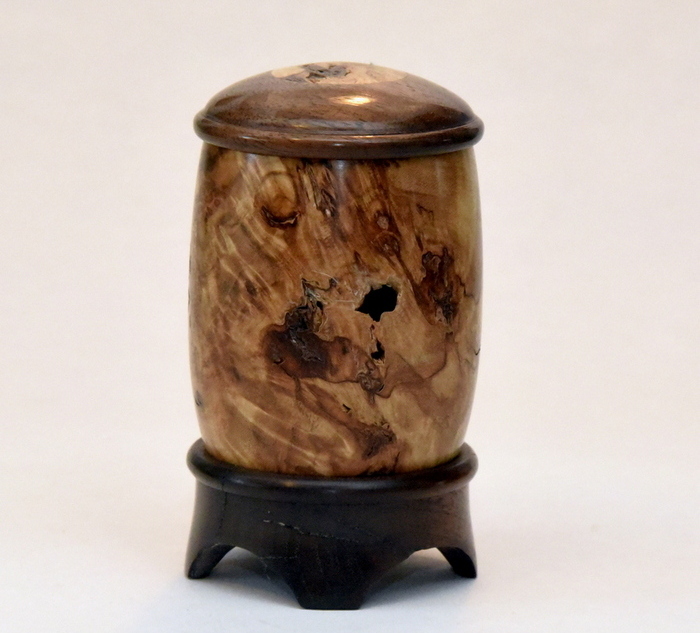
Top right is a 5-inch-tall cottonwood burl box with walnut lid and base. The insert at the top is also cottonwood. I got several cottonwood burls from a friend, and it is lovely and unusual wood, but difficult to work with. Dusty and full of holes and bark inclusions, unless it is filled and hardened with epoxy one cannot make items designed for hard or wet use at all. So mostly, I use it for decorative or artistic items.

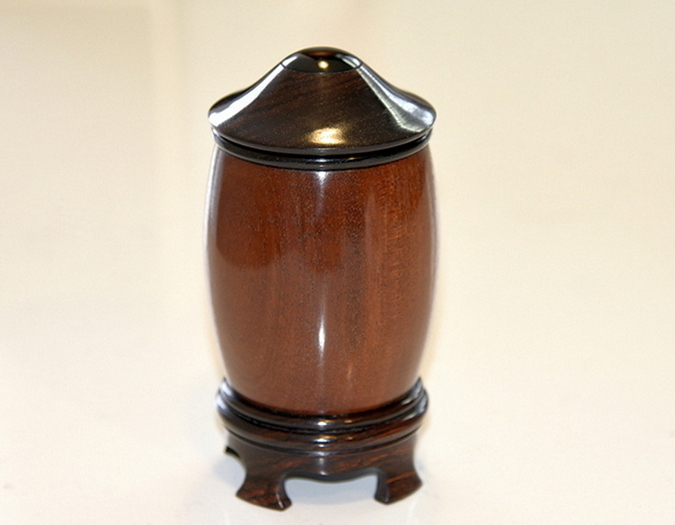
Middle left is a small box of sapele and cocobolo. This box style is becoming familiar with me, and I will continue to use versions of it in the future. In this case, I used sapele which is also rapidly becoming a favorite wood. Sapele is a mahogany type of wood and is beautiful to finish and lovely to turn. Cocobolo works well with it, even though I have to be a bit careful with cocobolo (it can be a bit toxic to the skin), it is also a favorite wood to turn. This box is about 4 inches tall.

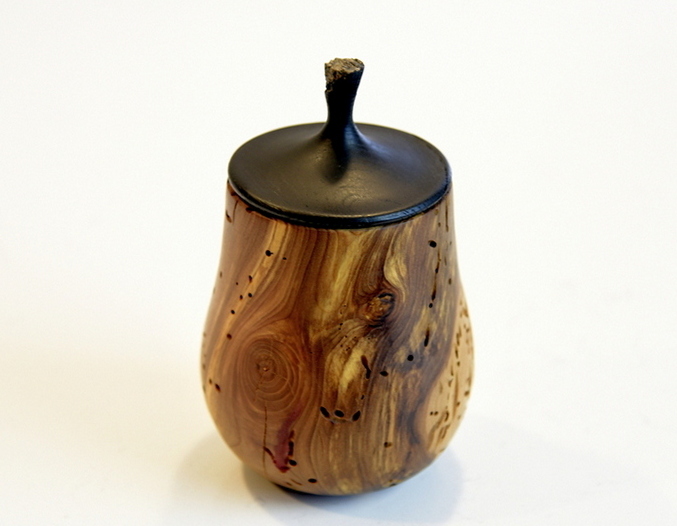
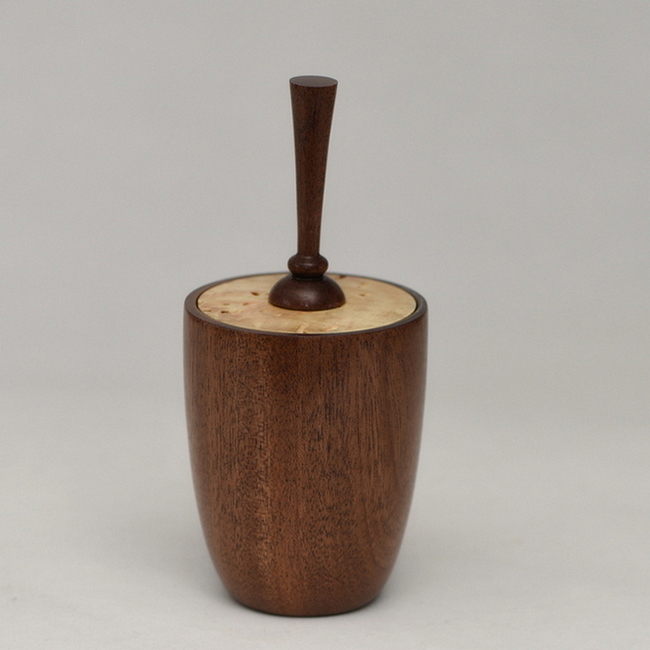
Middle right is another small box about 4 inches tall made of some wormy apple. Again, the worms did the decorating and made the box a place to keep little treasures rather than be used for anything wet or for hard use. The lid is a piece of dyed local oak with some of the rough bark left on the tip of the handle.

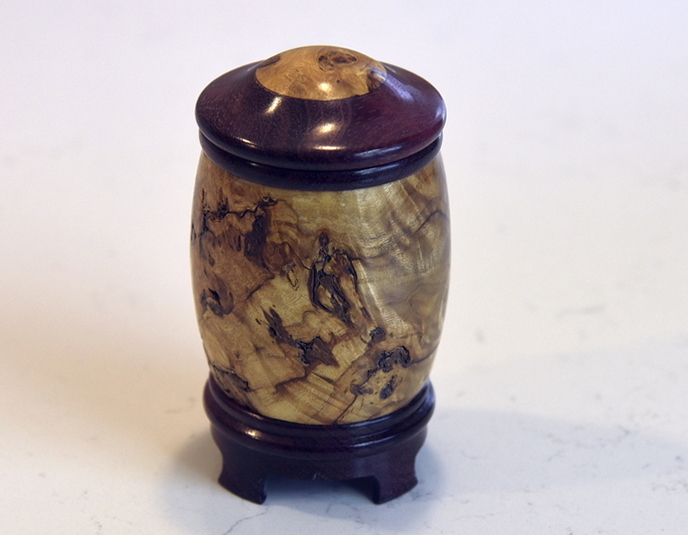
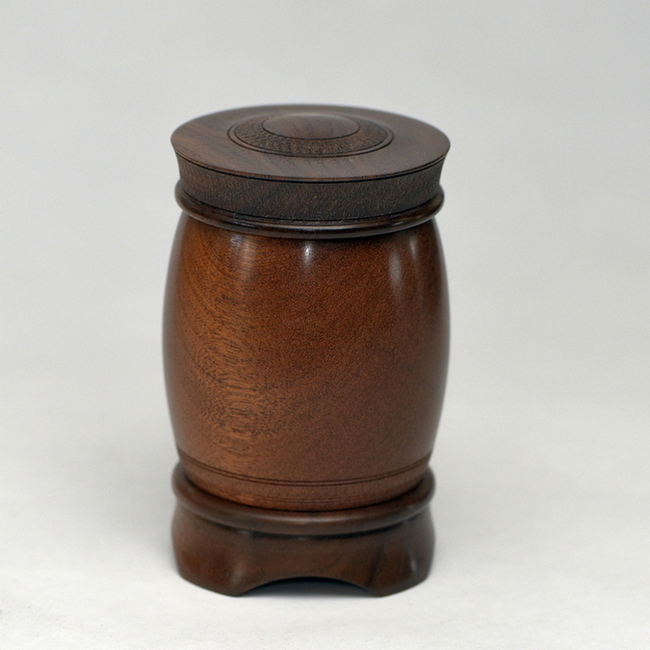
Bottom left, I show you another cottonwood box with a purpleheart lid and base is a version of the box style I like. Purpleheart finishes very nicely but is a difficult wood to work with - splintery and hard and difficult to sand. But it works nicely with the cottonwood. The style of lid and overall shape comes from the inspiration of Bill Clark on the World of Woodturners website, and is reminiscent of his style.

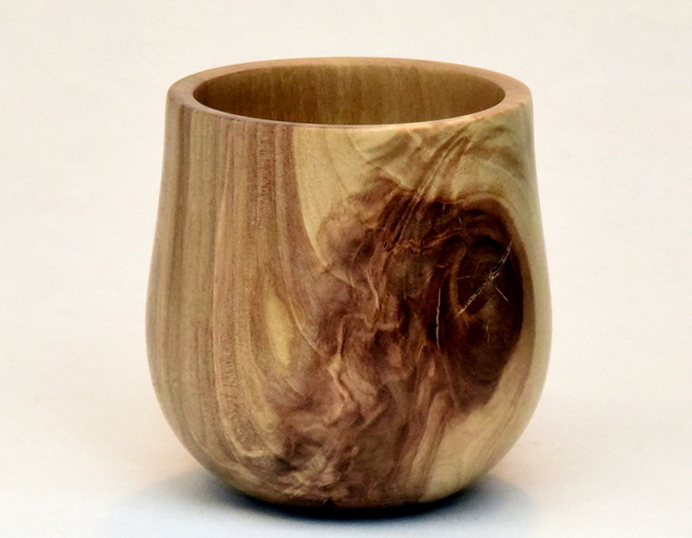
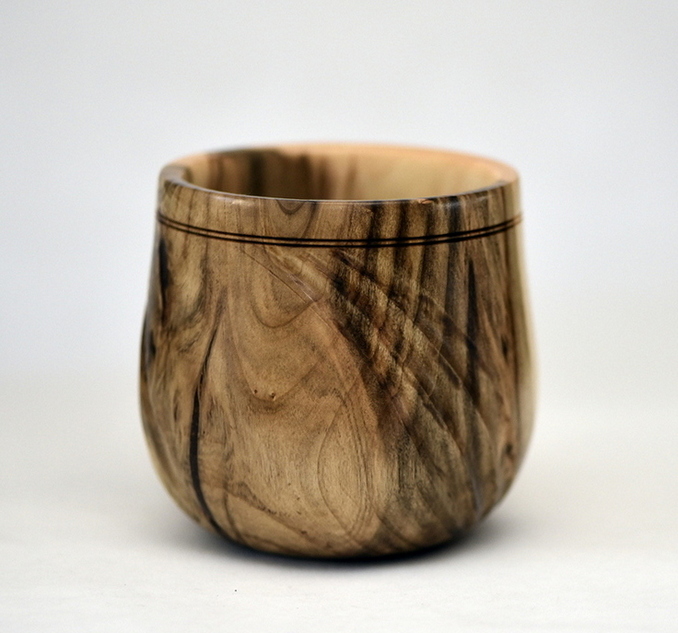
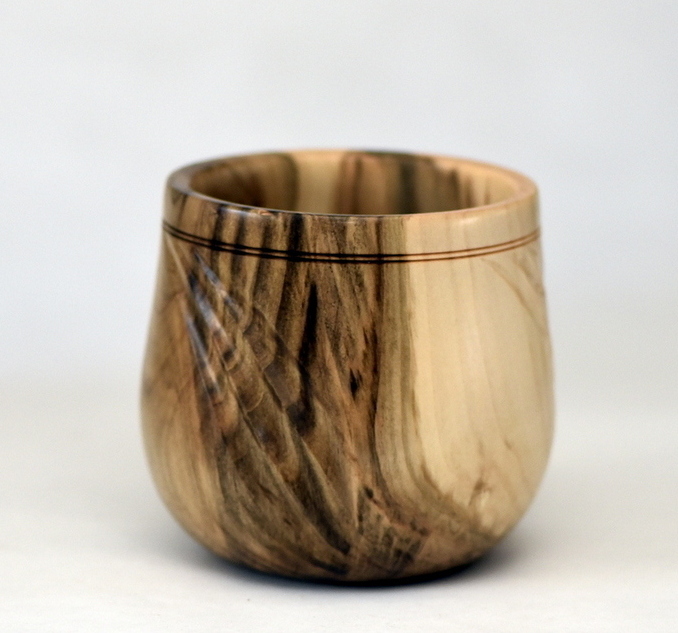
Bottom right - just a little 4-inch-tall cup of apple wood with some nice figure on the side.


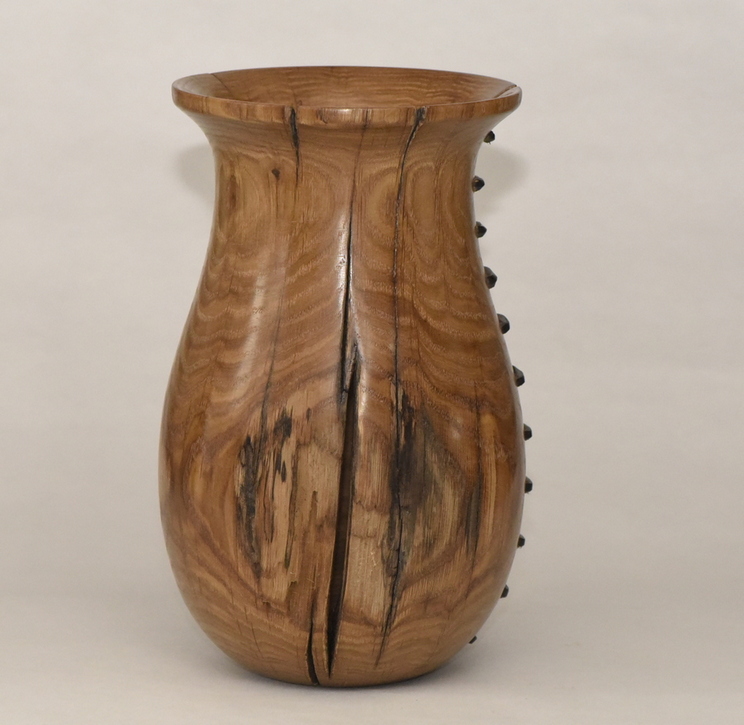
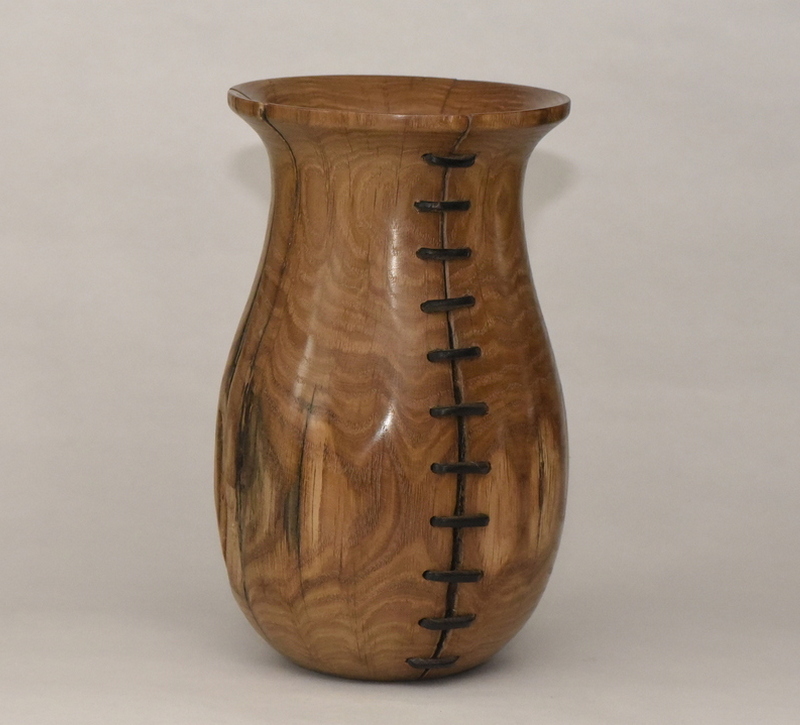
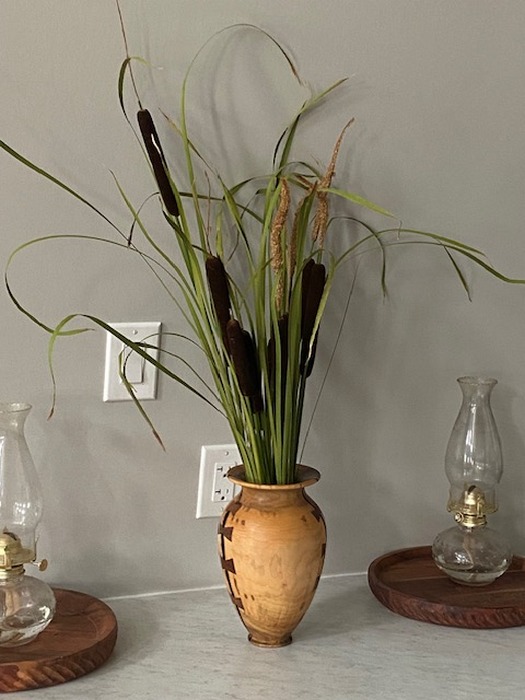
Brother Gerald saved me a couple of pieces of oak he had lying about on the farm. Could have been old gateposts or from a piece of homemade machinery, but whatever it was, it was old. This vase is about 11 inches tall and had a huge split down the side of it. I love these old chunks of oak and decided on a simple fix. After some creative ways to hold it together while I turned the inside (the outside is always done first), I used leather strip to "sew" the vase together. Nothing new, as I (and others) have done this sort of thing before, but it still means an unusual and one-of-a-kind work.

On the right is just another view showing the actual lacing of the leather.

A split in a vessel does not always ruin it. A favorite saying among woodturners is that a mistake often presents a design opportunity. When a mistake is made and a piece under construction suffers a setback, many would just burn the piece or throw it out. I generally swear a bit, then set the piece on the shelf and forget about. Except the subconscious mind keeps working and, someday, an idea on how to turn the mistake into part of the design just pops into my head.

The same is true for a piece that cracks while drying, or a split in the wood.

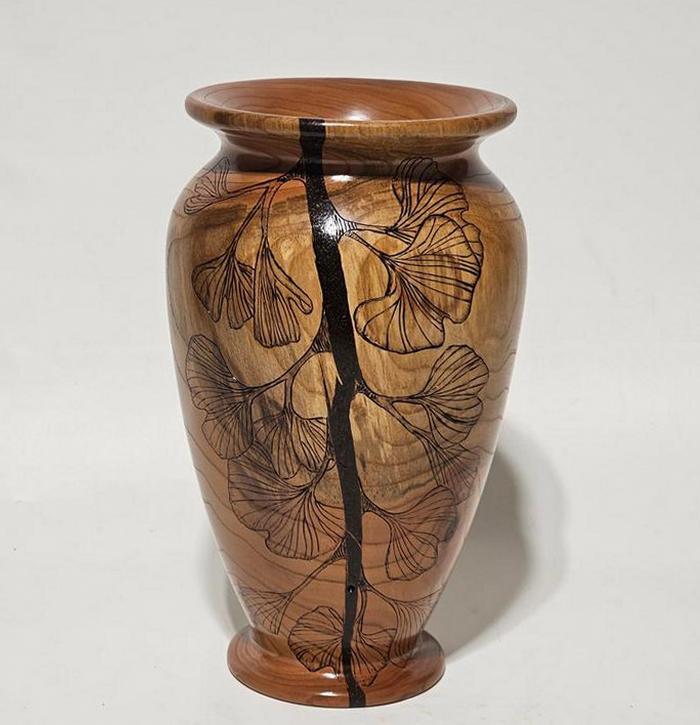
In the case of these two apricot vases, I filled the cracks with a mix of coffee and epoxy and set them aside. The woodturning club was having Donna Stewart do a demo on woodburning, and I took the vase on the left to the meeting to see if there was a way I could use the filled crack as a tree trunk and burn branches and twigs on it. Only problem was, the tree would have been upside down because the crack was wider at the top than at the bottom. Anyway, I sent the piece home with Donna and asked her to see if she had any ideas, and if she wanted to burn something on it to do so. When she brought the piece back to a meeting a month later, she had burned ginko leave on it, and I loved it. I took it home, finished turning it and put a tung oil finish on it.

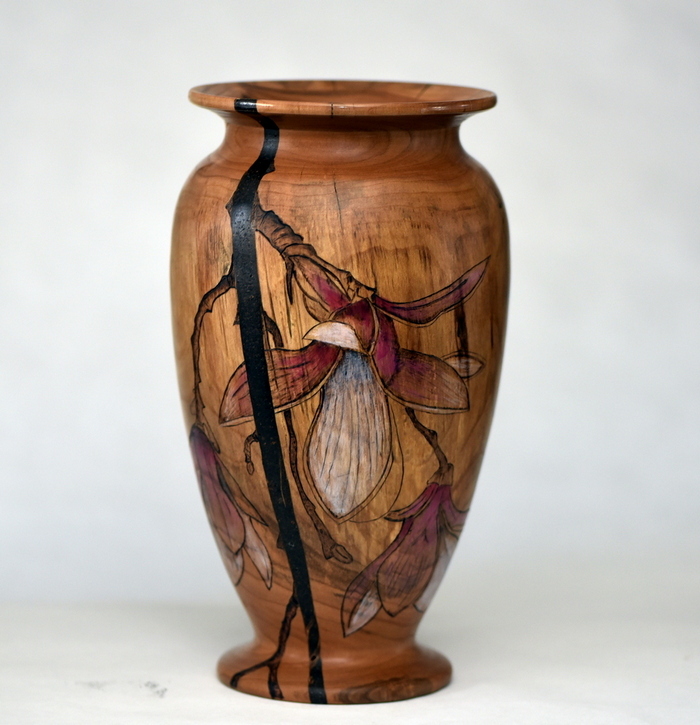
When I took it back to the club, I told her I had its twin at home, and did she want to try another. She did and returned it to me with eucalyptus flowers burned on it. When I got it home, I also finished it, but before I put tung oil on it, it seemed that some color needed to be added. What you see is my one and only attempt at "dry brushing" color. That is the process of taking a brush that barely has any color on it (a dry brush) and dabbing at the surface to create very faint tints. It takes hours, but I finally had to color I wanted, and the photo on the right is the result.

Both vases are about a foot tall. I gave the one on the left to Donna, along with a great deal of gratitude. Donna is a phenomenal wood artist, and I am so happy that our collaboration worked out.

Three little boxes here.

The first, on the right, is one I call "not sure". That means I am not sure if I like it, but the longer it was around I liked it more. The box is only about 2.25 inches tall and wide and is made of sapele with some burned-in texturing on the lid. Sapele (a variety of mahogany) is such a beautiful wood to turn and finishes so nicely.

Below left is a walnut box about 4 inches tall with an inset lid of mappa burl. The mappa was a bit off a slab burl sold as a tabletop. I liked the wood, so I bought the whole expensive piece, and you have seen several other pieces turned from it.

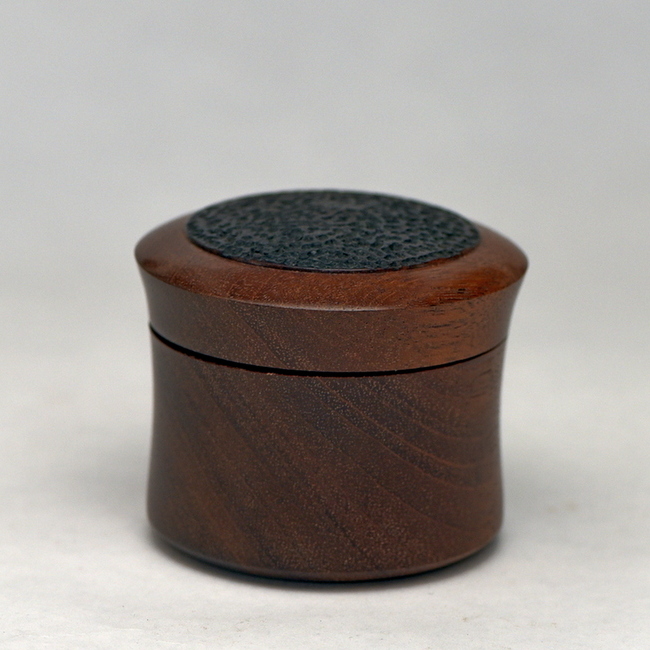
Below right is another sapele box with a walnut lid and base. There is a tiny bit of texturing on the lid (including on the inside) and on the underside of the base as well. I love the way sapele and walnut "marry" in the feel of the wood and in the colors.


I've watched a world-renowned turner for several years on YouTube. He has been a production turner for 50 years and written several books on woodturning. He absolutely refuses to work with any wood that has a crack in it. And another renowned turner said, "life is too short to work with crappy wood."

Well, color me different, along with many other turners. Wood is pure nature, and we can make all kinds of efforts to control it, but in the end, Mother Nature always wins. And sometimes, I think she just knows better. And, without question, she is the best artist of all.

So, when I end up with a vase that I turned when the wood is wet and then cracked when set aside to dry, I think I am being helped a little by Mother Nature and have to be a bit creative and put any art I can conjure up on top of hers. This happens many times, and this is just another example - a vase nearly split in half. If you have seen my other work on these pages, you know what I mean.

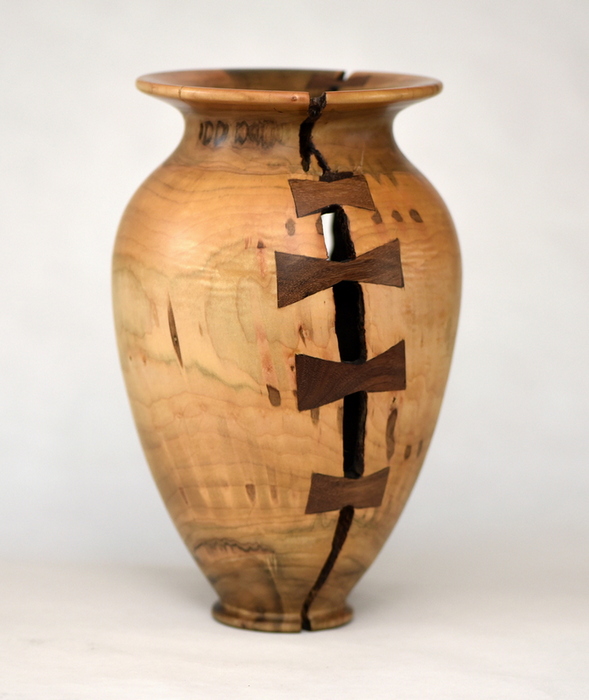
Some people really like this kind of work. My niece and her husband created a beautiful and huge home out of an old curling rink, and her creative decorating and design is all over the house, much of it reclaimed from second hand sources. Some of it very old antique finds. So I created an old rough vase stitched together with "pewas" (Hawaiian for fishtail and commonly known as dovetails). The pewas are hand cut on a bandsaw and roughly carved into the side of the vase to avoid any symmetry or sense of "planning".

She liked it - this grouchy old maple vase, about 11 inches tall, and gave it a place of honor in her home, as shown on the right.

It is always difficult when a family member passes away, but when it is a younger man and a favorite nephew the impact is even harder.

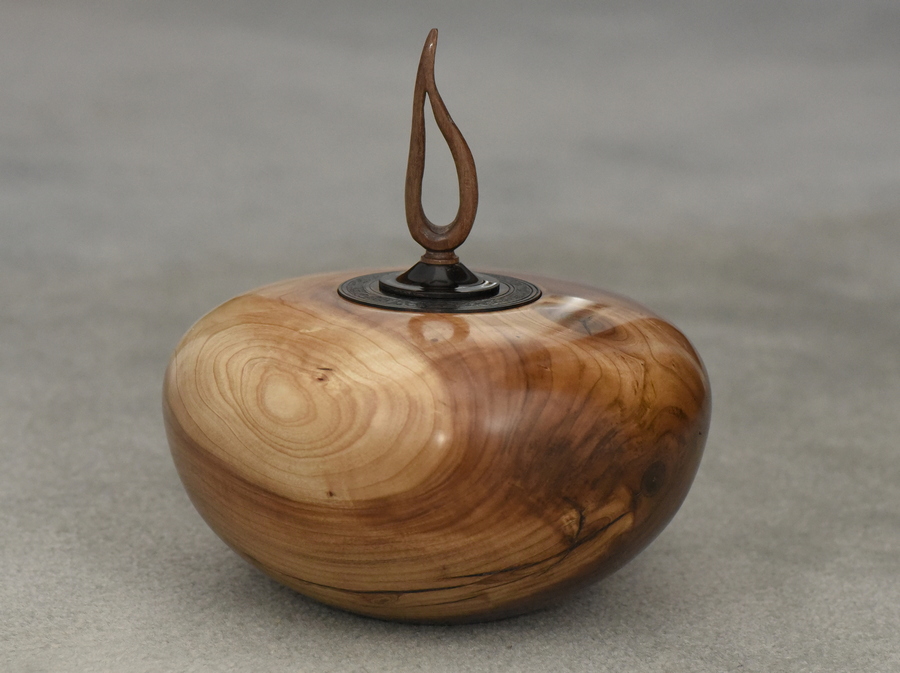
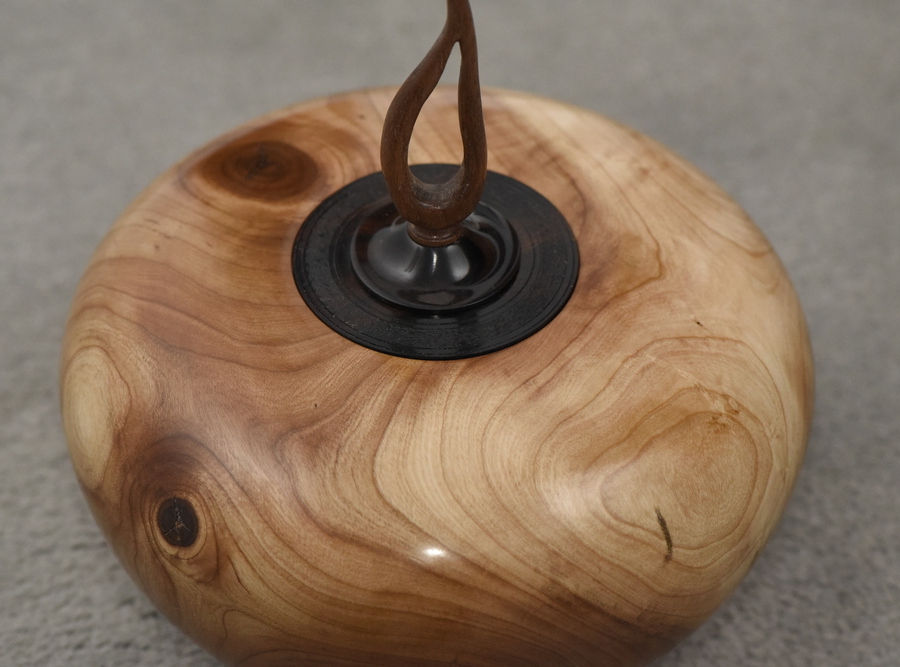
It was a sad honor for me to be asked to turn an urn for Steven's ashes, but I found a lovely piece of local chokecherry that seemed to be just right. After all, no young country boy in Manitoba is unfamiliar with walking through the bush and eating the wild chokecherries to return home with blue teeth from the tart berries. I was quite sure Steven was very familiar with the chokecherries as he grew up only a few miles from where I grew up.

I used a textured walnut lid and a carved cherry flame finial to top off the urn.

Rest in peace, dear Steven.

I went out into the back lane and saw my neighbor hacking away at his sizable maple tree with a tiny little hand saw. I asked what in the world was he doing, and he told me the tree was encroaching on his garage entry, so he wanted it gone. I said, "Did you forget you had a neighbor with a chainsaw?"

A few minutes later the amur maple was on the ground, and I saw the color on the inside. He said I could have all of it, and I am delighted that I found the wood. Have not seen anything like it since. The ripples and the colors of that little tree have yielded many small pieces that feel like silk in the hand and turn and polish beautifully.

There are other pieces on this site, but this little bowl really appeals to me. I used it as a demonstration piece for carving spirals on woodturnings, and the spirals really help to pick up the color and grain of the wood. Both views are of the same 3.5-inch-tall piece.

I have made a lot of stuff in the past that I have, wisely, "deconstructed". Let's just say - I was learning.

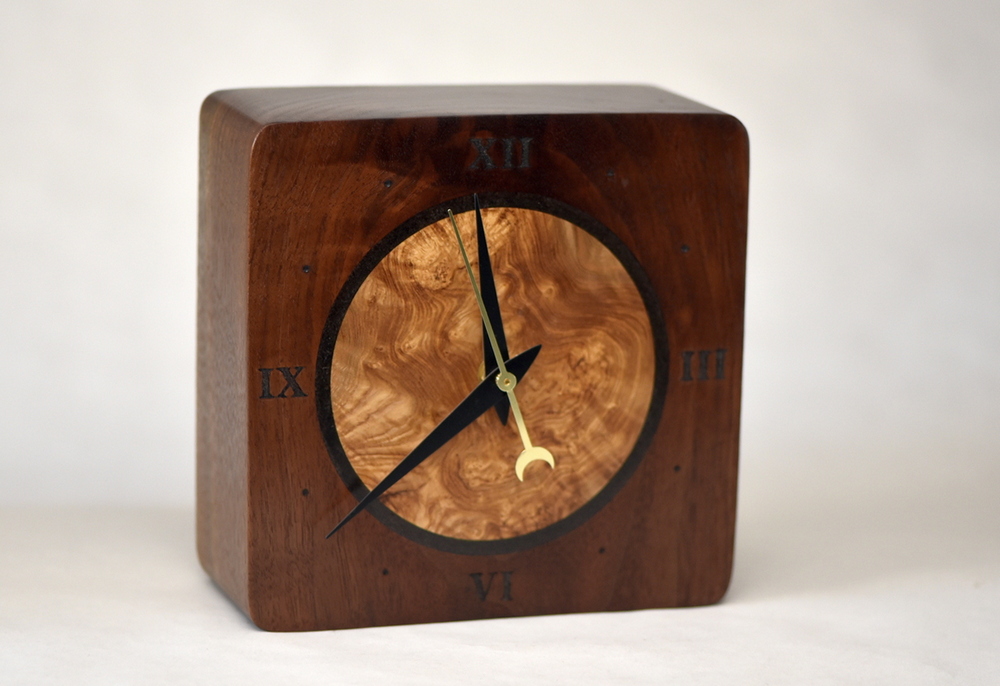
A very nice piece of walnut with a hole in it was recovered in one of these ventures, and it kicked around the shop for quite a few years. One day, after bumping into the piece again, I had a brainwave. My sister Mary, many years ago, had handed me a small piece of oak burl that I sliced up on the bandsaw into half inch thick pieces. And I saw the clock in my mind.

The walnut clock is 8 inches square and about 3 inches thick. I inlaid the oak burl inside an ebony ring on the front of the clock and burned in the numerals.

Karen has laid claim to this clock, which delights me.

The wife of a dear friend passed away suddenly, and I was asked to make an urn for her ashes. That is always a difficult thing to do, since there was a close personal connection with both of them, and I struggled to come up with something that would be unique.

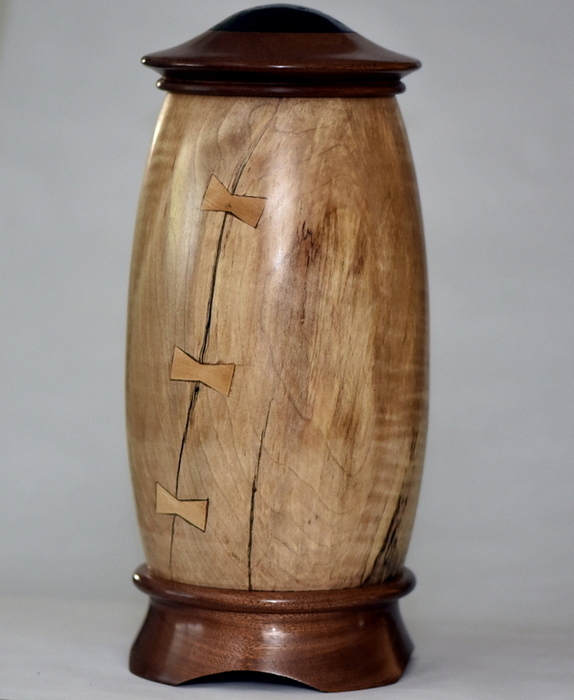
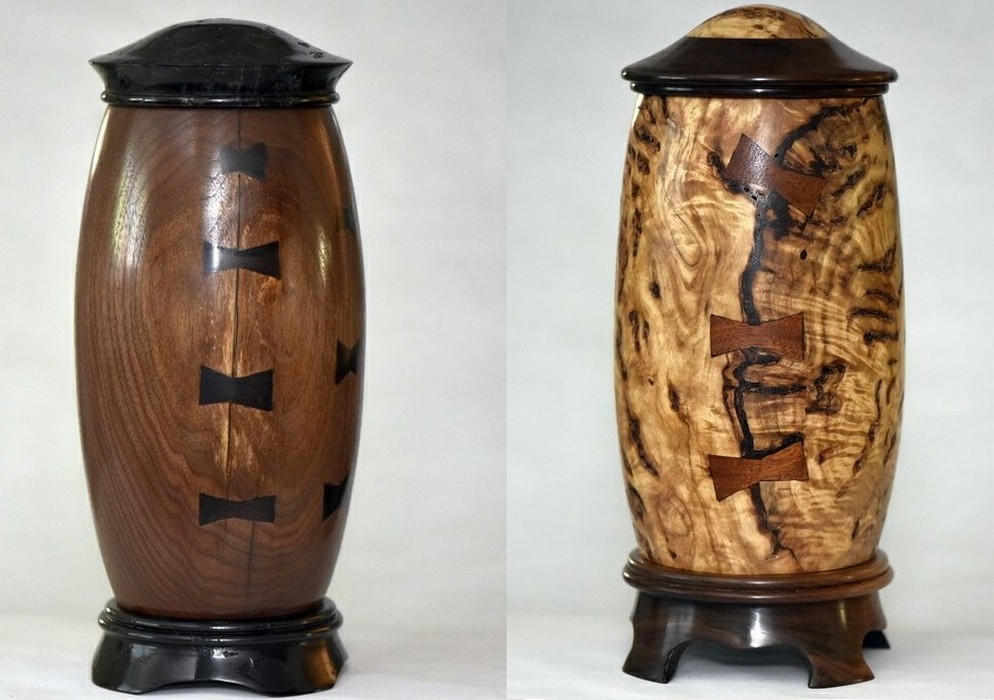
I decided to take the form I have been using for small boxes in the last couple of years, and with a few large pieces of wood I decided to do three urns to give him a selection to choose from. He chose the maple and sapele urn on the left. The body is maple with a couple of pewas (dovetails) across the crack in the side. The dovetails are merely decorative as the wood was very solid and lined with epoxy on the inside.

The right-hand photo is the other two urns. The middle urn is walnut with ebonized cherry for the lid and base, and the right hand one is of cottonwood burl with walnut pewas, lid and base.

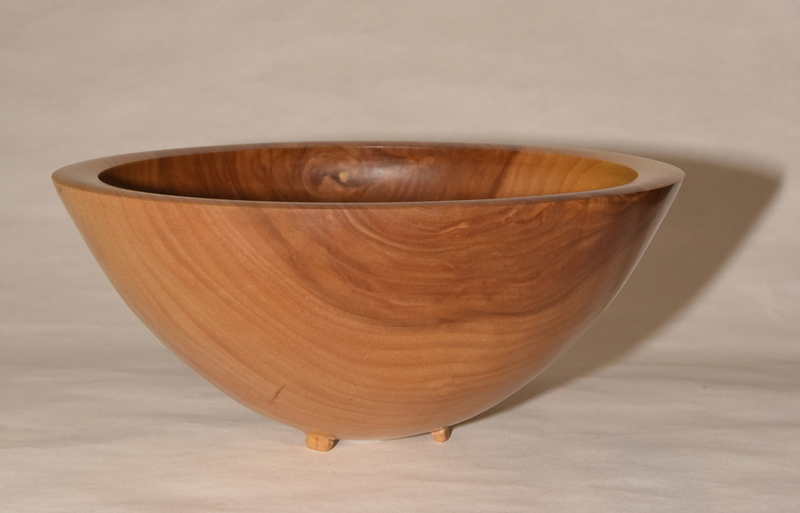
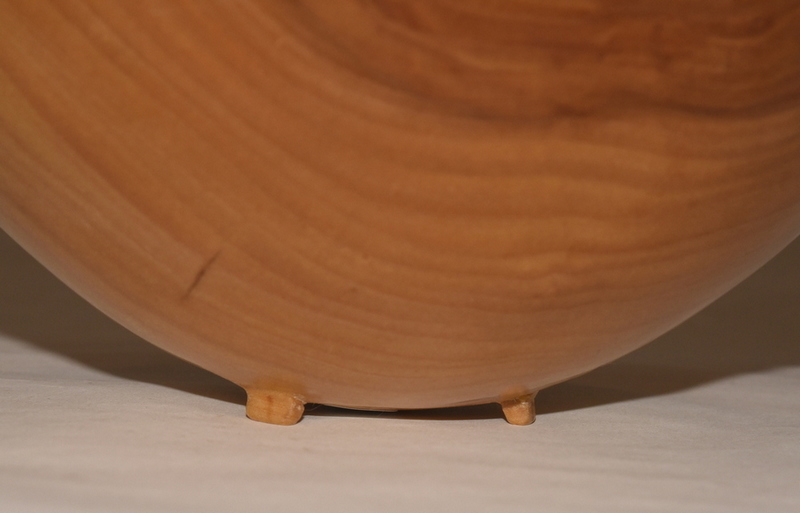
Just a chokecherry bowl with three feet. I have been doing a little more carving of feet on pieces as people really seem to like them. And with three feet one never has to worry about it sitting solidly on the table. This bowl is about 8 inches in diameter and 4.5 inches tall.

The photo on the right is just a close up of the feet.

Finally, my last entry for 2024.

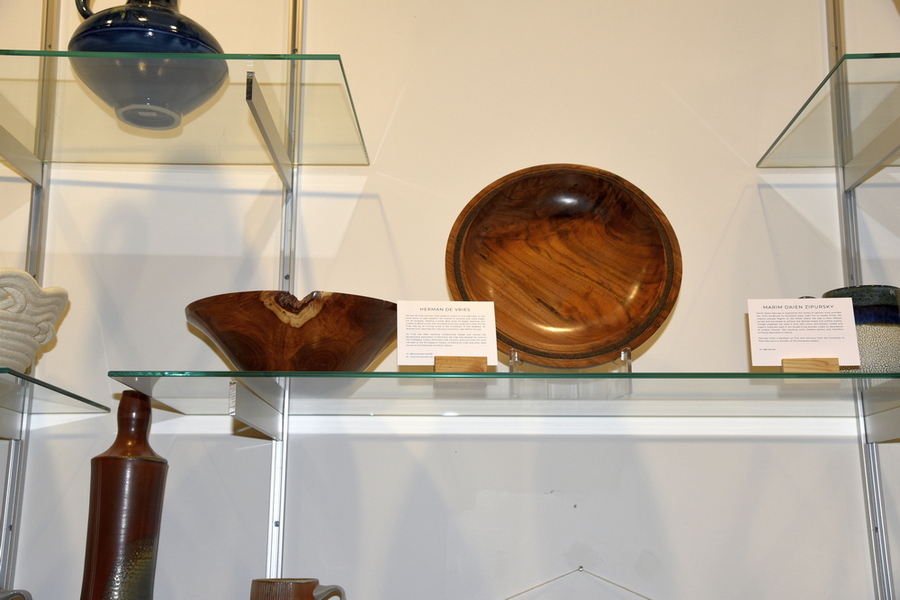
I was pleased when the Manitoba Craft Council asked if they could have my bowl for their permanent collection, and I was only too happy to let them have it.

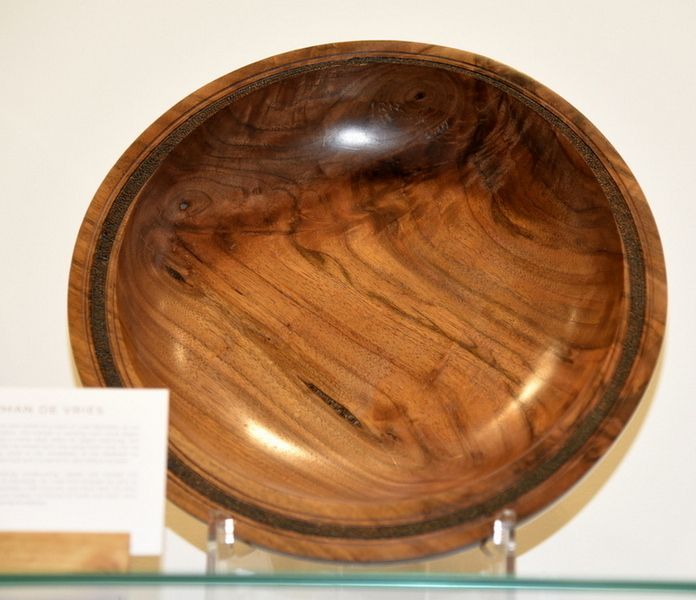
The walnut bowl is an offset rim design with a matching offset texture on the rim. The shallow bowl is about 3 inches deep and 11 inches across.

The left photo is with the bowl on display, and the right photo is a closeup of the bowl.

Thank you, Manitoba Craft Council.