

2022 Turnings |
|---|
Truth is - I am slowing down. I just had my 80th birthday, and to be honest, going into the shop and turning has not been as much fun lately. Seem to have lost my mojo somewhere and I am waiting for it to return. It does not help when the galleries are not taking work or shutting down and I feel like I am just stockpiling stuff. I think I need to see some sales light at the end of the tunnel to keep making. In addition, I hurt my back at the gym and have been a bit sidelined.
Regardless, I am not complaining. I know every artist, maker, or creative person goes through dry spells. This is no different, and I am fortunate that making things is not needed to put food on the table.
So, join me again for the journey through 2022. Again, I hope my work and sad attempts at humor, and perhaps a bit of creativity can be a brief and comfortable place for you to visit.
I love hearing from you, so feel free to let me know you were here.
I can't believe I am actually going to get started on my 2022 page. After all, it is just the middle of June, 2023. What's the hurry?
|
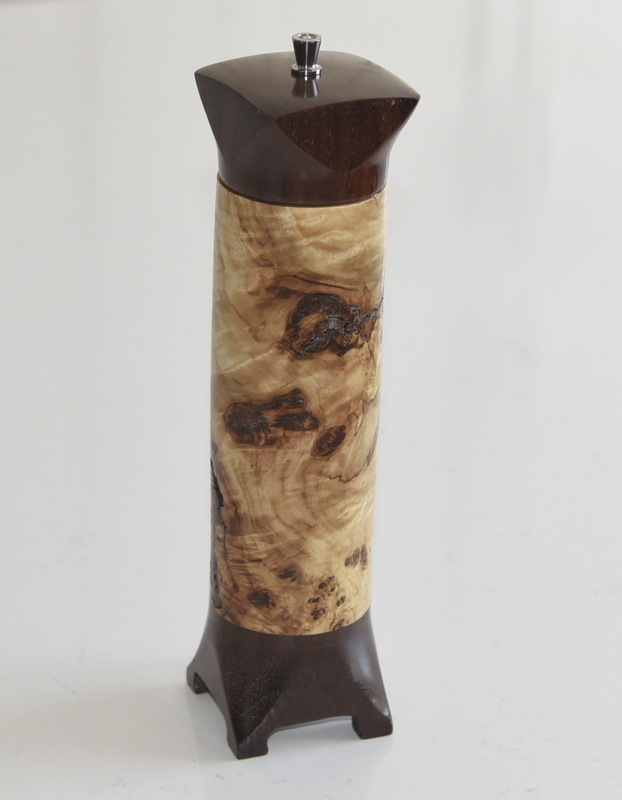
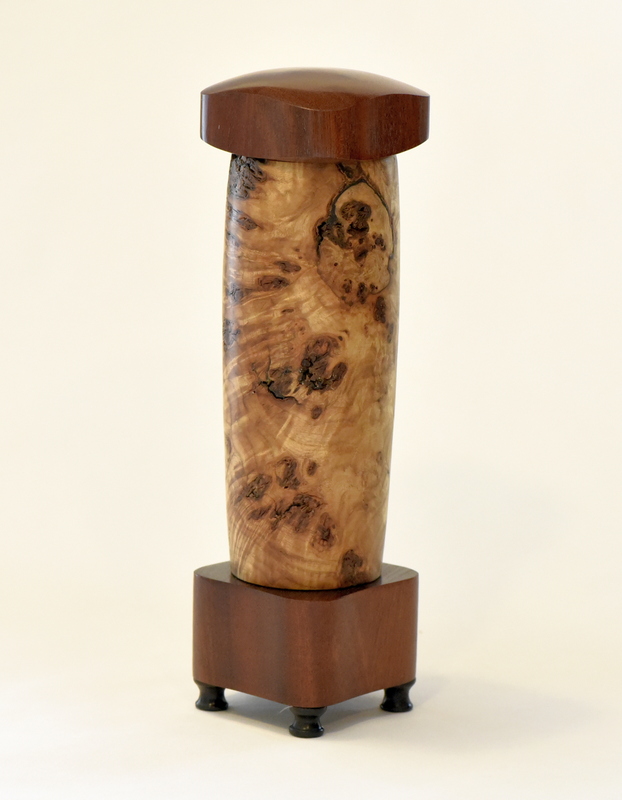
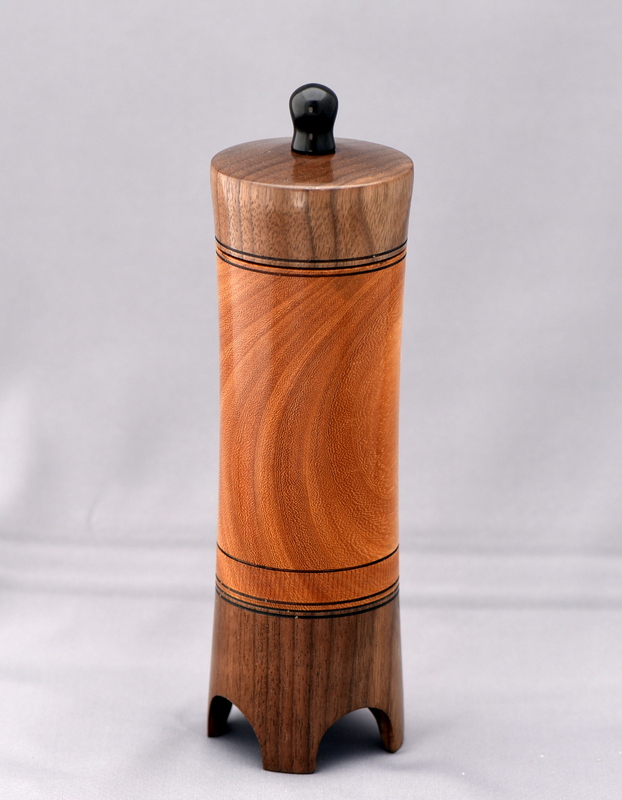
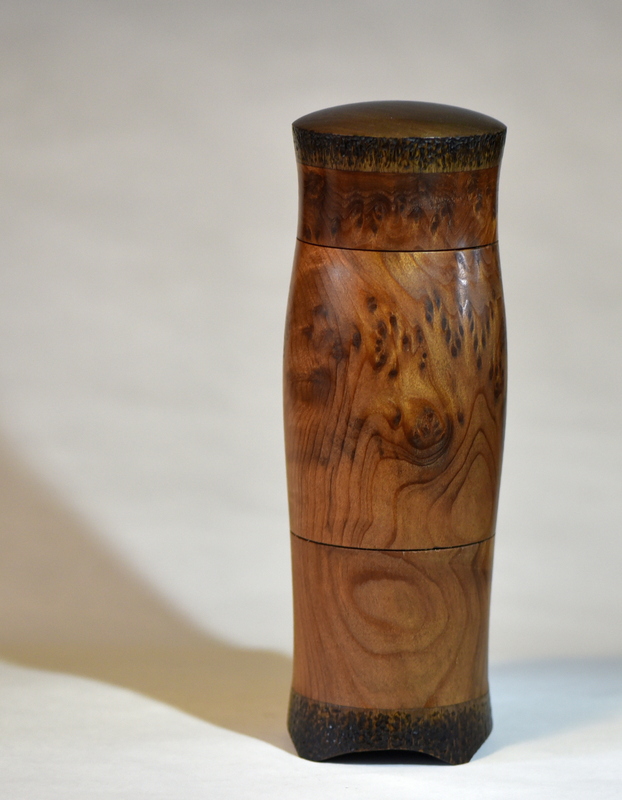
I said that 2021 was the year of the peppermill for me, but the bug got to me, and I have continued along that path. I think of peppermills as an art opportunity and have tried to think outside the normal box for peppermill design. Some of these may show that. In previous years I did mills that retained bark and branch nubs poking out the side of them, or made from seed pods, but the overall shapes were still similar. In looking at these, I have succeeded in putting myself in a box of my own making, and now need to work at escaping it. But still, these are somewhat different than the normal grinders you see on store shelves. I want my mills to be a conversation piece at the table for guests. The top left is a normal peppermill (with a central post) made of Manitoba cottonwood burl with a cap and base of walnut. I loved the color match of the walnut with the darker elements of cottonwood burl, and I loved the contrast of texture between the smooth walnut and the haphazard surface of the cottonwood. The top right is a similar peppermill of the same woods (cottonwood and walnut for the base and top), but with a Crush Grind ceramic mechanism. The user holds the base and turns the entire body to grind the pepper as opposed to turning the top. On this peppermill, the top cap unscrews to fill the peppermill. It can also be used as a salt mill as the ceramic will not corrode like metal does in contact with salt. I turned some little cabinet feet of ebony and kept the cap and base square. This is a very different mill. Bottom left is a 10" peppermill made of osage orange. Osage orange is not a local wood and when I found a couple of pieces at Windsor plywood, I grabbed them. It is a beautiful wood and a joy to finish, and I do not understand why so many turners hate it. I love it and matched it with an unknown wood for the cap and base, I think it made a very attractive mill. The silver knob has been covered with ebony. Like many other peppermills I am doing, I put exaggerated feet on this, and after it was completed, I added some lines and texture which it seemed to need. The piece on the bottom right is from my treasured stash of thuya burl, and a remnant of another larger piece. It has a "Crush Grind" ceramic mechanism which is not suitable to use with soft woods. Thuya is a very soft wood, but I developed a method of using an insert of oak that I then glue into the soft wood and makes it very strong. So, this peppermill (or salt mill) is due to last for a very long time. I use PVC threaded inserts on the cap that unscrews to fill the mill. Because the mechanism is ceramic it can also be used with salt. I always turn the centers of my mills. The normal mills are made by just drilling out in the center and leaving it that way. Mine are turned and sanded smooth and follow the outside shape. It's just a matter of pride for me and attention to detail, and it makes a mill with way more capacity. That makes a huge difference considering the rapidity with which we go through pepper in our house.
|
|
|---|---|
 |
 |
 |
 |
|
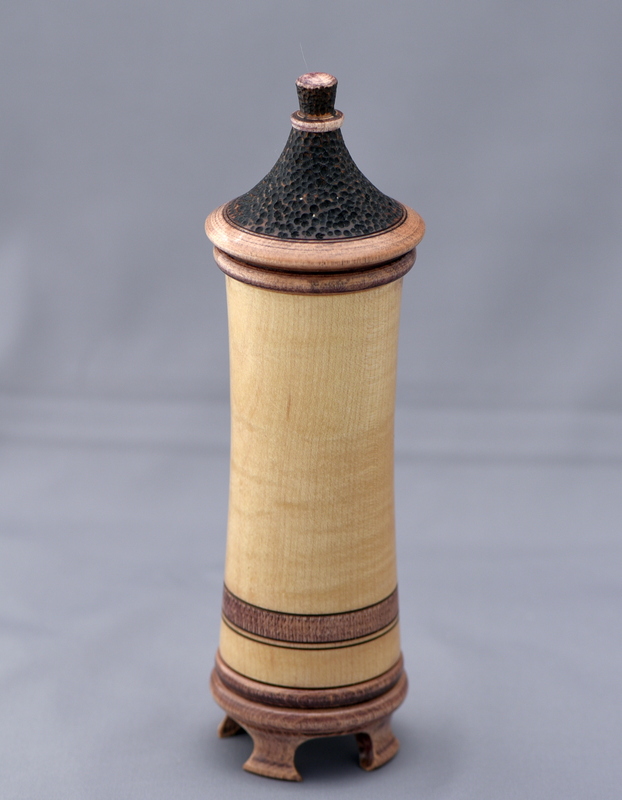
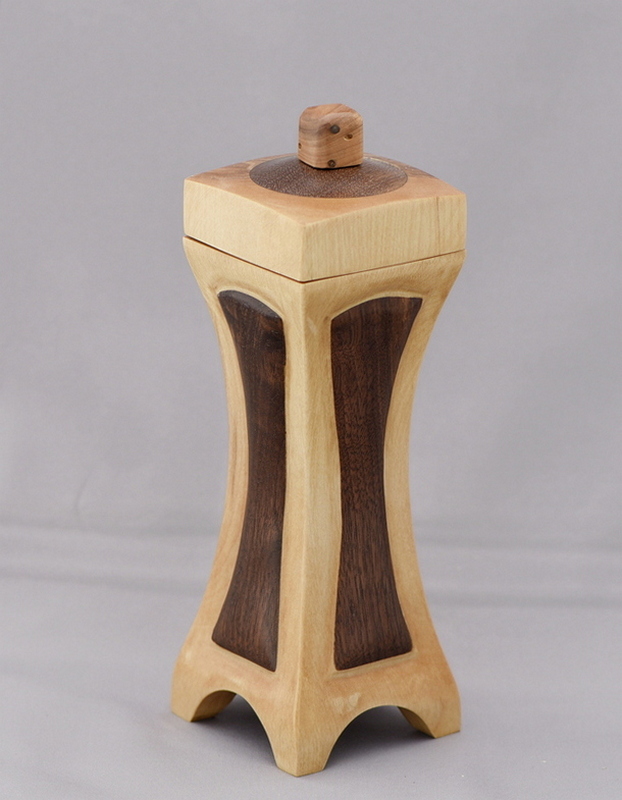
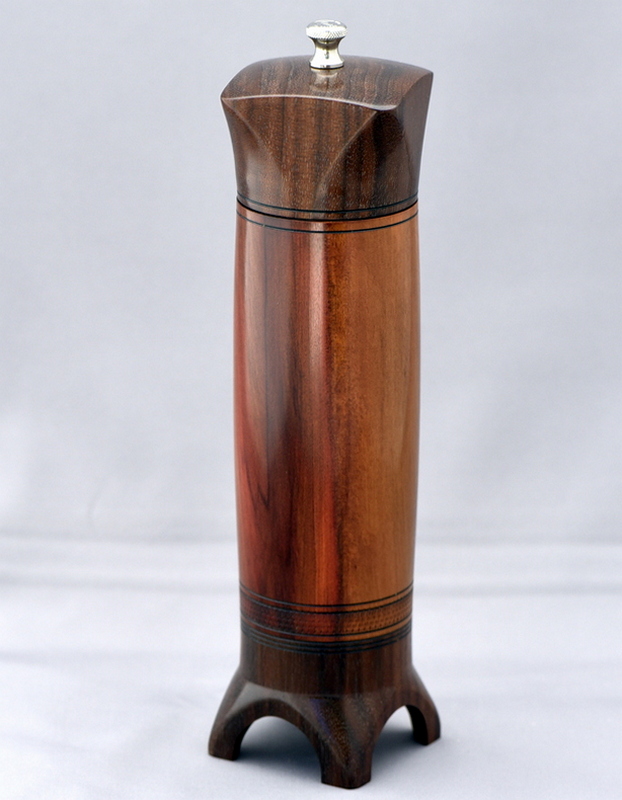
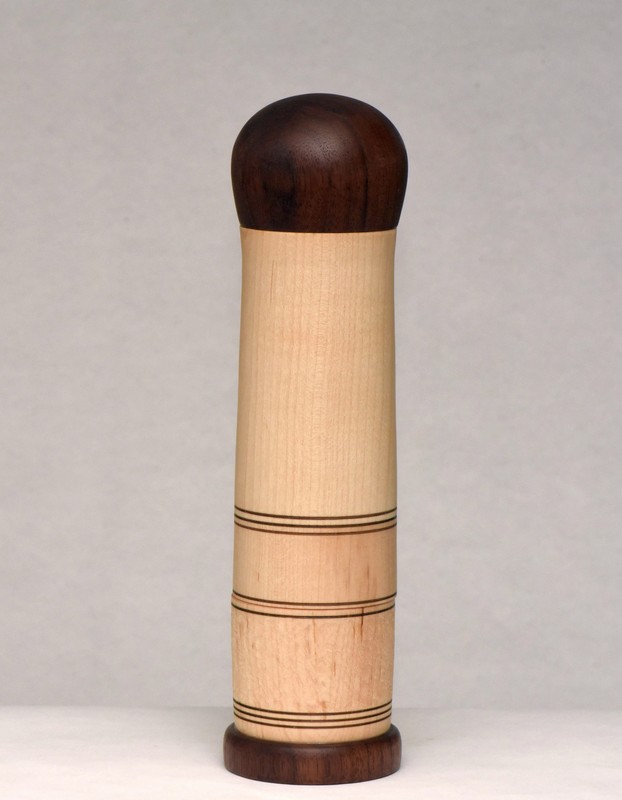
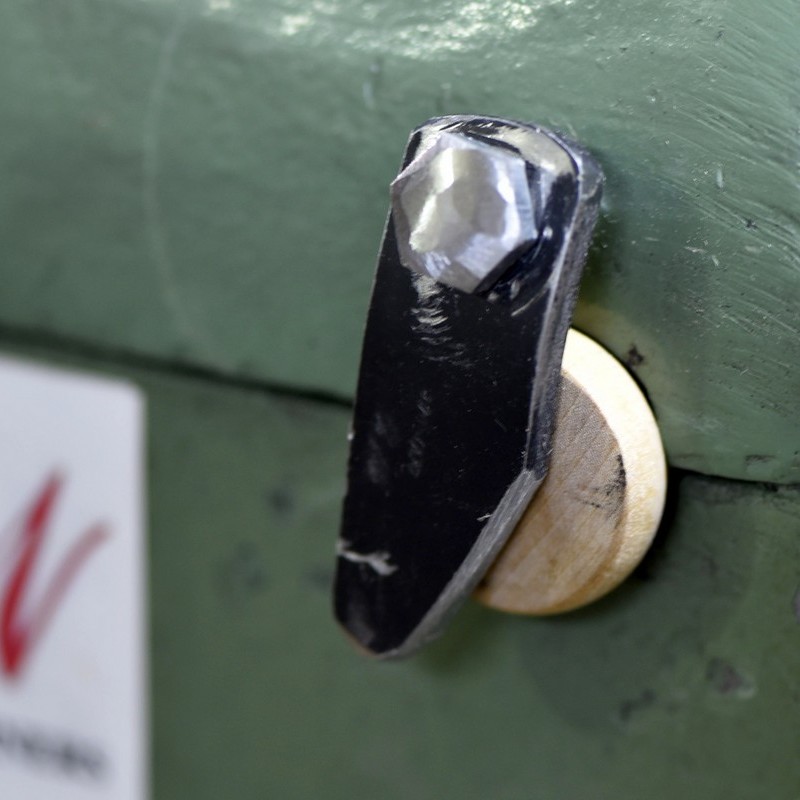
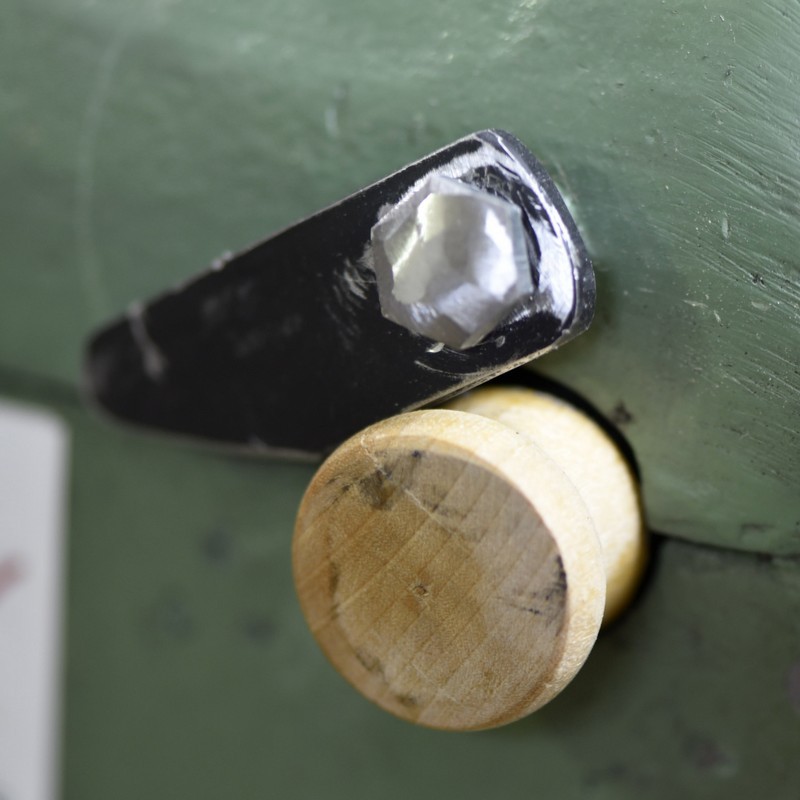
Here's 4 more pepper and salt mills, and they tend along the same lines as the previous ones. The top left one is made of maple, and while I liked the shape I came up with, I knew it needed some texture to give it some "oomph". It is also a normal peppermill with a central post, but the little silver nut on top has been covered with a maple button. I never liked the distraction of those little silver knobs, and now I often cover them with wood to match. This peppermill is all from the same piece of wood, with a tiny bit of stain to differentiate the cap and the base from the body of the mill. The top right one is also made of maple, and I like the squared off shape I came up with last year. Someone had commented that the sides provided a canvas for augmentation or some kind of artwork. Instead, I decided to give the maple body some walnut inserts, which I shaped and steam bent before attaching them to the four sides. Again, the little silver nut on top has been covered with a wooden button. Bottom left is a 10" peppermill made of an unknown wood of exceptional beauty, with a walnut cap and base. I get wood from many sources and tend to be nonchalant about noting the species and from whence it came (you know - I surely will remember that........ well - I don't). This is a traditional mill with that hated silver knob on top, but it's too late now. I still think it made a very attractive mill. I have Eiffel tower feet on this, and after it was completed, I added some lines and texture which it seemed to need. The piece on the bottom right is simple maple and walnut for cap and base with a Crush Grind ceramic mechanism. Because the mechanism is ceramic it can also be used with salt. I use PVC threaded inserts on the cap that unscrews to fill the mill. As usual, the centers of these mills are turned and sanded smooth and follow the outside shape. It's just a matter of pride for me and attention to detail, and it makes a mill with way more capacity.
|
|
|---|---|
 |
 |
 |
 |
|
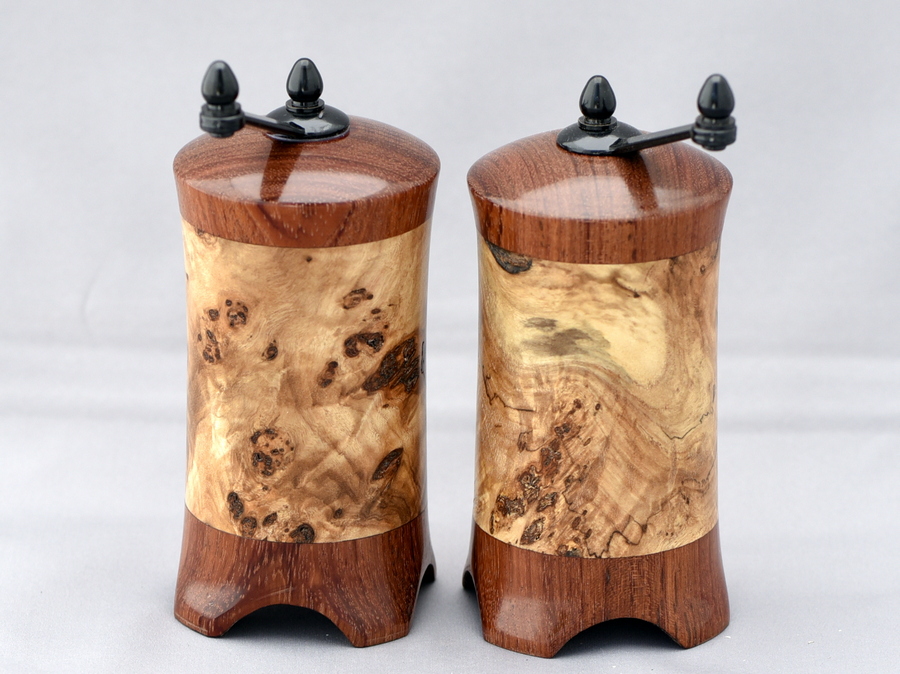
Not all the peppermills I turn have to be big. These two little mills are a salt and pepper set that we use on the island dining space in our own kitchen. They have ceramic mechanisms and are made of cottonwood and some species of ironwood. The little handles on top make them easy to use.
|
|
|---|---|
 |
|
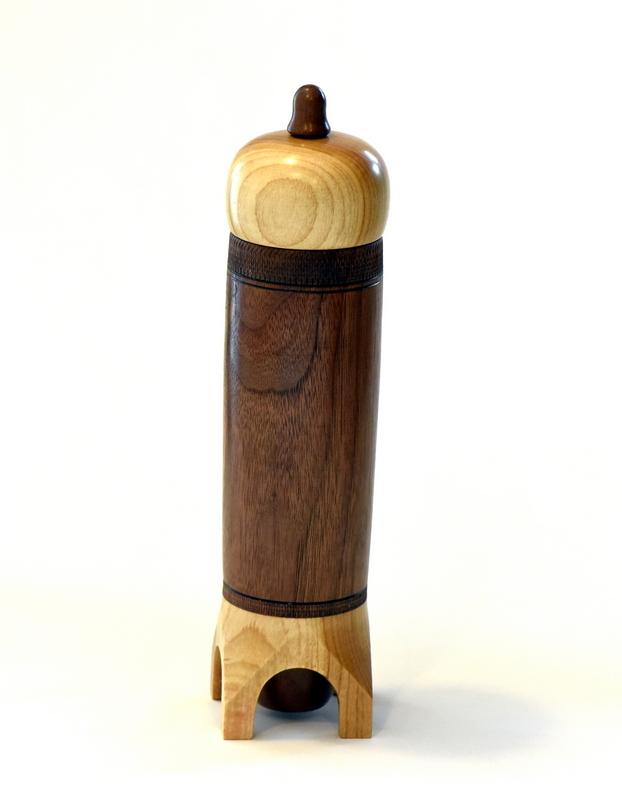
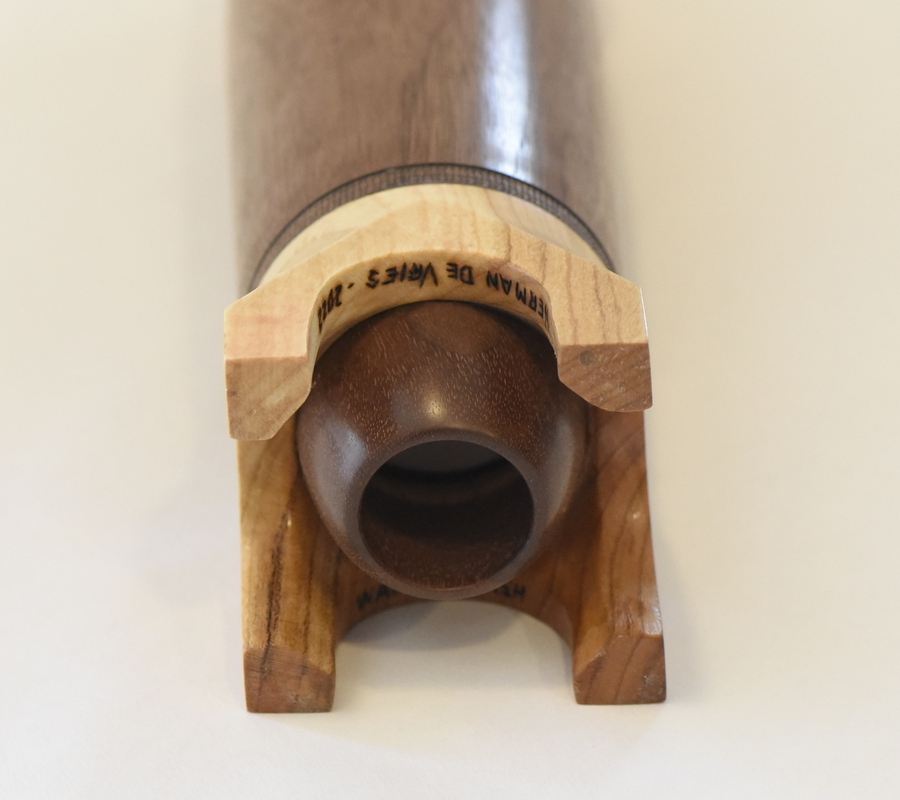
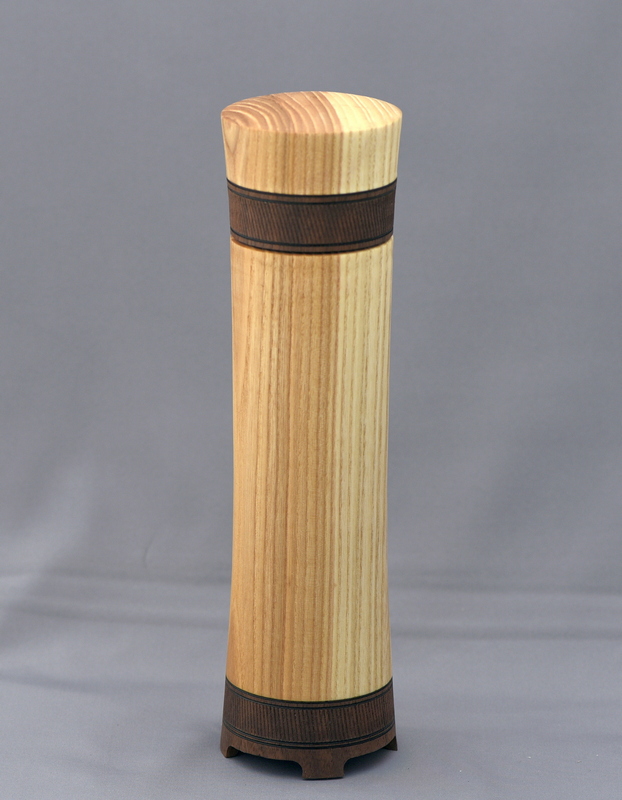
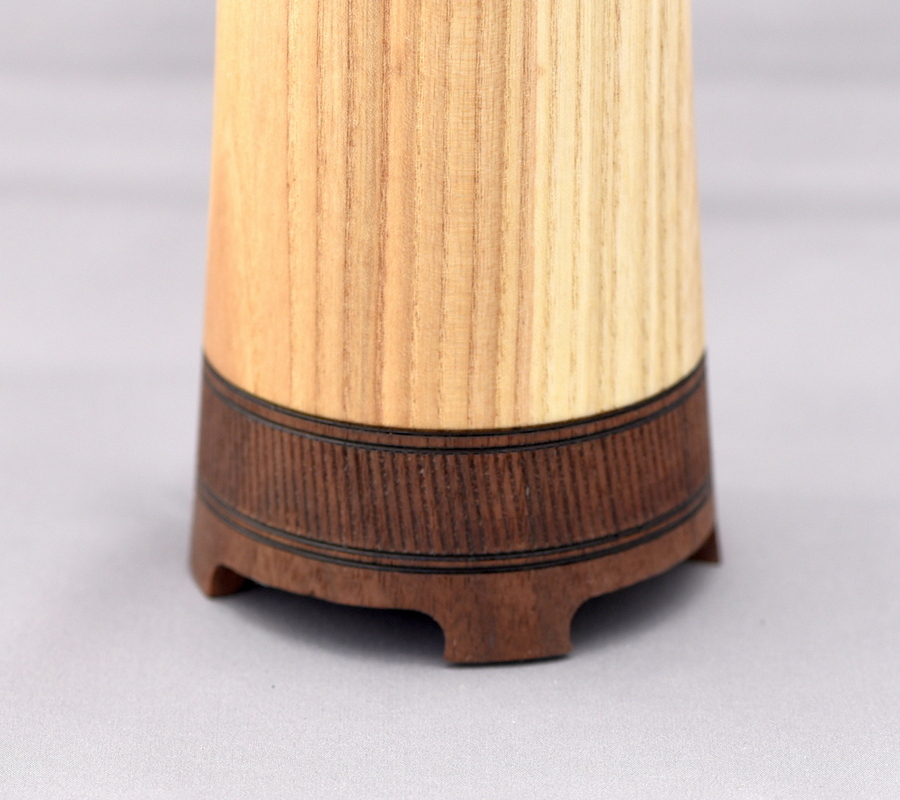
Two last peppermills Top left is a 10" mill I call the "Rocket Mill". I hate it when a peppermill scatters pepper all over the place and not just on the plate, so thought maybe a "chute" at the bottom would help guide the ground pepper as it came out the mill. It worked beautifully but was a pain in the butt to devise and construct. And when it was done, it looked like the base of a rocket - hence the name. It's made of walnut with a chokecherry top and base and a walnut "chute". There is a closeup of the bottom of the mill in the right-hand panel. Bottom left is a 10" mill of ash with walnut accent at the top and a walnut base. I like the effect of the texturing, although I have not used it much, but used it here on the walnut base and on the accent ring. The right-hand panel shows a close-up of the texturing on the base.
|
|
|---|---|
 |
 |
 |
 |
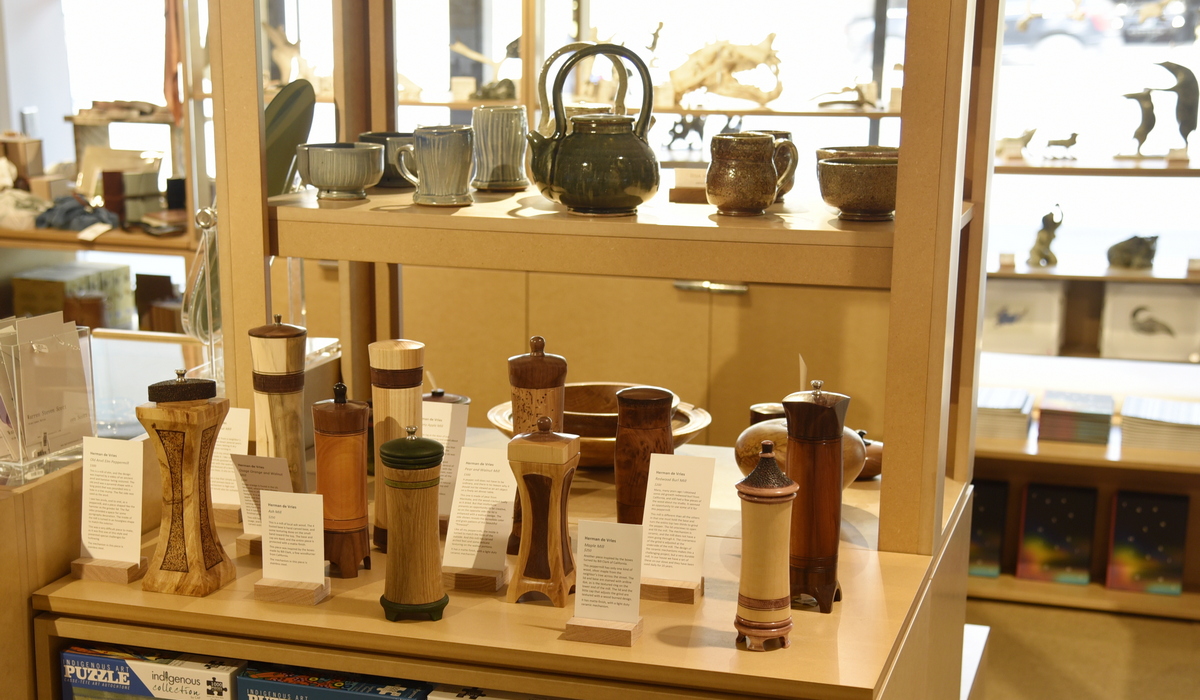 |
I have always cherished and been proud of my relationship with the Winnipeg Art Gallery, and they have treated me well over the years. During the Covid pandemic, there were many obstacles in the way of many galleries, and the WAG was no different. They closed their outlet at the "Forks" area and remained closed at the main outlet for quite a lot of the time while trying to renovate their space at the same time. Naturally, sales dropped. | ||
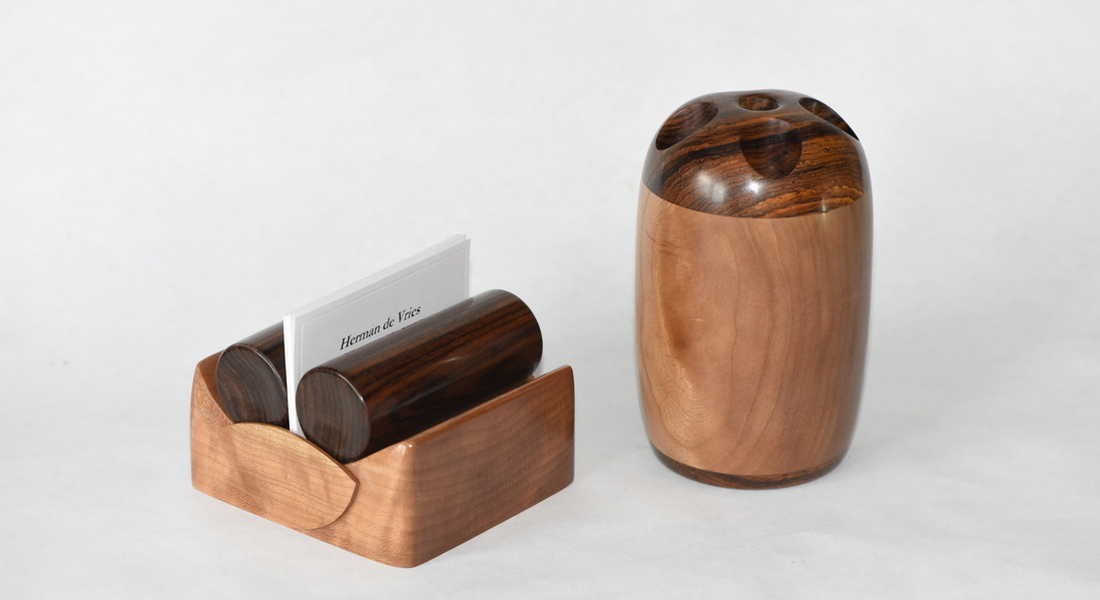 |
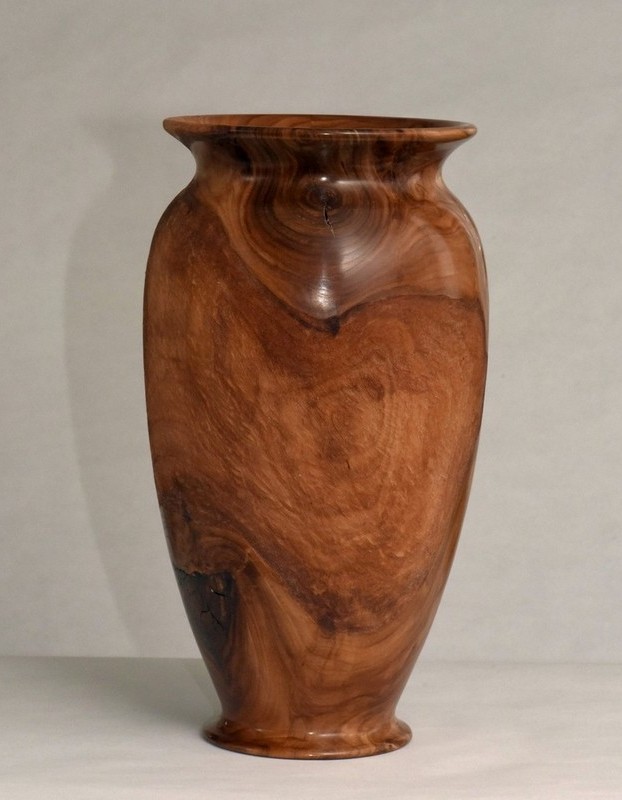
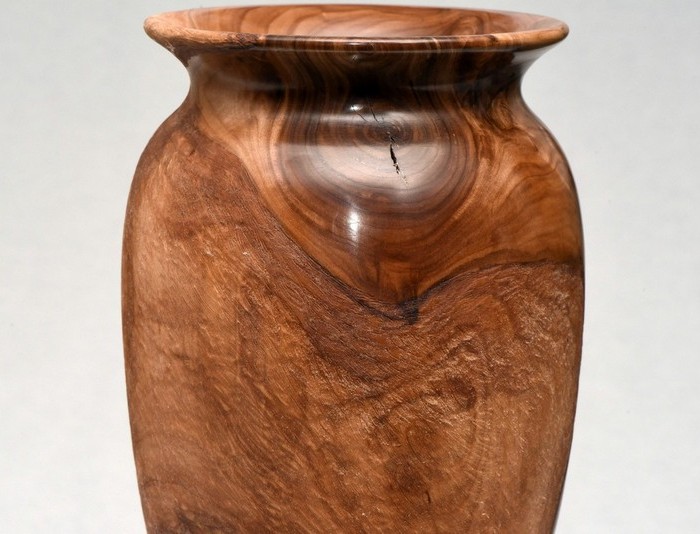
A Winnipeg client had purchased several items from me over the years, and she called and asked if I could create an unusual set for her son's desk. He had recently passed the bar and was practicing law in Calgary. I came up with several different ideas, including this one. I thought I came up with it on my own, but long after these were done, I found a card holder in this style in the archives of the World of Woodturners. So, at some time in the distant past I had seen the idea, and it remained in my subconscious. So, the idea was not original after all. | 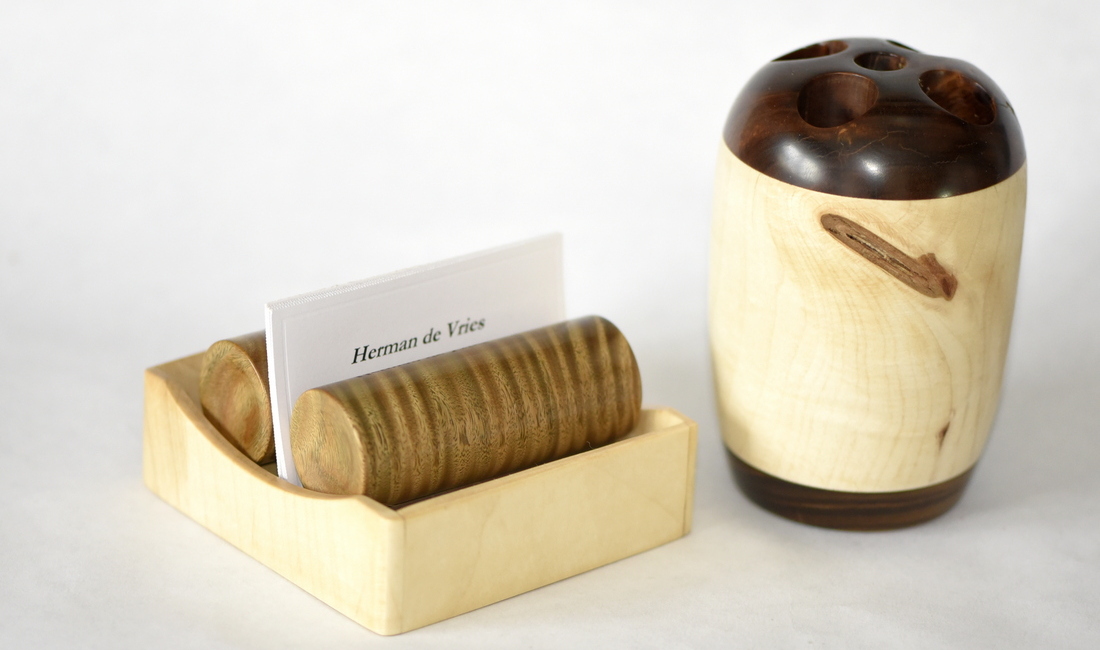 |
||
 |
 |
| |
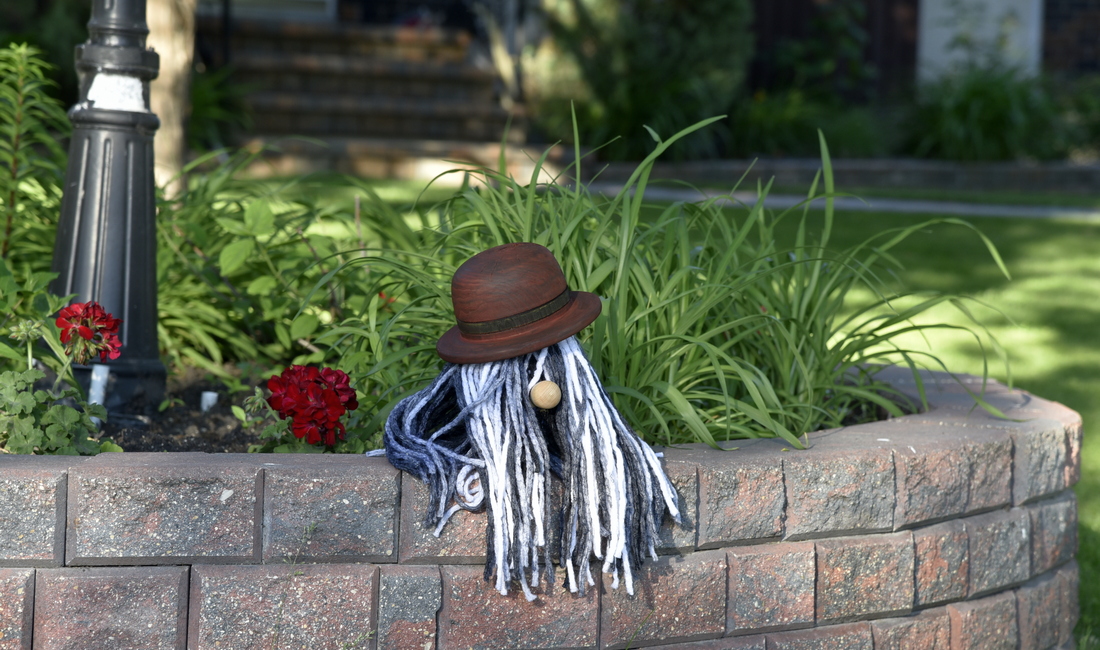 |
Scared the heck out of me, he did. Imagine coming out of your front door and finding this intruder casually relaxing in the sun in your flower bed? | ||
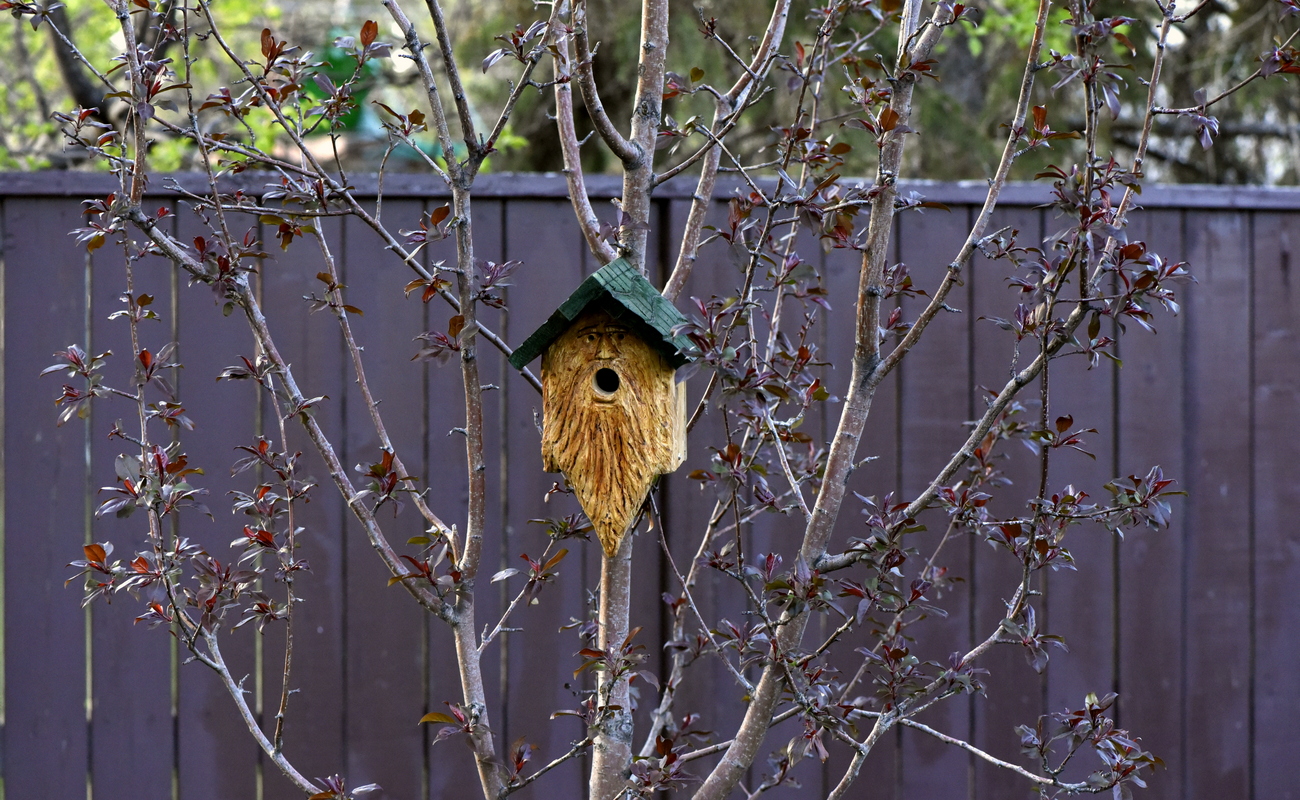 |
I don't carve very much, and it shows here, but I could not resist. Having gone down several rat-holes on YouTube at the computer out of sheer boredom, I ran across some guys making spirit birdhouses. I thought they looked like fun to make and we needed some birdhouses. | ||
 |
 |
| |
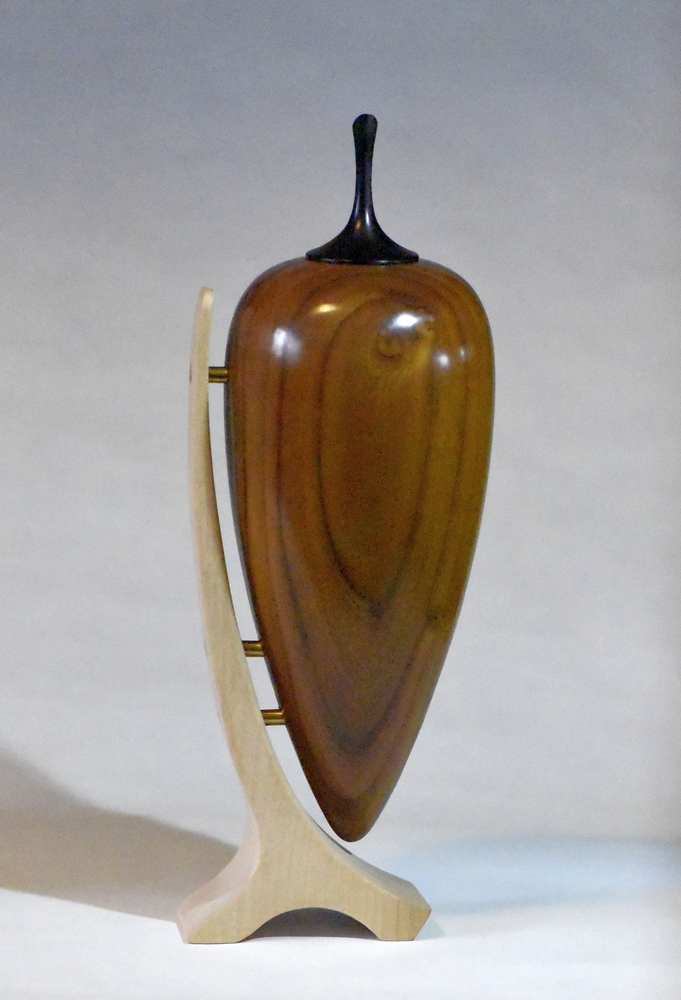 |
I have one final piece to show for this year | ||
|
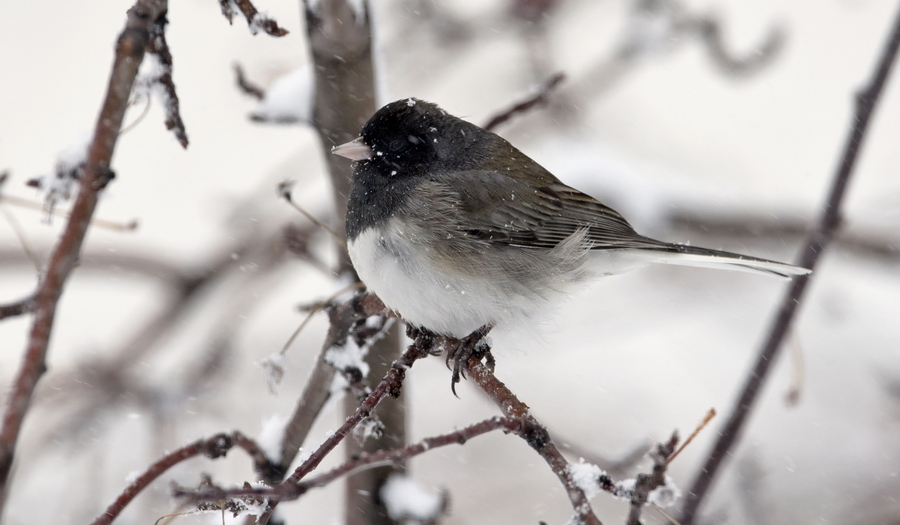
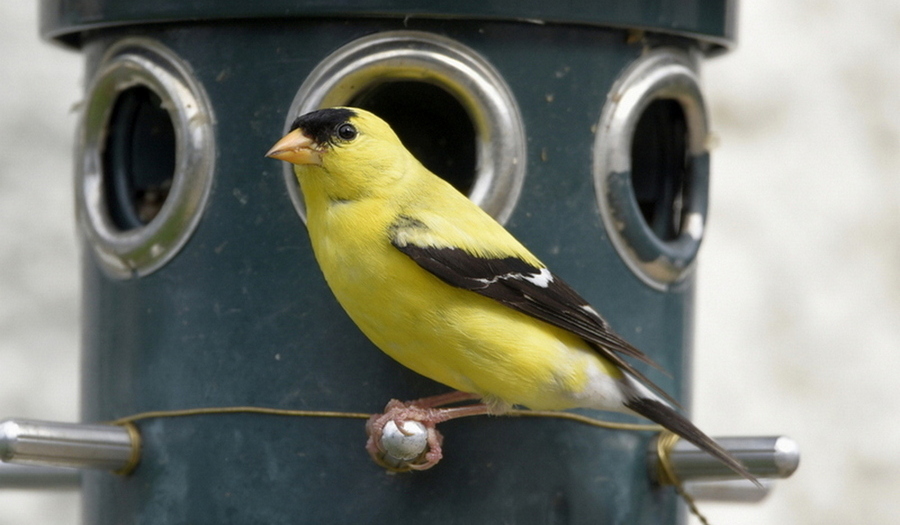
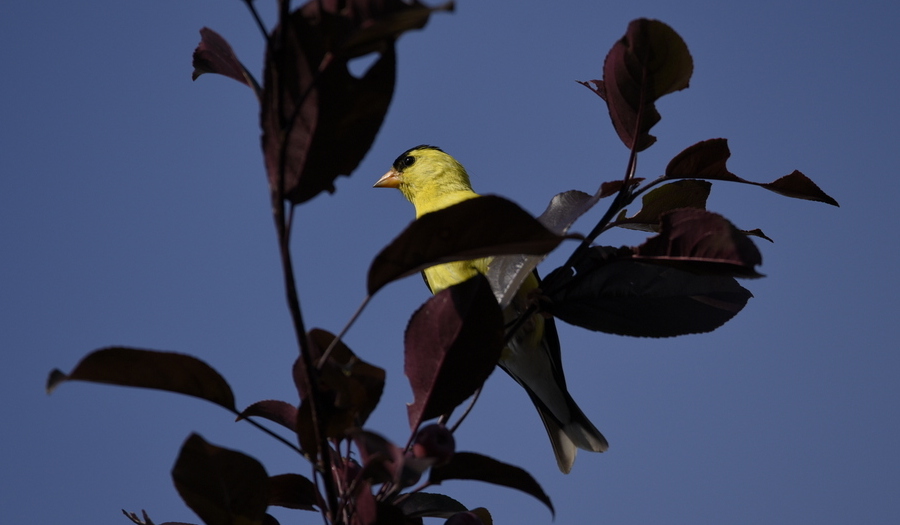
We like birds and they like our back yard with all the flowers, trees, grass and birdie restaurants. The expensive little critters bring us a lot of enjoyment, and I spend a few leisurely afternoons under the umbrella taking photos. Here are just a few. First - A chickadee. Second - A finch at the feeder. Little gobbledy guts are almost impossible to photograph without a mouthful of food. Third - Another finch. This time in the tree. They are beautiful little flashes of yellow about the yard and have a beautiful call. Fourth - A dark eyed Junko. Fifth - When spring comes the robins flock to our yard to grab worms, then seem to disappear for the rest of the year. This one found breakfast. Sixth - The bird of the north, the famous Canada goose. They live by the thousands on our ponds close by, and like my lawn because I keep it watered and green. They are a remarkable bird, with a lot to teach us as humans. Especially, they have a selfless approach to child raising, where most of the adults go off to feed during the day, but there are three or four pairs that stay behind with the hundreds of babies. They shepherd them from pond to pond, stopping traffic, looking after the kids every minute of the day. They mate for life and are fiercely protective. I would sooner face a Rottweiler as an angry goose.
|
|
|---|---|
 |
 |
 |
 |
 |
 |
P>