
2019 Turnings |
|---|
I think you may find there are a few things different, and there have been a few areas of artistic growth. But, on the whole, I still pretty much spend my time doing comfortable things. I can't help the fact that I love to turn bowls, so that is mostly what I do. I no longer am going to post a lot of them here, and I am probably going to keep my pages a bit shorter. No sense posting dead ringers to what I have done often before.
Anyway, join me on this trip through 2019 and enjoy the voyage. I just hope someone is helped or entertained by what I put on the pages.
As usual, I love hearing from you, so feel free to let me know you were here.
It is now August, 2019 as I begin work on my 2019 pages, and I am struck by the thought that here, on these pages, is the last 22 years of my life in wood. That time has gone by in a flash, and the best thing about it is - I have no regrets. Were I to do it all again, I would have preferred that I had experienced no accidents, while at the same I rather think I could have taken more risks with my art. All the same, I am pretty happy.
|
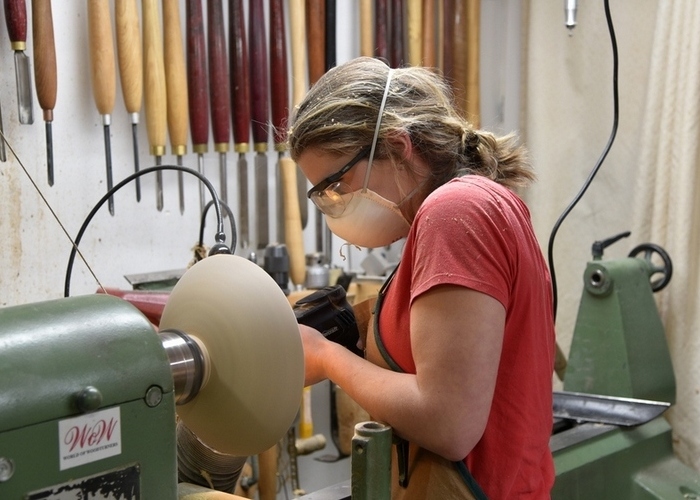
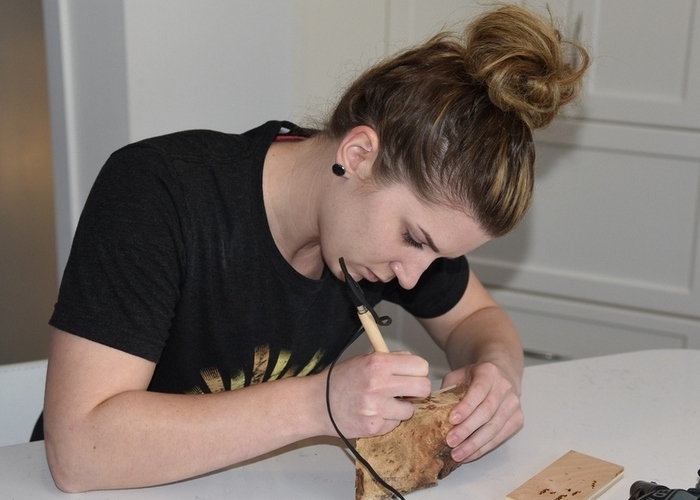
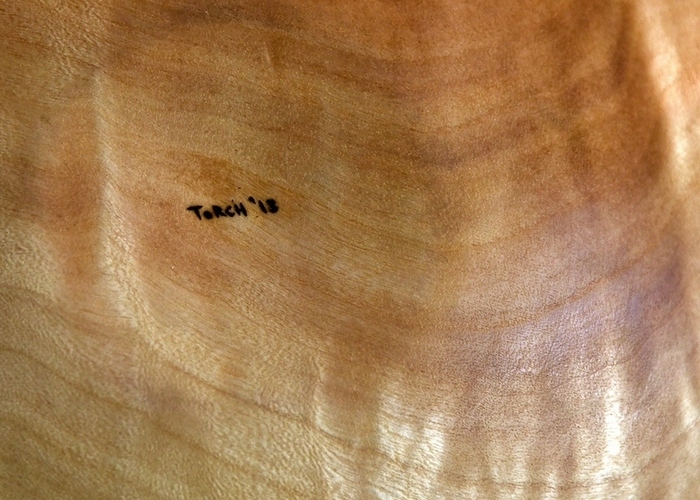
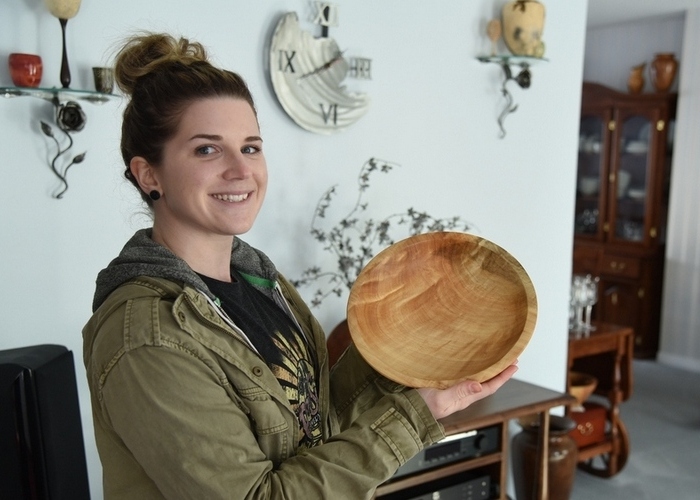
We begin 2019 with Morgan, a lovely young woman who approached me at the Crafted show at the Winnipeg Art Gallery. She had a simple request. She just wanted to turn a bowl for herself. Was not interested in learning the whole gamut of turning - just wanted to turn one bowl. I agreed and she came over to the shop several times to do her bowl. For the bowl, I provided her with a piece of mappa, a poplar variety that comes from Austria as a table top slab. So, we were limited to a fairly shallow bowl. The first photo shows Morgan at the lathe. The second shows her practicing her signature with a burning pen, and the third shows the signature "Torch" on the bowl. The final photo is the one that tells it all. Morgan holding her finished bowl with pride. She turned a beautiful bowl, and I am proud of her for her determination and effort. I only did a finish cut for her to eliminate some grain tear out, but the bowl shape and all is entirely hers. And she is, right now, working on a second bowl for her mom.
|
|
|---|---|
 |
 |
 |
 |
|
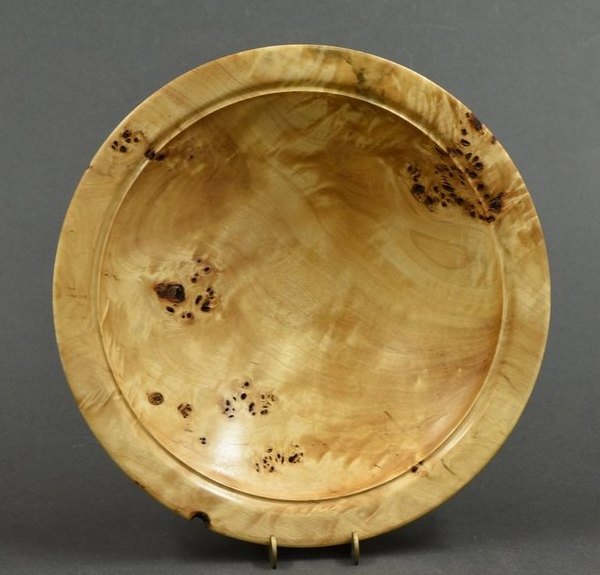
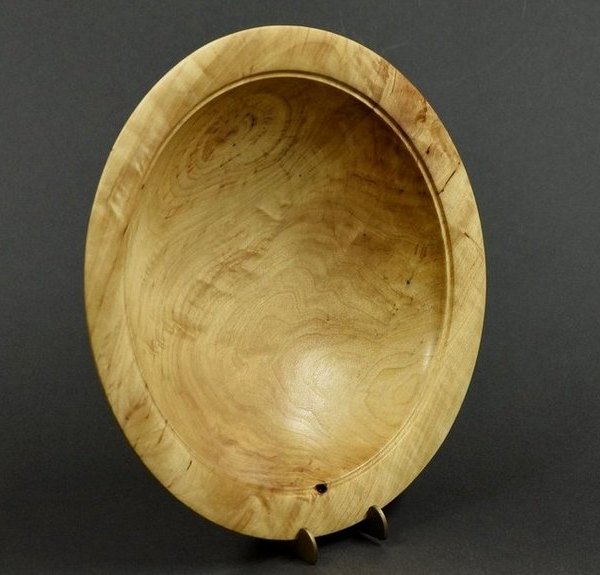
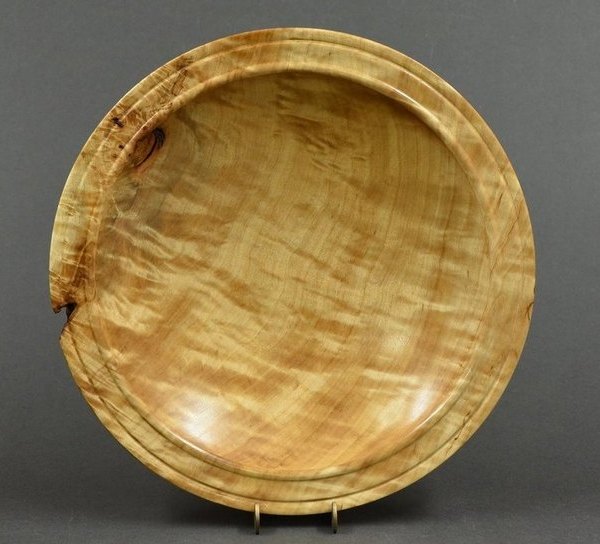
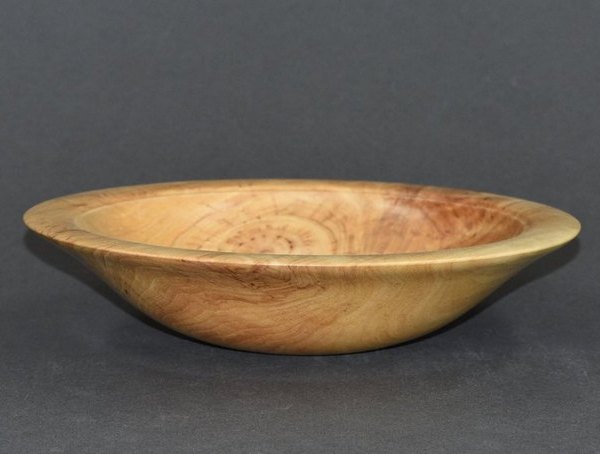
As I said, I had provided Morgan a piece of mappa to turn her bowl. I came across the mappa table slab at Windsor Plywood, and it was about 12 feet long and 3 feet wide. It was expensive, but gorgeous. I pondered the purchase for weeks, finally went in to buy it and was told it was sold. Turns out the store manager bought it for a table. Well, Paul said he only wanted about 5 feet of it, and I agreed to buy the rest. The photos below show the result of the purchase, and I still have half of what I bought. Being only 3 inches thick it is a bit limiting, but you cannot beat the beautiful patterns and chatoyance (cat's eyes) of the wood. It is fairly soft and stringy and hard to get a clean cut, but the end result is worth the effort. Here are four bowls (platters) that I turned of the wood. They are all different pieces and are finished with Danish oil. The first three are about 13" in diameter and the ogee bowl about 10".
|
|
|---|---|
 |
 |
 |
 |
 |
 |
| |
 |
I am an 8-year member of a place called the Reh-Fit Center here in Winnipeg. It is a beautiful and impeccably outfitted gym with a contingent of very qualified trainers, nurses and doctors on site. It is close by and it does an incredible job in working with people recovering from heart and stroke issues. It is very popular with the general public and is a strong promoter of healthy lifestyle. It is a truly incredible place, and when they have asked for a donation I cheerfully provide something. | ||
 |
 |
| |
|
 |
|
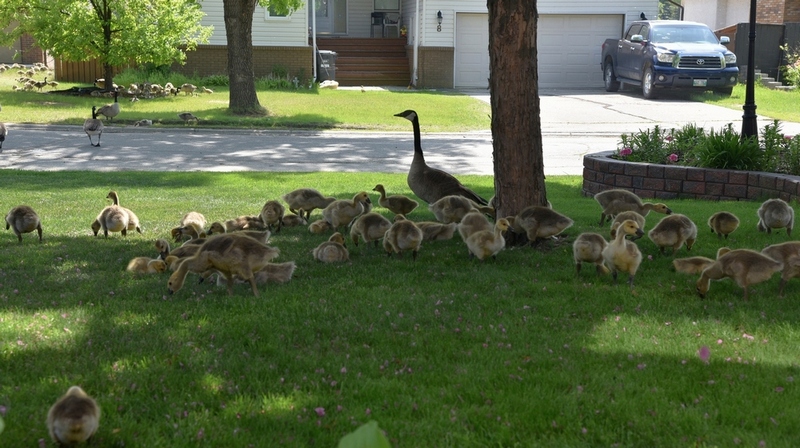
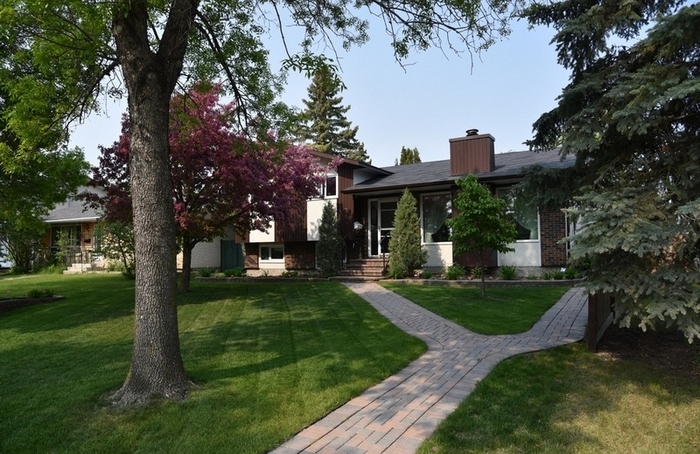
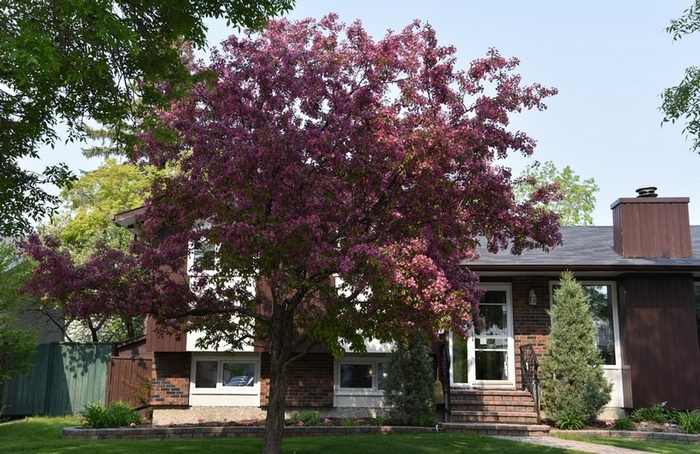
Here's a couple of pictures of our house BEFORE the geese visited. We love where we live, and taking care of the yard brings me satisfaction, while Karen tends to her flowers. That ornamental crabtree on the right is certainly holding up its end of the bargain, too.
|
|
|---|---|
 |
 |
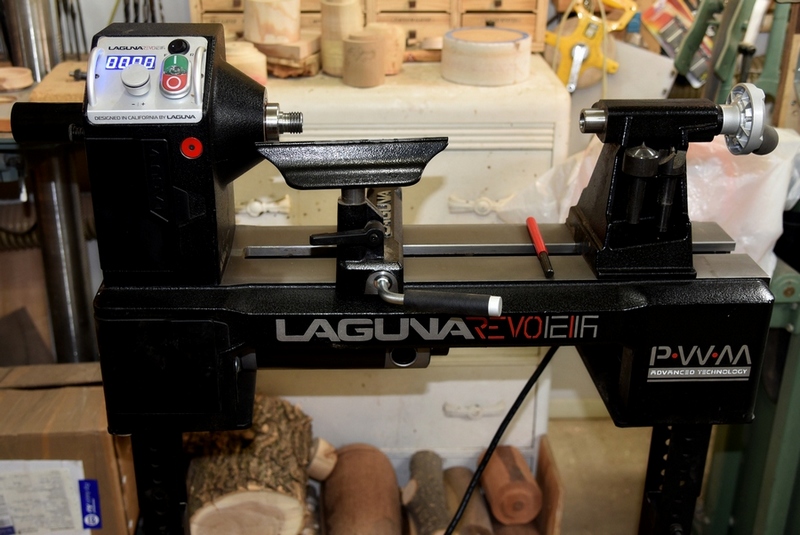 |
People said, "at your age you should not be buying new toys. You ought to be taking it easy." They fail to realize that woodturning IS taking it easy for me. It is one of the most relaxing and pleasurable activities around. | ||
|
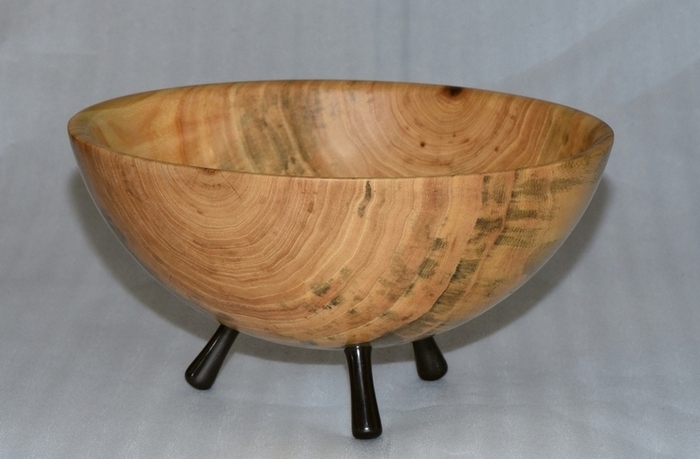
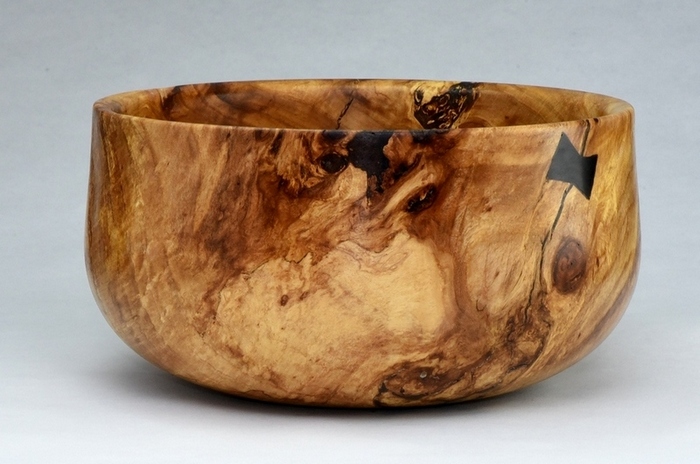
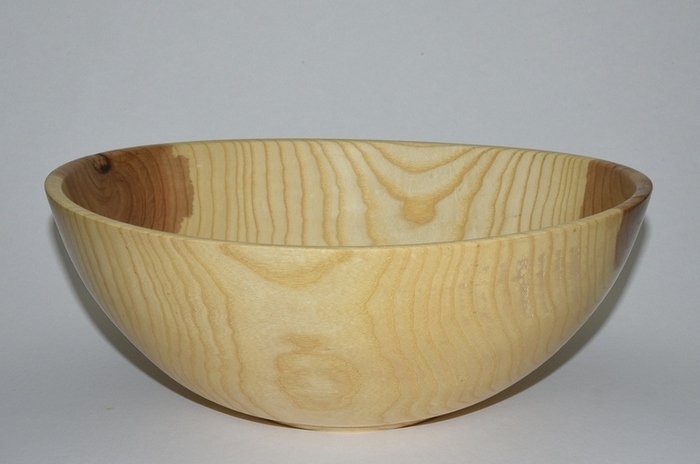
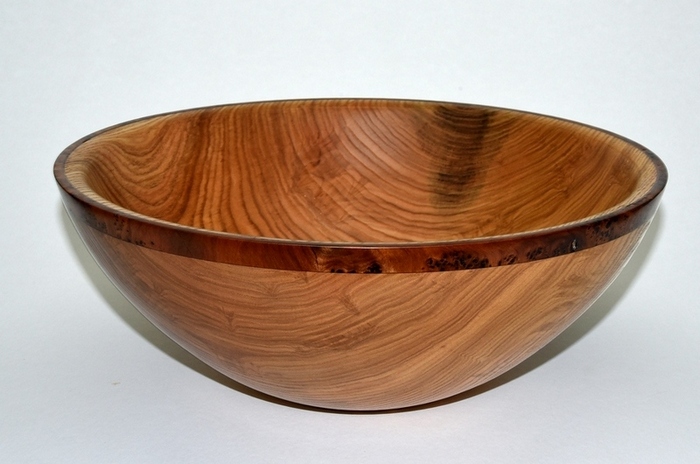
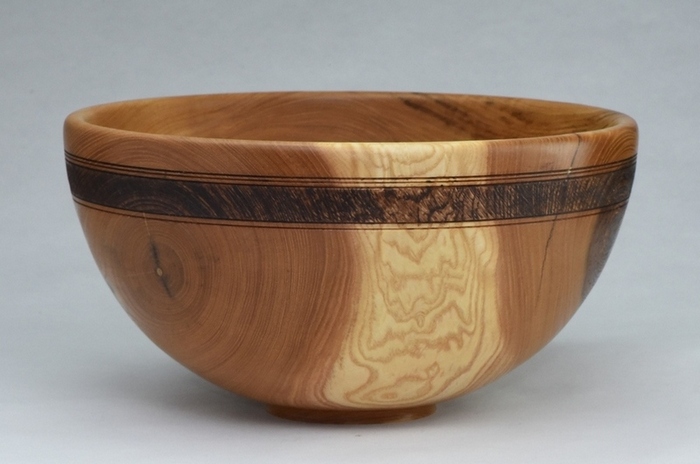
Four bowls here. Top left is a chokecherry bowl with pewas (Hawaiian - pronounced "peh-vah"), about 12" diameter. The pewas are ebony, and several are on the other side. I filled the voids in the bowl with coffee and epoxy. Buffed danish oil finish. Top right is a 13" ash salad bowl. Just a simple bowl meant to be used at the table. The interior is finished with Tried and True triple boiled linseed oil and the exterior with buffed Danish oil. Bottom left is an ash bowl, 14" diameter, with an inlaid band of thuya wood. Bottom right is an oak bowl, 14" x 7" with a band that is textured and given a bit of walnut stain before finishing with Danish oil. This one has a little foot, which is something I do not do often.
|
|
|---|---|
 |
 |
 |
 |
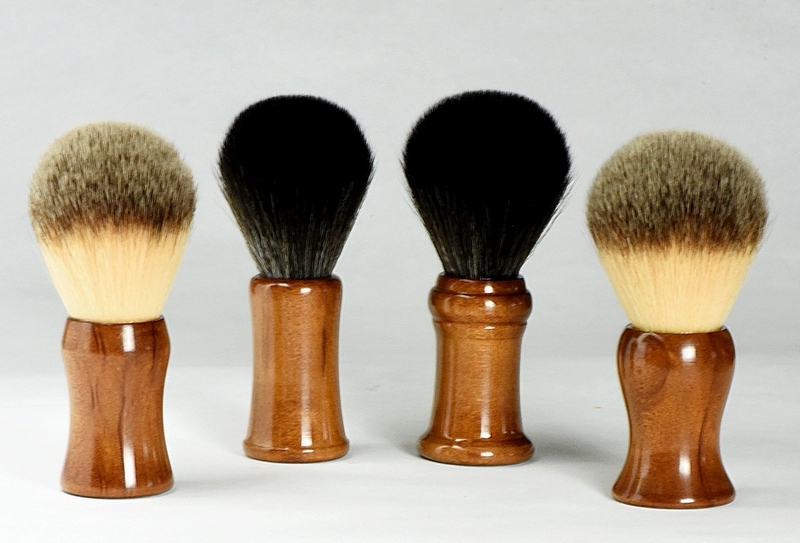 |
So, my friend Terry Scott (Timberly), sent me a small box full of ancient kauri from New Zealand. Terry is one of the world's finest woodturners and is generous to a fault in helping other woodturners. When I asked if anyone knew where I could source some unusual wood for some shaving brushes, the box arrived on my doorstep. Terry, I thank you very much and will try very hard to find the courage to carve on the small bowl you sent along. (Terry has been on my case to do more embellishment on my work and was quite specific on what he wanted me to do with a small roughed out bowl he included.) | ||
|
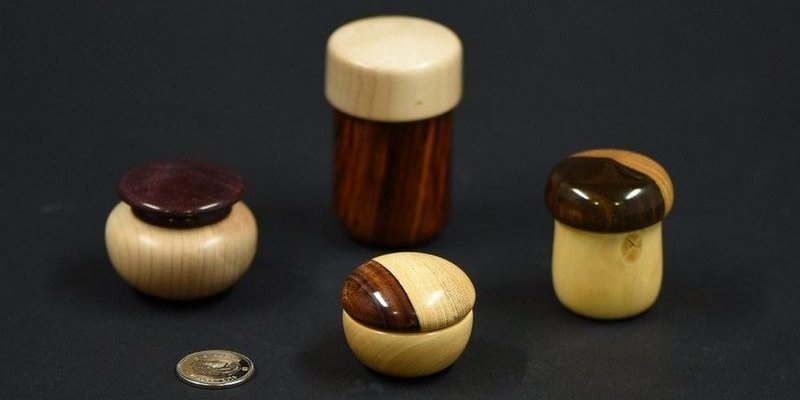
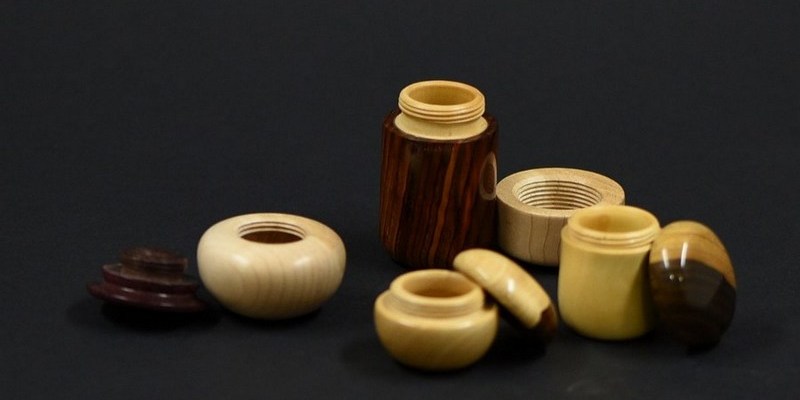
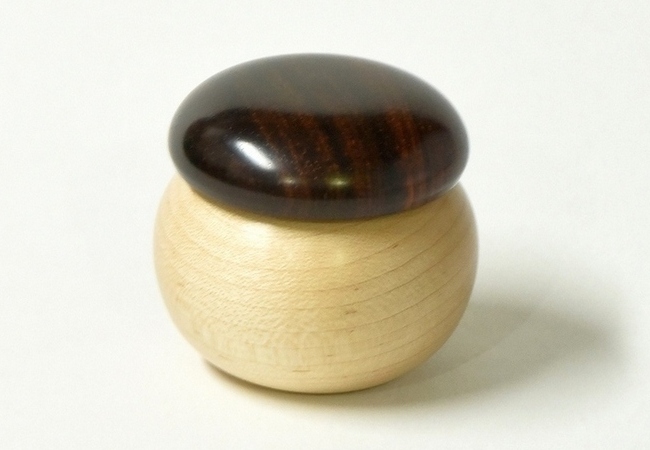
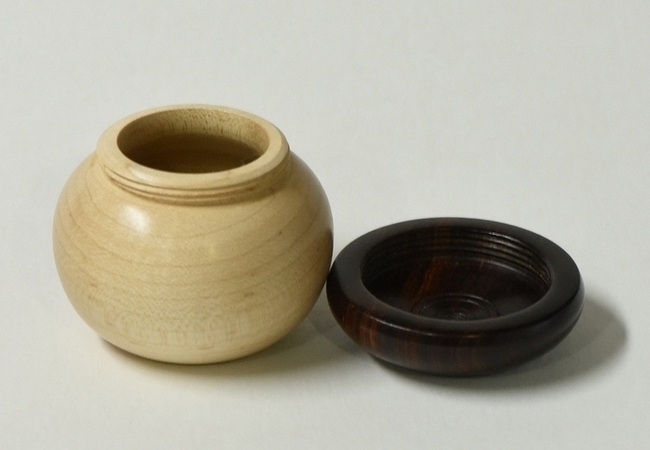
Two tiny little boxes, closed and open views A friend gave me a piece of wood - just a branch, really - that he called ironwood from Arizona. He had gotten it from a relative. The wood is very hard and heavy and brittle, so threading it was not possible. The box is about 1 1/2" high and 1 1/4" across. Since I could not thread the wood, I used boxwood inserts to give it a threaded top. The second photo is the same box, open. The third photo is of a maple box with a cocobolo lid. It is a bit smaller than the first box. The last photo is the maple and cocobolo box open, and you can see that I could thread both the maple and the cocobolo successfully, so inserts were not needed. It has been suggested that these little boxes would work well for a tiny amount of weed (pot, marijuana, cannabis). Cannabis is now legal in Canada, so the market may just be there. I do know that my niece's little girl thought it was a wonderful place for her baby teeth until the tooth fairy came round.
|
|
|---|---|
 |
 |
 |
 |
 |
So, last year I turned a giant pedestal for a table. The glued-up blank was 16 inches square and too long, so I cut about 11" off the top and set it aside. I never thought there would be a use for it. | ||
|
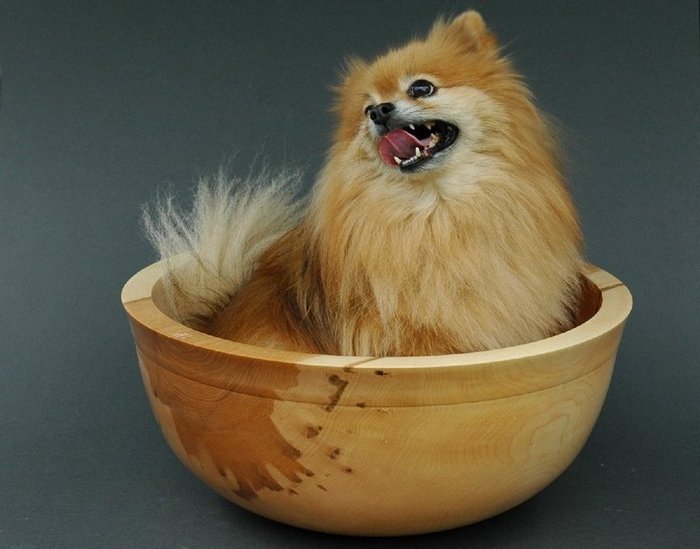
Can't resist posting these two on here. They were posted, just like this, in the Winnipeg Free Press last year. The left one is of Kira, our 8-year-old Pomeranian, and she is sitting in the maple bowl from the previous frame. She is our current little sweetheart, and more of her can be see on the "Pomeranians" page. The right hand view is of Jazzy, who departed us about 7 years ago. She was a favorite, and she is sitting in a bowl from back then. She now resides in one of my little pet urns on our mantle.
|
|
|---|---|
 |
 |
|
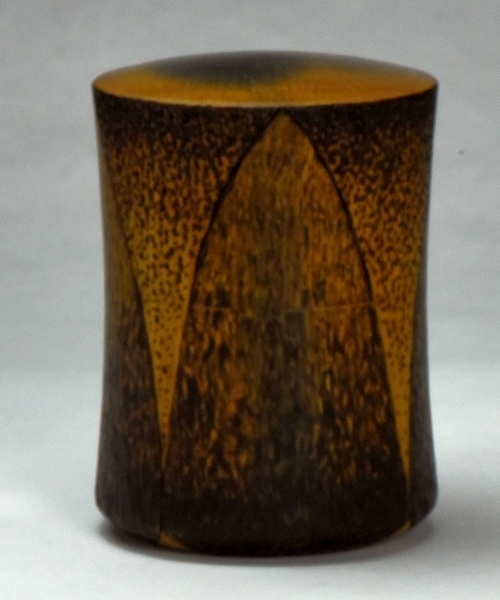
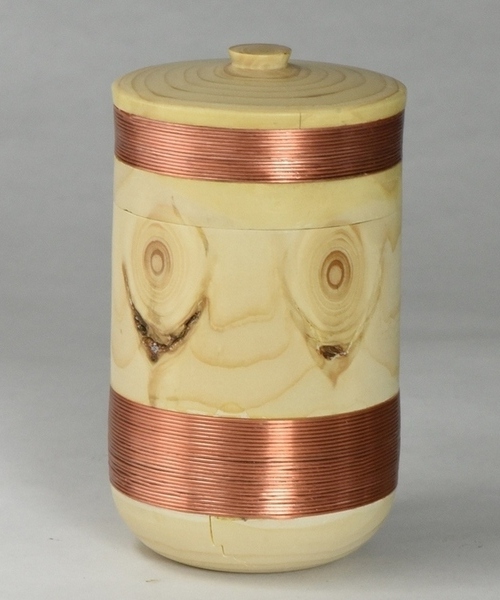
Two boxes, both of Manitoba wood. The one on the left is of oak, and it is about 4 inches tall. Oak can be rather plain, so I decided to use a pyrographed patten on the box. The box is finished with Danish oil and buffed. The right box is of ordinary Manitoba spruce, and it was never intended to be completed. I thought I would experiment with it and decided to wind it with copper wire thread. Karen liked it, so I thought I would go ahead and finish it. It is a bit smaller, about 3 1/2 inches, and is finished with matte Krylon spray finish.
|
|
|---|---|
 |
 |
|
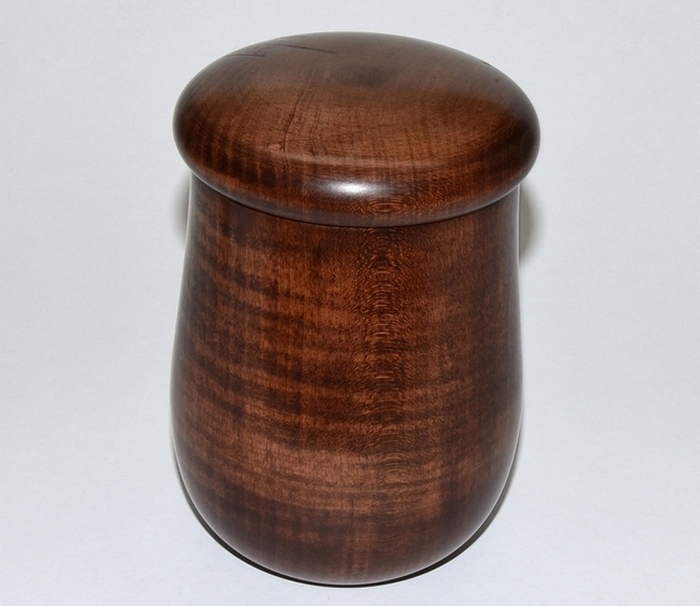
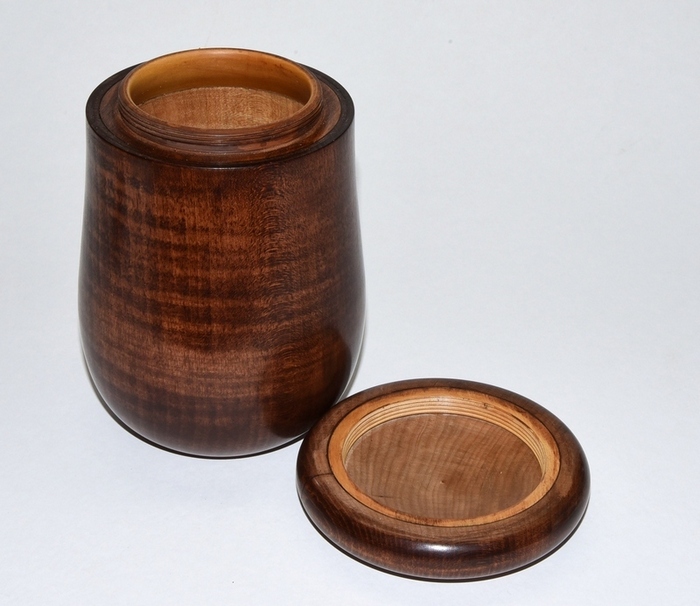
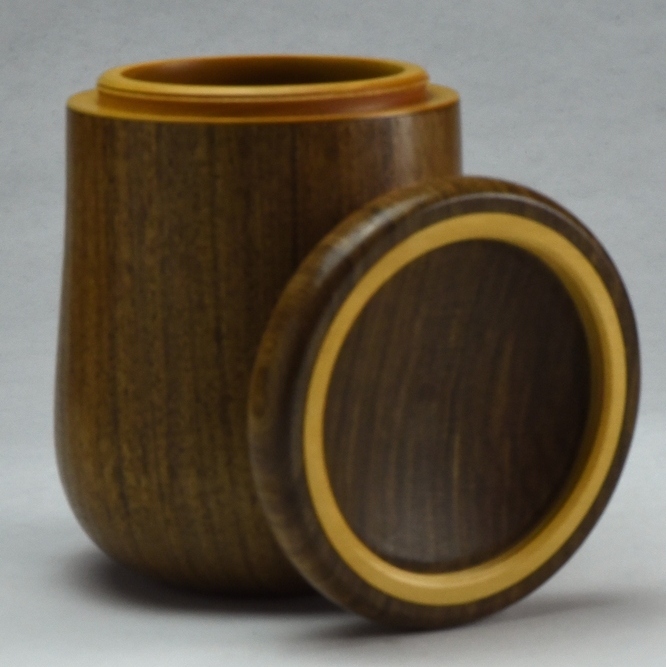
Here are two umeke forms with lids. "Umeke", truthfully, is what a bowl is called in Hawaii, but woodturners often think of this shape of bowl as a umeke style or form. A calabash is a umeke too, but a calabash tends to be wider than it is tall. Vice versa for the umeke. I like them both, and they are extraordinarily hard to pull off the right shape. Seems simple, but it is not, as the form is subtle. I am sure my Hawaiian friends would find plenty to criticize on these two forms for daring to call them umeke. The first one is a figured maple one and it is dyed to match the color of our kitchen cabinets. It sits on the counter and belongs to Kira, as it holds the Pomeranian's little treats. She well knows the sound of the lid being unscrewed from the umeke. The next photo shows it open to reveal the threads. I had to use boxwood inserts on both of these forms to thread them. The bottom left photo is a umeke of butternut and bottom right shows it open, again using a threaded boxwood insert. I can thread boxwood, but the maple and butternut were not good candidates for threading. These are both about 5" tall with the lid in place.
|
|
|---|---|
 |
 |
 |
 |
|
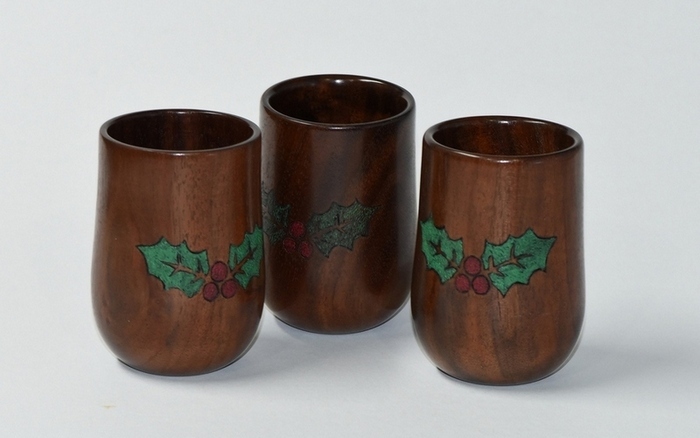
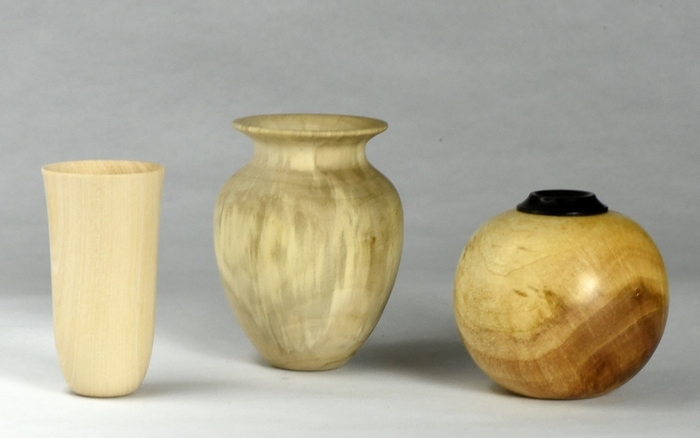
The left photo shows three little wine cups. I got a request from my niece to turn some cups as a gift for her friend, and I turned these as well as a set of light-colored ones of maple. She chose the maple ones and I still have these. Both sets are finished with a finish impervious to wine and are decorated with holly berries and leaves. The cups are about 4" tall, and are 6 oz. glasses. Right photo - our Manitoba Woodturners club often does public demonstrations, and we haul a few small lathes to a site and set them up to demo woodturning. This summer we set up at the Arbor Day celebrations in the park, and this is a few of the little items I turned while folks watched. A 3" tall vase, 3/5" vase and a 3" hollow form with ebony collar. Maple, buckeye and chokecherry. Of course, other items, like spinning tops, weed pots and whistles were also turned and given to kids that came by.
|
|
|---|---|
 |
 |
|
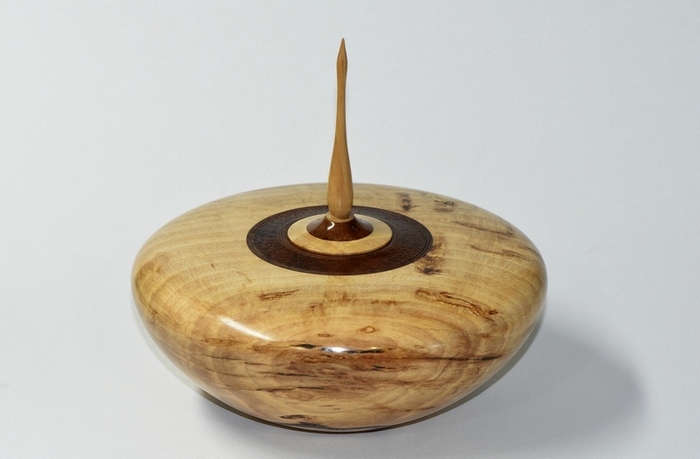
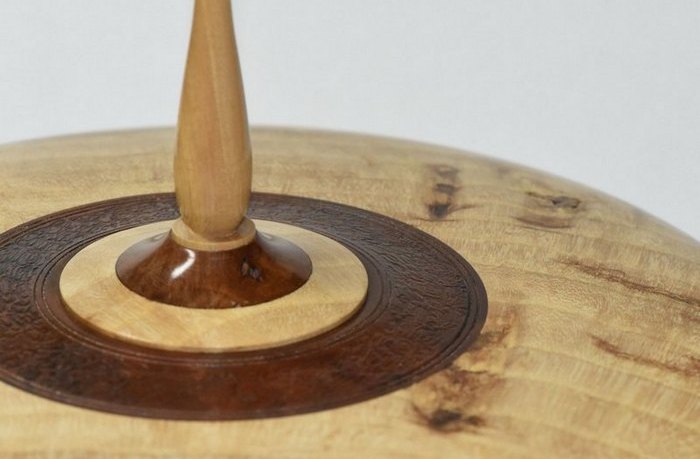
I make quite a few urns, but do not post them all. This one is a large elm urn with a textured walnut insert at the top and on the lid, and with an elm finial. The elm trees of Winnipeg are a threatened species with Dutch elm disease killing thousands of these beautiful trees. The second photo shows a close-up of the insert, which is textured. The urn is about 11" in diameter.
|
|
|---|---|
 |
 |
|
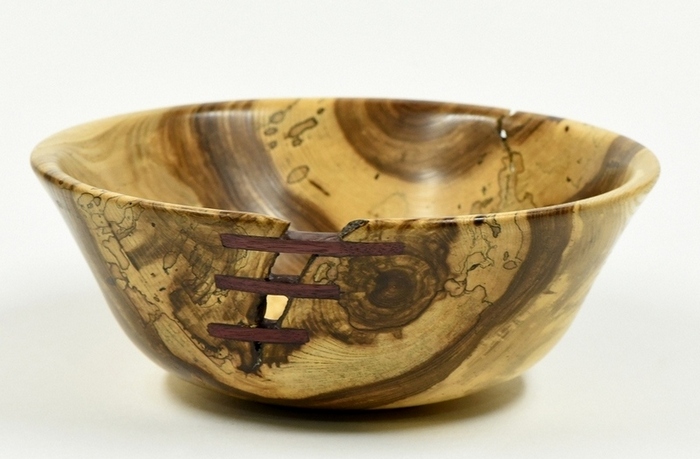
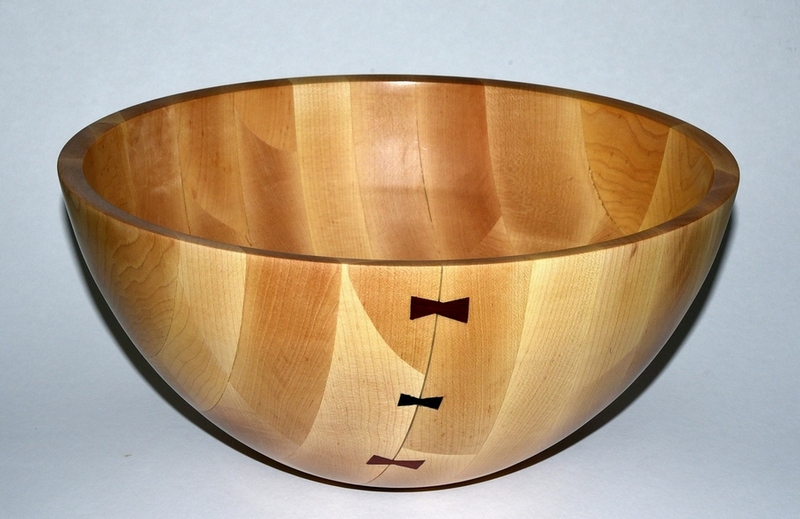
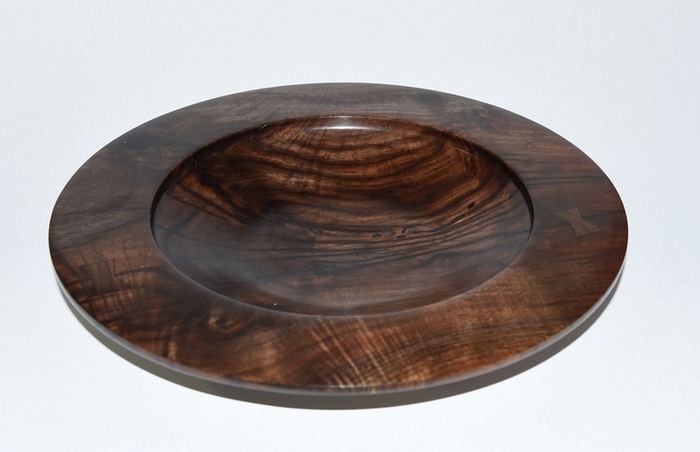
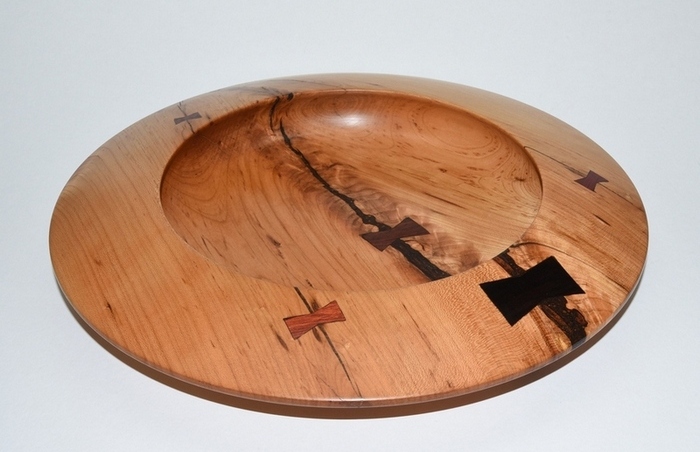
Here are a couple of platters, an item I do not often make. Sometimes the wood is not thick enough to make a deep bowl, but the wood is too nicely figured or too pretty to cut into smaller pieces. A platter is a good way to provide a broad canvas to preserve lots of the figure in the wood. The first platter is claro walnut with spectacular grain and figure. The second is of Schubert chokecherry, held together at the crack with a series of variable sized butterflies (dovetails, pewas). All my butterfly ties are different sizes, since I cut the shapes randomly on the bandsaw, and then hand carve the mortise for the butterfly. That is very challenging to do on a curved surface, but I enjoy it. Both platters are about 12" in diameter.
|
|
|---|---|
 |
 |
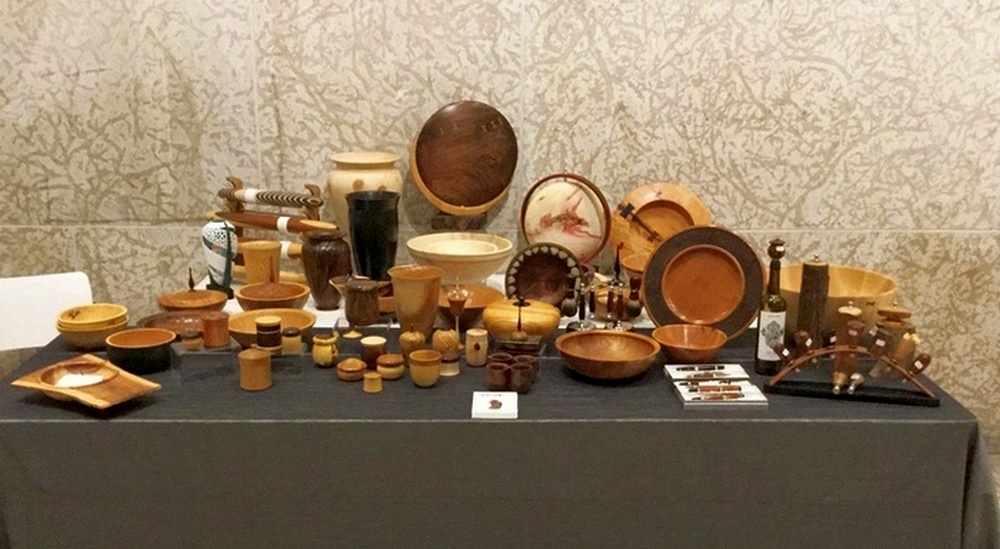 |
Just thought I would show you a photo of the table, in 2018, of my work at the Crafted sale held every year in November at the Winnipeg Art Gallery. This is a juried show, and I have been part of it for the past three years. This will be my fourth year. I have a rather plain table, and this year I made a special display unit with lights to showcase my work, and I hope it will display the work a little better. | ||
 |
And this was my table for this year, 2019. As I said above, for the show this year I built the shelves to raise the work a bit higher and make it more visible. I like this setup, but the lights need some work, and for 2020 I will do some revamping of the setup. This is a juried show, and I have been part of it for the past three years. | ||
|
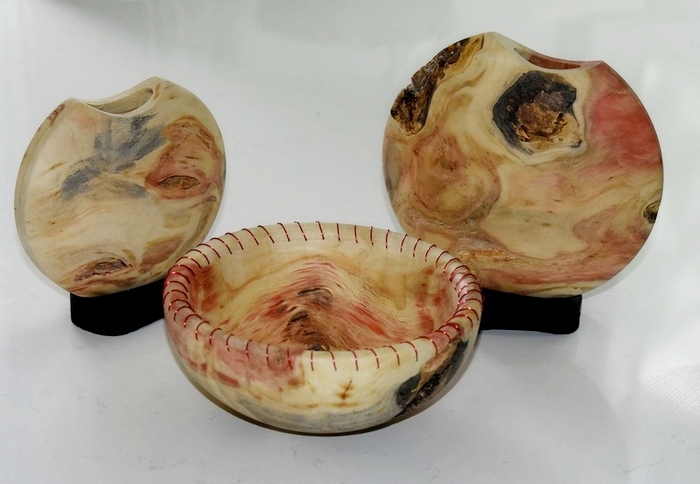
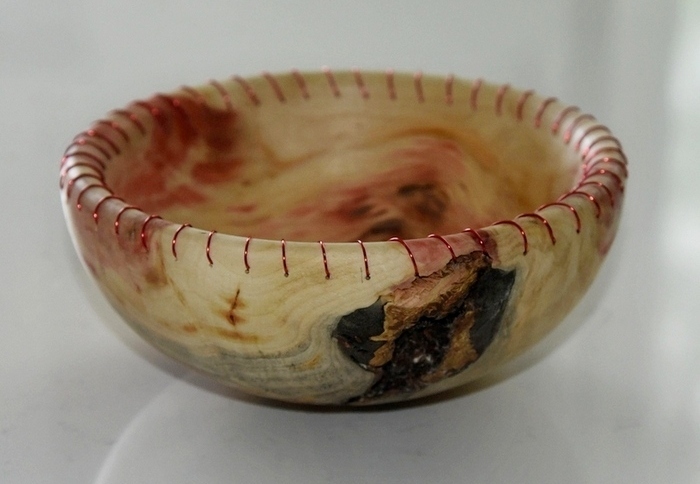
I do some work for people on commission, usually when they have a piece of wood from some favorite tree, and they want something made from it. Such was the case with these pieces. The people stopped by our club's demo at the Arbor Day festivities and asked if I could turn something from a box elder burl they had. They wanted a couple of items for their daughters, who had played in the tree as children. When they came by with the wood I was taken aback, as it was very punky and almost rotten in some parts. I told them I could not make bowls and suggested perhaps making clamshell type vases, and they agreed. I was able, with the help of CA glue and Polyall 2000, to stabilize the wood and turn the 10 inch vases, and even got a 10 inch bowl to hold together. For the bowl, I decided to add some interest by stitching the rim with copper. I had intended to just stitch the white sapwood part, but due to an error, I had to stitch the whole rim. I won't do that again, as dealing with yards of wire and threading it and pulling it taut through each tiny hole took a long, long time.
|
|
|---|---|
 |
 |
|
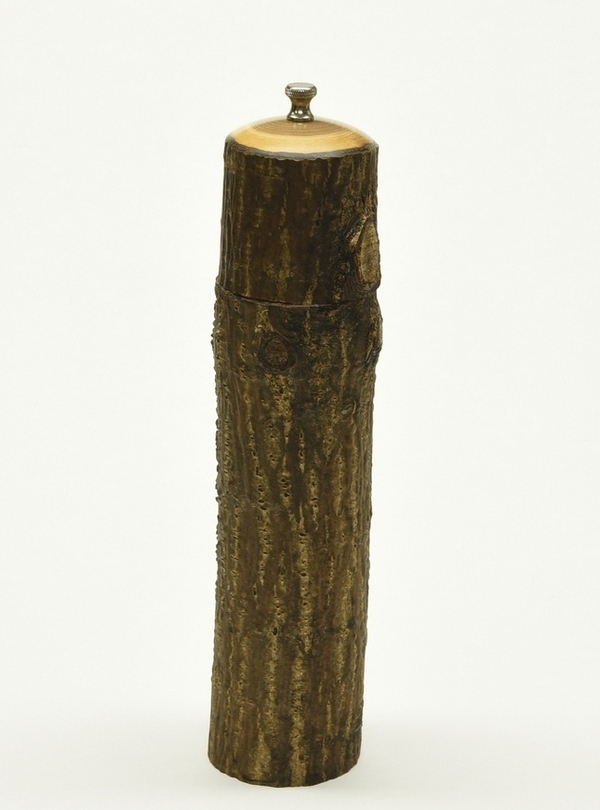
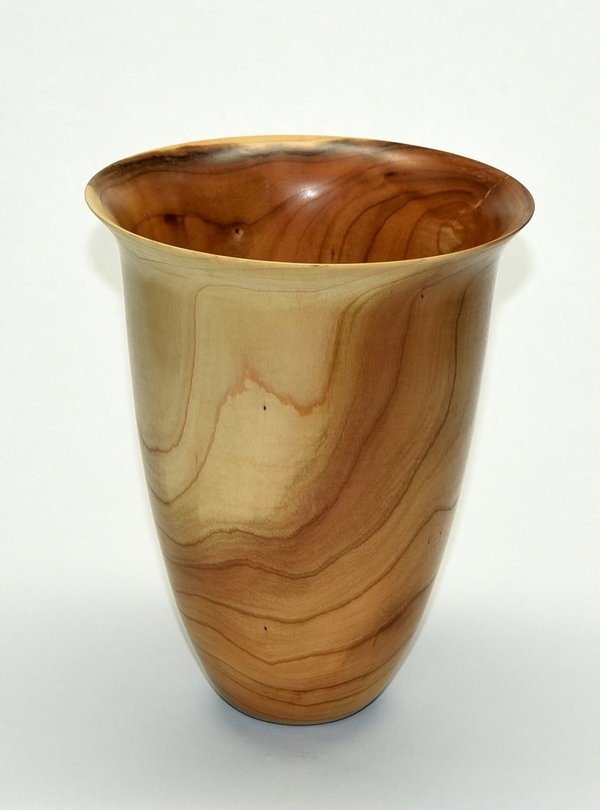
Just a couple of pieces that are a bit different than my usual. The one on the left is a rustic 10" peppermill turned from a branch of a cherry shrub. I make quite a few like this and they are popular at a resort area where they sell for outdoor barbeque pits. The one on the right is a chokecherry vase, just a small one about 10" high, turned endgrain.
|
|
|---|---|
 |
 |
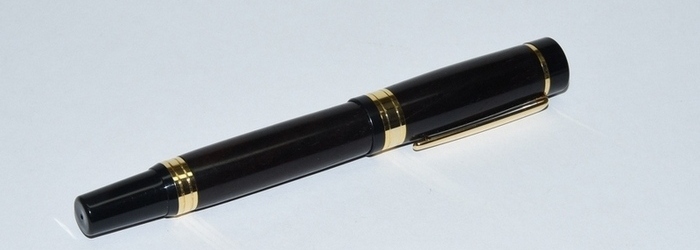 |
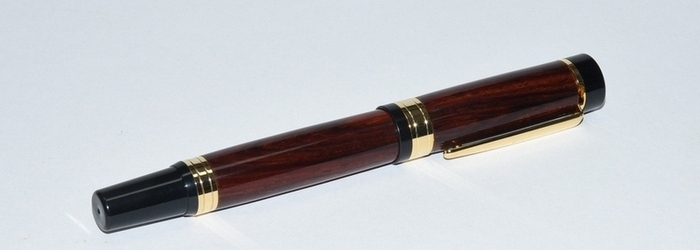
I know, everyone makes pens, and you don't need to see any more. I know some turners that make nothing but pens, and I can't imagine anything more boring than standing there making pens day after day. It is a good thing we do not all like the same thing. |  |
 | |||
|
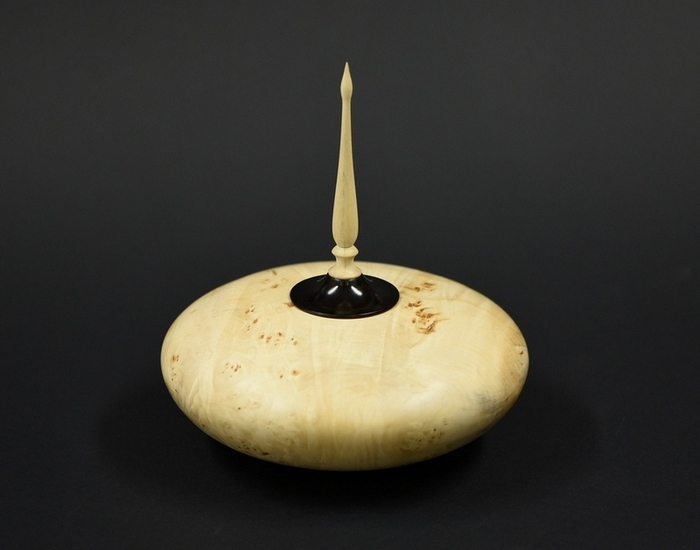
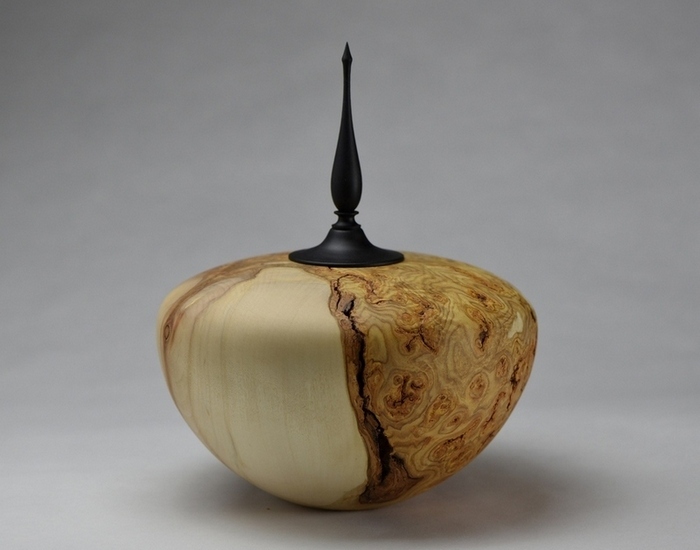
A pair of hollow forms, often used as urns. I make quite a few like this and have quite a few roughed out so I can finish them quickly when someone needs one. The one on the left is Manitoba maple, about 10" diameter and 4" tall (without the lid). The finish is matte Krylon, and the finial is holly on an ebony lid. The one on the right is poplar burl, and Donna gave me the burl, unsure of what she could do with it. She had turned some of the wood and found it very soft and punky, and did not think she would be able to hold this together. It was a challenge all right, but the end result is really spectacular grain, held together with a fair amount of Polyall 2000. (Polyall, by the way, seems to have disappeared off the market. Don't know why as it was a splendid product). The finial and lid on this form are of cherry dyed black. Both the form and the lid and finial are finished with matte Krylon like the other. This one is not suitable for an urn. It has numerous voids in it.
|
|
|---|---|
 |
 |
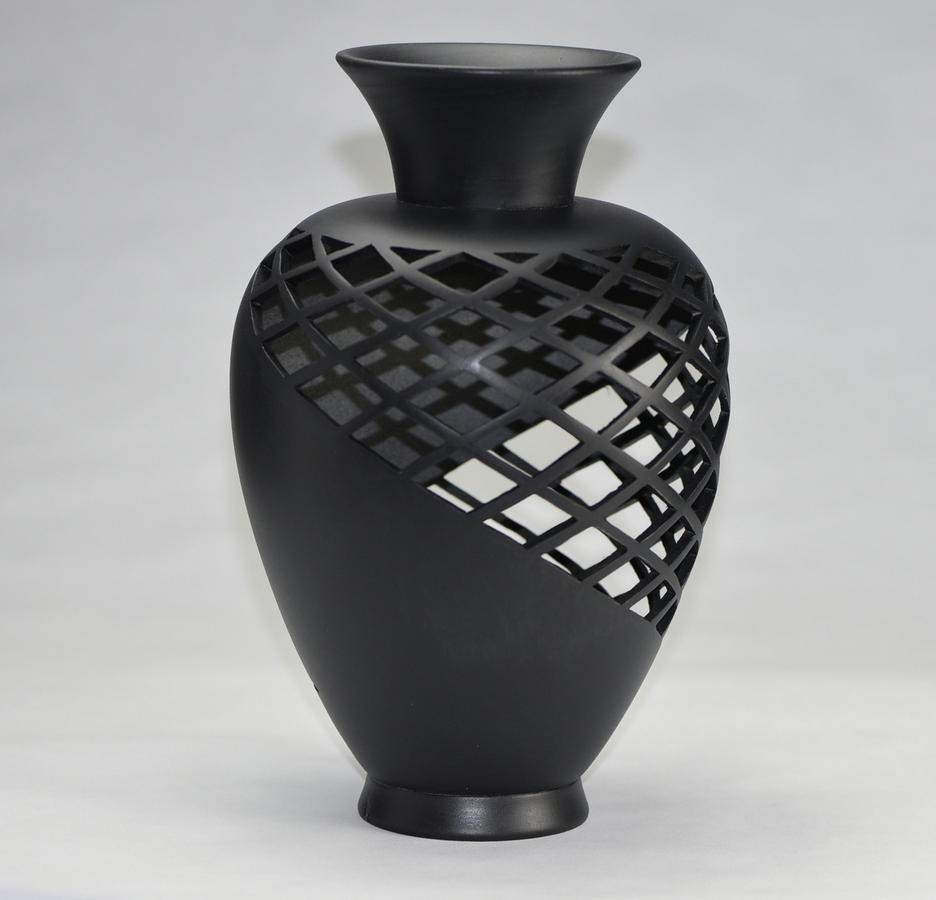 |
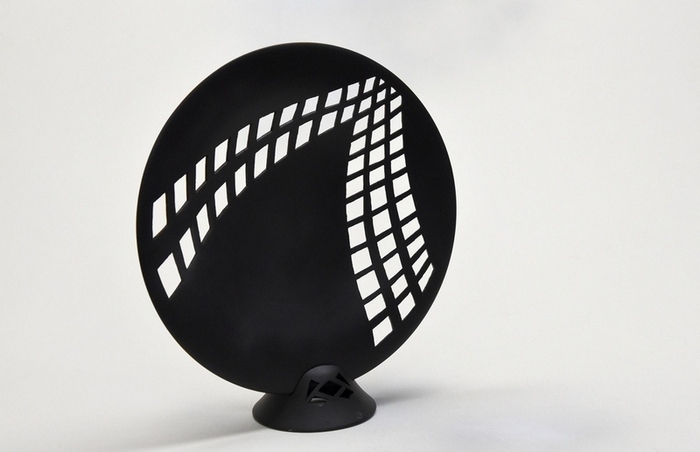
This is a new series I have started on, and when I finish, I expect there will be four pieces. The series is based on some Chinese porcelain forms and decoration, although I will be mixing in other popular forms. All the pieces in this series will be matte black and will feature pierced diamonds. | ||
|
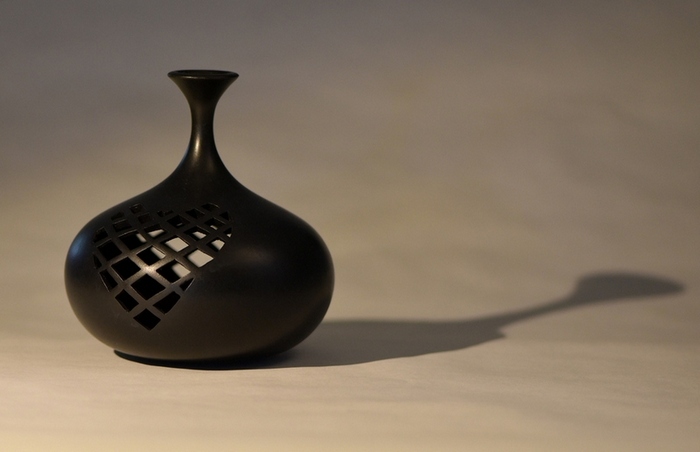
Here are Silhouettes 2 and Silhouettes 4. Like the first, they follow a pattern of diamonds pierced through the wood. The piercing is done using a Foredom cable carver to hog out the main part of the wood, and then using a carving skew and finally, very slim Xacto knives to do the very corners of the diamonds. And sand, sand, sand. The hardest part of these pieces is handling them during the carving because they are so fragile. The plate is Manitoba Maple, and is about 10" tall and the base holding the plate is also hollow and pierced with diamonds. Both pieces are 1/8" thick or less. The small piece is cottonwood and is about4" tall. The plate was not inspired by any Chinese porcelain and was put into this series simply because I wanted a plate in there. The small piece is a form that I saw being used in a video of a Chinese potter.
|
|
|---|---|
 |
 |
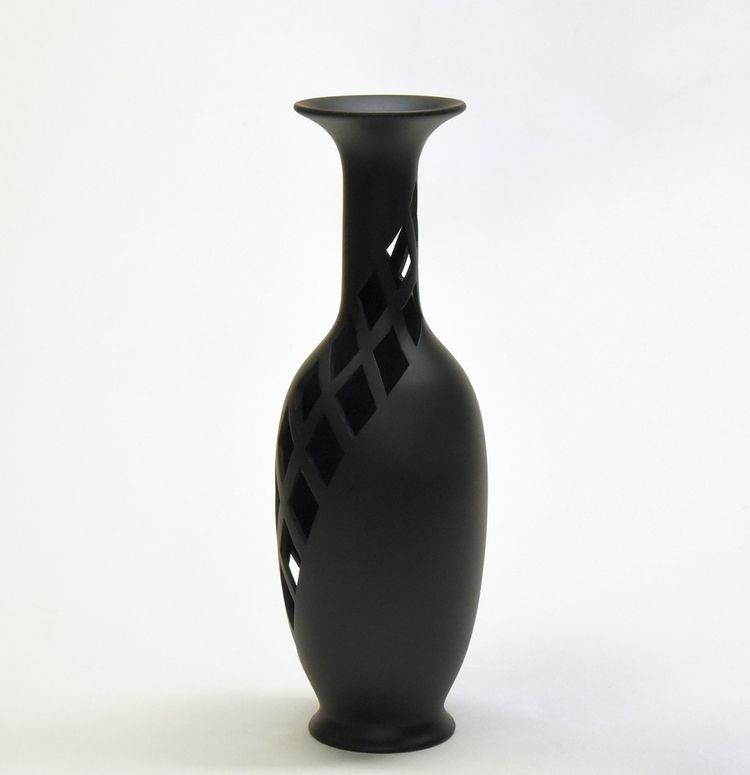 |
Here is Silhouettes 3, based on a Chinese pottery piece I saw. This is about 11" tall and is made of Manitoba Maple. | ||
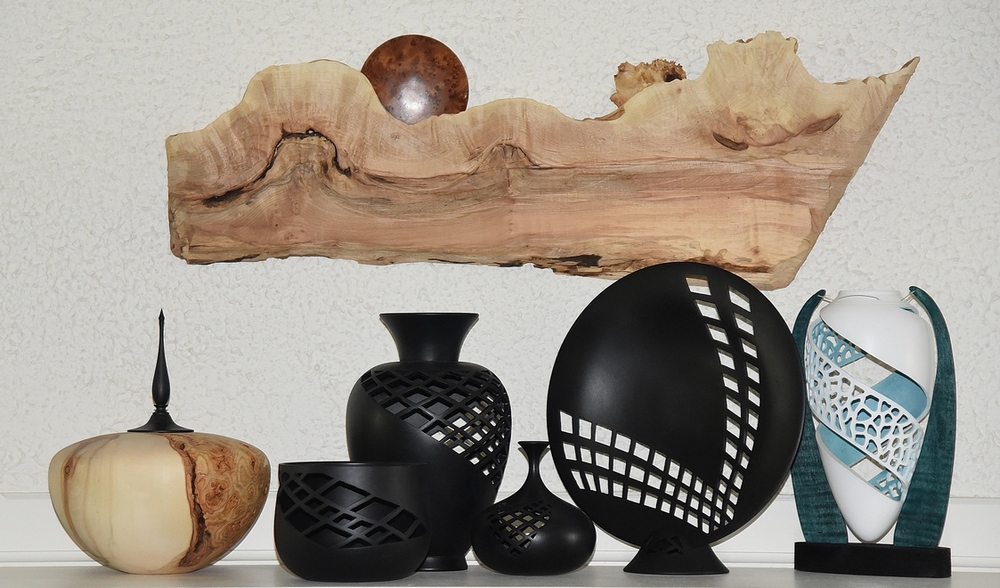 |
Here is the entire set with a couple of other pieces on display at our house. The white and blue piece sold this year at the Crafted sale, but none of the Silhouette series sold. I had hoped to sell them as a complete set. | ||
|
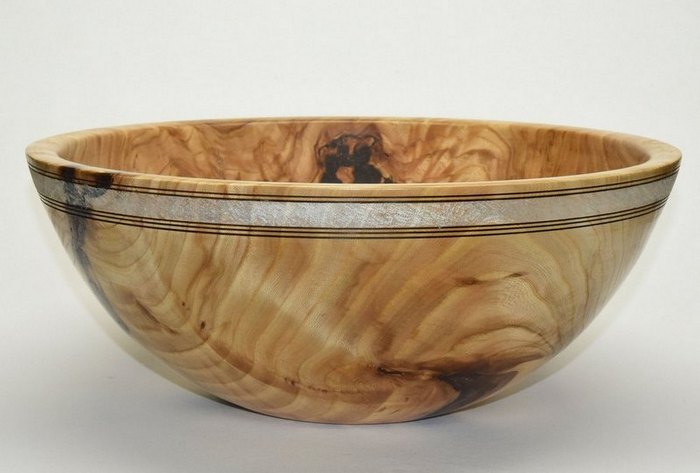
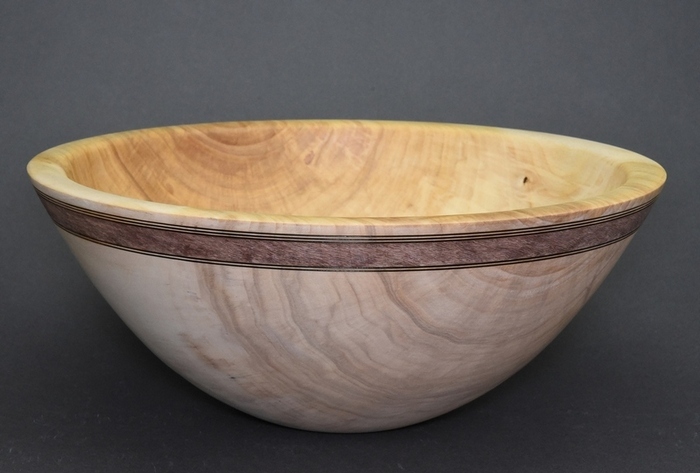
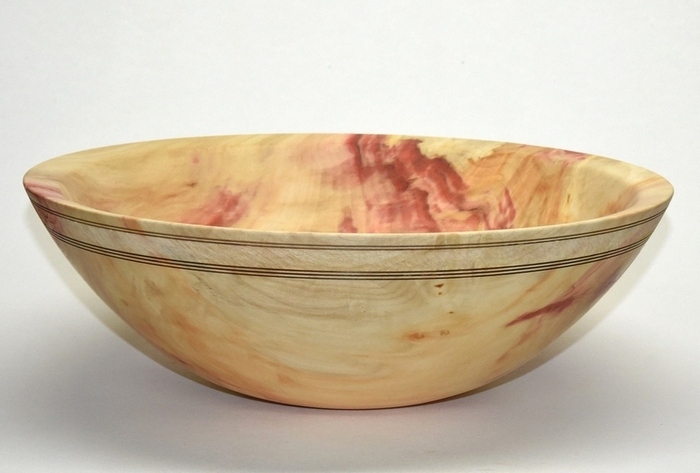
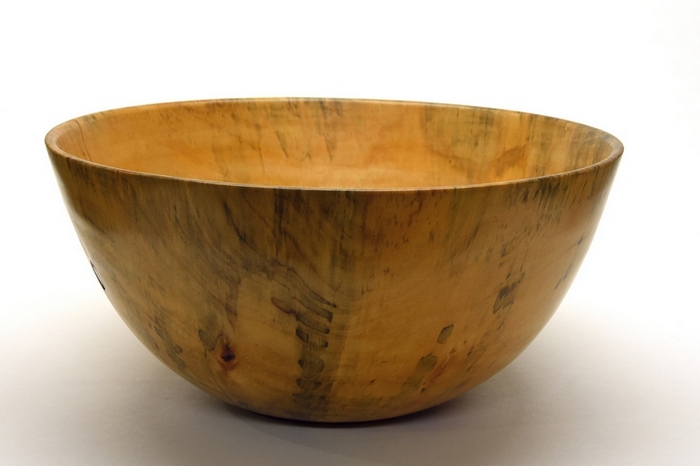
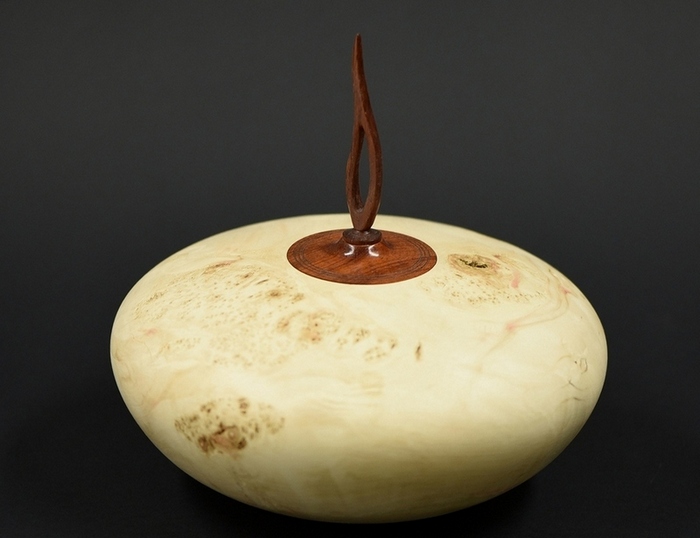
The top two bowls are somewhat connected. The one on the right was one I took to the Crafted sale. A young woman came by and said she was looking for a salad bowl for her boyfriend for Christmas, and she really liked the one with the band on it. That would be the elm salad bowl, 17" across, and a rather unusual band I had painted with some silver interference paint. Except - she would prefer a more subtle, masculine band. Could I make her a duplicate without the paint? Well, sure, but it would have to be of whatever wood I had available, and there was no more elm in my stash. So, I made her the bowl on the top right, of ash. A simple band dyed a bit darker than the rest of the wood. She came and picked it up and was delighted with it. After Christmas she emailed me and said her boyfriend was really happy with his gift. The bowl on the bottom left is Manitoba Maple, and the band is bleached so it is slightly lighter than the rest of the bowl. In some light it looks much whiter. This bowl is 18" in diameter. The bowl on the bottom right is from a chunk of Norfolk Island Pine I got from my friend Roger in Texas. This bowl was rough turned in Texas but finished here. It is huge, 19" across 9" deep, and very thin. I called it a popcorn bowl, and it sold at the Crafted Sale. The bottom left photo is a umeke of butternut and bottom right shows it open, again using a threaded boxwood insert. I can thread boxwood, but the maple and butternut were not good candidates for threading. These are both about 5" tall with the lid in place.
|
|
|---|---|
 |
 |
 |
 |
 |
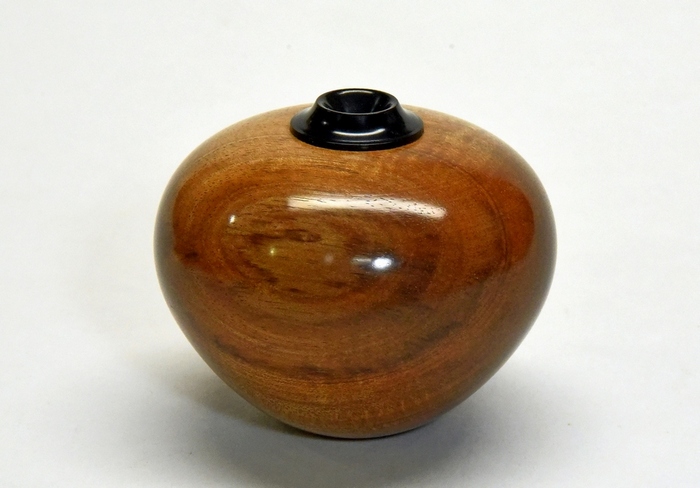
Three rather different pieces, for different reasons. Each one has something different or unique from what I usually do. | 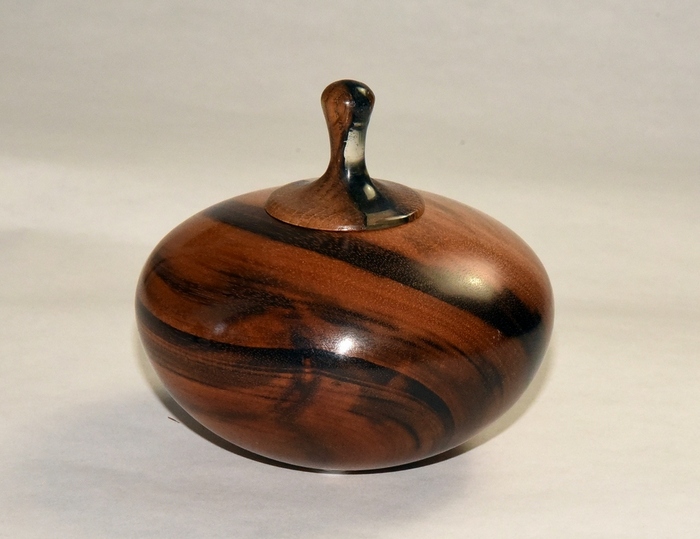 |
 | |||
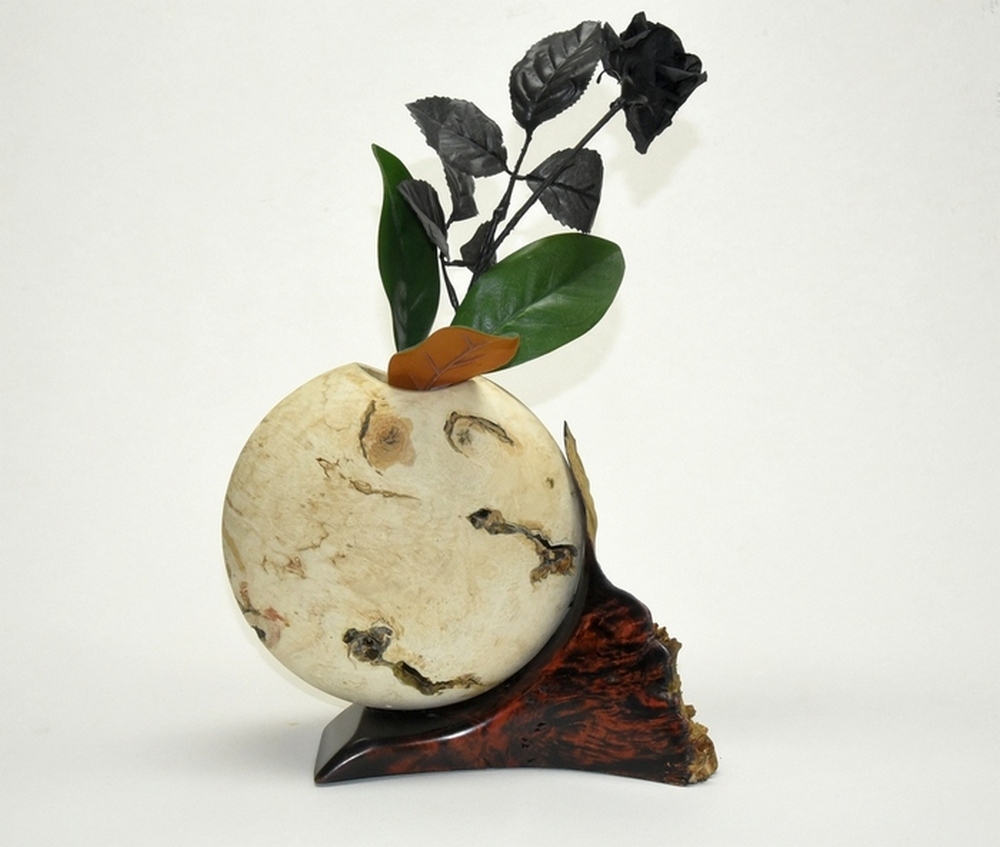 |
So, this is the final piece for 2019. It is a split vase of Manitoba Maple, about 9" in diameter, bleached and finished with Krylon matte spray finish. | ||