
2017 Turnings |
|---|
I did a couple of different things in 2017, mainly having gotten into hand chasing threads. A lot of stuff is similar to work I have done before but each piece is still unique and one of a kind. No two are the same. Enjoy whatever you wish, and I hope you learn something and appreciate the beauty of the wood.
As usual, I love hearing from you, so feel free to let me know you were here.
It's June, 2018, and I am just finished the 2016 page, so now on to 2017. This site is getting pretty big, and I find it hard to believe that there is soon going to be 21 years of work on display. Please keep in mind that not everything I do is shown here. Not even half, the larger pieces mostly.
 |
This was a difficult piece to make, probably one of the most difficult I have ever done. Looks simple - was not. | ||
|
 |
 |
 |
| |
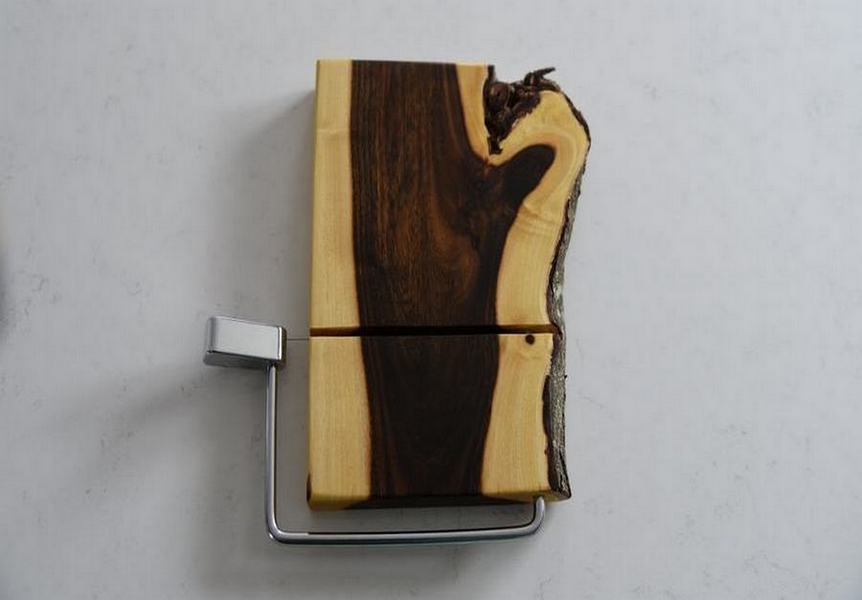 |
Texas ebony is almost a weed tree in lower Texas, but I think it is greatly underrated and unappreciated. I absolutely love this hard, difficult wood with its variety in color and the beautiful contrast of the light and dark wood. It is exceptionally hard, and is a black mess to work with that gets into every crevice of the workshop. | ||
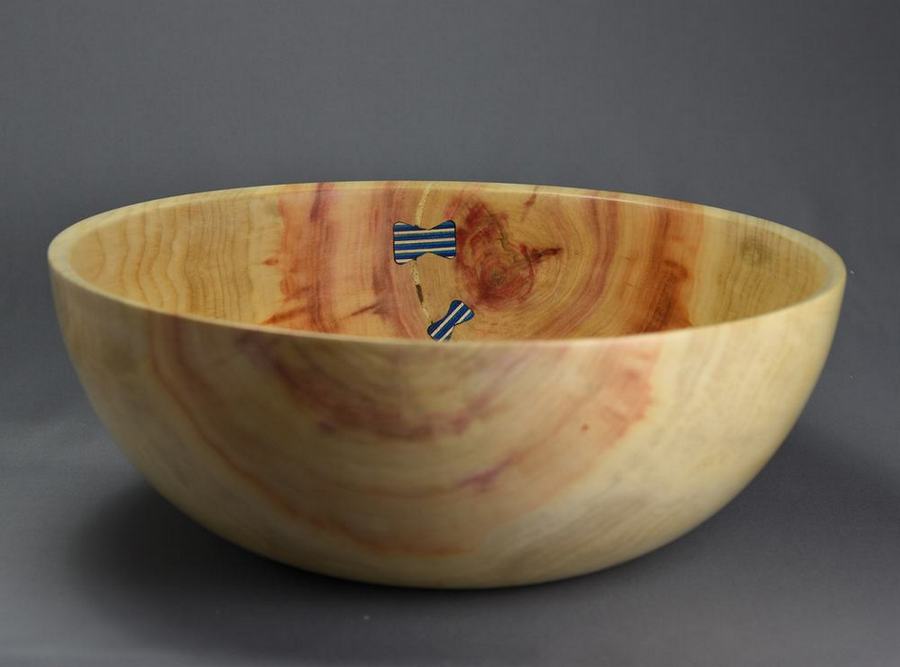 |
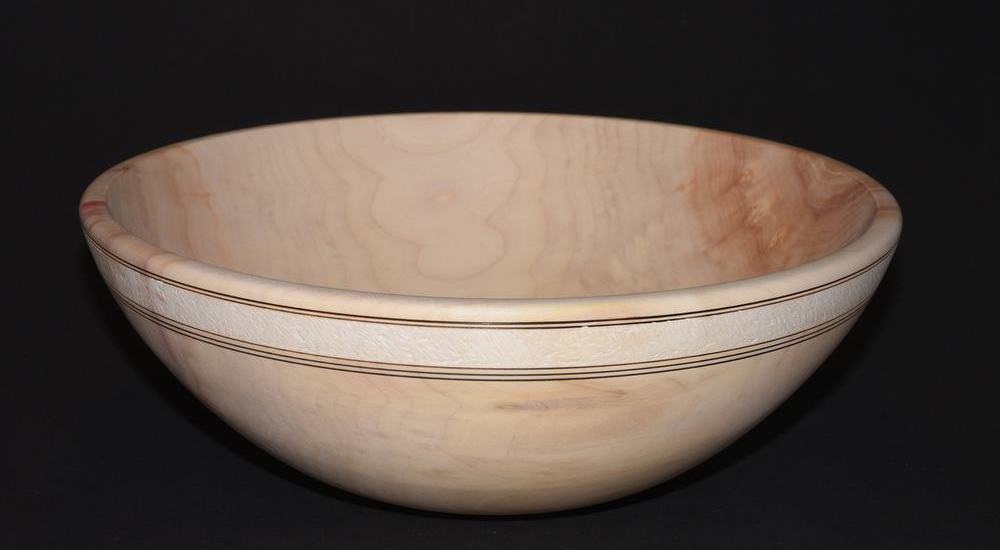
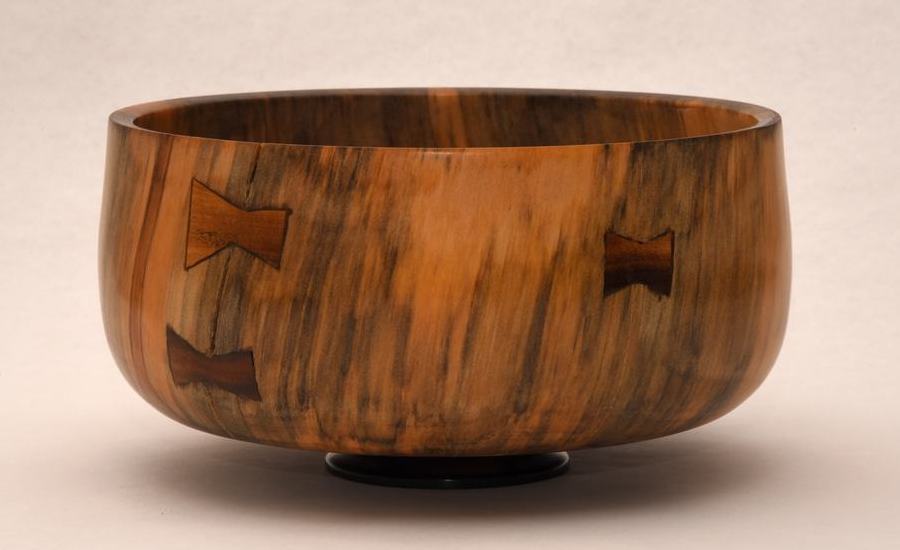
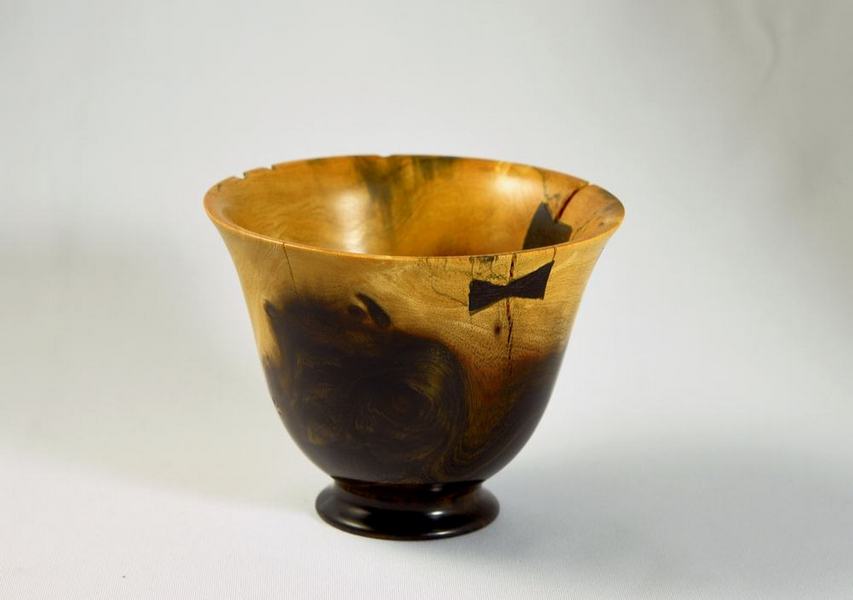
This is a large Manitoba maple salad bowl, about 16 inch diameter, but it had a split in it. I decided to use pewas (dovetails), rather than to just fill the crack and hope it holds together. The pewas provide a lot of strength and the crack will never come apart. | ||
|
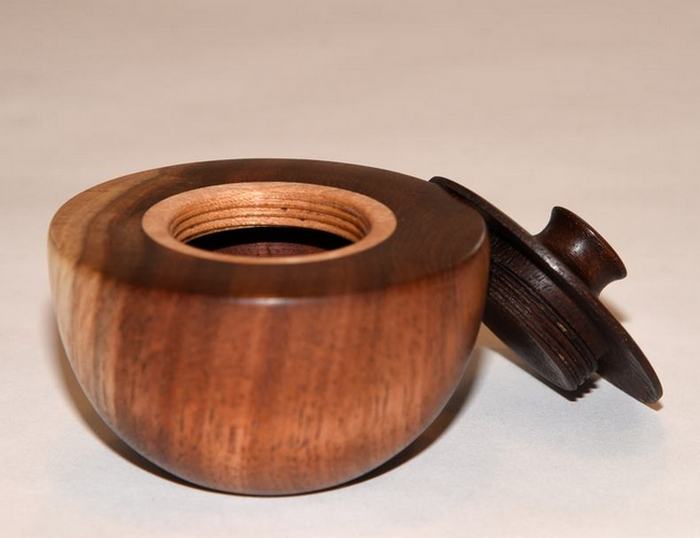
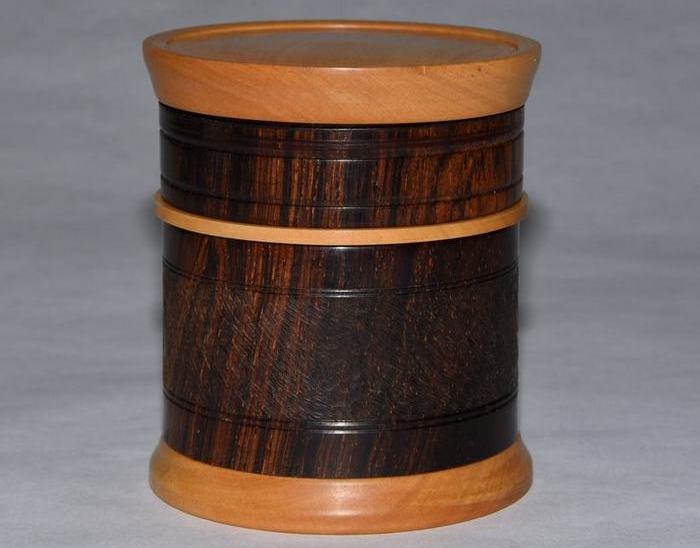
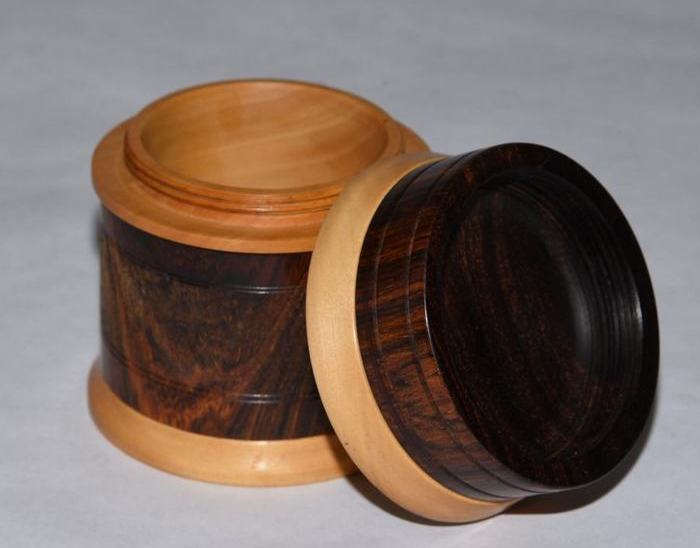
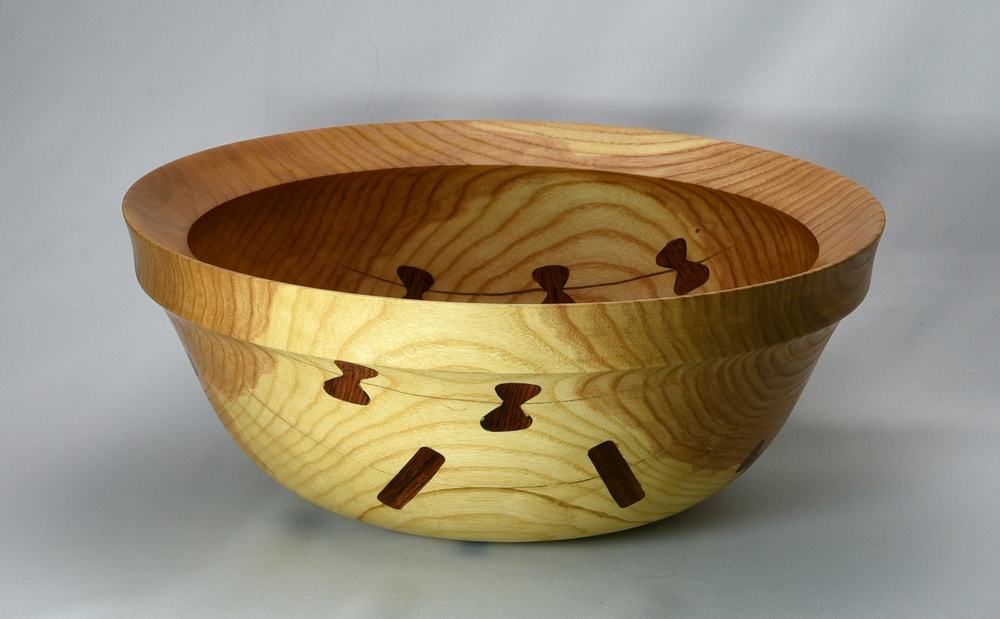
I told you, at the opener of this page, that I had started to experiment with hand chased threading. Hand chasing threads is a learned art which requires perfect timing and rhythm with a notched tool to create clean and straight threads. And it is fun to do with the right kinds of wood. The top left is a little, 3" tall, box of butternut. Butternut is not a canditate for threading as it is soft and weak. Boxwood is one of the finest woods to use for threading, so I used boxwood as an insert and threaded that. The walnut lid was threaded, with some difficulty as walnut is soft, too, but I hardened the wood with CA glue several times while I threaded it. The top right photo shows the lid open. The bottom left is a box made of boxwood and cocobolo. These boxes are very difficult to pull off. Notice that the box inside is light colored boxwood. The dark outside is a cocobolo sleeve turned about as thin as veneer and then slipped over the core of boxwood. Then the boxwood is threaded, and the foot glued in place to hold it all together. The top is of cocobolo, which threaded nicely, and a cap of boxwood on top of that. The bottom right photo shows the piece opened up. It is about 4.5" tall.
|
|
|---|---|
 |
 |
 |
 |
 |
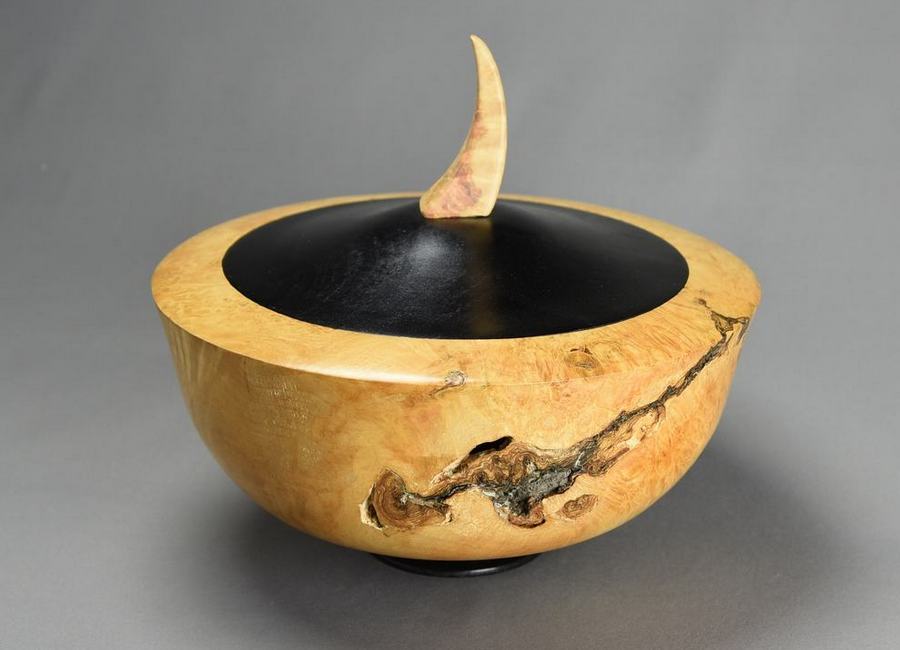
Now, this is a wild one. I had turned this large ash bowl, about 17" diameter, a long time ago when the wood was wet. Even though it was coated with log end sealer, it still cracked very badly, and very unsightly. Four large cracks and I threw the thing into the corner and forgot about. | ||
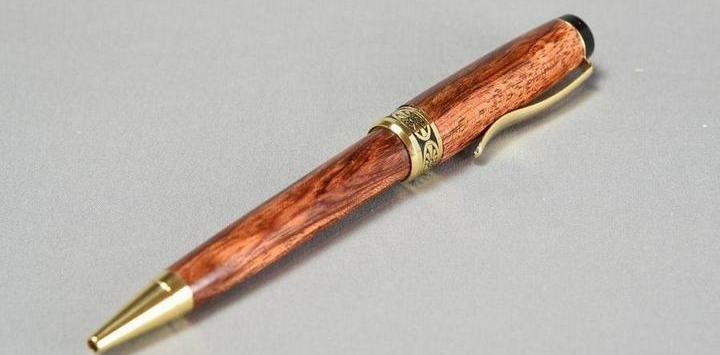 |
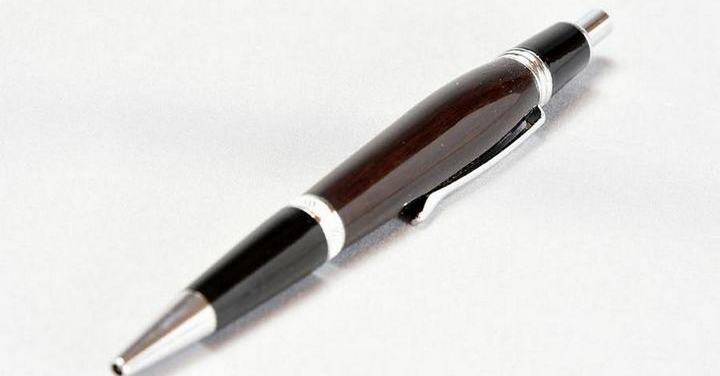
I know, pens are pens, and for the most part they all look alike. | 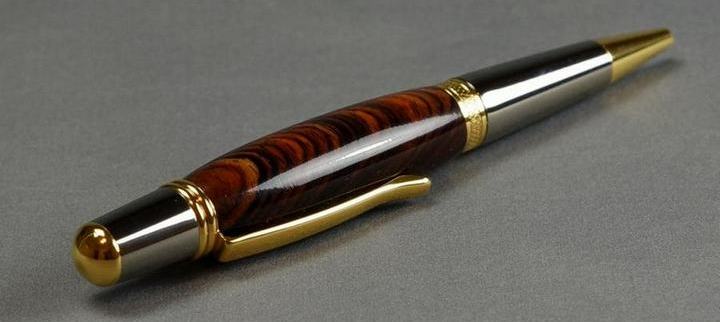 |
 |
|||
 |
Our local Manitoba maple, known elsewhere as box elder, is really one of the most beautiful woods, and one of the most pleasant to turn. It can smell a bit (like manure sometimes), but that seems to depend somewhat on where it grew, and how old the tree is. | 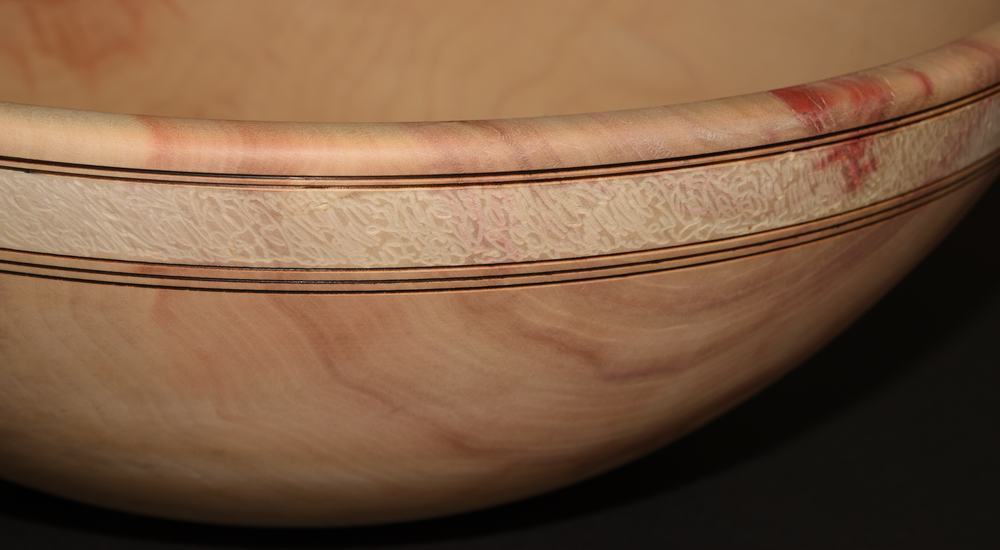 |
||
<
|
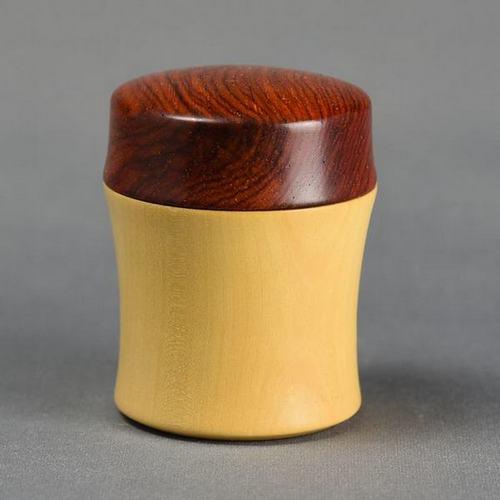
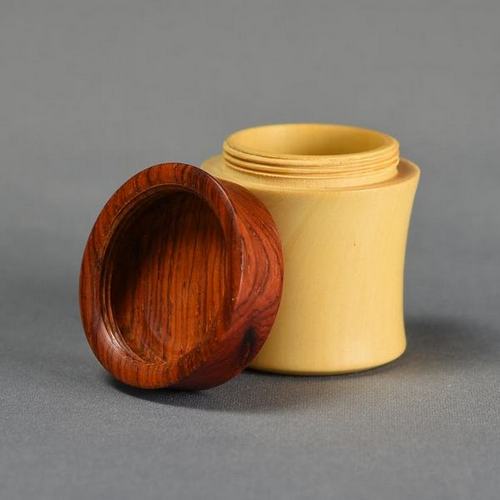
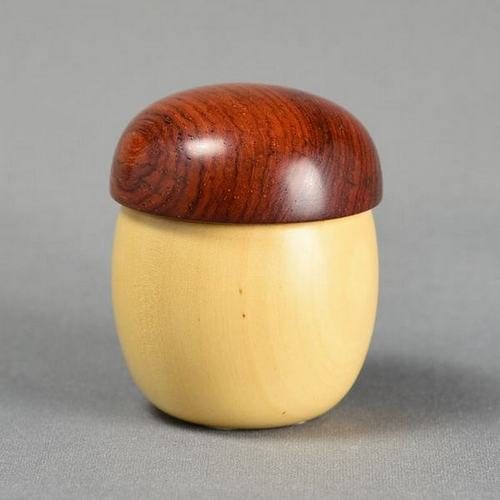
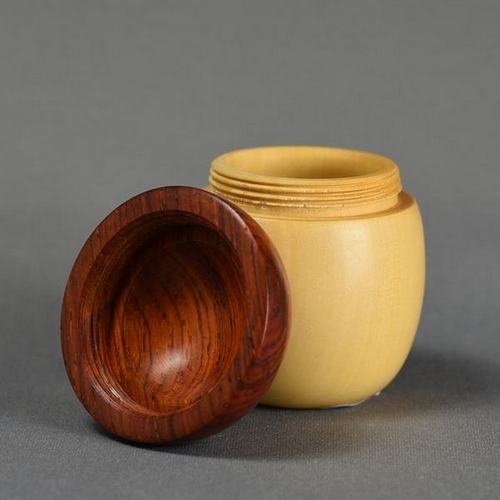
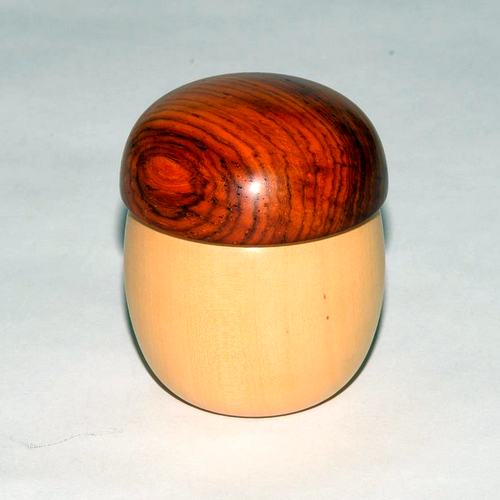
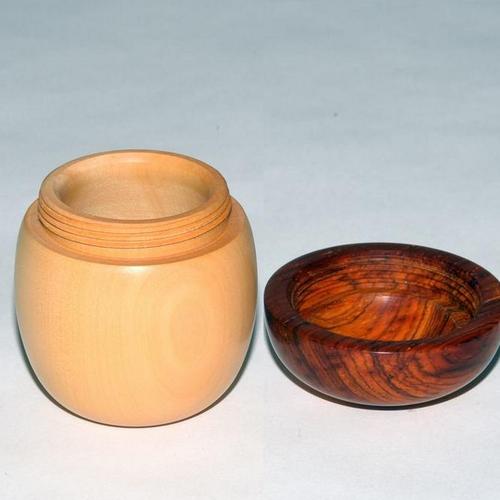
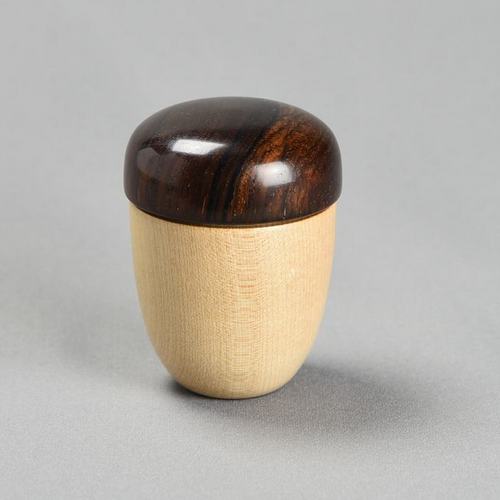
I told you earlier that 2017 was, sort of, the "year of the threads" for me. I have had so much fun experimenting with making threads, and after watching an Alan Beatty video on making acorn boxes I decided to try them. They are little (about 2" or 2.5" tall) and are cute. And people like them. So here are two made of boxwood with cocobolo lids. The photos to the right of both show them when open. Boxwood is a lovely wood to turn, dense and beautiful to thread. Threading works best with a dense and hard wood. And it is a nice light color that contrasts nicely with darker and more colorful wood. The cocobolo also threaded nicely, and the reddish wood has gorgeous grain. These have no finish other than being buffed.
|
|
|---|---|
 |
 |
 |
 |
 |
My friend, Ken, brought me a spruce burl that he found on vacation in British Columbia. I normally avoid spruce because of sticky sap, but this burl was bone dry and looked like it had nice figure inside of it. | ||
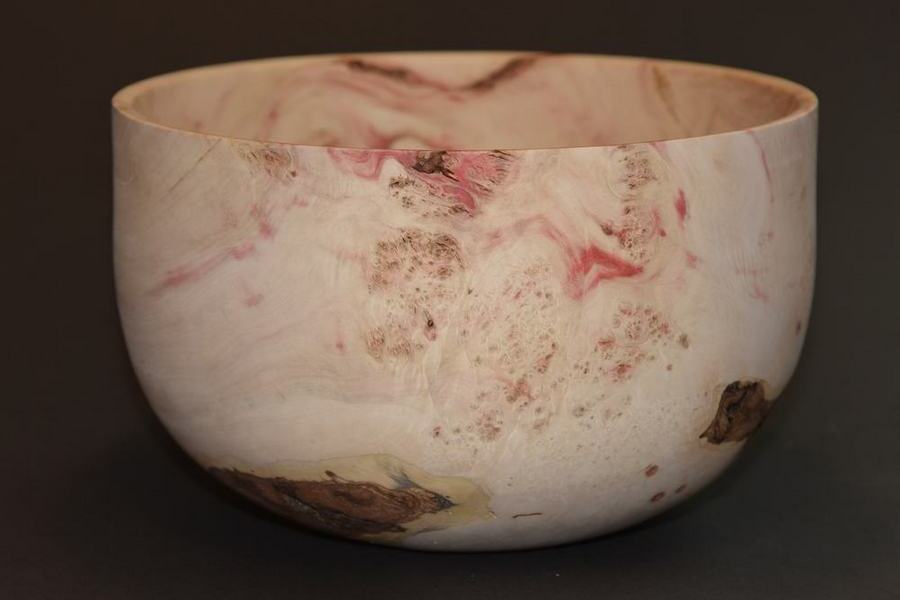 |
I have often stated my preference for Manitoba Maple - box elder to many. The wood is plentiful, extremely varied and fun to turn. When turned wet (green) the wood dries without a lot of cracking and warping, and finishes well. I think the light color lends itself best to a water based matte finish, like Krylon, and it bleaches beautifully. Then you get the reds, and beautiful burl. | 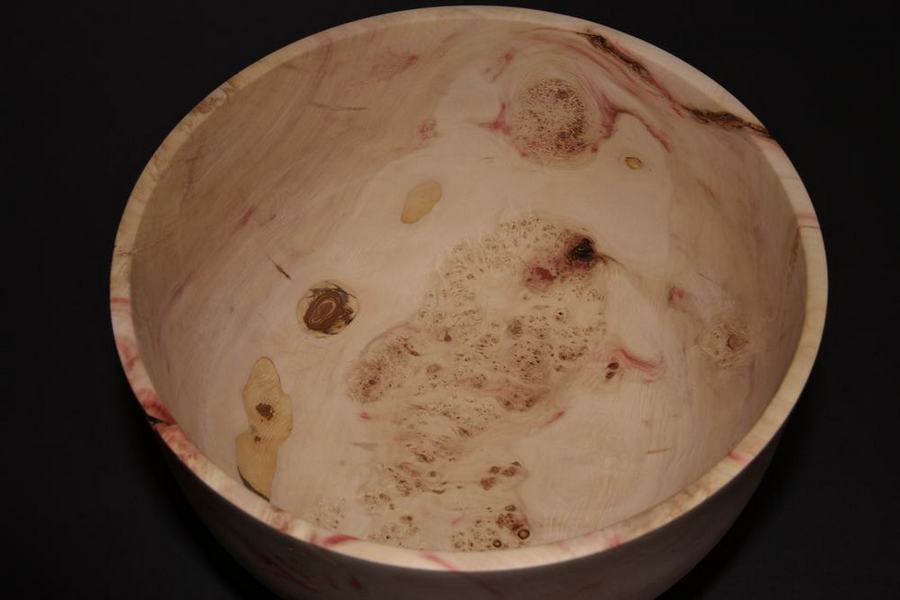 |
||
 |
Don Burton was a resident of the Palm Shadows park in Texas where we spent our winters. Don was a crusty sort of guy, but the gruff exterior and blunt talk disguised a heart of gold, a man who spent so much time collecting food and money for underprivileged little kids, and who loved to work with wood. | ||
 |
Meh - that's how I feel about this one. I primarily built this site as a way to show my work and to be both an inspiration and a teacher to others. Not sure I am doing either job very well, but I tried. | ||
|
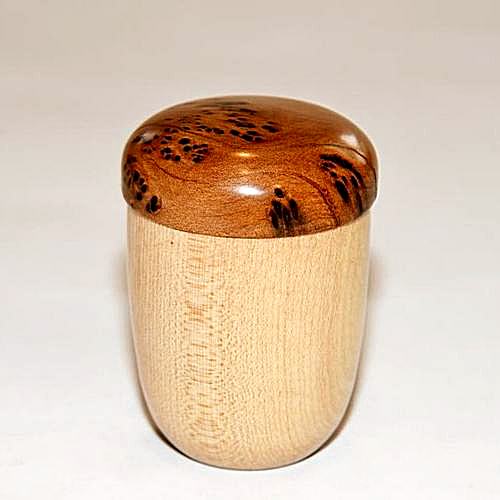
Three more little threaded acorn boxes. These are fun to do in a public demonstration, as people are fascinated about how threads can be turned by hand in wood. They do not take a lot of time to turn, and I usually use an orange wax on the inside (great smell when you open it) and simply buff the exterior with the Beall buffers and carnauba wax. I did try doing a demo for our woodturning club, using wood other than boxwood, and failed miserably. Sometimes, people can learn as much watching someone make a fool of themselves as they can by watching a master. I was embarrassed, as I cut threads easily at home, but on a small and unfamiliar lathe, not runnng true or slow enough, and using inferior wood, I made a bit of an ass of myself, much to their delight. We have a pretty close family of turners, and they had some fun at my expense. The top one is boxwood with an unknown wood for the top. The bottom left is maple with a thuya top, and the bottom right is maple with a cocobolo top. The thuya top required a great deal of hardening with CA glue to turn the threads. All of them are about 1.5" in height.
|
|
|---|---|
 |
 |
 |
 |
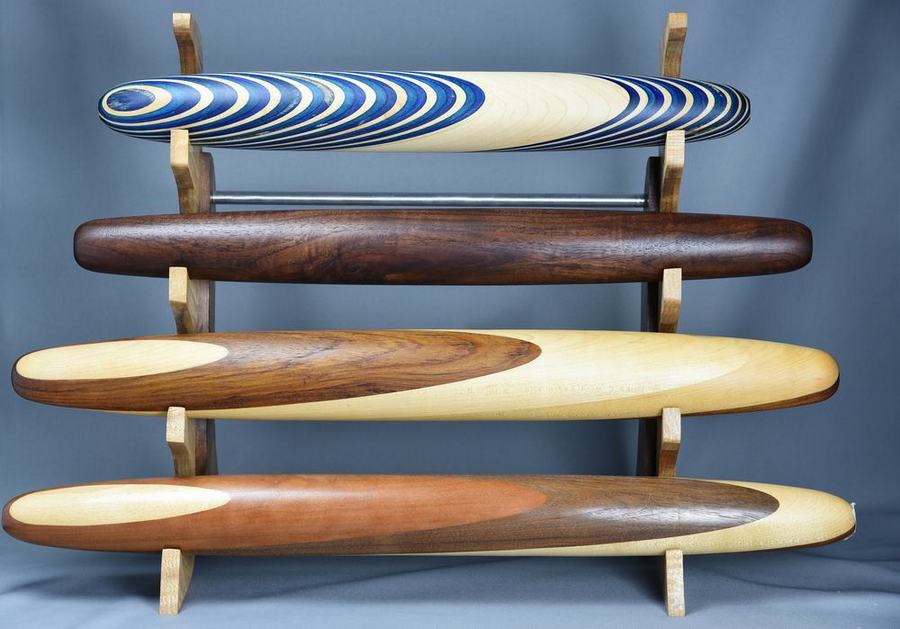 |
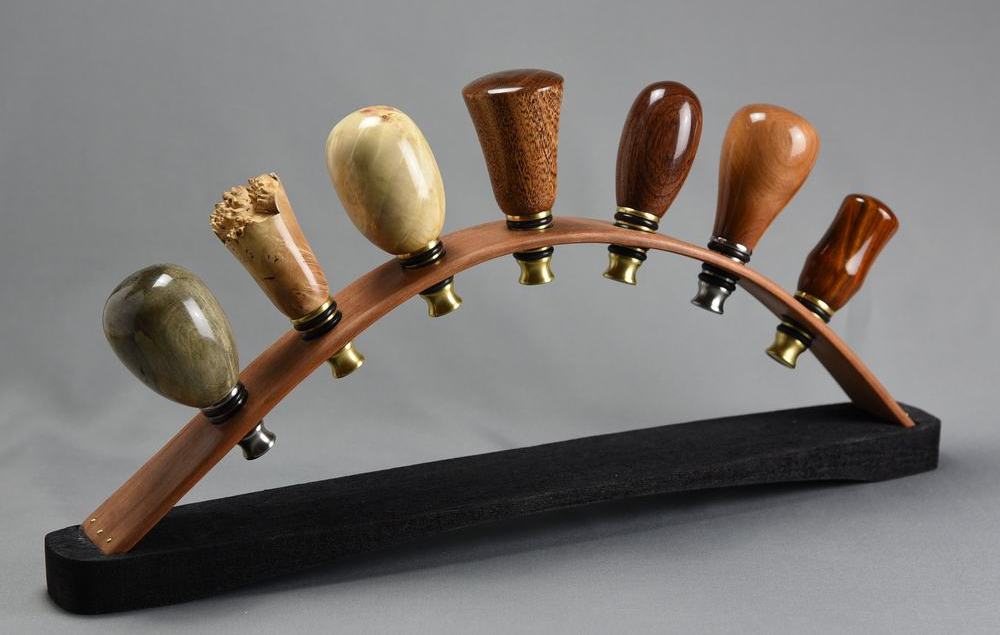
Just a set of rolling pins displayed on a special holder that I made for showing them when at a craft sale or at a demonstration. The club often does public demonstrations at markets, Arbor Day celebrations, aand various other venues, and this is a handy way to show the rolling pins in a small space. | |
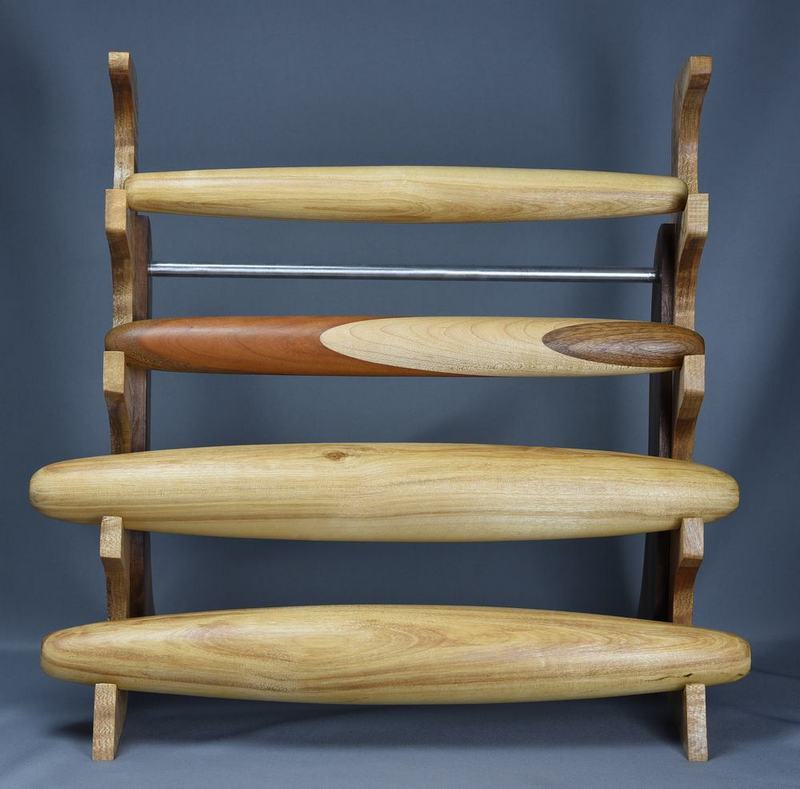 |
Same rack as the previous photo, with four different rolling pins. I told the story on the 2016 page about how the little rolling pins came into being, so there are two of them at the top here. They are about 11" long. The top one is oak, the second one is maple, cherry and walnut. The bottom two are midsize, and are made of local oak. | |
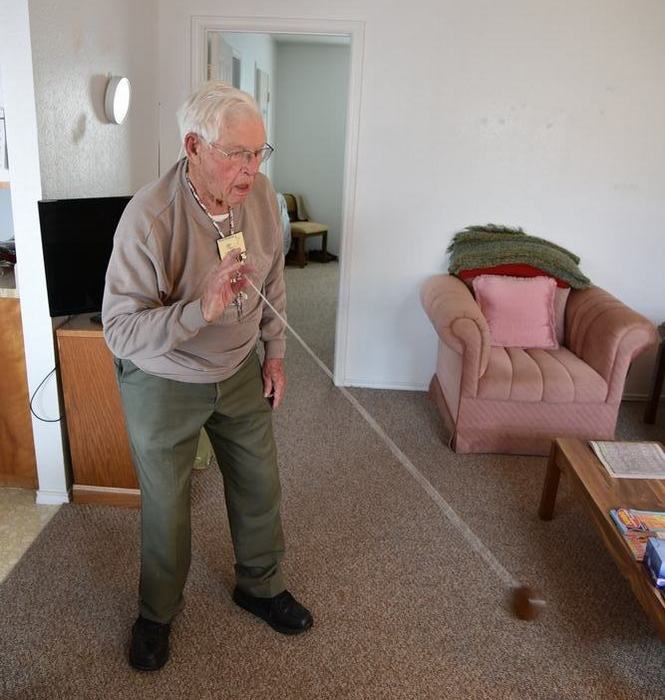 |
So, here's a really neat story. | 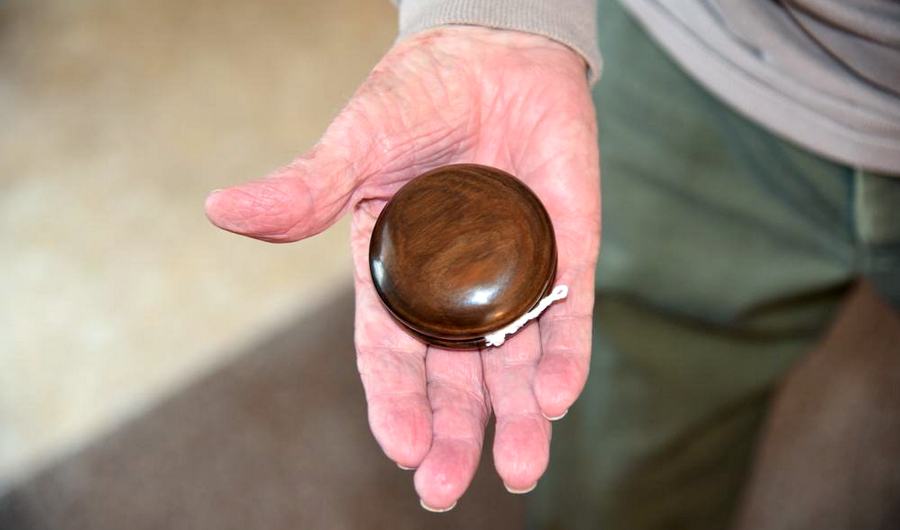 |
||
 |
I have often spoken of Texas Ebony, a tree that is very common in southern Texas. I had access to quite a bit of it when we were travelling to Texas for the winter. The wood is hard and brittle, and dirty to turn, but the color contrasts and beautiful finish one can get makes it a beauty to work with. | |
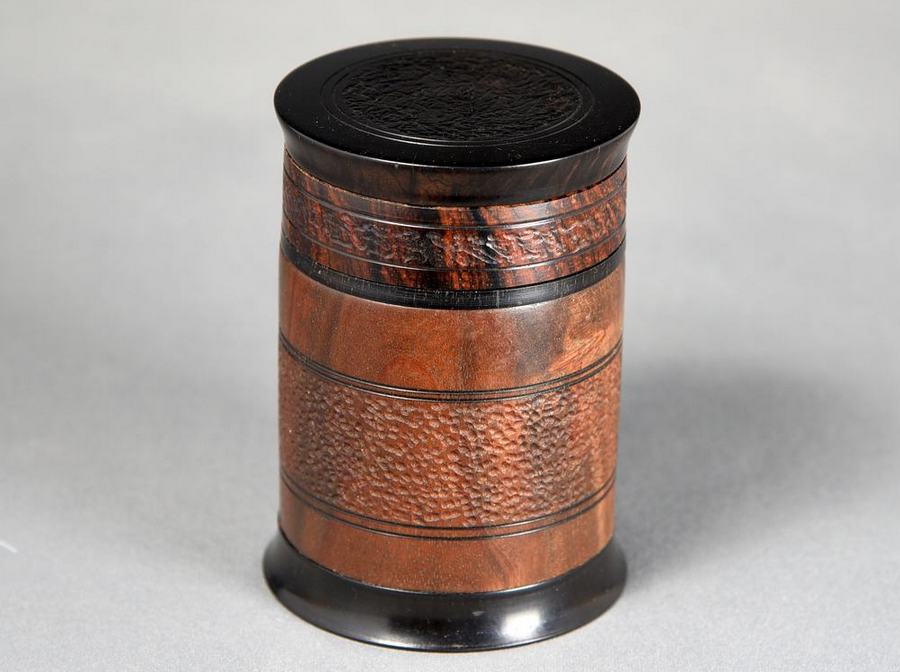 |
This box will probably never leave our family. Karen always has first dibs on everything I do, and some of them are immediately seized and brought upstairs into the living room and placed on display. Those, I know, are not going to be for sale or give away to anyone else. When I am gone, someday, she may choose to give them away. It is of African ebony and cocobolo. These boxes are very difficult to pull off because of the construction of them. Notice that the box inside is ebony, as is the foot and the cap. The outside is a cocobolo sleeve turned about as thin as veneer and then slipped over the core of ebony. Then the box is threaded before the foot is glued in place to hold it all together. The thing is, most of the work is done before the threading, and if you screw up the threads, the piece is firewood. The cocobolo was then ringed and textured. The middle photo shows the box open with the threads visible. This box opens and closes like silk. The bottom photo shows the ebony top, which is also textured using a ball cutter in my Foredom carver. This box is about 5" tall and about 2.5" in diameter. 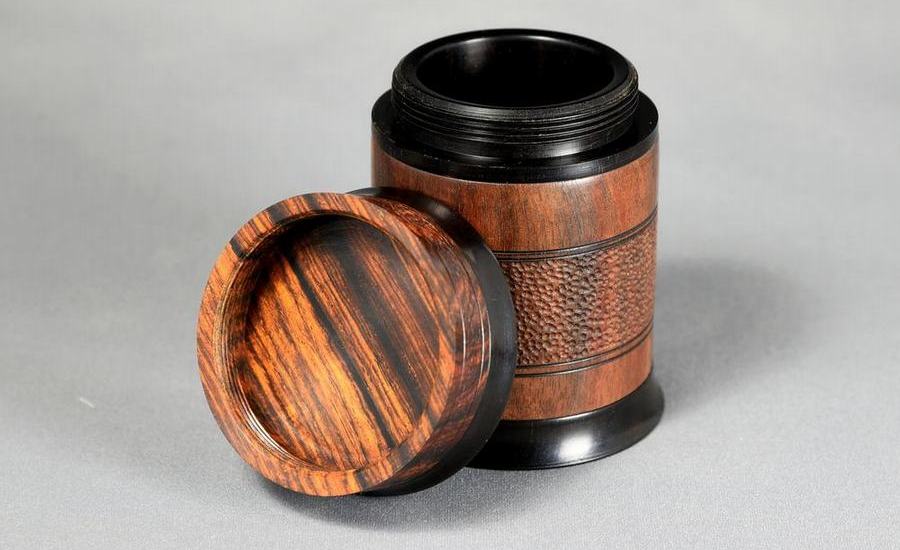 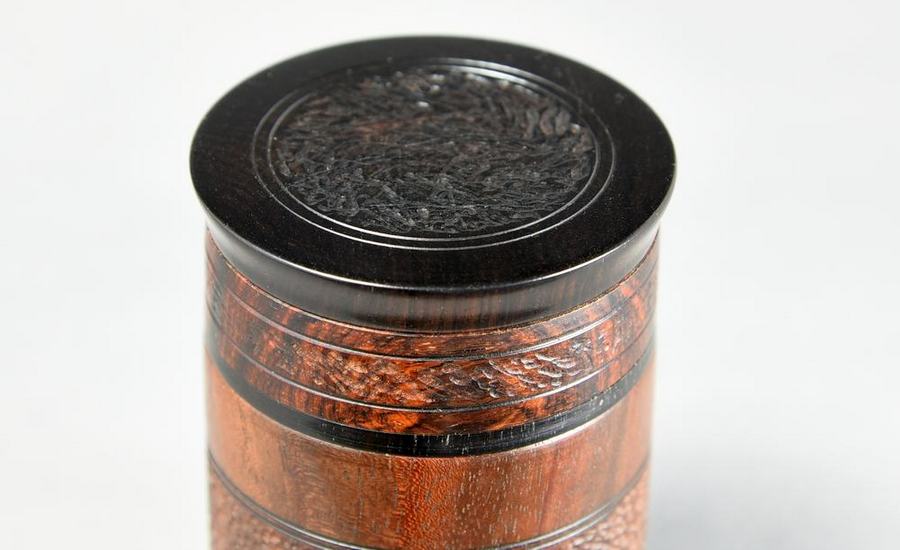 | |||||
|
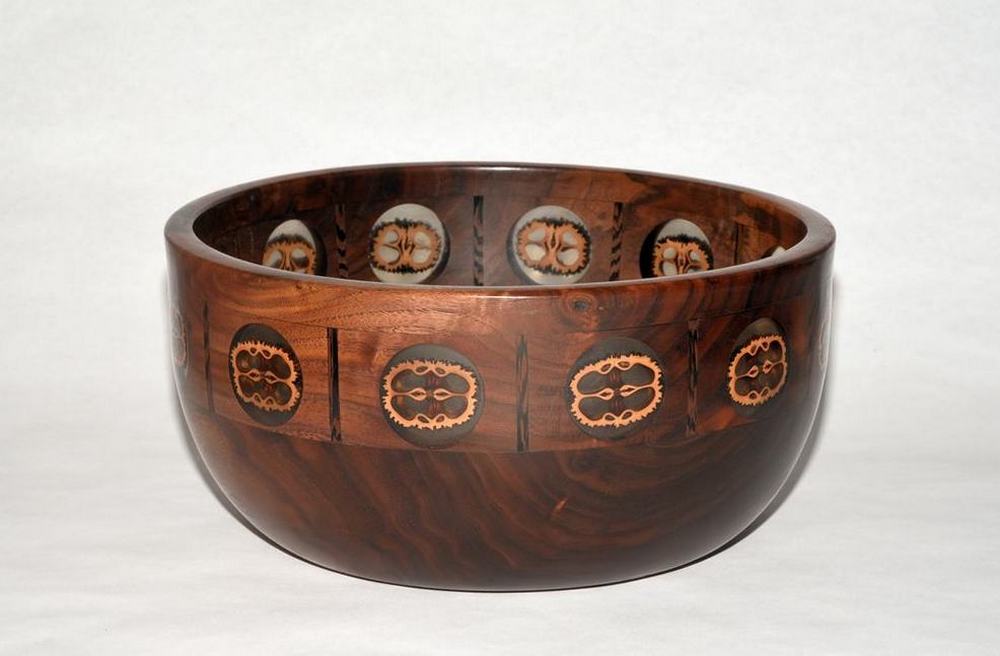
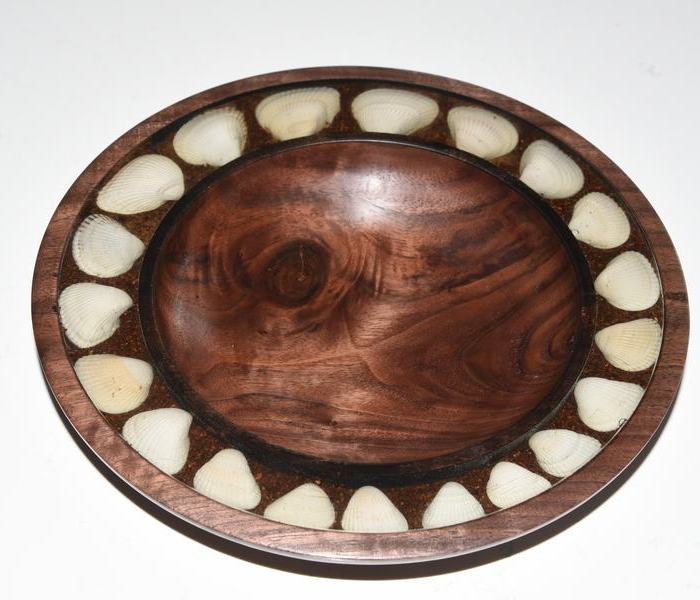
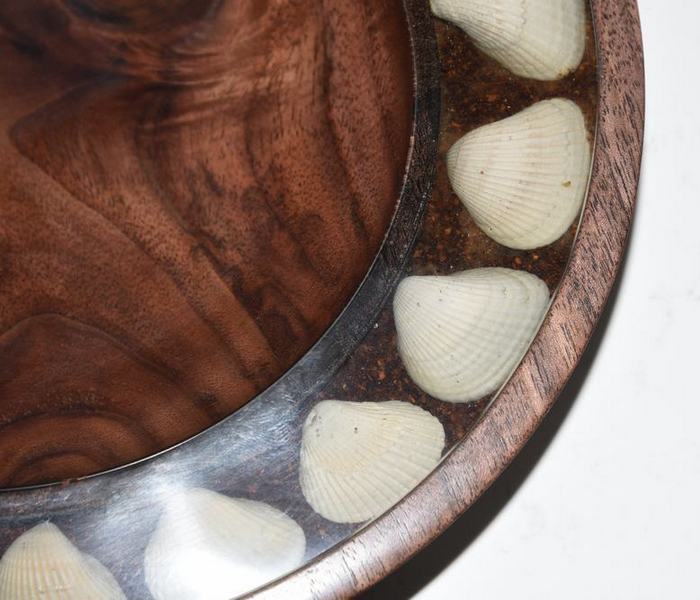
About 45 minutes east of Donna, Texas, there is a road that leads directly on to the beach at Boca Chica. You drive straight on to the beach and then turn south and drive all the way to where the Rio Grande River empties into the Gulf of Mexico, about 4 miles or so. The beach is literally deserted, and the driving smooth as glass on the hard, wet sand. Just a fisherman or two along the way. Just a beautiful spot, and we could let Kira off the leash and watch her dodge the waves coming in and dig in the sand. Of course, she required a bath to get the sand out when we got home. And lots of little shells, which Karen and I could not resist picking up. Had no idea why - they were just pretty, and we don't have them in Manitoba. But I was already hatching an idea. The idea turned into this piece, called "Boca Chica". Turned of Iowa walnut from Lauren Cory's farm, this piece is about 11" in diameter. The bowl is offset, as the shells go from large to small in the rim. The groove in which the shells are placed also varies in width to accomodate the different size of the shells. That meant that the bowl was turned off center much of the time. The groove, in addition to being off center and of a different width, also had to be deeper for the larger shells. That meant, on the lathe, the bowl not only was off balance, but also had a wobble to it in order to create different depths in the groove - the deepest where it was the widest and the shallowist where it was narrowist. I still can't figure out how I did the math to accomplish this, but it worked out. And, yes, what looks like coffee in the bottom is exactly that - coffee. Then the shells were tacked in place, and the casting resin poured in place over a few days to make sure that aire trapped under the shells could escape. All in all, a very difficult project.
|
|
|---|---|
 |
 |
|
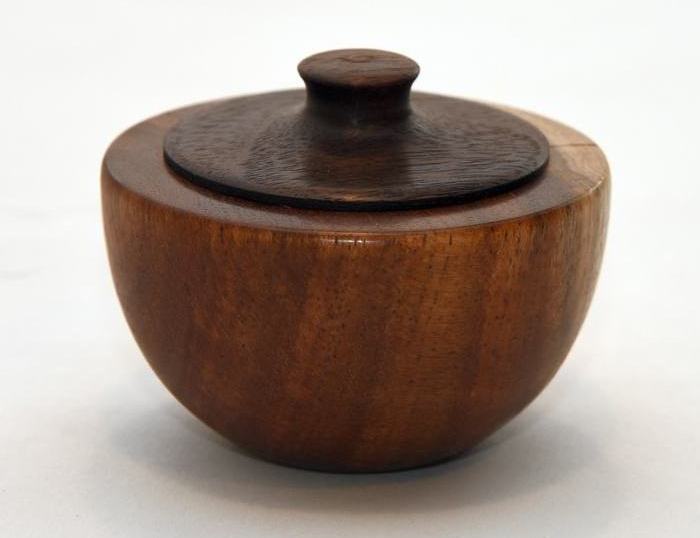
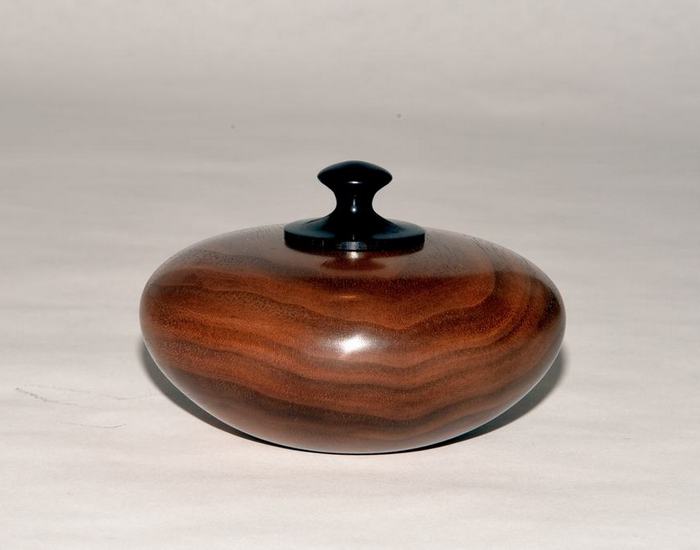
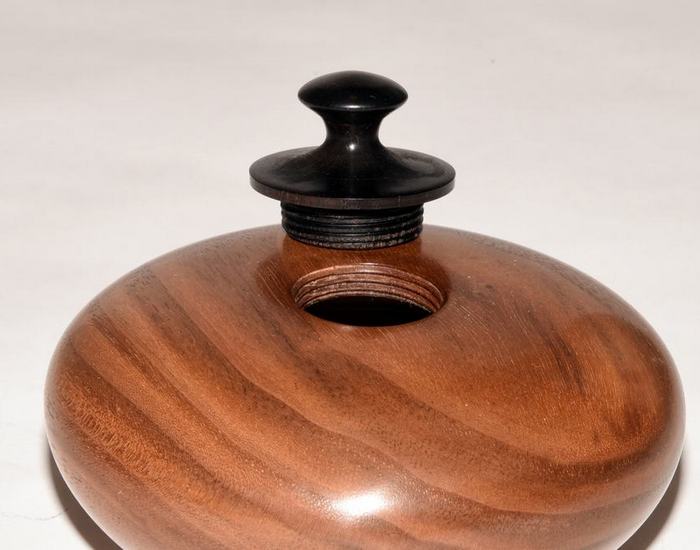
This is the first piece I ever threaded. I practiced a bit with the toothed tool for a while in Texas, and decided to try it on a little keepsake box, or pet urn, of walnut. This piece is about 5" in diameter. The threaded lid is of cherry and dyed black. I was amazed at the result. It worked perfectly the very first time, and almost better than any time I tried it afterward. The threads spin easily, close tightly and smoothly. I thought, "well, this is a snap," and then found out that it was purely beginner's luck.
|
|
|---|---|
 |
 |
|
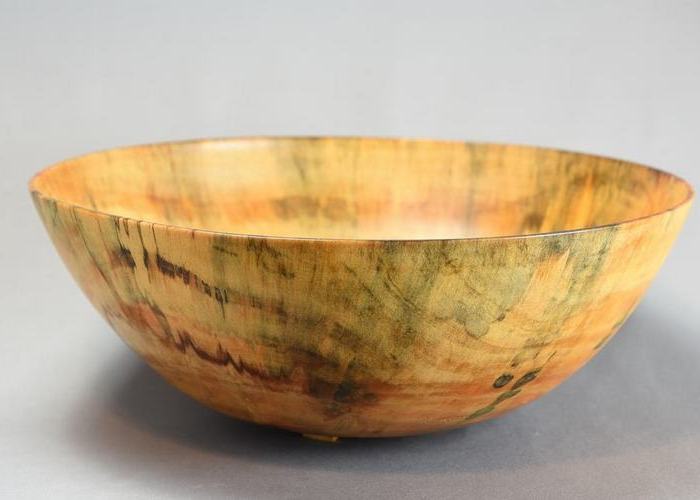
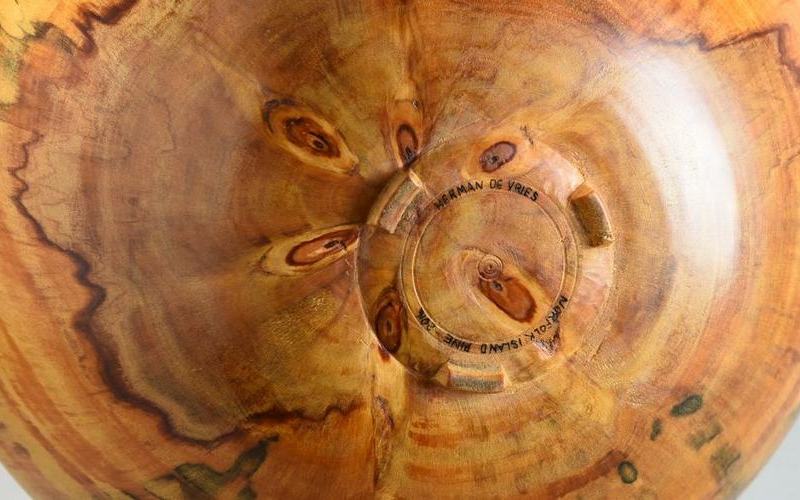
Roger Lieser had a huge piece of Norfolk Island pine and shared some of it with me. I eagerly accepted, having seen some of the beautiful translucent pine bowls being made by woodturning friends in Hawaii. This wood lacked the branch figure that is often spaced equally around the outside, although a tiny bit of it can be seen in the bottom photo. I made this 18* bowl in Texas. It is turned while the wood was wet, using a dark shop with a single light on the outside as I turned. The amount of light showing through helps to judge the thickness. It is extremely thin, about 1/8 inch, and when it was done I put it in a plastic bag with Danish Oil and left it there for about a month to make sure oil soaked completely through. Then it was taken out and allowed to dry, then put back in for a week, allowed to dry, etc. Several times repeated. Finally, it was buffed. The right hand photo shows the three little feet I carved on the bottom. It sits solidly on those feet. A light on the inside of the piece can clearly be seen through the wall.
|
|
|---|---|
 |
 |
|
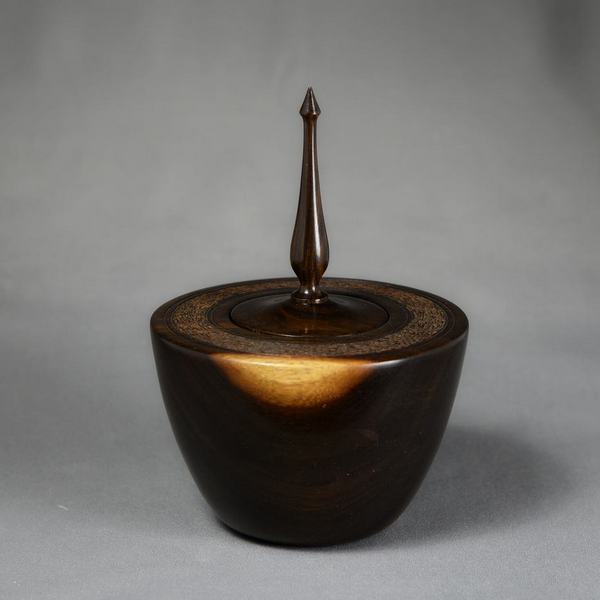
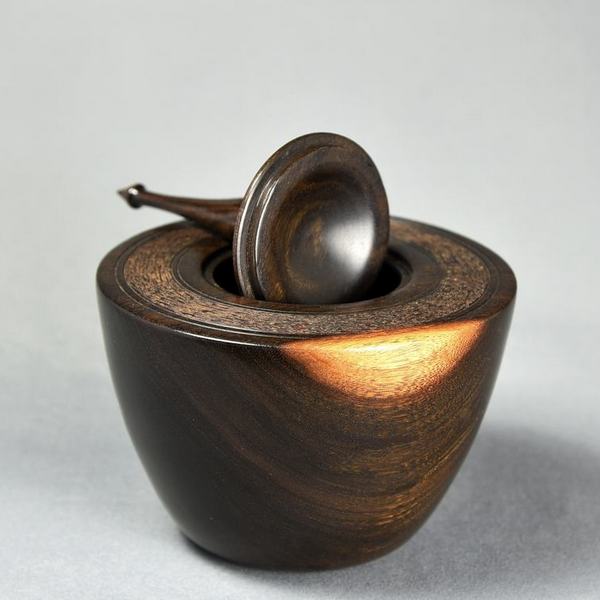
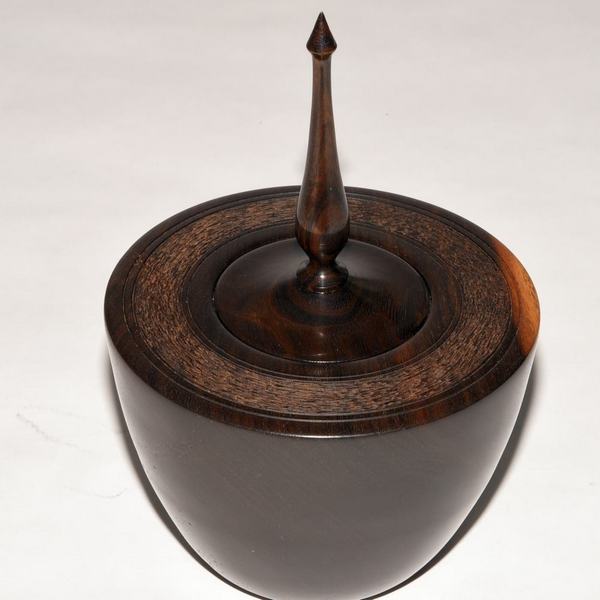
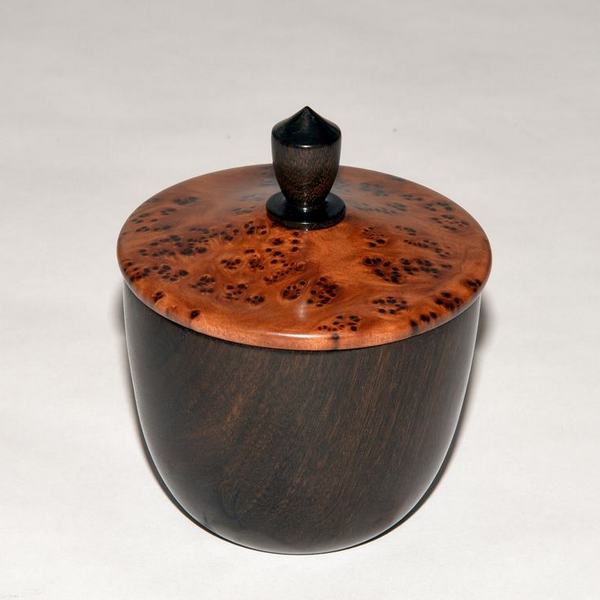
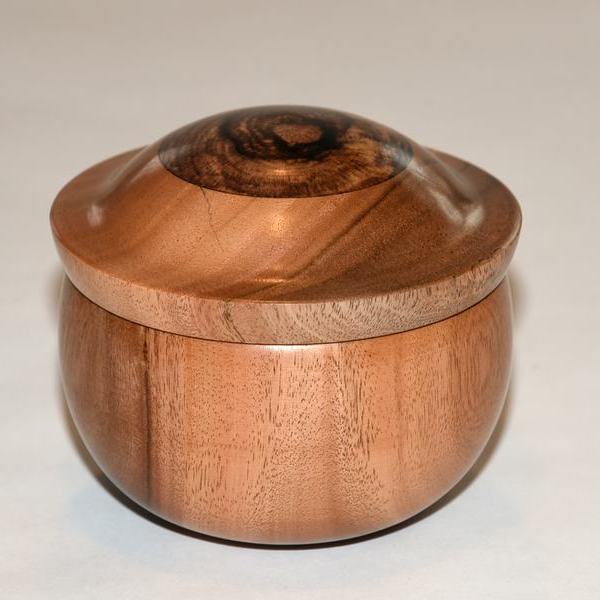
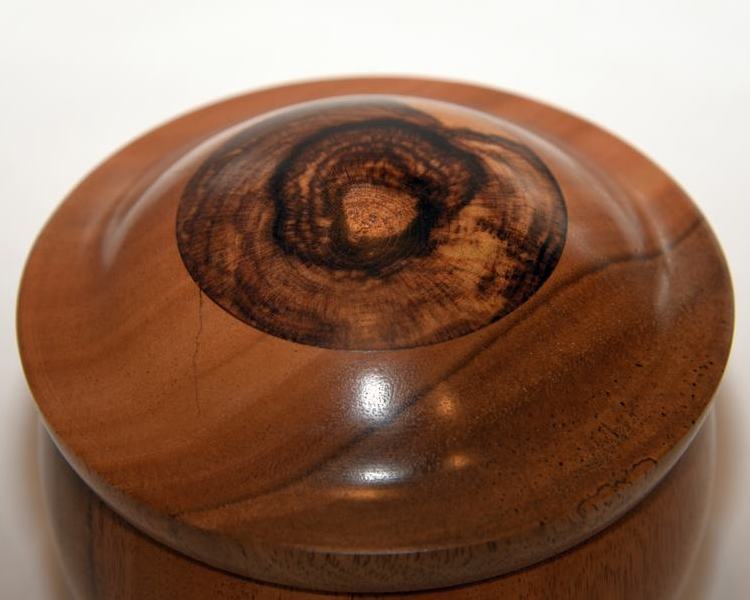
Three separate pieces here. The first three photos are of the same piece, an 8" tall, overall, lidded vessel of Texas ebony with an ebony finial. This is a rare piece of Texas ebony with no splits or cracks. The little vessel was given a texture treatment around the opening, and the lid was inset into the box. The second photo shows it open, and the third a closer view of the texturing on the top. This one is owned by Karen. The finish is one coat of Danish oil, and then the piece was buffed with the Beall buffer and carnauba wax. Note the little patch of white sapwood left on the piece for interest. The fourth photo is of a Texas ebony bowl with a thuya lid. The two woods go well together, the dark ebony contrasting with the beautiful red burl. This box is only 4" high overall. The bottom row is a box of eucalyptus from Texas, and the lid has an inset of Manitoba caragana bush. The eucapyptus has a silky smooth finish. About 4" diameter.
|
|
|---|---|
 |
 |
 |
 |
 |
 |
|
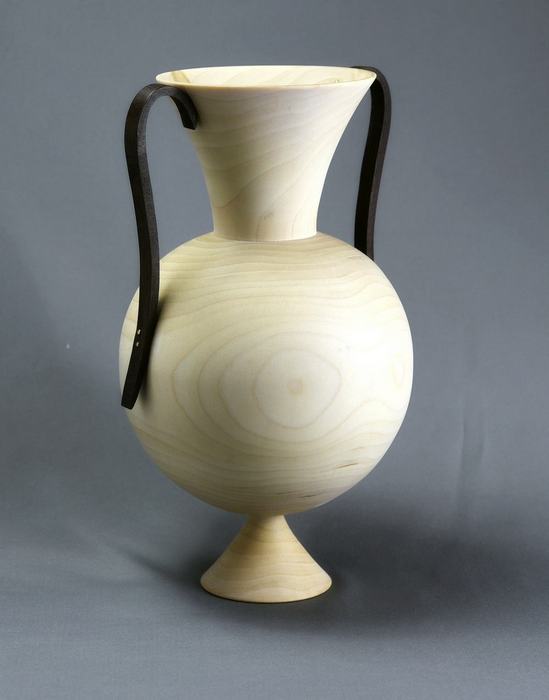
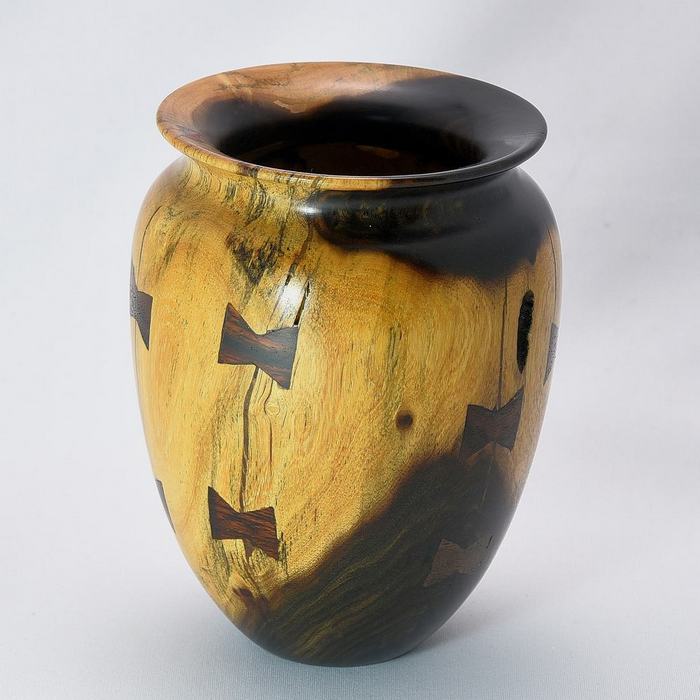
"Bones"???? Why would you call a wood turned piece "Bones"? The TV show, Bones, was about a quirky and brilliant forensic anthropologist working at the FBI lab at Quantico, with her FBI agent partner. I liked the show because it was strange and quirky, and because she had the neatest stuff on her shelves in her office. One day, I decided to photograph the television screen and hung the photo of this piece on the shop wall. In the photo it was just a shadowy outline, but I liked the shape. I first turned the body and foot, and the neck separately, out of birch several years ago. Them, it sat on the bench, unfinished for a long time. I also bought some compressed walnut, which was bent and became the "ears" or handles. The compressed wood can be cut thin and tied in a knot if one wishes. Amazing stuff to work with. I made the handles, and they sat there too. I did not know how I was going to attach them. Finally, I figured it out and drilled three tiny holes to fit three snipped off brass brads and epoxied them in place. The piece is finished with matte Krylon spray, and the handles with Danish oil. The piece is about 12" tall and barely more than 1/8" thick. It is very light. The right hand photo is a 10" tall of Texas ebony, typically cracked. I used small dovetails to span the cracks, and if you look very closely at the top left of the upper rim, you can see a tiny little dovetail up there. All hand carved and put in place before finish turning. Finished with Danish oil and buffed.
|
||
|---|---|---|
 |
 |
|
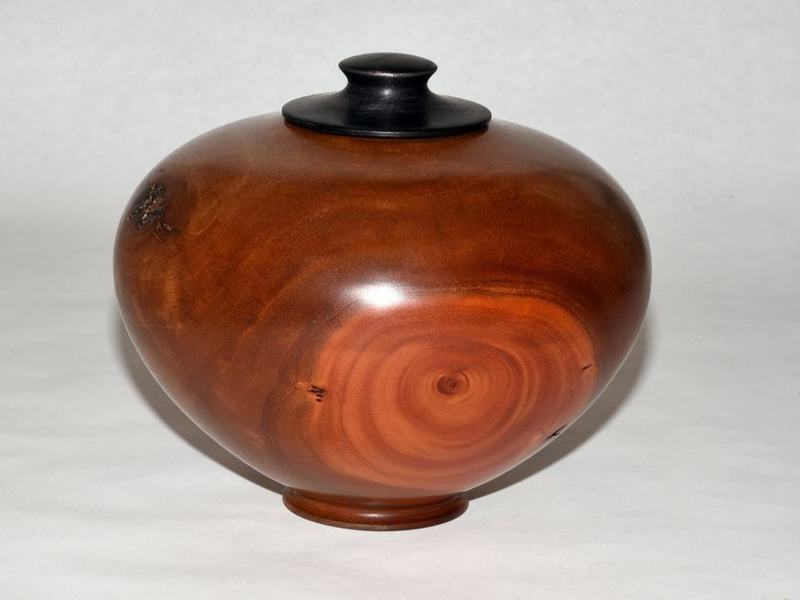 |
This a eucalyptus vase with a threaded walnut lid. The lid is, of course, dyed black. | |
 |
Let's finish off 2016 with a touching story. | |