2013 Turnings

Here we are in May, 2013, and I just finished the 2012 page. Oh well, better late than never, and this year I have a really good excuse.

We decided to go to Texas for about a month and a half, and while we were gone I unplugged the computer and made sure everything was backed up and secure. All good so far.

When we returned, I plugged in the equipment and pushed the start button on the computer. Nothing. After several tries, I figured that the power supply had given out. After all, it was almost 10 years old. My repairman replaced the power supply and turned it on. The computer dutifully powered up and all seemed OK until it wouldn't boot. To make a long story short, after more than a week I was finally told that everything was toast. Starting over again, even though everything is backed up, is not easily, especially since half the programs that ran before no longer run on Windows 8, which was a whole new learning curve by itself.

Finally, though, I completed the work and then tried to FTP my stuff to the server. Another lesson in frustration and patience. Perseverance, however, is a trait of the woodturner, and we are finally here. Only thing is, it is now December of 2015. Two years have gone by and some people are wondering if I am still kicking, and if I am still turning.

Yes I am, although not as much as before. I need a new muse - my old one is wearing out. Texas was nice. They have mesquite in Texas and it took me awhile to run some of it down to turn in the park shop. The 55+ RV park is very well equipped with Nova DVR lathes and some other nice equipment, as well as very nice people.

Not surprisingly, some of my new pieces will be of mesquite, and in the future you will be see more of it as we return to Texas each year and I now have some excellent sources for the wood.

As usual, I love hearing from you, so feel free to let me know you were here.


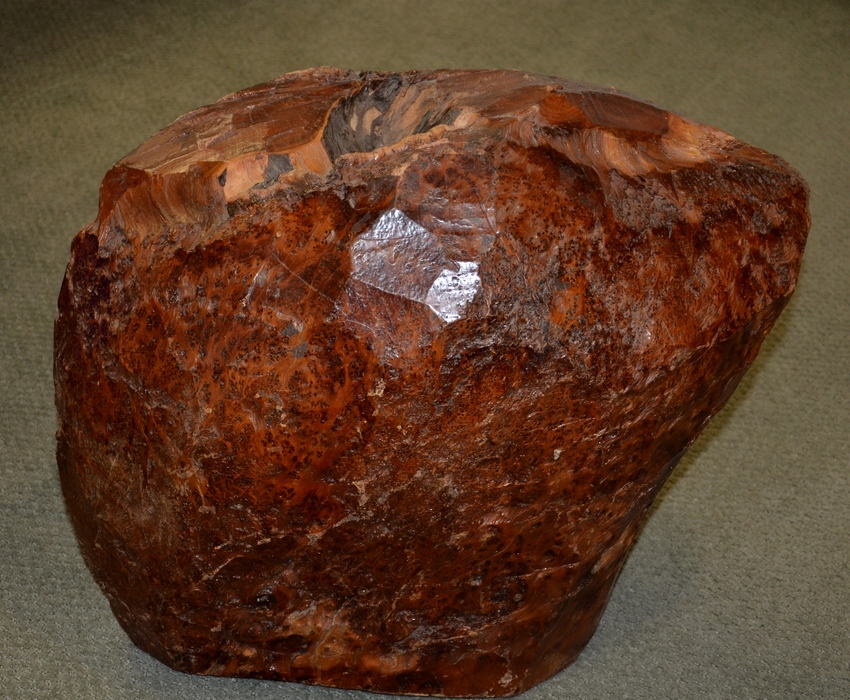
I have called this piece "Now What?"

I first posted this on the WoW site with the comment that I feel like the dog that finally caught the car. Now that I have it, what do I do with it?

I first spotted this burl in about 1987, sitting at Windsor Plywood with a very hefty price tag on it. I offered various prices over many years, but they would never discount it for me. Then a friend of mine caught them on a weak day and they sold it to him for way less than I had offered, and Mike took great delight in giving me a hard time every time I was at his place. He had it displayed in his living room on a pedestal.

To make a long story short, Mike offered the burl to me at his purchase price. He had some health issues, and told me he did not have the heart to cut the burl without having a precise plan for it. He thought that, as a turner with more experience, I would find a way to use the burl to its best advantage. So "now what" is my question.

I have walked round and round and drawn on this burl a dozen times, but still have to get the nerve to make the first cut. At the price of this stuff, even the shavings are valuable.

The famous woodturner Mike Hosaluk is a man I now feel safe to call my friend. We were able to host Mike during his recent trip to Winnipeg, so I asked him what he thought of the burl. First thing he said was "the shavings are like perfume when they burn, so don't throw them away."

I have some ideas, and when they come to a head and the piece is cut, I will post photos of it. Until then, the outcome for this 80 pound burl is still a mystery.

Note added - some results of the burl, and the cutting up of the burl can be seen on my 2016 page.

80 pound Thuya Burl

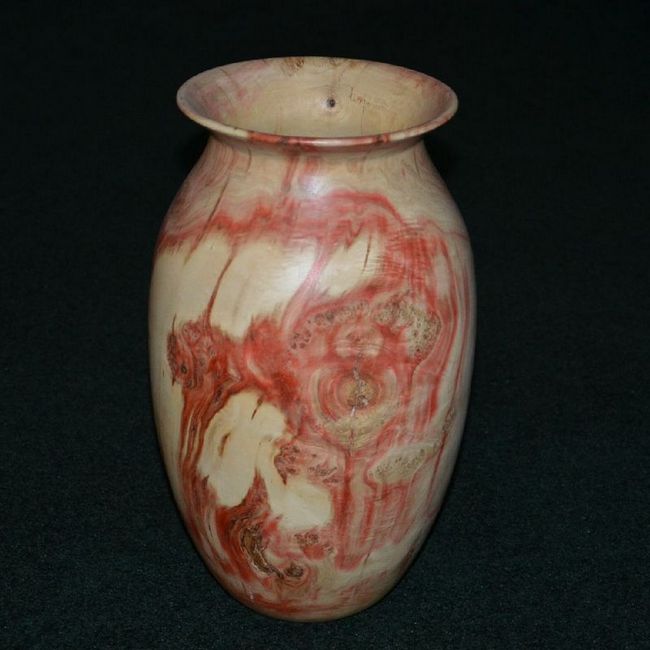
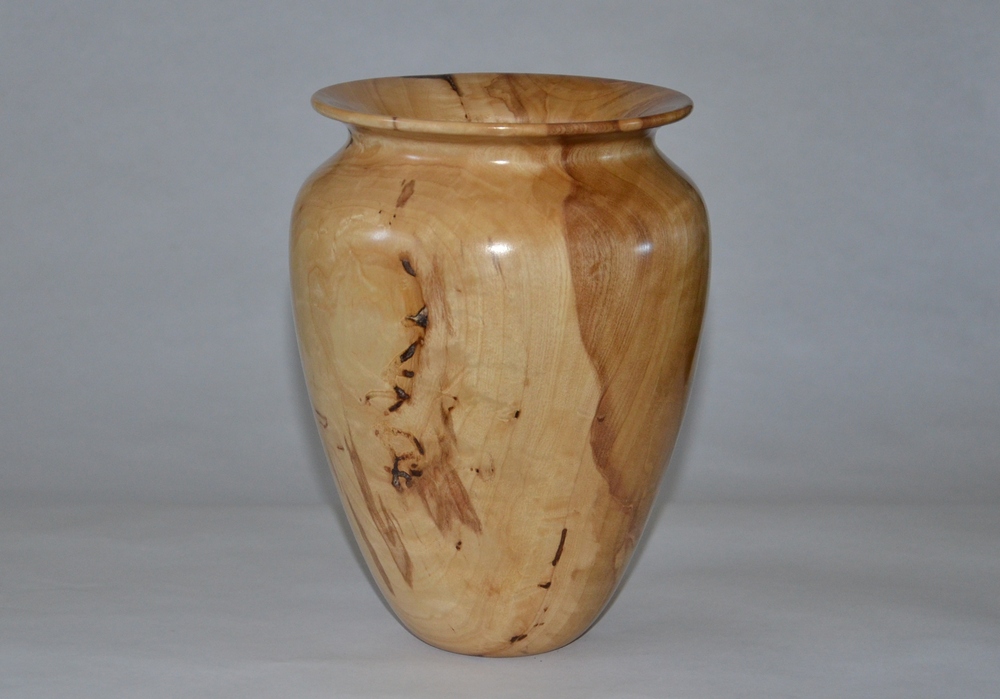
Box Elder Vase
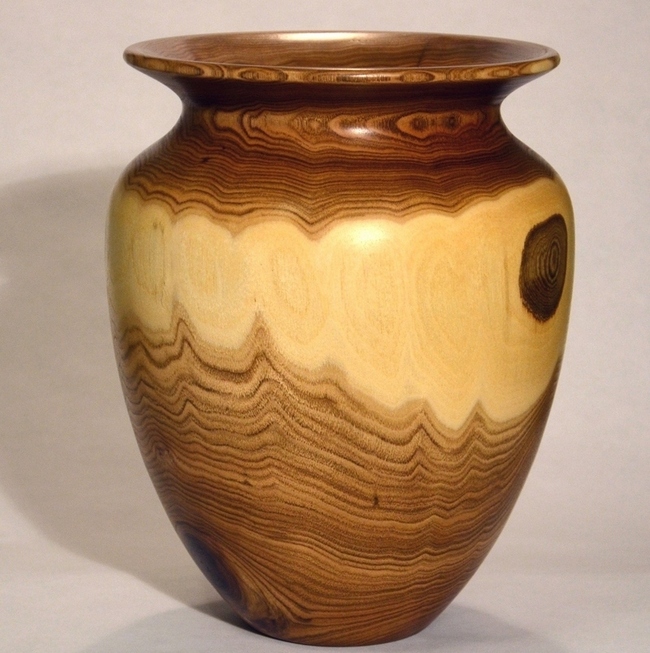
Butternut Vase

I like turning vases for some reason. I think because there is something so classical about the vase form, having been used so much throughout the history of mankind to store stuff. Anyway, here are two of them. The one on the left is about 18" tall, made of some of the most colorful Manitoba maple I have ever seen. I remember getting the call from a local news photographer who said he had some trees he wanted to remove and wondered if I would be interested. I went and saw the trees, and our club went out and cut down the trees and took them home. This is finished with water based urethane which will help to keep the color intact longer. It will not last, however, and the red will turn into a nice chocolate brown.

The piece on the right is a bit smaller, about 12" tall. It is of butternut from a tree along the Assiniboine River here in Winnipeg. It was a huge tree and the homeowners were dismayed to have it fall in a windstorm. The branches were so big that at one time the Winnipeg Symphony actually sat and played under its protection. This vase is finished with Danish Oil. The interesting grain and color comes from turning this in end grain orientation and leaving the sapwood (wood just under the bark) intact on the widest portions. The inner wood is much darker. This vase is very thin and light.

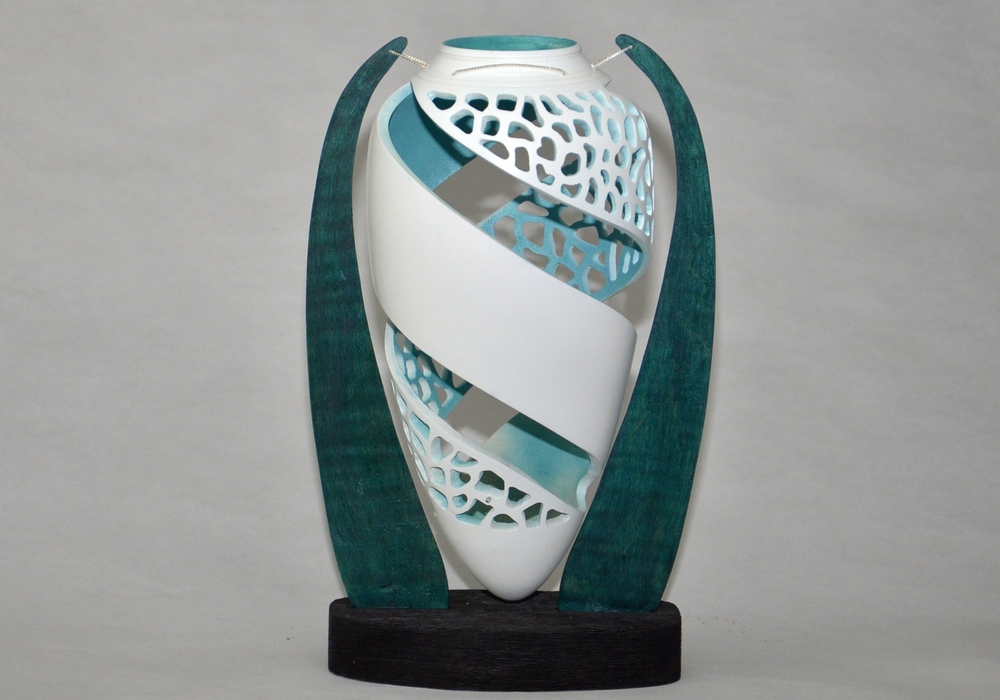
Suspended Spiral Vase

This thin birch piece sat on my bench for years, waiting for some inspiration and it just didn't happen. Finally, I was scheduled to do a demo for our club, so I grabbed the piece and used it to show how to do piercing. When I took the piece back home again I decided to turn off the foot and make it pointed, then decided to create some "negative space" by taking out big spirals and finished piercing the rest of it.

It still looked funny, so I painted it white with the airbrush. Still something missing so I used the airbrush and my favorite color, turquoise, to paint the inside of the piece. That was better, so I turned my attention to suspending the piece.

After several false starts I got the idea to use dyed maple on the sides and a wirebrushed and dyed walnut base. Then went to the jewelers and bought a very fine silver chain to suspend the piece.

Haven't a clue what to call this, and am not even sure if I like it. It gets a bit of interest when people see it, but no one has asked me for it, yet.

It stands about 11" tall.

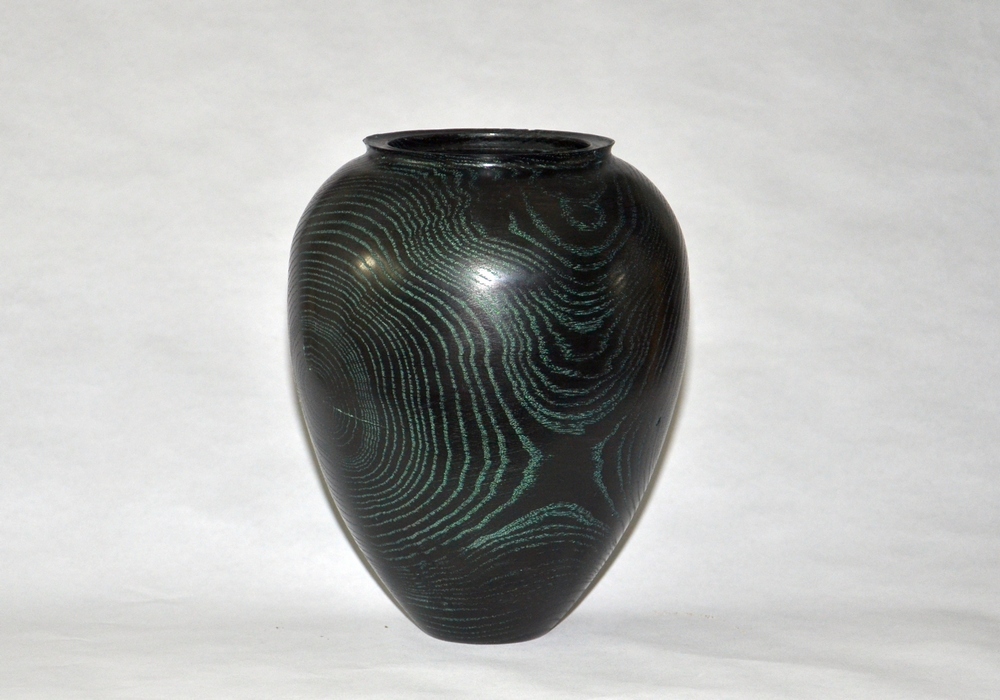
Waxed Oak Vase

I told my friend I was going to destroy some of my old work. There are many pieces that I have kept from my early turning years that I was pleased with at the time, but now no longer like. When they begin to build up on the shelves and in boxes it is time for a housecleaning.

He was horrified. "How can you do that? Can I see them?"

So, we went down and I opened up a box of stuff I wanted to burn. He looked at this piece and said, "How would it look if you waxed it with a colored wax?" So we took it into the shop and I mixed some iridescent green dry paint into a batch of homemade mineral oil and beeswax compound I had made up about 20 years ago, and we smeared it on. Then buffed it off.

This was the result, and I kind of like it. I wanted to give it to him, but he refused, so I still have it.

This piece was first turned in 2003, and the original can be seen here

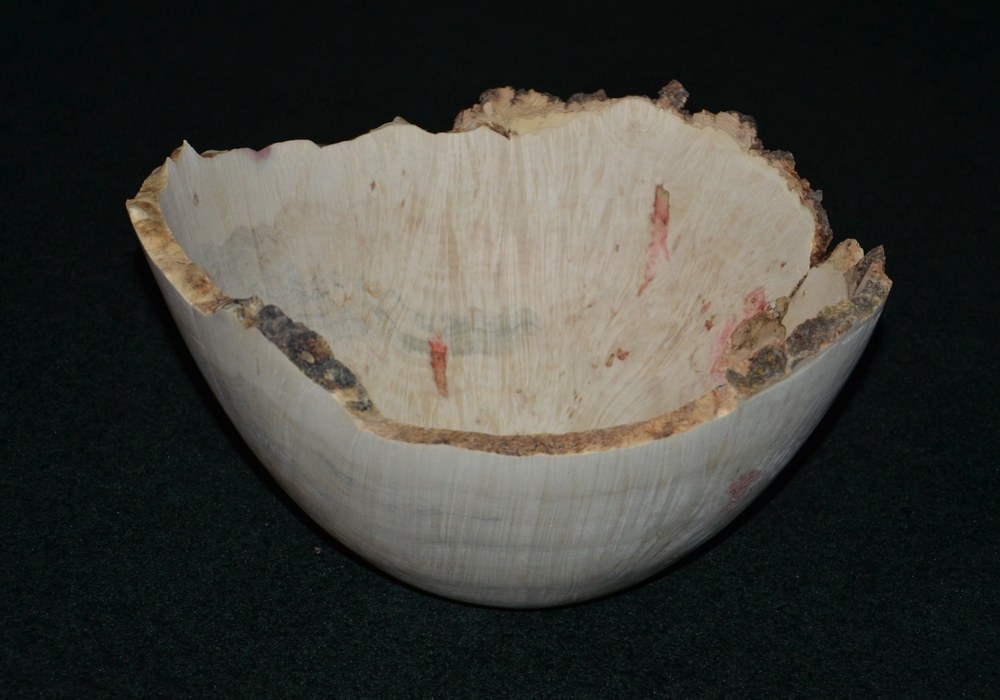
Box Elder NE Bowl

I used to turn a lot more natural edge pieces than I do now, and don't really know why that happened. I suspect it may be because the "magic" has kind of worn off. To me, most natural edge pieces with the bark on them all tend to look alike.

Having said that, the upper bowl, an 18 inch box elder burl, is very different from most natural edge bowls. There is no bark on this, the bark was way too fragile to even think of trying to preserve it. But the natural edge follows the form of the outer surface of the burl, rather than the profile of the trunk of the tree. That makes it unique and quite different. It also does not have the oval shape that the usual type of natural edge has. This is a large bowl, bleached to keep the wood white, and then finished with Krylon matte finish.

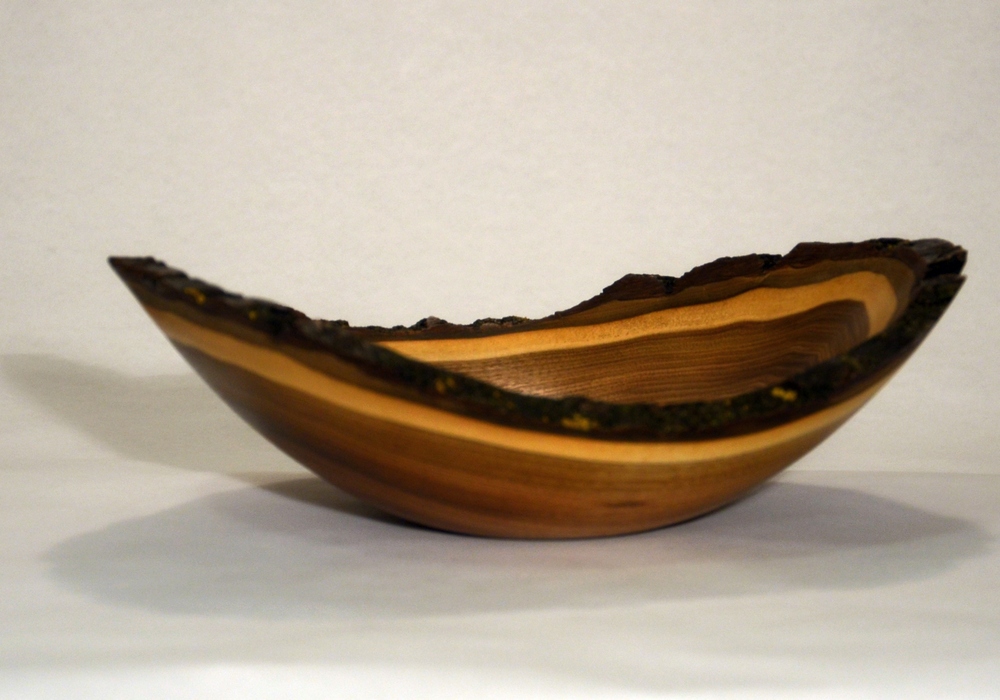
The lower bowl is butternut. The wood was an excellent candidate for a natural edge bowl due to the wide ring of whiter sapwood, which adds a beautiful contrast, and the nice stable bark which so nicely frames the rim. The bowl is about 12" in diameter and is finished with Danish oil, then buffed and waxed.

Butternut NE Bowl

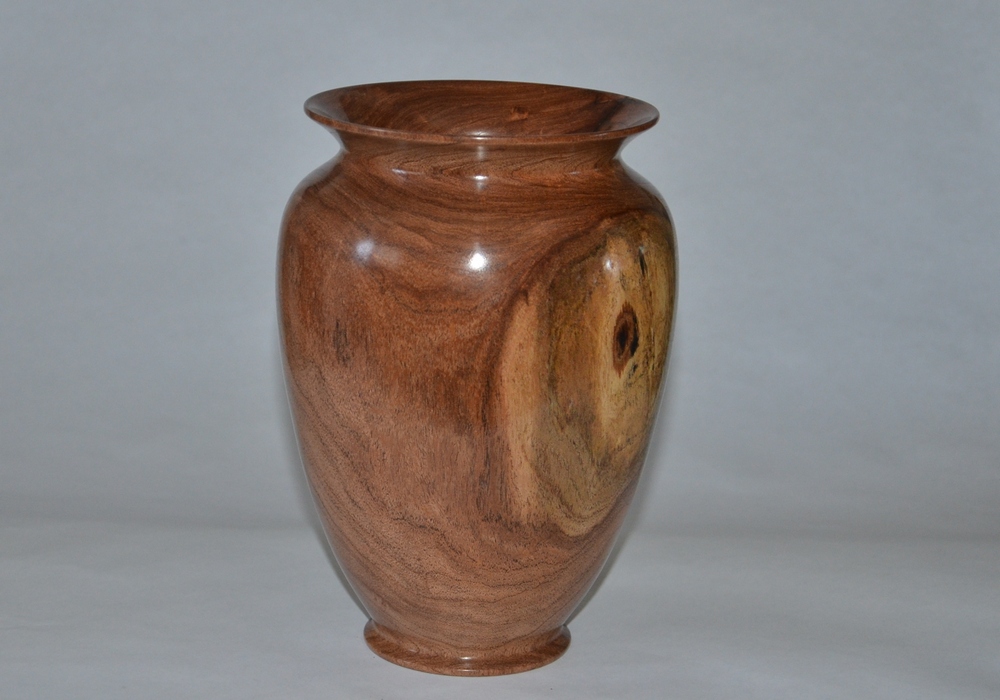
Mesquite Vase

I've mentioned before that I like turning the traditional vase shapes. This shape just seems to emerge when I get a piece of wood on the lathe without a real plan. Don't know why - it just happens!

Well, actually that is not quite true - at least not anymore. It is rare that I will put a piece of wood on the lathe without knowing precisely what the end result is supposed to be, but sometimes .....

In the case of the upper vase, made of mesquite about 10" tall, it was easy to see the form hidden in the wood. Mesquite is such a beautiful wood to begin with, and a bit of sapwood on it - like this one has - is just a bonus. The wood turns like a dream, smells good when turning, sands and finishes without fighting back, and makes me wonder why so many turners do not like it. I love it. The color and finish is always outstanding.

This piece of wood came from the valley here in southern Texas, where I am writing this. I am not sure, but I think it might have come from my good friend, Roger Lieser, who is a fabulous cabinet and furniture maker here n southern Texas.

The lower vase is of a wood that is a close competitor for my affections. I love turning our local Schubert chokecherry for a lot of the same reasons. Turns like a dream, smells good, sands and finishes beautifully. This vase is about the same, maybe a tad smaller, but is almost identical in shape.

Chokecherry Vase

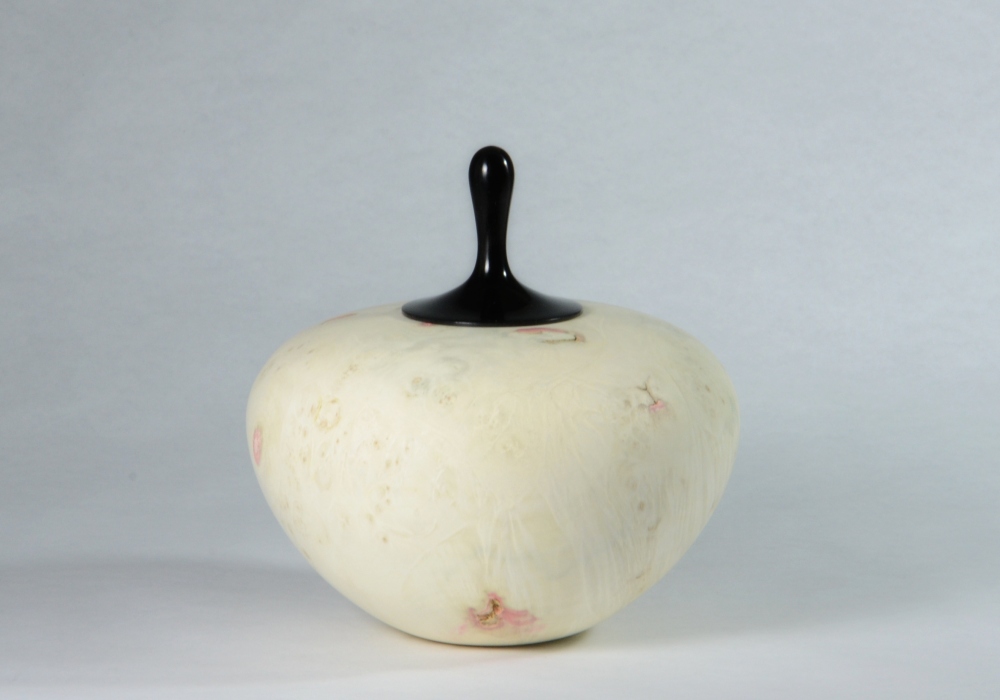
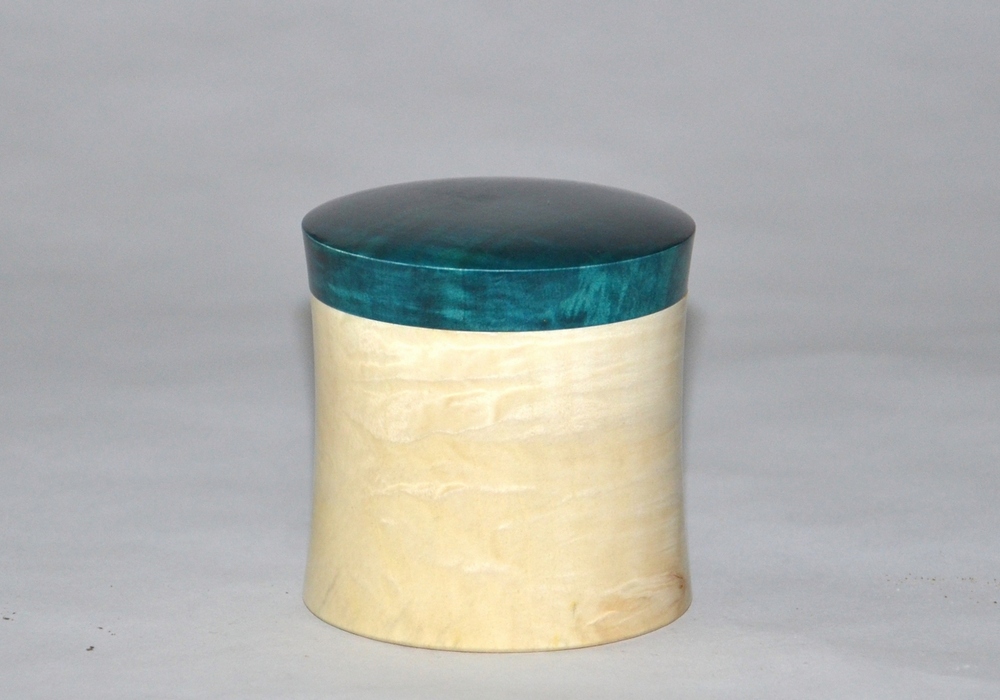
Bleached Manitoba Maple Keepsake Box.

I call these "keepsake boxes" because that is the name my little granddaughter hung on them many years ago. Actually, that is exactly what they are. She put her collection of pretty stones in hers, and others who have them use them for precious jewelery, a hiding place for keys and money, and other stuff. In very many instances they are used to hold the ashes of a special pet (like our Pomeranian, Jazzy), and, in one case, a portion of the ashes of a lady's mother.

So, keepsake boxes they are, and I like making them.

This one is made of box elder, or Manitoba Maple as we call it here, and the lid is of ebony. The box itself is bleached and finished with matte Krylon finish, and the lid is buffed and waxed. The box is about 4" in diameter.

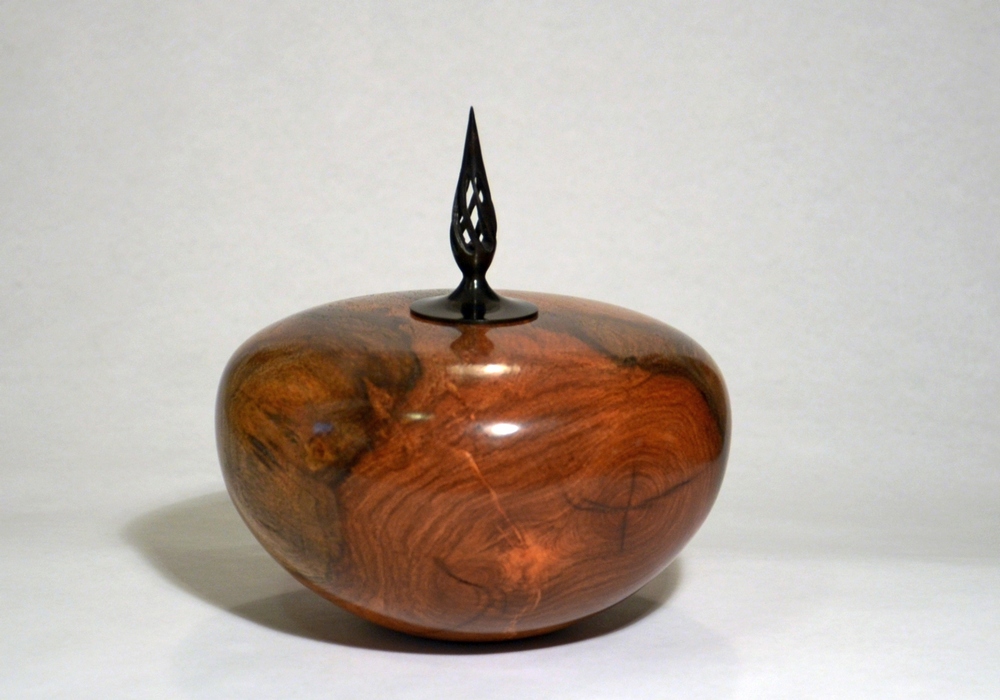
Mesquite Urn

This is a full size urn, although it does not have to be an urn. It could simply be called a hollow form.

This one is of mesquite from southern Texas, and it is about 9" in diameter. I have stated before how much I like turning mesquite and how nicely it sands and finishes. This piece was no exception.

The finial is a bit different. I first turned a cone shaped finial, and then, using small bits in my Foredom carver, I carved the spirals in the cone freehand. The carving almost took as long as making the piece, and the finial is quite fragile looking. It is tougher than it looks though, as I dropped it twice while working on it.

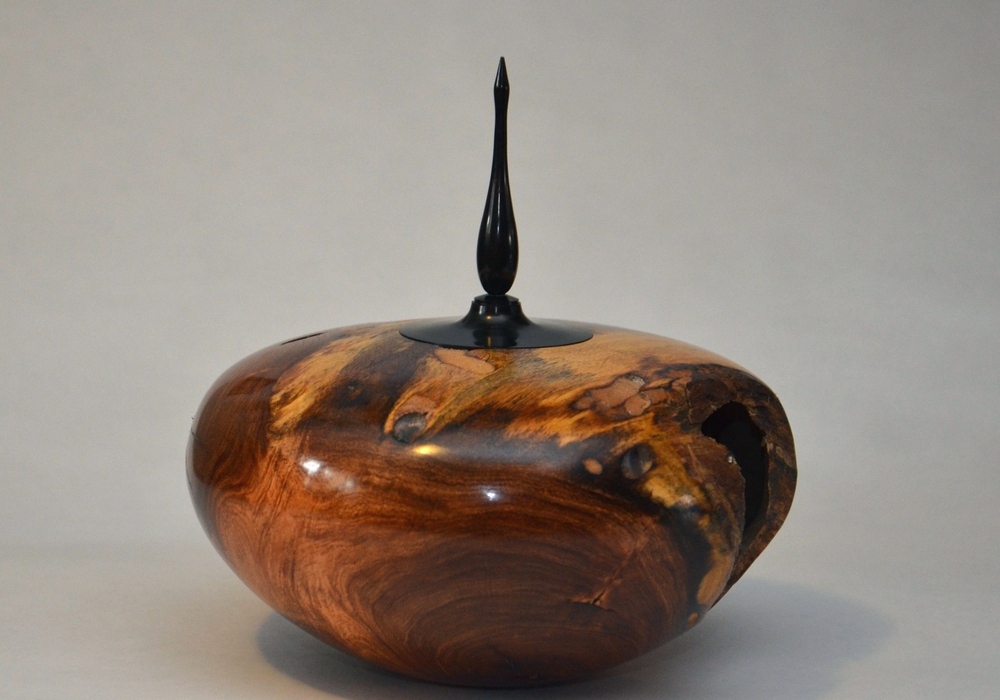
Mesquite NE Hollow Form

Looks like the previous one, except it is not a urn. The clue is that it has a big hole in the side and would be rather leaky.

Again, this is mesquite, and is simply called a hollow form. It is hollowed out through a hole in the top.

This one is a bit bigger, about 10" in diameter and the hole in it makes it an eye catching piece.

Box Elder Spiral Form

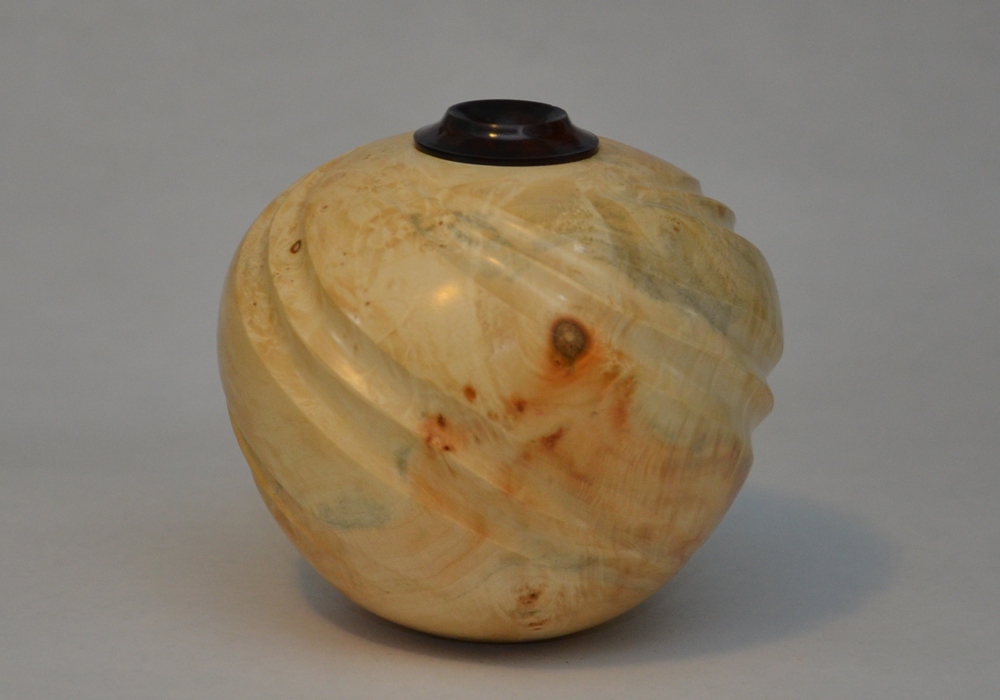
This is a box elder, or Manitoba Maple, hollow form. It is about 4" in diameter, and is finished with wipe on poly and buffed .

I have made many of these small hollow forms, which are purely for decoration - to sit on a shelf and look pretty - and they really are neat to do. What I like best is to turn them very, very thin so that when people pick them up they are surprised by how light the pieces are. This one was, of course, somewhat thicker because the spirals are carved into it, so it needed more wood on the side.

Manitoba Maple Hollow Form

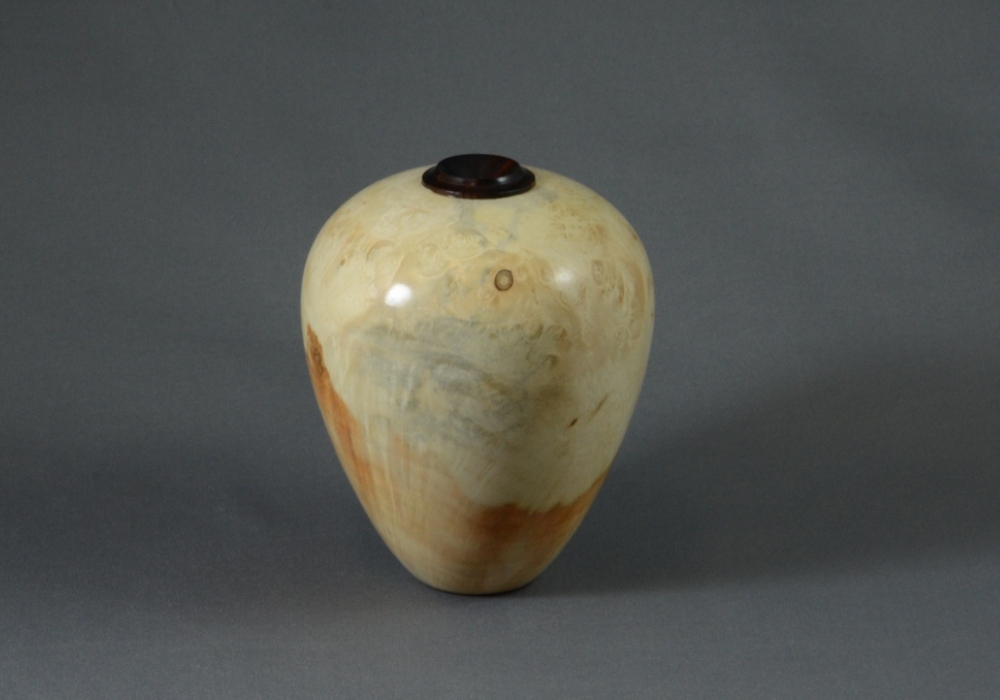
This is another box elder hollow form, a much different shape than the one just above. It is also much smaller, about 2" in diameter, and the color is much lighter. This one was bleached and then finished with a matte Krylon spray, which leaves the color intact. With the previous one, the wipe on poly darkened it a bit.

This one is very light because it is about 1/8" thick.

Tower of Ballsl

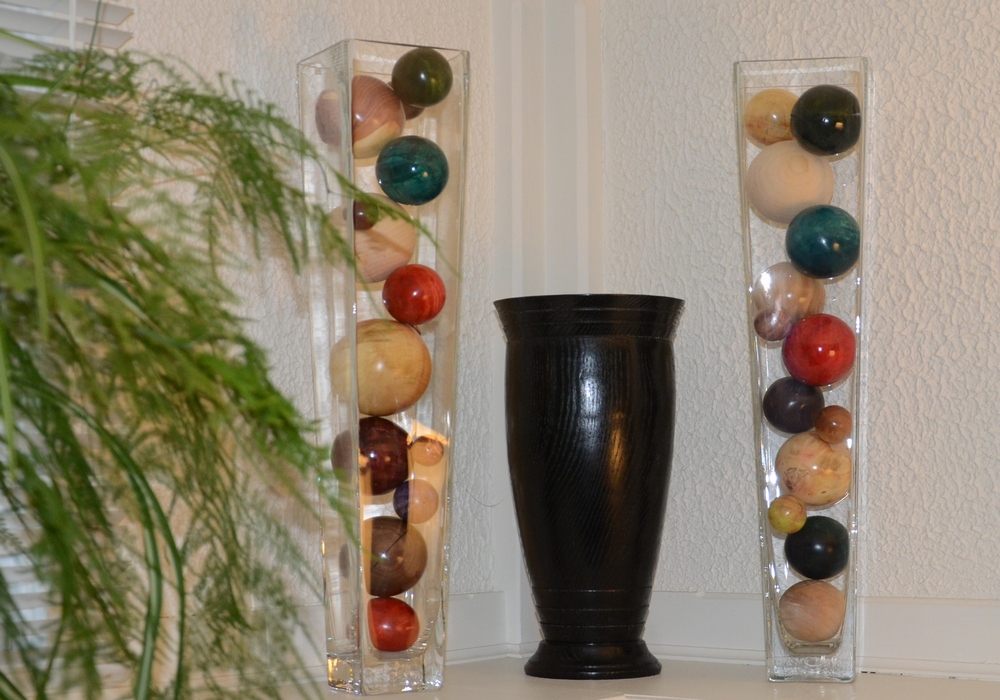
Balls - orbs - spheres - it doesn't matter. They're rounbd things and I like making them.

In a previous year I posted a photo of a bowl filled with balls, and people were always coming in and playing with them and admiring them. A wooden ball is a very soothing and relaxing object to roll around in your hands, and I wished I had known about them while I was still working. I would have had a bowl full of them on my desk. Helpful to soothe shattered nerves and relieve stress. :))

Karen had these glass vases filled with dried leaves and stuff, and one day when she came home I had replaced the contents with these balls. She liked it, and that is where they stayed.

Just thought you might like to see it.

Mesquite Box

Boxes, little boxes.

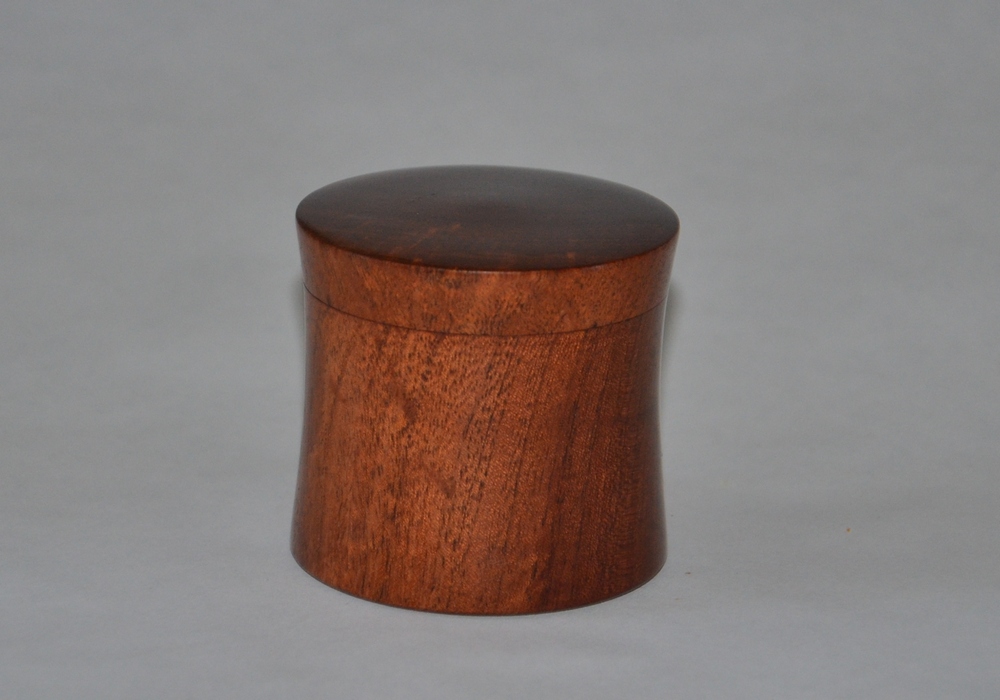
Here's two of them that I made this year. The top one is mesquite and I made this one in Texas during our winter stay. The mesquite came from a tree that some Mexican fellows were cutting down right at the edge of our park, and they let me have some of it. It is about 3½" tall and is finished with Danish oil and buffed .

The bottom one is box elder burl, about the same size. The box is finsihed with water based urethane and buffed, and the top was dyed with clothing dye and then top coated with water based urethane and buffed. .

Box Elder Box

Salt & Pepper Mills

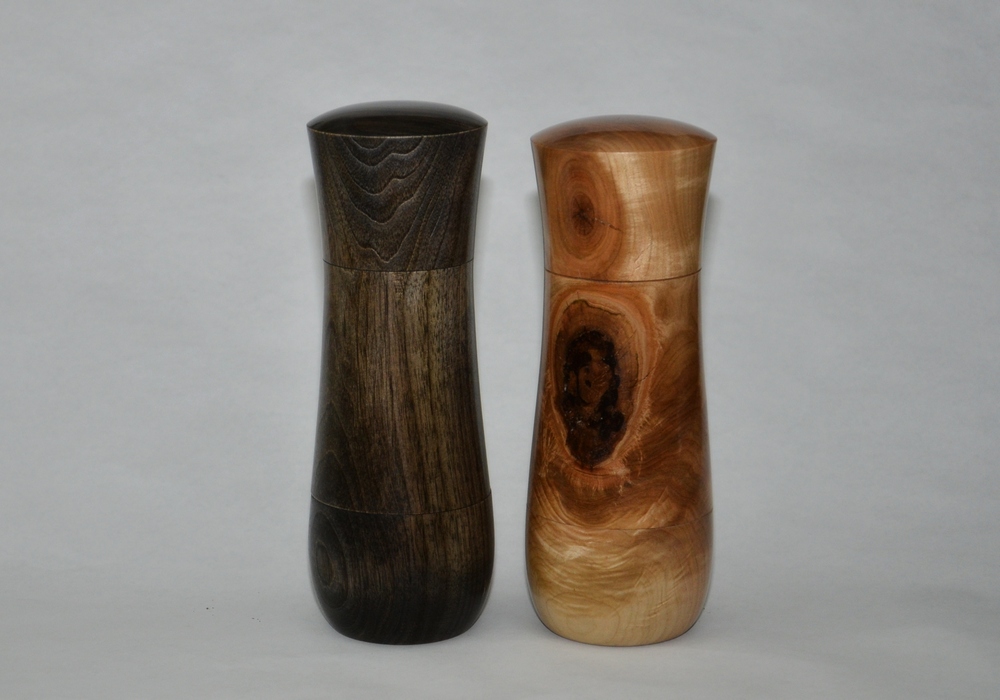
My daughter has gotten stuff from me to use a prizes for a golf tournament she used to arrange at her place of work, and one time she got a pepper mill from me. One of her bosses asked if he could get a set of mills for pepper and salt with a ceramic mechanism.

This is the set of 8" mills I made for him. The dark one is walnut with a dark stain on it, and the light one is cherry. They are identical in shape and size, even though the photo does not quite show that.

These are made with the Crush Grind mechanisms and I use a special process to make the connection between the base and the center piece very strong. These will never come apart, but if one follows the instructions for the mechanisms they can wear out and fall apart. So I invented my own method and can, therefore, use any kind of soft wood I want. The tops unscrew to fill the mills, and the inside shape is turned to follow the outside shape. They are not just drilled out, like most peppermills. They will hold a LOT of pepper and rock salt.

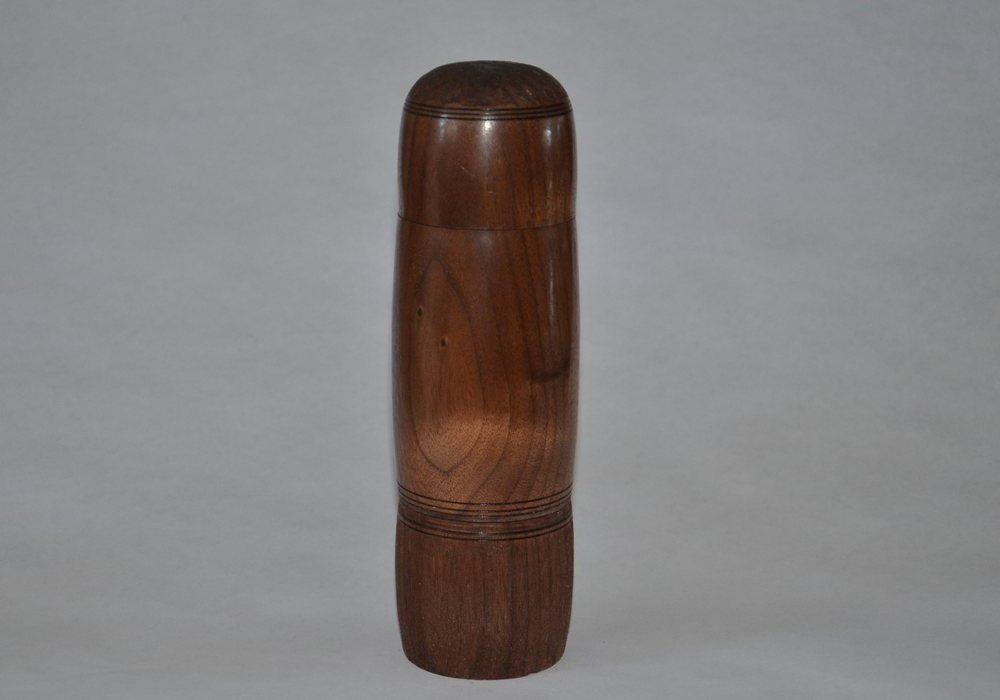
The walnut pepper mill in the bottom panel is made the same way, and the bottom and top are textured to add a bit of design interest. This one is finished with wipe on polyurethane and buffed. It is about 10" tall. P>

Walnut Peppermill

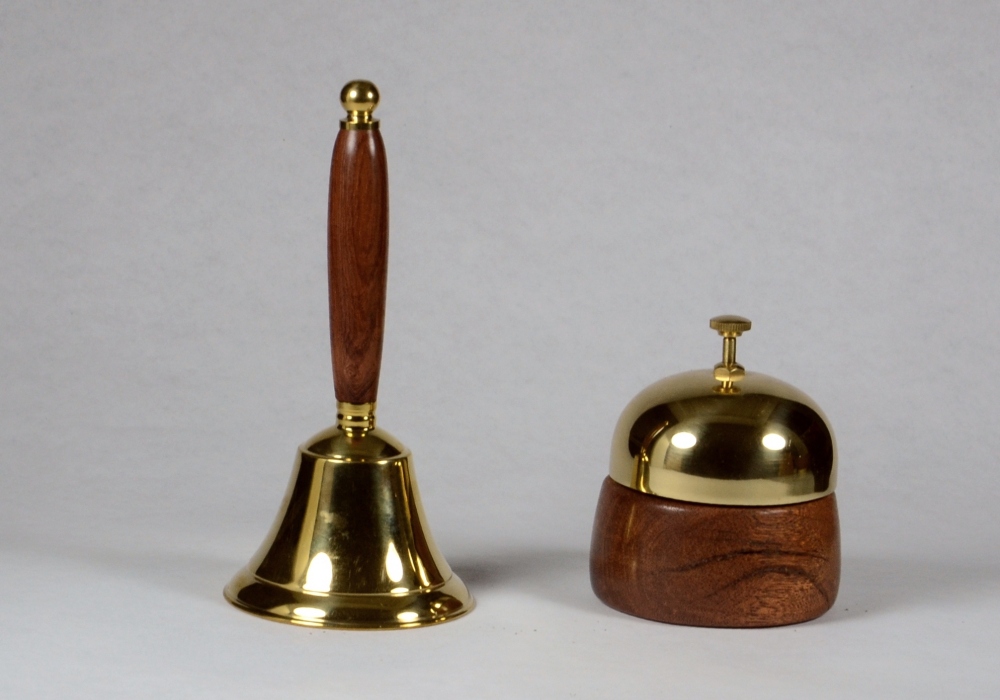
Have A Bell

I don't do much "kit" work, but every once in awhile something will grab my interest.

These did because they reminded me of when I was a kid going to the one-room country school and the teacher would use bells like this. The tall one would be rung to get us back into the classroom from outside when the lunch hour and recesses were over, and the short one sat on the teacher's desk to let us know when one class was over and another was to begin.

My brother, Bryon, is a human resources professional with a local school division, and he has the desk bell sitting on his desk.

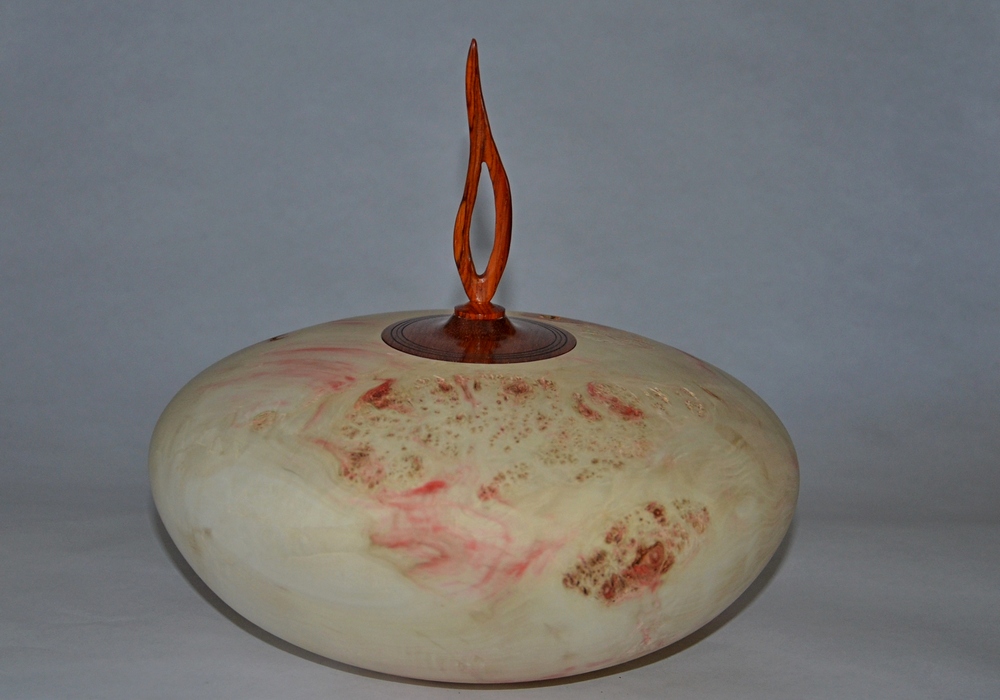
Manitoba Maple Flame Urn

Another urn, again from Manitoba maple. This piece of burl came from a tree that my uncle planted in the 1920's when he first came to Canada. The story of the farm and the tree and my very interesting cousin can be found here.

This is a large piece, about 12" in diameter, and bleaching it brought out some of the beautiful reds and pinks in the wood. It is finished, like most of my bleached pieces, with matte Krylon spray which is my finish of choice for this wood.

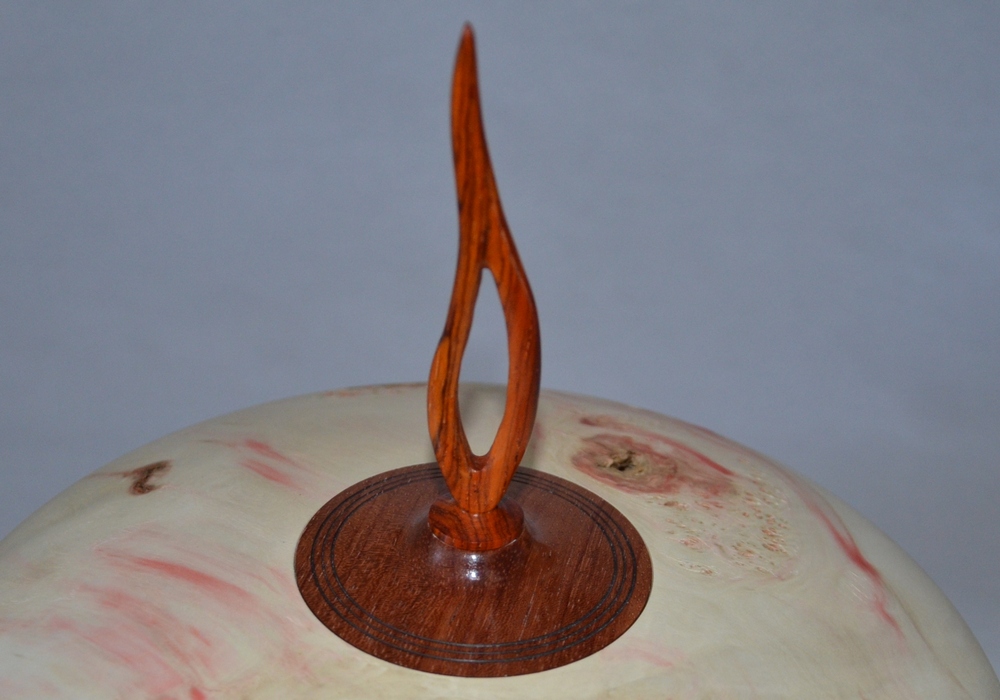
When it came to the lid and finial I had trouble coming up with the right combination. I finally found the right color in a piece of unknown wood I had laying around, and I had barely enough to carve out the flame finial. All in all, I like the effect.

The bottom view is just a close up of the lid and finial.

Manitoba Maple Urn - Flame

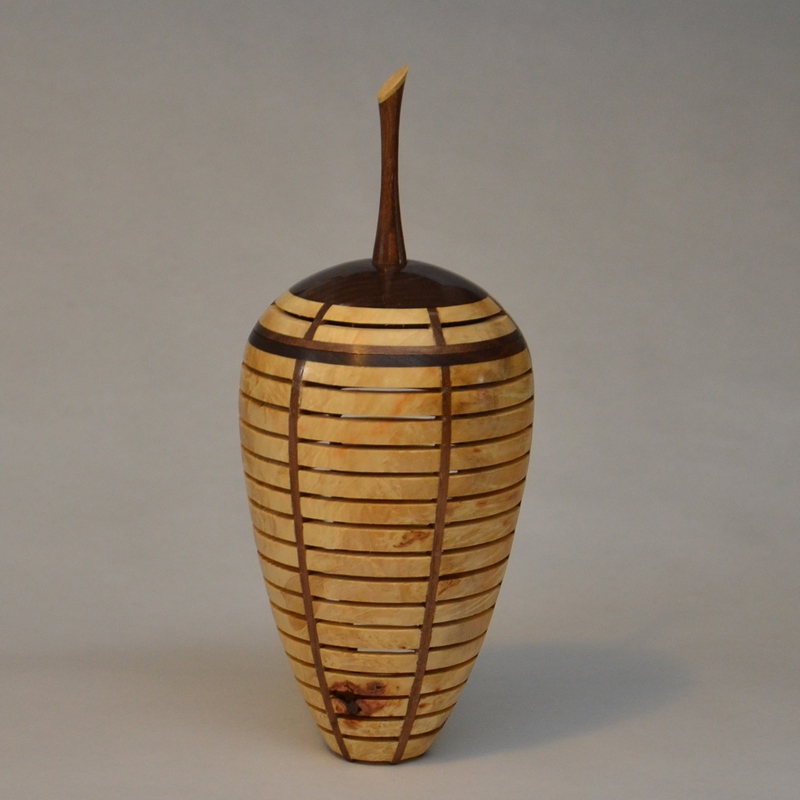
Manitoba Maple Segmented Vase

Now, this one was a doozy. I saw a piece on the World of Woodturners (www.thewows.com) that I found fascinating. It was similar to this but I have no idea how it was made. So, I decided to try my own.
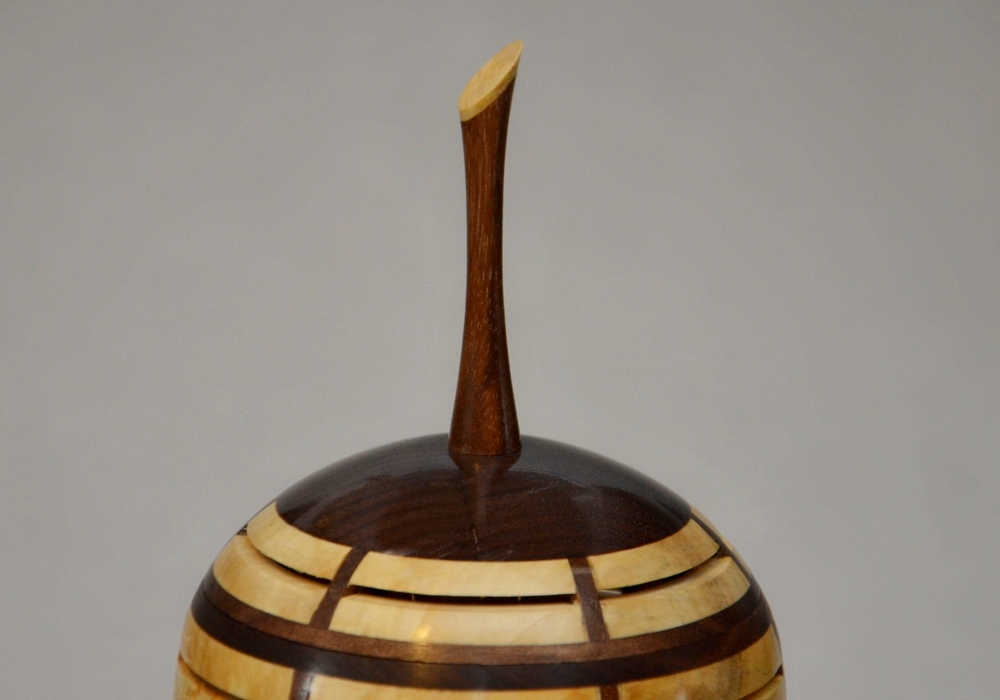
This is a piece of Manitoba maple burl, turned to close to the outer shape. Then, I cut grooves about ½" deep around the piece, and while it was still on the lathe I used the indexing feature and a mini router to route 1/8" grooves into the piece at six equally spaced sections along its axis. Tap in some curved 1/8" pieces of walnut, divide off the lid and turn the piece - praying that it would stay together.

It did, and after carving 6 little feet on the bottom it was finished with wipe on poly and buffed. The piece is about 10" tall.

Shortly thereafter, I showed the piece at an exhibition where I was also demonstrating woodturning. I had the piece on the table with signs - FRAGILE, please do not touch - and people left it alone. Then, while packing it up to take home, I dropped it and it landed on the concrete floor. Thirteen of the tiny sections disappeared under the tables and some ended up in the sawdust. An hour later I finally had retrieved thirteen pieces, which I took home and laboriously glued back in place.

I don't know whether this was worth the effort, since few people seem to like the piece, but I was not about to give up on it.

Manitoba Maple Segmented Vase Lid

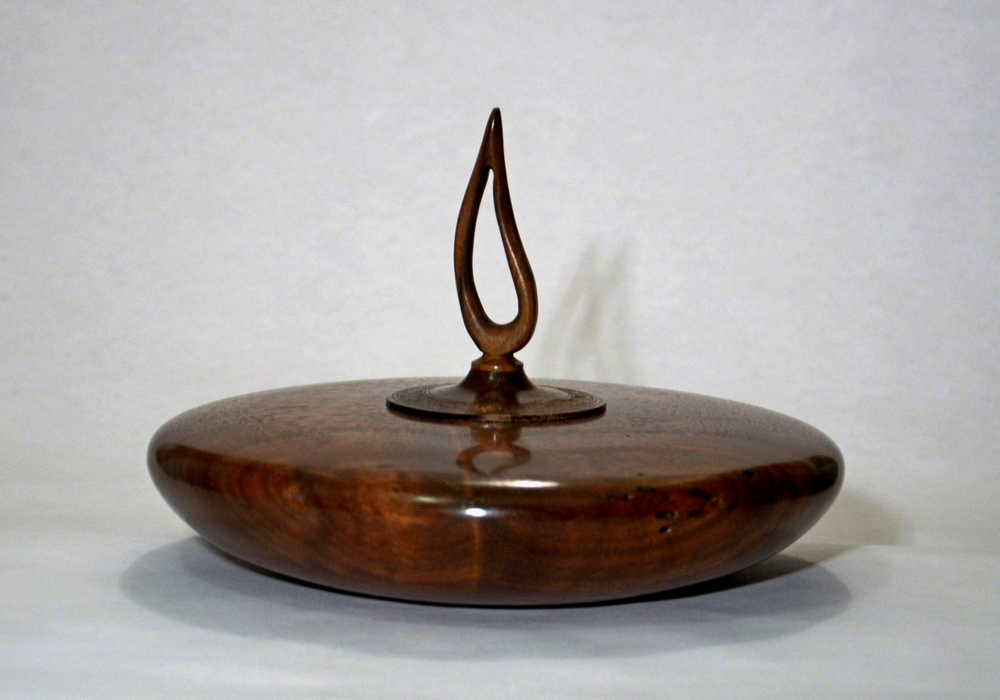
Walnut hollow form

This hollow form was turned in Texas from a piece brought to me by Loren Cory, who is from Iowa and is a splendid segmenting woodturner. He has his own woodlot and sawmill and harvests wood from his own forest. He is now over 80, and still actively turns in his shop here in the park. When he found out I liked walnut, he brought me several pieces.

If you look at this piece, you can get an idea that it is very difficult to turn the inside right to the top corner of the piece. The diameter is close to 9", the thickness about 2½", and the hole through which it is hollowed is about 1¼". A tool with a serious 90 degree bend with a cutter on the end is needed to get into those corners.

The piece is about ¼" thick, and is quite light. The cap and finial are also both of walnut, with some mild texturing done on the lid.

This was a challenging and satisfying piece to make.

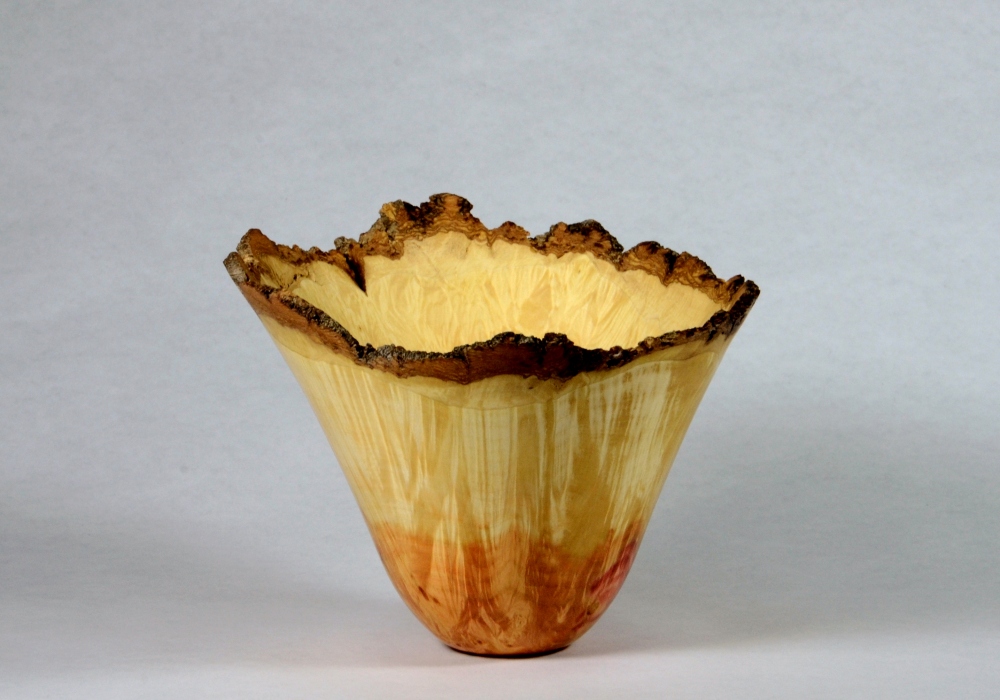
Manitoba Maple NE Vase 2

At the top of this year's work I showed you a natural edge piece of Manitoba maple with the bark missing. On this vase, I was able to keep the bark intact.

I have always liked the bell shapes, and still like to use the shape. With a beautiful and colorful piece of burl wood, it seemed to be the right one to use.

This piece is about 9" tall, and has some beautiful color. My only regret is that I did not bleach it and use a matte finish on it. This has Danish oil on it and is buffed and waxed.

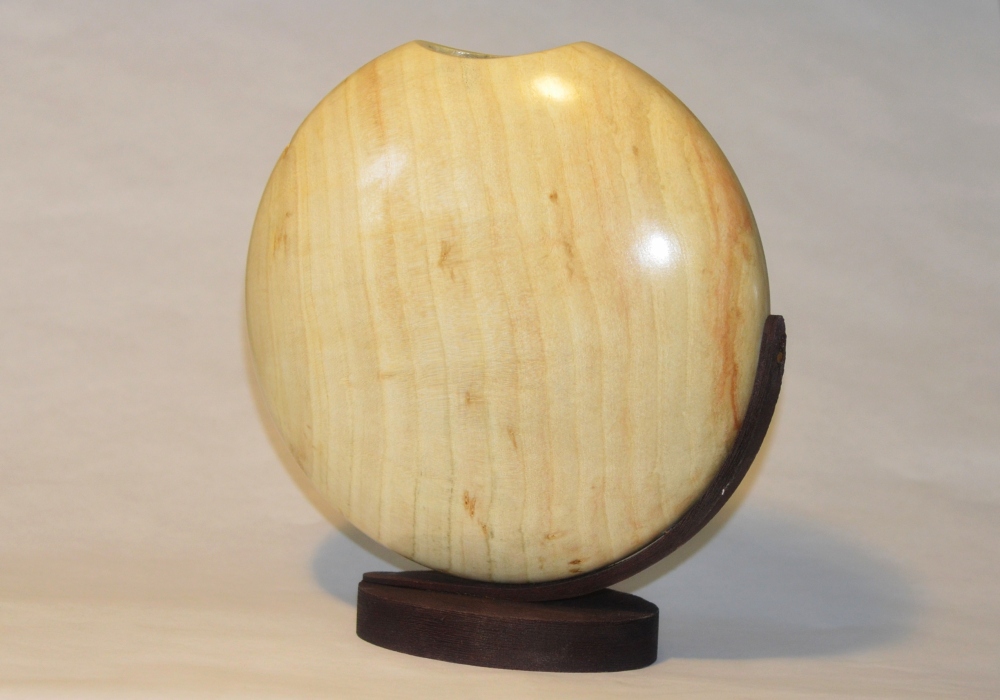
Round Elm Vase on Pedestal

This is another in the series of split vases that I make. I told the story in previous years' work, but I first saw this form in a model home in Calgary, except it was a ceramic vase. I thought of doing it in wood and figured out a way to do it.

The process is not easy or quick, and requires the construction of a few jigs and some precise templates. The real challenge, though, is to find interesting and new ways to mount the vases. When completed, they are very attractive with dried flower and other types of arrangements.

This vase is about 12" in diameter, and is mounted on a walnut base with a steam bent walnut half-frame pinned to it with brass pins.

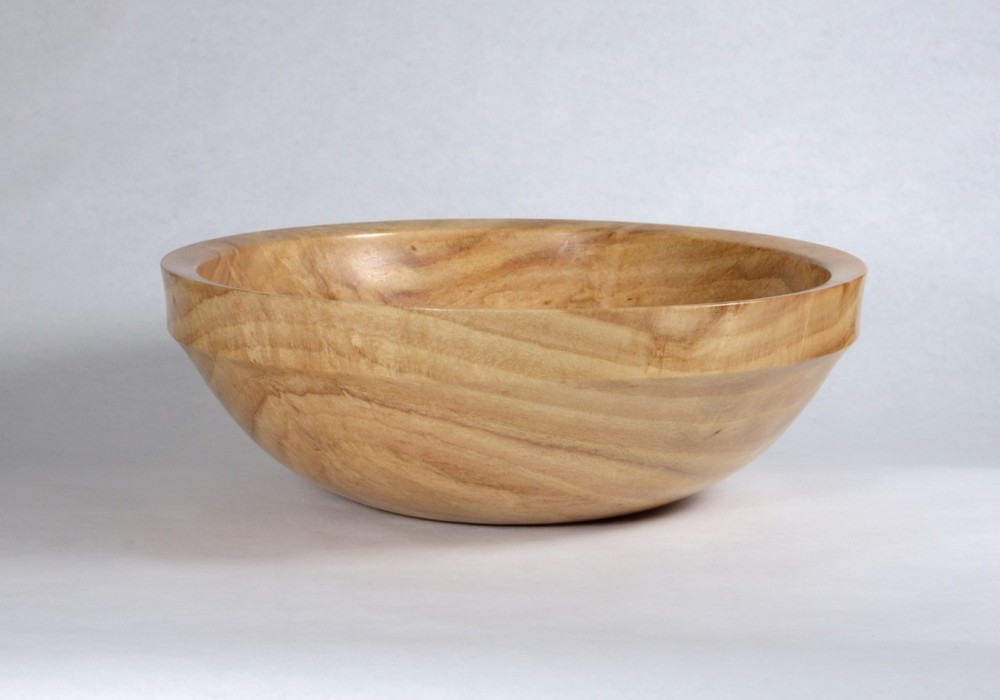
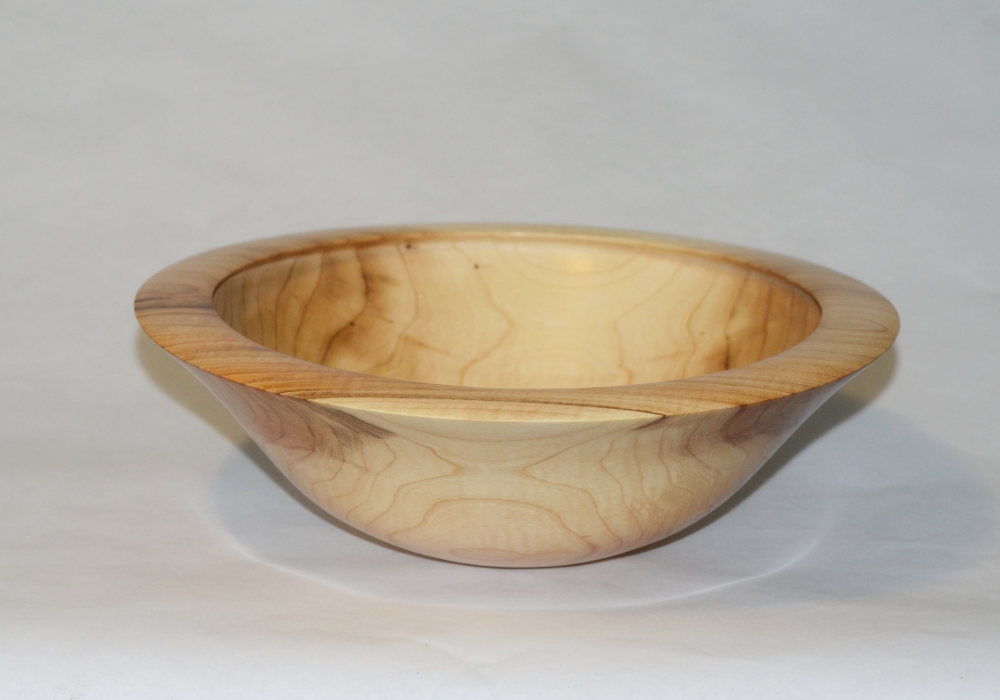
Elm Salad Bowl

This is just a simple elm salad bowl, about 12" in diameter and 4" deep. The shape is just a bit different than most of the other bowls I have turned, and I threw it in here just to show that I still turn bowls from time to time.

The bowl is finished with wipe on polyurethane and buffed.

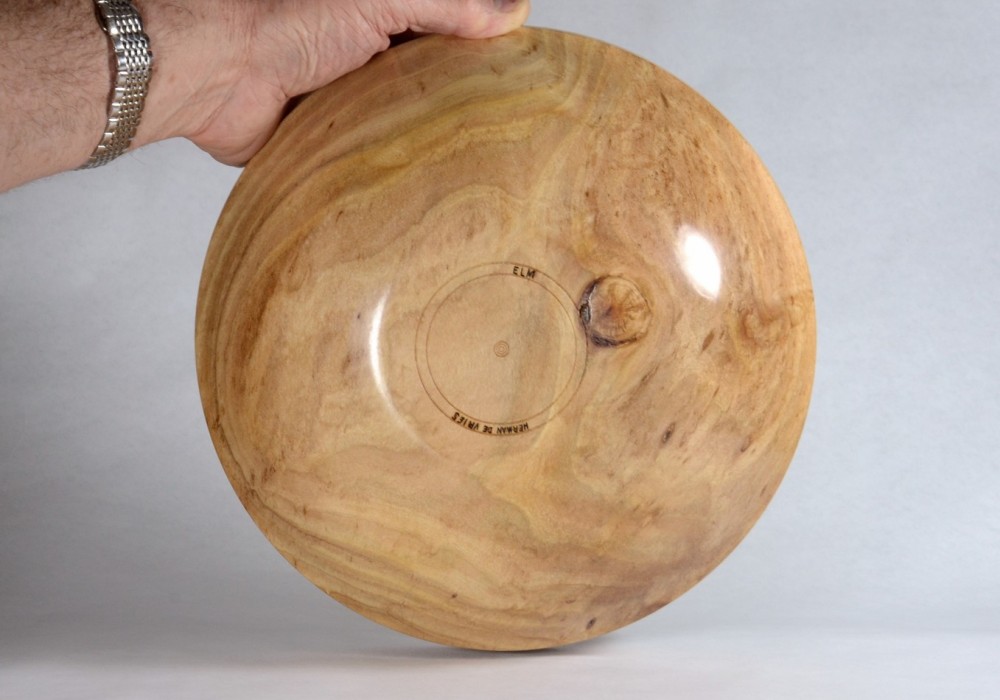
In the bottom panel I am showing you the bottom of the bowl with my name and the species burned into the ring in the bottom.

Elm Salad Bowl Bottom

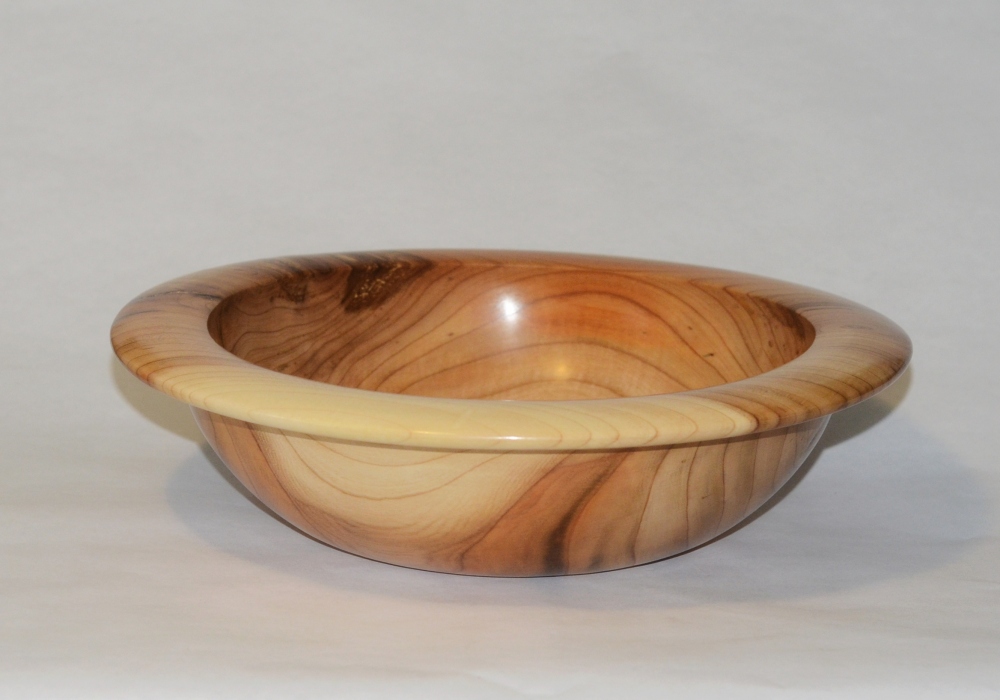
Chokecherry Salad Bowl

When I was a kid growing up in northern Manitoba, I always looked forward to chokecherry season. The bush on our pasture was loaded with chokecherry trees, and the huge berries in season were an irresistible temptation for a young boy sent out to fetch the cows in for milking.

"Why did it take you so long to get the cows, Herman? Were you eating berries instead of looking for the cows?"

"Gee, Mom, the cows were hard to find and that's why it took me so long" replies the lad with the blue teeth and lips.

I never dreamed that those bushes, although they were wild and much smaller, contained such beautiful wood. The domesticated chokecherry tress, like the Schubert chokecherry, can grow to impressive girth, as shown by these two bowls.

Both bowls are from the same tree, although the wood is vastly different in character between the two. This wood is one of the most beautiful to work with - it cuts so cleanly, smells lovely, and finishes beautifully. The only downside is that the wood can twist and warp, like most fruitwoods. Long after they are finish turned they can warp, and the only way to get away from that is to make sure they are bone dry, like less than 8% moisture.

Both bowls are about 12" to 13" in diameter and are finished with wipe on poly.

Chokecherry Salad Bowl