2008 Turnings

Seeing that it's now 2009, I suppose I ought to respond to those who have emailed me, and to my dour old buddy, Ed Tabachek - "IT'S TIME FOR YOU TO UPDATE YOUR WEBPAGE!!!"
WELL OK !!

I'm just getting lazy, that's all. I had good intentions, and did talk about turning over a new leaf last year, but .............

Anyway, here is some of the work from 2008, and with a little luck I will get started on 2009 and maybe keep it going, too. I hope you enjoy this update. Again, thank you for visiting, and please let me know you were here. I love hearing from people who visit the site.

Russian Olive Bowl

Bill Neddow is a fabulous bowl turner from Ontario. I call him the modern bowl master, and the exquisite forms he achieves with his bowls sets him apart. You can see his site here.

One of Bill's bowl forms uses the Roman ogee flare on the side of the bowl, and I quickly found that getting it right is very difficult, indeed. Just a fraction of an inch too much, taken off the shape, will complete change the character of the bowl and its form.

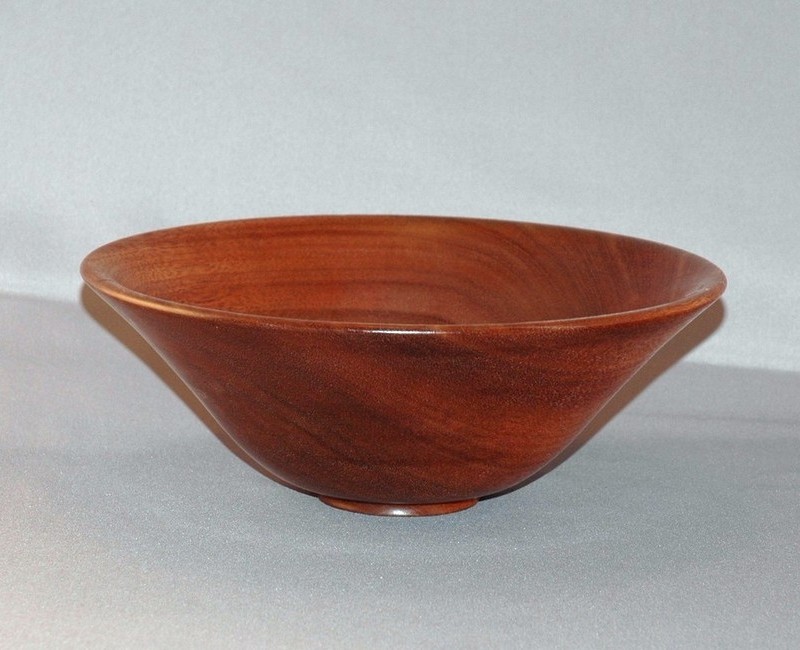
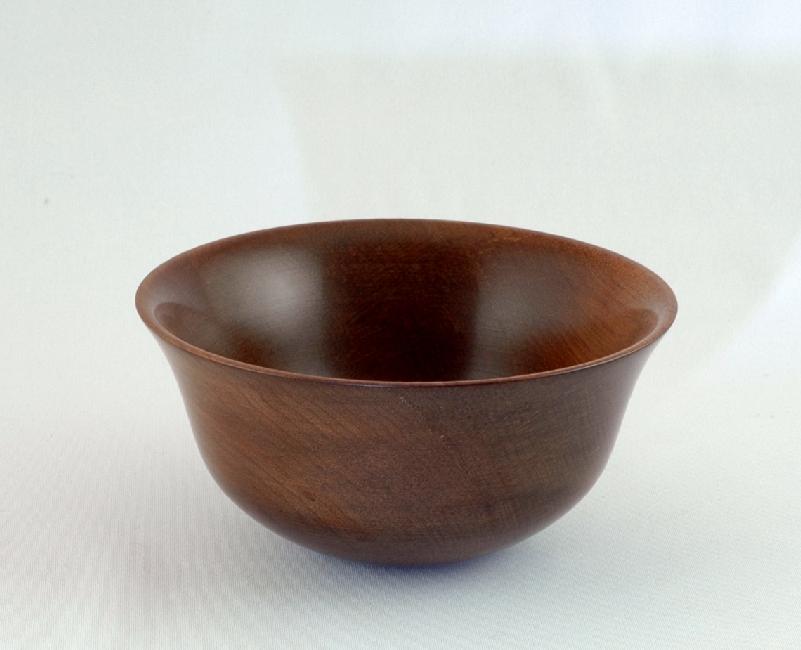
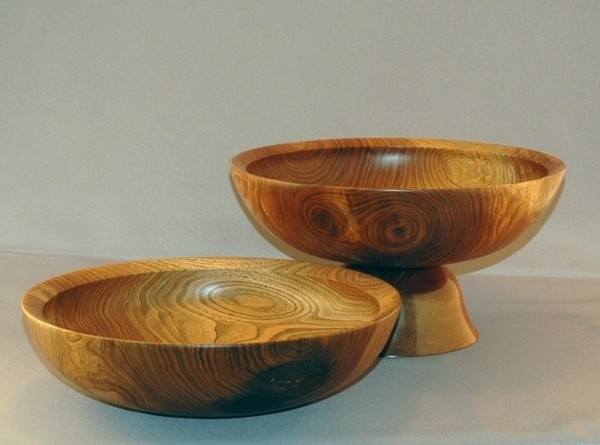
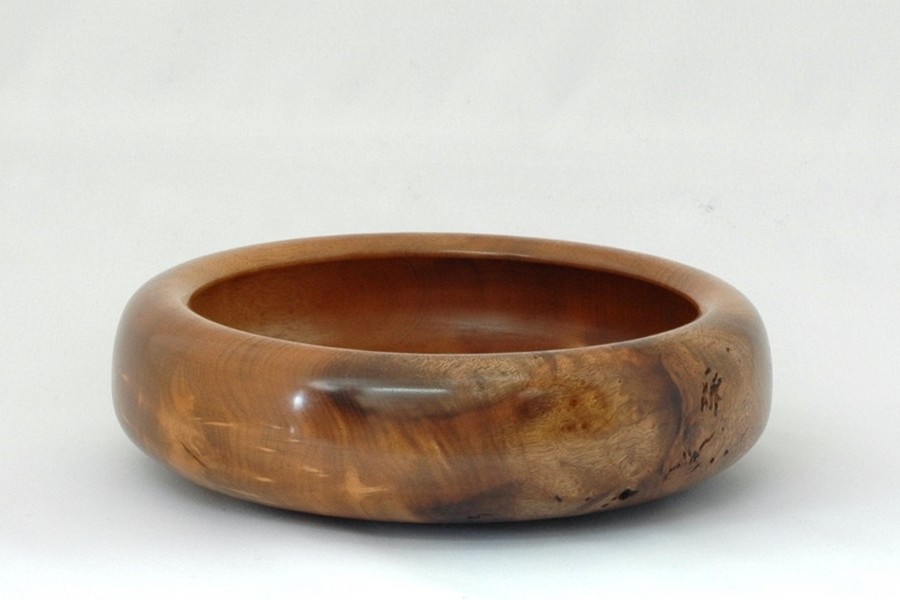
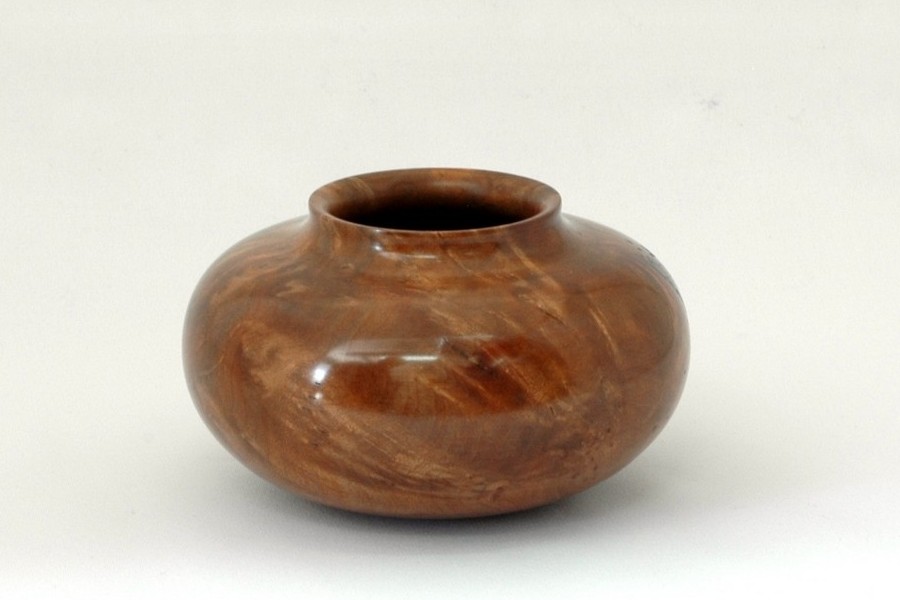
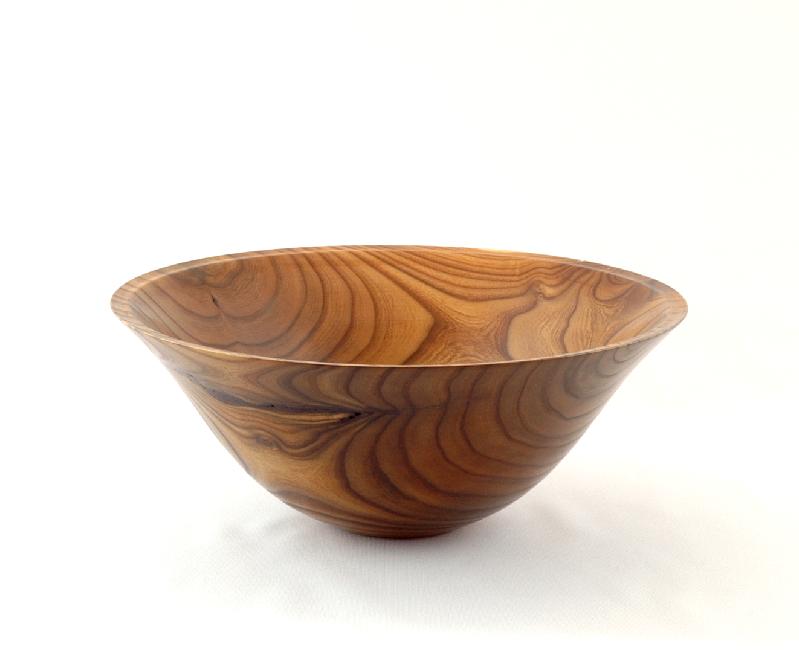
These are two of the bowls, out of the dozens I turned, where the form seems to have come together well.

The upper one is from a Russian Olive tree taken out of my neighbor's yard, following his death and the sale of the house to his daughter. I always loved the Russian Olive tree with the delicate pastel green of its leaves among the darker leaves from the surrounding trees. And it had such a wild and free-ranging shape. I asked him, since he was going to take the tree down anyway, if I could do the job and have the wood.

After Albert died, his daughter asked me about taking down the tree and a couple of years ago, I did. This bowl is about 13" in diameter and 5" deep. Further on below you will find a vase from the tree that I made for her as a memento of her father.

The lower bowl is of mahogany that I got from a piece of an old beam belonging to a fellow that took one of my woodturning classes. I have no idea how old this wood was, but it was dry as tinder and very dusty to turn. However, it finished into a lovely sheen. About 12" x 5".

Mahogany Bowl

Ancient Kauri Bowl

Terry Scott is from New Zealand, and is an incredible artist. He is also a friend, and it was nice to get a little care package from him that included a piece of ancient kauri wood. Ancient kauri is found buried underground in New Zealand, and some of it is more than 50,000 years old. According to the note from Terry, the wood in this piece could be that old. There is an excellent reference for ancient kauri, if you click here.

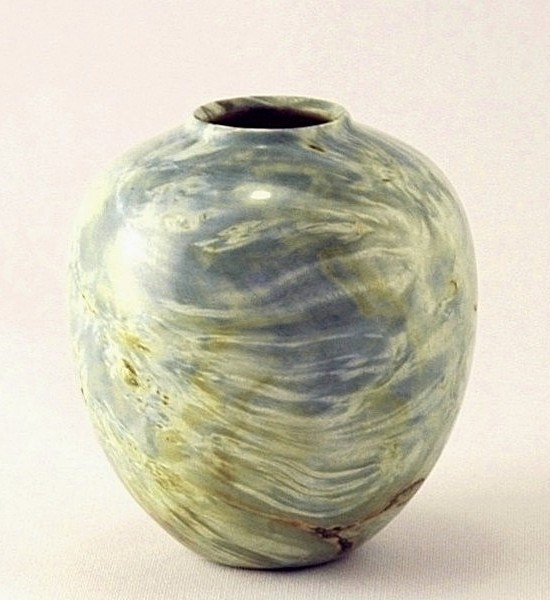
I decided that a small bowl would be the best way to show this marvelous, smooth turning wood. It does not have a lot of grain character, but makes up for it in color and texture. This was a delight to turn, and likely one of the only pieces of this wood I will ever have to play with.

I apologize for the bad photo of this piece, and will re-shoot it one day. It is about 5” in diameter.

Buckeye Form

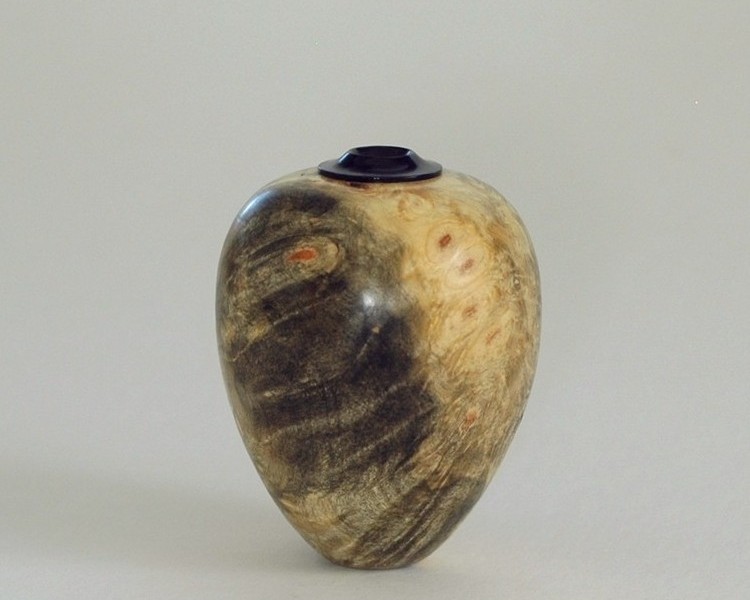
Buckeye is mostly from California, and the buckeye burl is especially prized for its colors, especially if it is a bit spalted. Spalting is the chemical changes that occur in a piece of wood as it begins to decay that cause parts of the wood to acquire a dark stain. Some buckeye can be almost black.

Buckeye burl is notorious for little pockets of dirt and stones embedded in it, and no matter how much you pressure wash a piece, there is no guarantee that you won’t hear a “click-click” as you are turning. That means a trip to the grinder to sharpen the gouge and a little digging around with needle nose pliers and assorted tools to find the offender.

As you can see from this piece, there were many places for dirt to accumulate in the wood, and lots of little hidey-holes for stones. It had its share of surprises for me, but the nicest came at the end after I applied the finish and adorned the lid and base with purpleheart and ebony accents.

I decided to leave this piece, which is about 12” tall and 5½” in diameter, with a matte finish. This was achieved by using water based urethane and steel wool to buff mack the finish. The interior is a bit rougher than I would like, but the wood was very fragile and very thin, and to mess around more with the interior would have resulted in a fractured piece.

This deceiving piece of 6 ounces is extremely fragile, and is one my favorites. As Karen says, “it’s mine”.

Madrone Urn

I bought several pieces of madrone when I was visiting my daughter in Calgary. Madrone, found on the Pacific Coast, from southwestern British Columbia south through Washington to western Oregon, is described as one of the most beautiful broadleaf flowering evergreens. The burl of the tree, very popular for furniture work and marquetry, is scarce and very expensive when available.

Madrone is a wood that moves, twists and warps until it is completely dry, and thus is not used commercially. I was fortunate to find this wood, which reportedly came from a stockpile of an elderly gentleman who bought it decades ago and never did anything with it. The wood found its way from his estate sale into the store where I got it.

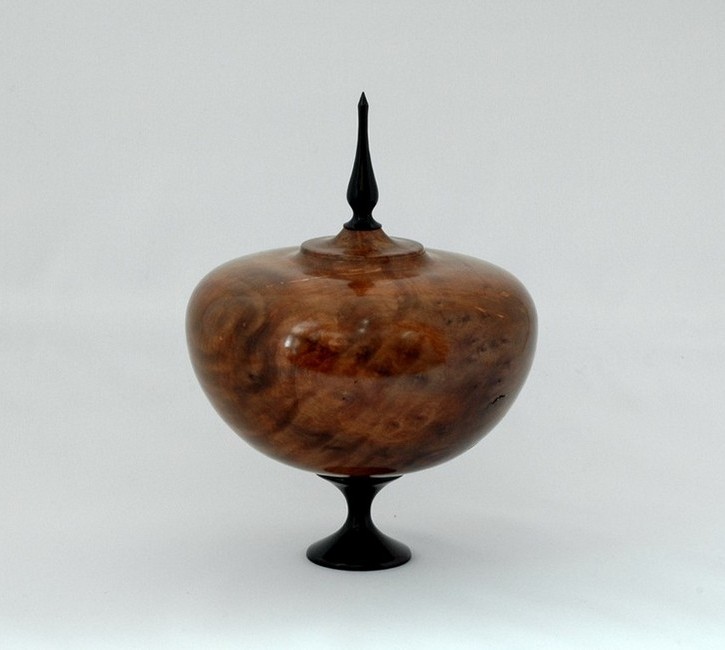
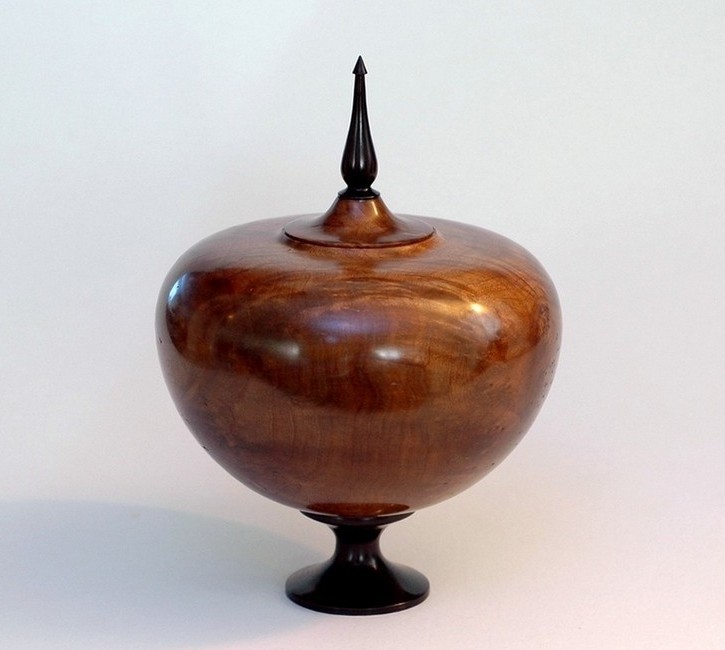
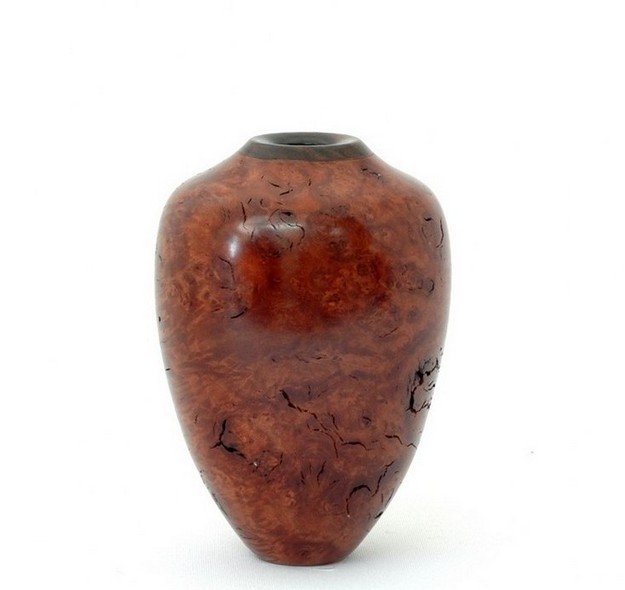
I love madrone burl for its turning qualities and for the richness of its color. Both of these pieces were finished with danish oil and then buffed. Also, both were designed for use as urns, for a small person or pet. By that, I mean they are left thicker and more robust. Both measure about 8" in overall height and about 5" in diameter.

Madrone Urn.1

Historically, butternut, a member of the walnut family, was considered an excellent source of nuts, for both oil and fabric dye applications. Even the sap was collected and made into syrup. More recently, butternut has been recognized as a great craftwood and a superior species for intricate wood carving. The fact that it carves easily AND has a beautiful appearance encouraged many churches to have elaborate doors and interior millwork carved out of wood from the butternut tree. It grows predominately in central and eastern part of North American, with a limited number of trees in Southeast Canada.

It is a beautiful wood to turn and finish, and I love the rich brown color. This little piece, about 5" x 5", was turned cross grain to bring out the variances in color and grain.

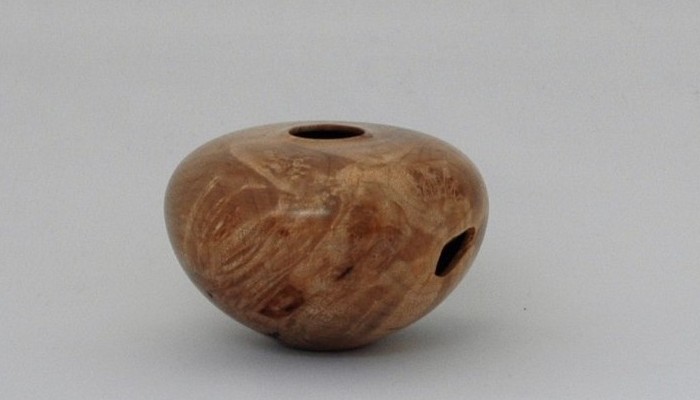
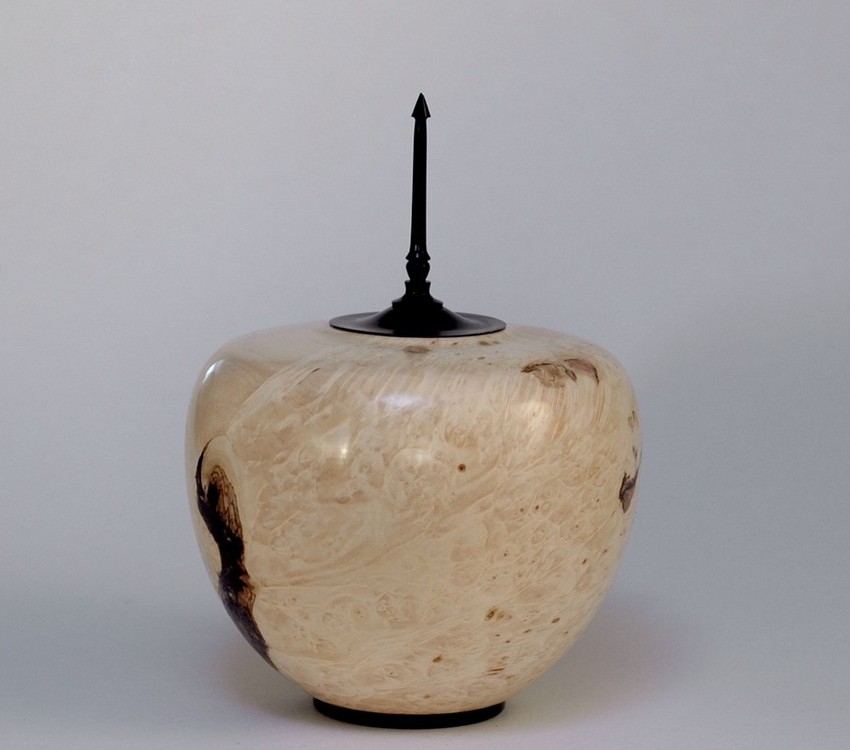
The bottom piece is of big leaf maple burl from Oregon and was turned one afternoon when I was just noodling around. Many people have commented that they like the little imperfection (the hole) and so I thought to include it here. Also, it is one of my favorite woods.

Big Leaf Maple Hollow Form

Larry's Walnut Peppermill

Larry is one of my favorite people. Well - why not - he's a chef and he's my nephew, too. I prefer to be around people that can cook, as my girth will testify.

At a family gathering of the de Vries clan a while back, I had provided several of my peppermills and was giving them to some family members. Larry had cooked the meal (prime rib) and I offered him one. I told him of the 18" tall peppermill I had made for my son-in-law and he said, "Oh, I like large peppermills!"

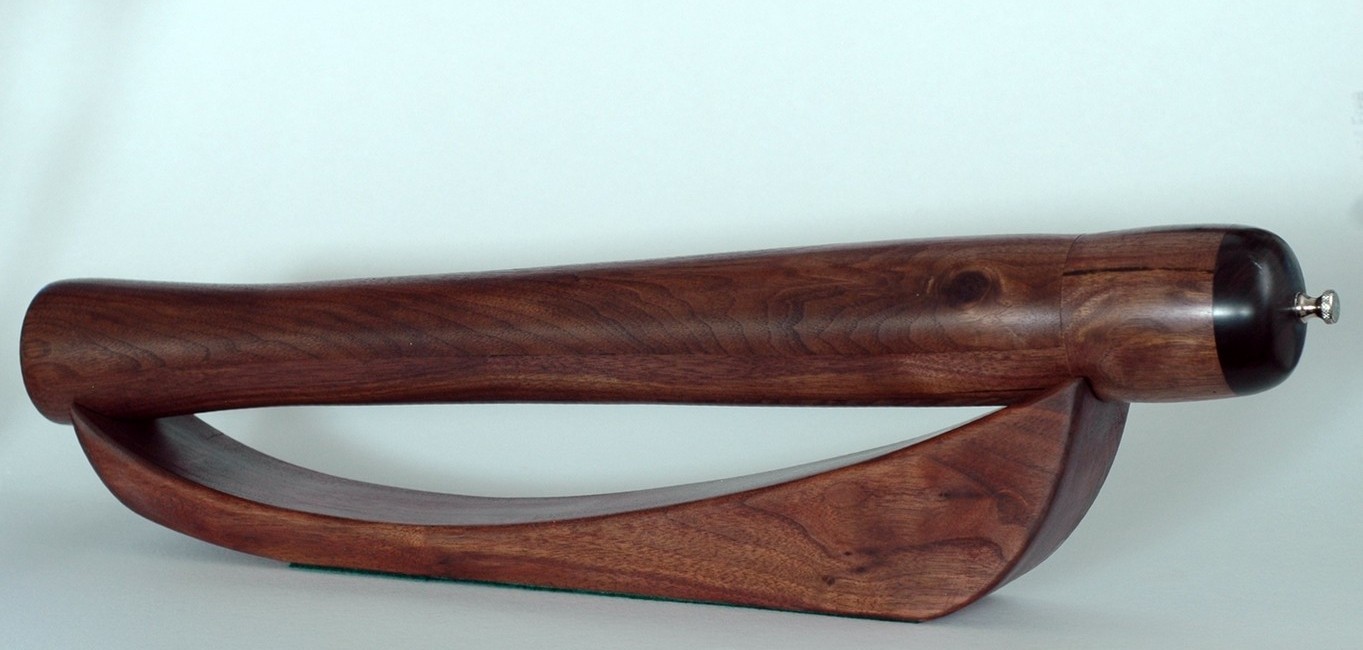
So I put his gift on hold, promising to make him a very large mill, and this is the result. Made of walnut, it is 24" tall and I made a cradle to hold it as it can get a bit unwieldy if it stands upright.

I love turning peppermills, and the difference with mine is that the interior shape follows the outside shape. Most peppermills are simply drilled out, which greatly restricts their capacity to hold pepper, so I decided to turn the inside of my mills rather than just drill them. Besides, it is very challenging to reach the interior of a mill like this with a hollowing tool. There isn't much room in there as it spins at 2,000 rpm.

This was fun to make. Enjoy, Larry

Small Bloodwood Hollow Form

These are two tiny little pieces that I turned from little pieces of wood left over from larger projects

The upper one is of bloodwood, left over from the pair of bloodwood platters below. The lower one is of buckeye, left over from the buckeye form a couple of screens back.

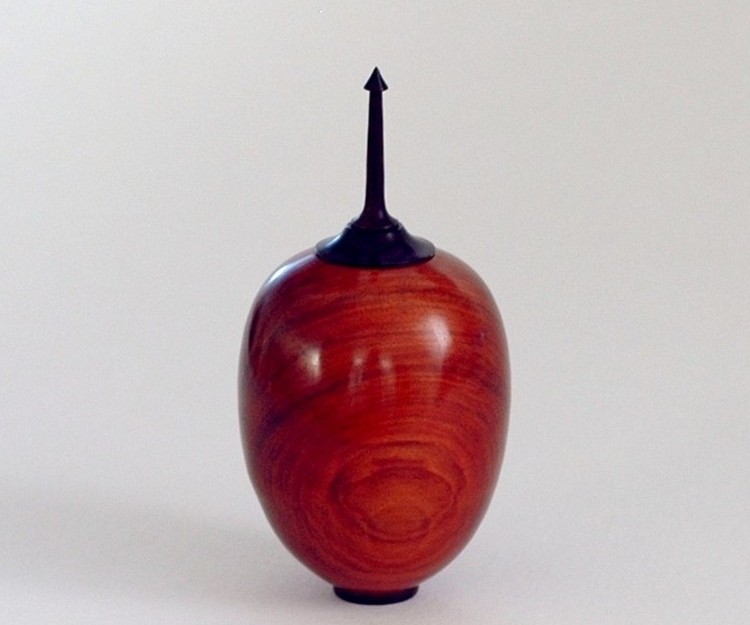
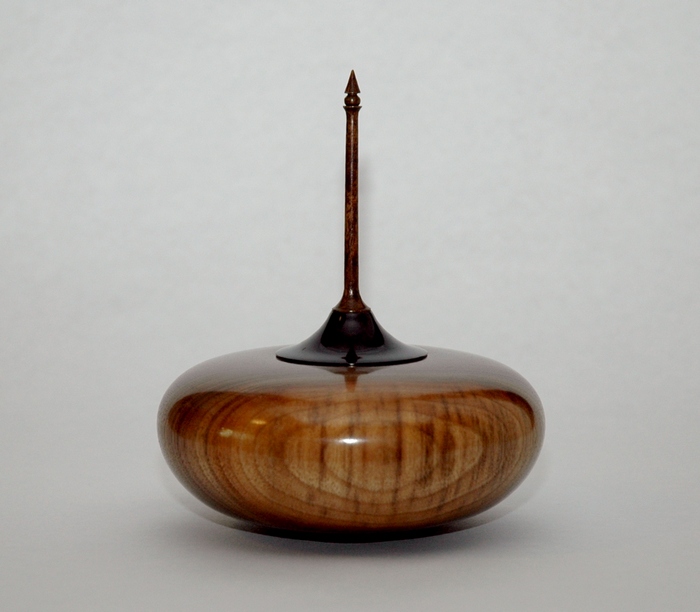
Bloodwood is a lovely wood to turn and finish, but wow, does it ever turn everything in the shop red. I wear a mask when sanding, but even turning the wood raised a fine mist of red that covered everything in the shop. It finishes beautifuly. This piece is aout 4" tall, including the finial

The buckeye piece (see the earlier piece for a description of buckeye) is only 2½" tall and weighs only ½ ounce. It is eggshell thin, and the wood finished like a little jewel. I am a fan of the work of Wally Dickerman and Art Liestman, and this is a form both of them have used extensively. This is also one of my favorites.

Small Buckeye Hollow Form

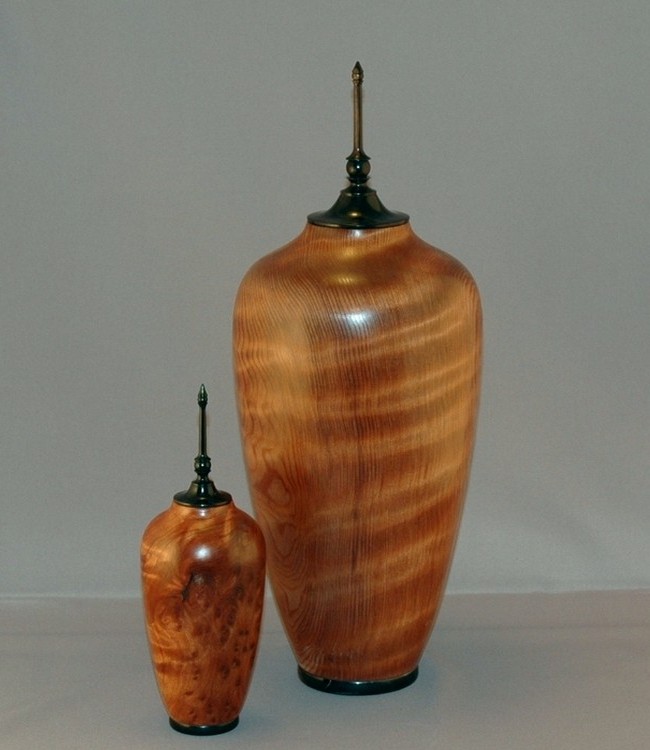
Russian Olive Urn

People have heard that I turn urns, and I was approached several times to do an urn for the loved one of a friend or acquaintance.

It is hard to be very creative with an urn, as it has to be solidly built, and of a certain size. Some urns are too small for the ash remains of a full size person, and some may be too masculine looking, or feminine looking, etc. A further problem is that they are often required quickly, and I generally do not have the luxury of turning a piece to match a specific need. Usually, they will have to choose from what I have already made.

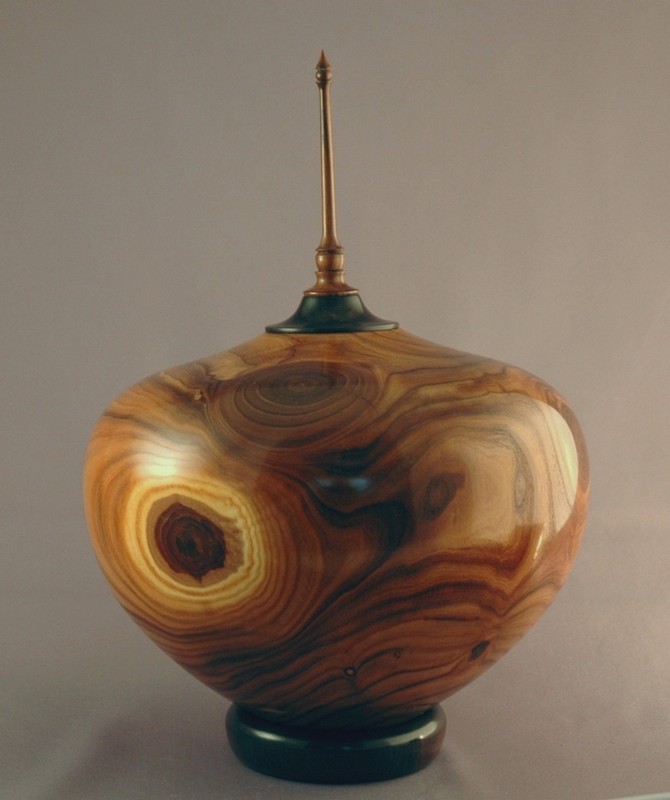
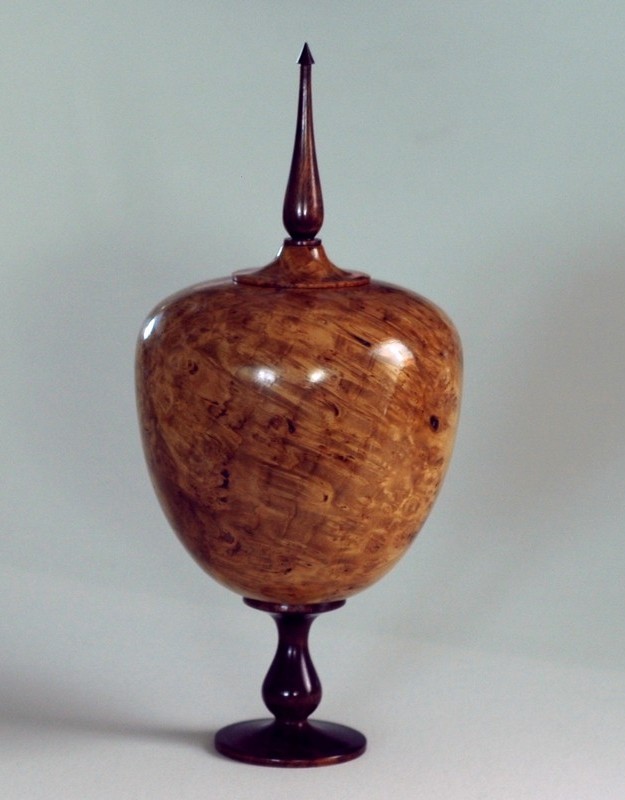
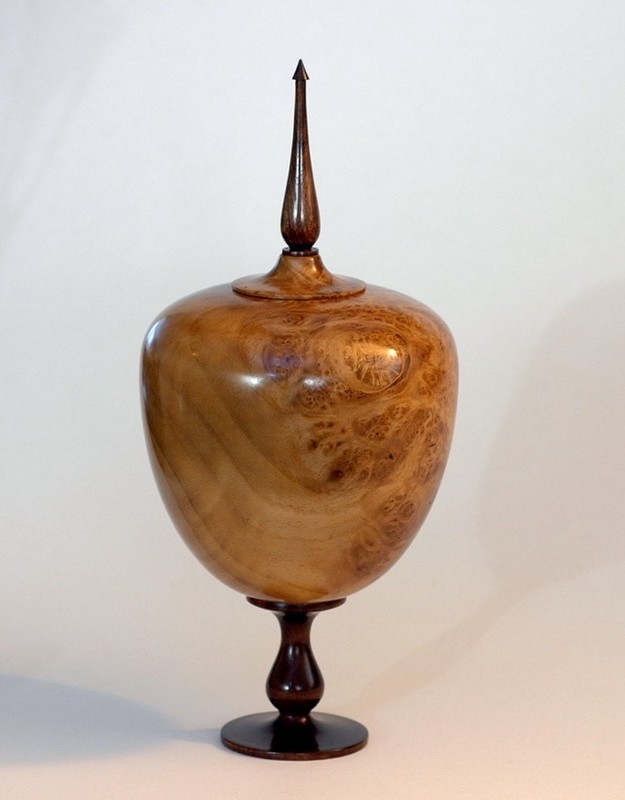
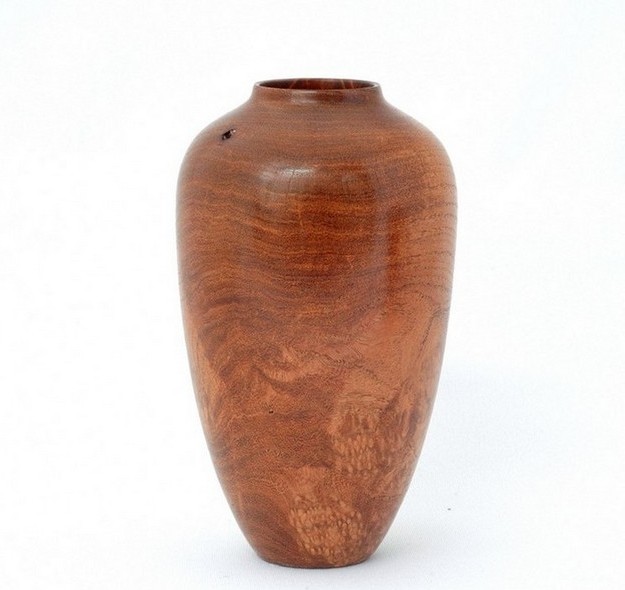
The upper piece is made of Russian Olive. It is very large, 18" tall, including finial and 13" diameter, with a volume of close to 4 liters. It came from a tree that I removed from a neighbors property several years ago. Russian Olive has beautiful grain and color, and I made this urn to sit either on its flat base, or to sit within an ebony ring so it can be titled to any angle.

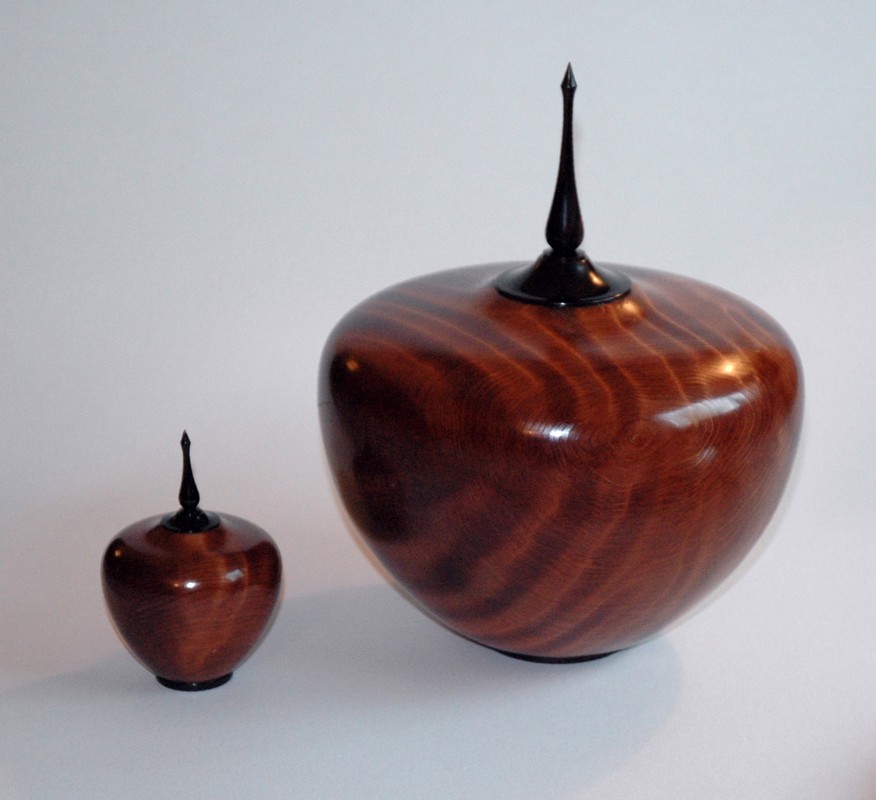
The lower photo shows a large redwood burl urn, 14" tall with finial and 12" diameter. This urn was interred in New York City and the smaller matching keepsake urn, containing a small amount of ashes, resides on a daughter's mantlepiece. The idea of making a smaller keepsake was something I started doing some time ago, and now people are asking for the keepsake. I find it quite a challenge to replicate the large urn at a tenth the size.

Redwood Urns

Color Experiments

I have never been a big fan of coloring or otherwise enhancing wood, although I have woodburned the odd logo on things, or used minor piercing techniques on specific pieces.

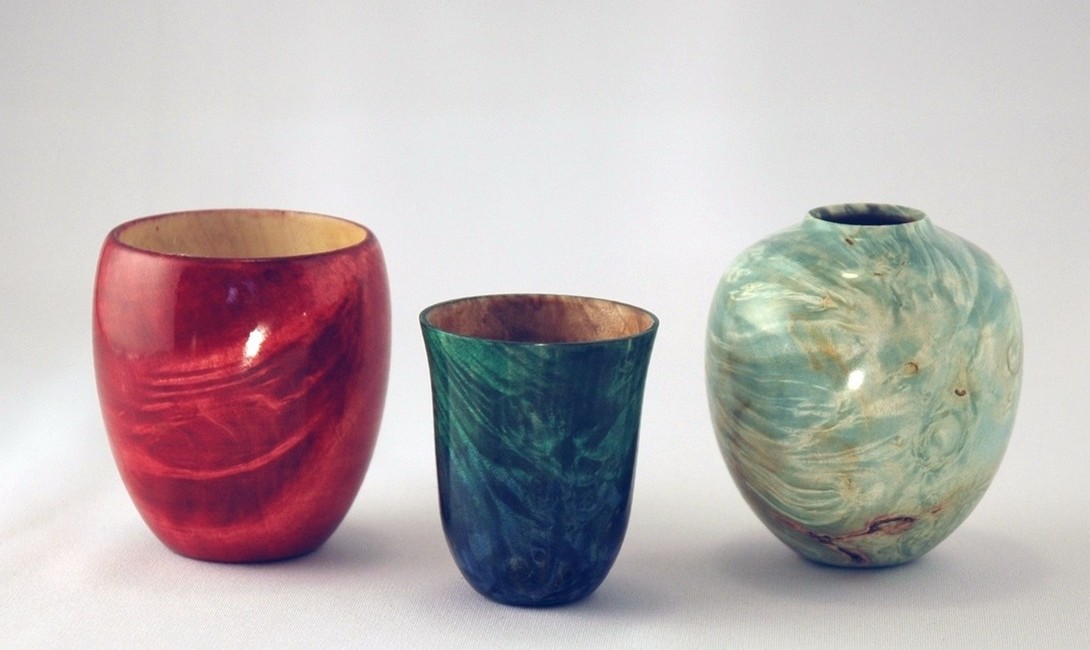
However, maple burl is a nice wood to color because the burl figure really "pops" when color is added. I like box elder, or Manitoba Maple as it is often called, because the wood is beautiful when it retains its white color. However, any oil finish tends to give it a blotchy and unpleasant yellow color, in my view. Certain dyes, though, like clothing dye, seem to work well with it.

The piece on the left is colored with red fabric dye and the one on the right with a light blue fabric dye. The middle piece is colored with green and blue Prismacolor markers and the two colors blended to make the gradual change from blue to green.

Myrtle Burl Urn

Earlier, I told the story of the man in Calgary that had purchased a building full of madrone burl decades ago, and had never used it. The wood was sold at his estate sale by the store where I got it.

Well, he had a lot of this myrtle burl as well, and it was sold at the same time. I prefer the myrtle burl to the madrone as it does not get as dark and the burl figure shows up more. Myrtle Burl is a tree native to coastal forests of western North America and in the western foothills of the Sierra Nevada mountains.

A source says, "Myrtle Burl is commonly referred to California Bay Laurel (its pungent leaves have a similar flavor), California Bay, California Laurel, Spice Tree, Pepperwood and Headache Tree (the last from the strong scent of the crushed foliage, which can cause a headache if breathed in to excess)."

This is two photos of the same urn to show the variance in grain from opposite sides. The piece is about 12" tall overall and about 4½" wide. It is finished with Danish oil and buffed. The finial and base are African blackwood.

Dyed Box Elder Hollow Form
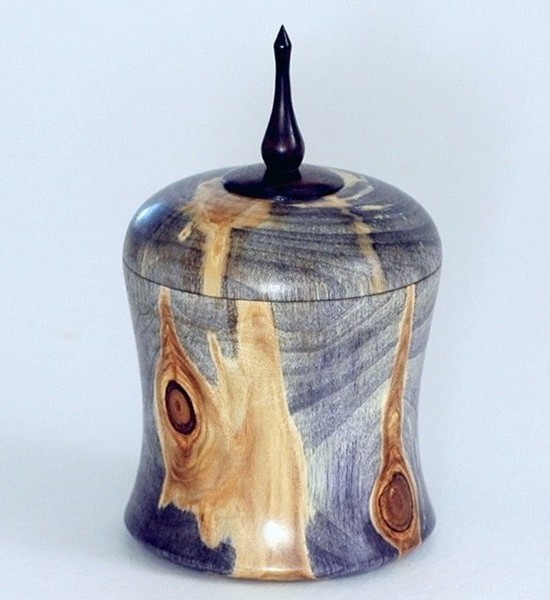
Dyed Poplar Box

The piece on the left is described above in the photo with the three dyed pieces. It is one of them, but I wanted to show it alone with slightly different lighting. This photo is a little sharper and more true to color.

The piece on the right is, of all things, poplar from Manitoba. This was an experiment that I tried, recalling from my youth how we used to make fence posts out of poplar. If you cut a fresh poplar and use it for a fence post, it will last about 5 years. However, if you treat it with copper sulfate, or "bluestone" as we used to call it, the post will last 50 years.

Copper sulphate arrived in bags of bright blue crystals, which we would dissolve in water in a concrete vat. You had to use concrete because it would eat up a metal vat. The poplar fenceposts, about 7 feet long, were cut in the spring just as the leaves began to show. They were immediately placed upright in the container of dissolved bluestone, and in a few days the bluestone solution would wick its way right to the top of the post, turning the post a pretty blue color. The posts were taken out, dried and then used.

I thought, "if it works with bluestone, why not with clothes dye?" and I tried some of it. It was spectacular in the way the dye followed the capillaries of the wood, but not into the side grain where the branches entered the trunk. This makes for some interesting patterns, and I intend to try it more often

This little box is about 4" high and 3" in diameter.

Butternut Matched Bowls
Small Oak Bowl

I gave a history of butternut a bit earlier. It is regarded as a great craftwood because it carves easily and has a beautiful rich brown color. It grows predominately in central and eastern part of North American, with a limited number of trees in Southeast Canada. I got this wood from a friend in the Ottawa, Ontario area.

I decided to turn the two bowls on the left from the same piece of butternut. They actually faced each other in the raw blank of wood. They are about 13" in diamter and about 3" deep. The color of this wood is amazing, and we love these bowls.

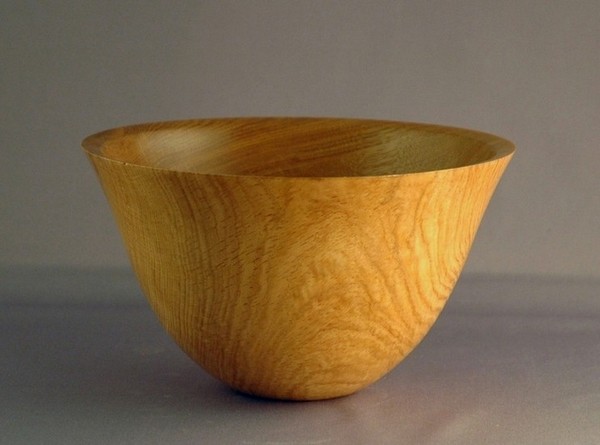
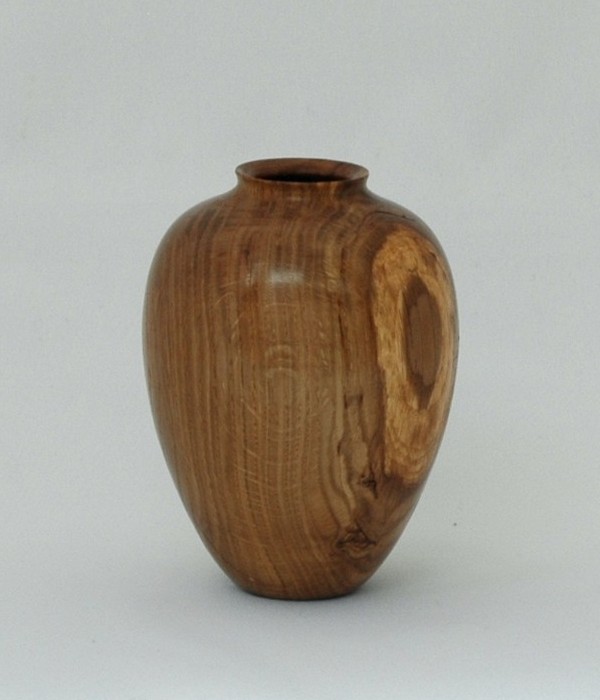
The piece on the right, about 7" in diameter and 5" tall, is of Manitoba oak. I have spoken before about how cantankerous this wood can be, but this piece behaved itself with nary a split or warp. You can see the influence of my friend, Bill Neddow, on this piece.

Christmas Sale

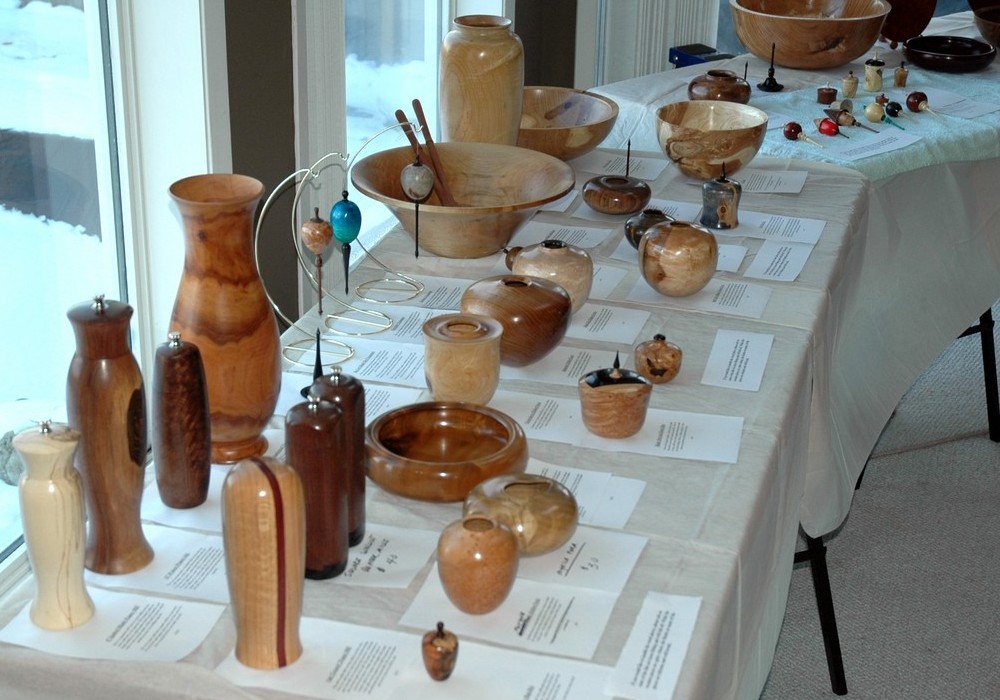
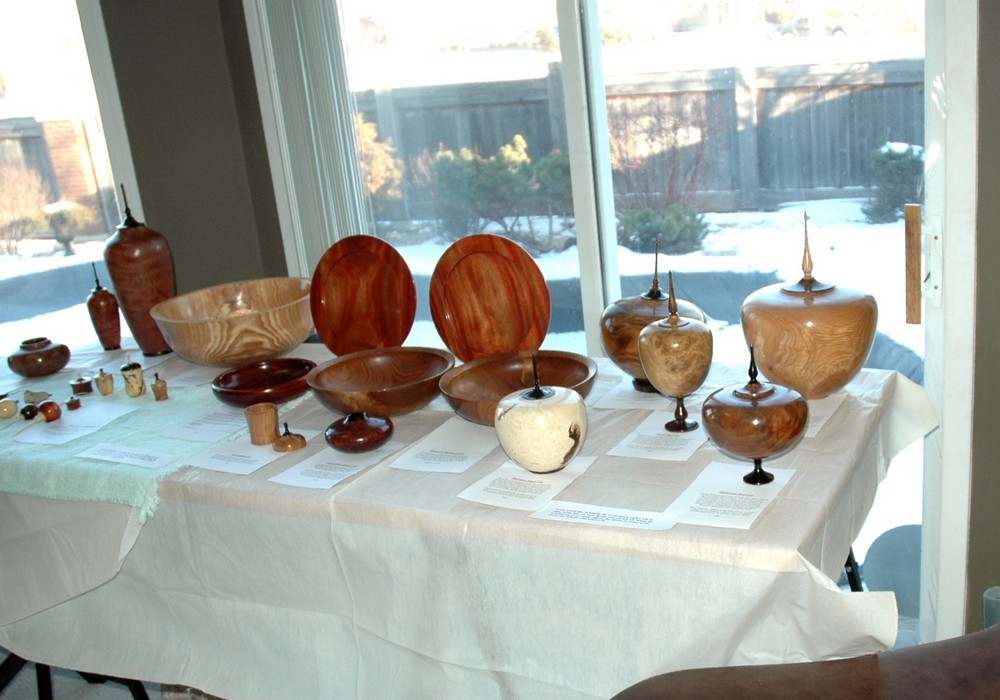
Last Christmas my sister-in-law, Diane, and her sister, Wendy, and her friend, Dave, decided to have a little Christmas sale for friends and acquaintences at her house. Diane does beautiful pottery, Wendy does water colors and Dave is a photographer and framer. They thought it would be nice to add a little wood, and these two photos show some of the pieces I brought and set up there. It was fun.

Christmas Sale

Myrtle Rolled Rim Bowl

Earlier, I told you about the story behind the myrtle burl and madrone burl that I was able to pick up in Calgary.

The piece on top, the myrtle rolled rim bowl, is about 11" in diameter and 2½" deep. I like a turning challenge and designed this to show off the grain of the myrtle and to play with a rolled rim. The rim is hollowed from the backside, which means it is a blind cut and only reachable with tools that I make myself just for that purpose. But the result is nice, when you put your fingers under the rim and feel that it is hollow.

The lower piece, of madrone burl, is just a little pot shape, partly dictated by the shape of the raw wood. I saw this shape inside of the wood, and thought it would be a good choice for the wood.

Madronne Burl Vase

Large Oak Bell Vase
Large Oak Lidded Hollow Form

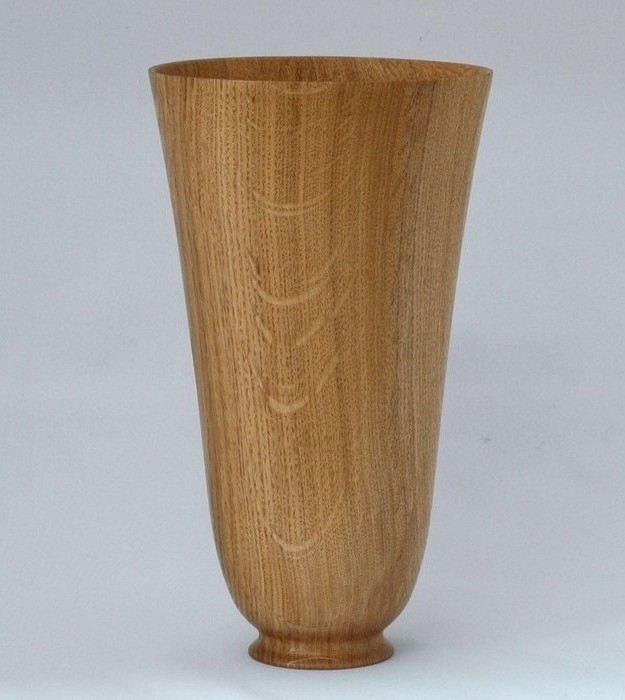
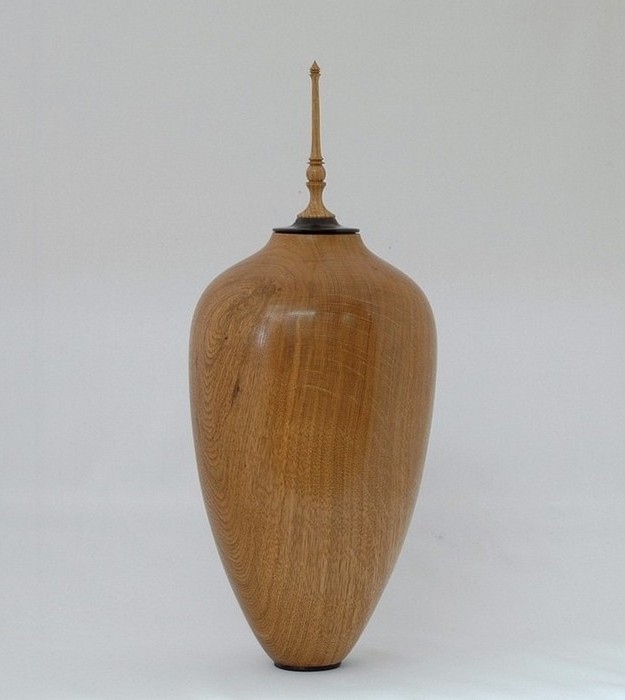
Two pieces made of oak from a Manitoba tree. A friend had called to see if I was interested in some wood from his brother-in-law's backyard. I was amazed at the size of the tree, because normally they don't grow that large, about 30" diameter, unless they are close to water. At any rate, seeing how these two pieces turned out, I wish I had taken more.

These are both turned into the end-grain, which is almost a requirement for this wood, since it will warp and split almost uncontrollably when turned cross grain. I once rough turned a bowl cross grain and returned to the shop a couple of days later to find it completely split in two.

The 14" tall Bell shaped vase on the left is one of my favorite shapes, and the 16" tall lidded hollow form could be used as an urn. Both are finished with tung oil and buffed.

Peppermills

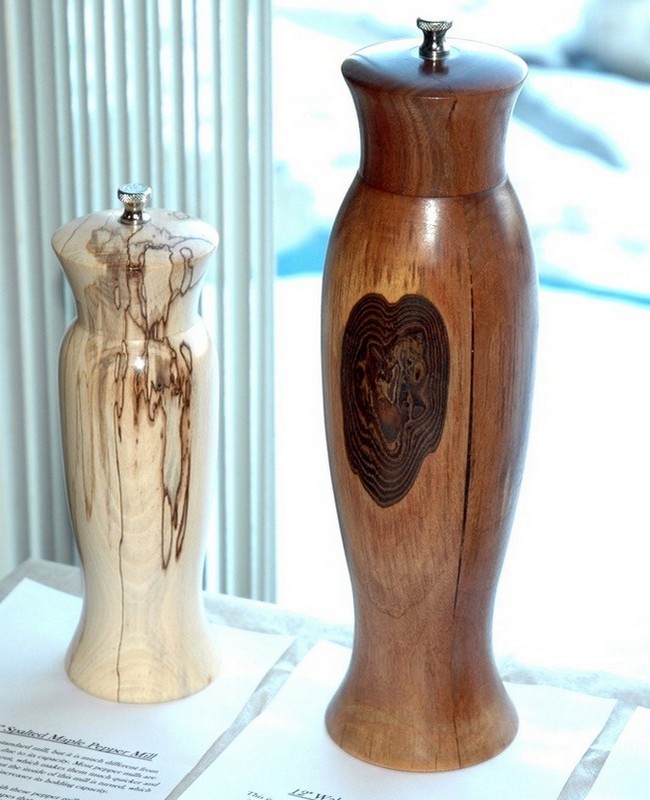
I like making peppermills, and these are two that were on display at my sister-in-law's house at Christmas time. The one on the left is made of spalted maple and is 8" tall. The one on the right is walnut with a little of the bark left on it, and it is a 12" mill

Small Mesquite Vase
Red Mallee Hollow Form

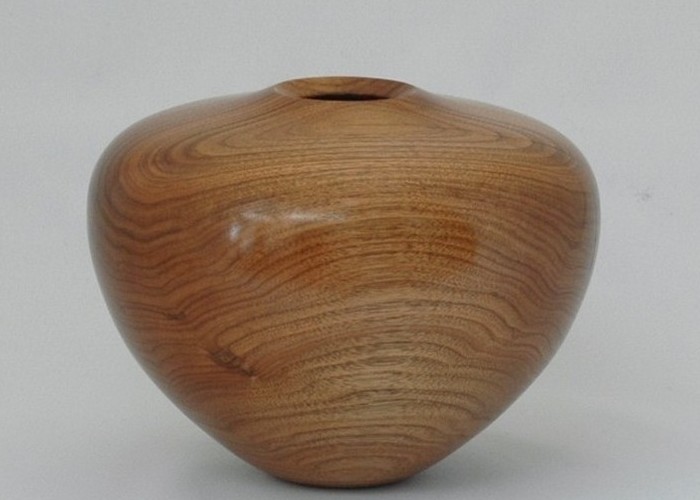
There is no wood I know of that turns as sweetly as mesquite. I'd almost move to Texas just to have a steady supply of the wood. That's where this piece on the left came from, a remnant of a piece sent to me by a turner sitting at our table during the banquet at the AAW Symposium in Kansas City in 2005. I just love the way it takes a finish and polishes up so nicely. And the grain in this small piece, with its little bit of burl, is just wonderful. This piece is about 5" tall and 2½" in diameter.

The piece on the right is of red mallee, which is a wood from Australia. I bought some pieces of the wood at the same AAW Symposium in 2005, and this little cutoff piece sat around for a long time. This piece is also about 5" tall and 3" in diameter.

Walnut Keepsake Box

This is a little walnut keepsake box, about 5½" in diameter and 6½" in overall height. I made a lot of these little boxes several years ago and thought I ought to turn a few more. This is the only one I got around to doing.

OOPS!!!! This piece, I just noticed, is also on my 2007 page. I'm going to leave it here anyway, just to let you know that I do make mistakes once in awhile - especially when it is late at night and I have a cold, like I have tonight. However, this is my first mistake this year - honest!

Pair of Bloodwood Platters
Redwood

Jim King, a friend from Peru, sent me a care package of some of the woods that he exports. I am going to ask him for a link that explains what he and his people do there in Iquitos-Peru and will post it here. He's attempting to create a livelihood for native Peruvians by marketing some of the beautiful wood available to them there, which most of us don't see in the rest of the world. At the same time, he and his wife run a shelter for displaced and injured animals from the forest.

I put Jim in touch with Windsor Plywood here in Canada, hoping to help him create a market for some of the wood, and so far I have bought several of the little turning blanks he ships to their stores.

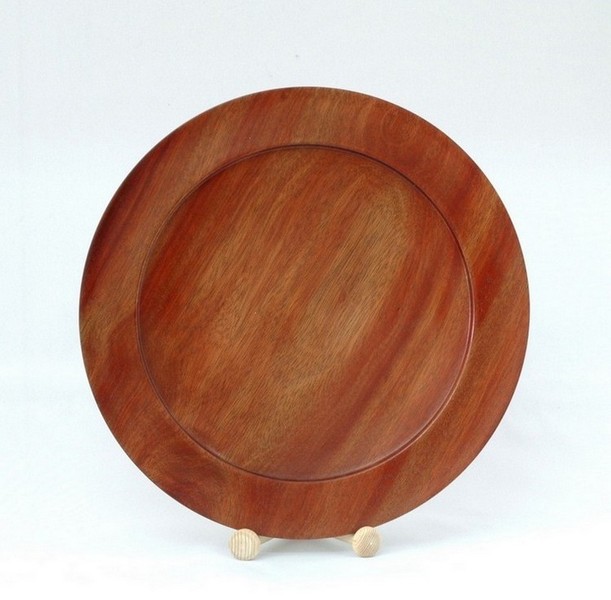
The piece of bloodwood from which the platters are made (there is two platters - identical) came from Jim. Like other bloodwood I have worked with, it turns everything red in the shop and you need a good collection system to take care of the dust. The platters are about 12" in diameter and 1½" thick.

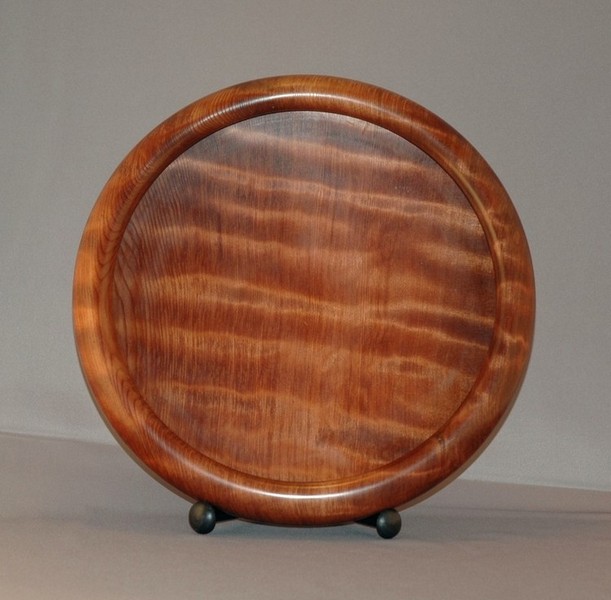
The Redwood burl platter on the right shows the incredible chatoyance that the wood reflects under the light. This wood soaks up oil finish like a sponge, and it is hard to get a uniform finish on it. The contrast in the grain makes it difficult to get a good photo due to the difference in reflection, but that also accounts for the chatoyance you see when you move the platter around. This platter also has a rolled and hollowed rim, and is about 14" in diameter.

Large Ash Vase
Chokecherry Pedestal Urn

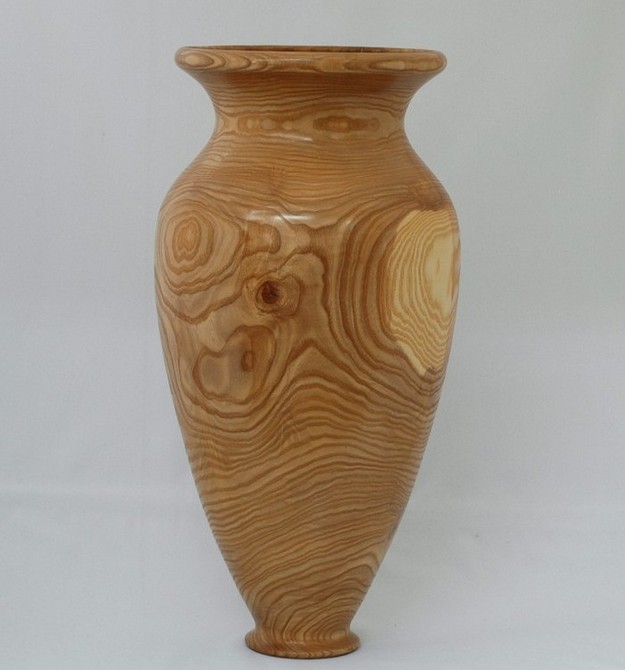
This ash tree came from the farm of my buddy, Jack Hamer. Our local woodturning club went to Jack's place for a "field trip" to learn about proper use and safety in using a chainsaw and taking down a large tree. Several of us took home pieces of the tree to turn, and this large vase (about 18" tall and 9" in diameter) came from part of that tree. Ash is a wonderful wood to turn and we are fortunate to have a lot of ash in this area.

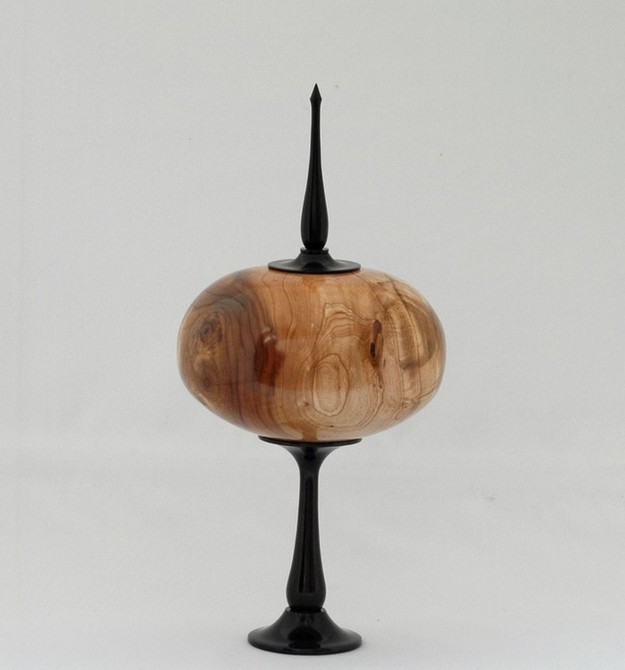
Chokecherry is another common bush found in Manitoba, and any kid from the country is familiar with the puckery chokecherry. My summers as a little boy were spent with blue stained teeth, and later, as an adult, with blue stained fingers from picking the berries and making wine with them. It is rare to find a chunk of chokecherry large enough for a piece like this, and I was amazed at the lovely variances in color and texture inside the wood. This piece is about 12" tall and 6½" in diameter.

Redwood Urn Set

My friend, Lionel Bedard, sent me some photos of a load of redwood burl that he had acquired, and I bought a load of it and shared it with friends from our local club. Redwood burl is difficult stuff to turn, as it is soft and a bit stringy. A clean cut is hard to get across end grain. Sanding is also difficult as the softer light colored wood will sand away more quickly than the dark wood and leave a rippled surface.

These pieces are urns. The large one (14" tall overall and 7" in diameter) is designed to be interred, and the small duplicate as a mantlepiece keepsake urn.

Small Oak Vase
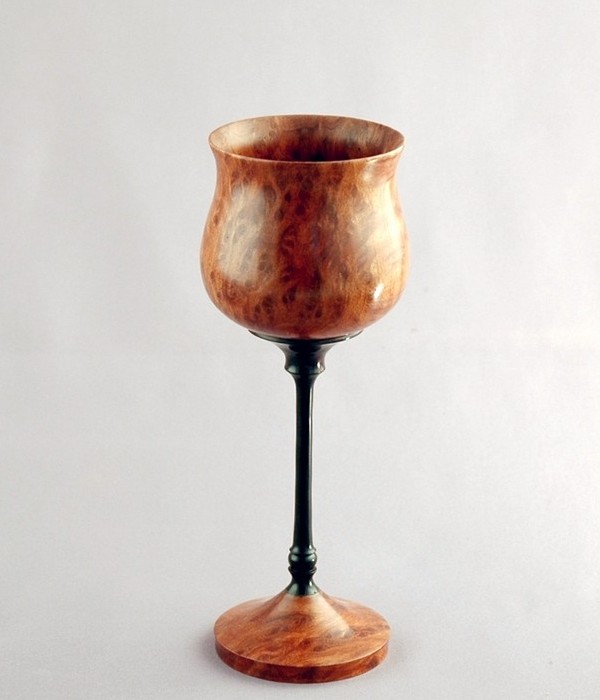
Redwood Burl Goblet

The one on the left is just a small Manitoba oak vase about 4" tall and 2" in diameter. I left a little bit of the sapwood (wood just beneath the bark) on the exterior as a focal point. As miserable as this wood can be to turn, I still like it, and there is lots of it around here.

The redwood burl goblet is an offcut from the two urns posted just above. Like most woodworkers and woodturners, I find it difficult to throw away wood if there is the slightest chance that it can be used at some future point. So, little pieces build up in the corners of the shop until we get tired of tripping over it and either do something with it or burn it in the fireplace. This little piece of wood was so pretty that it seemed a good candidate for a goblet. The cup is about 2½" by 2½" and the overall height is about 7".

Box Elder Urn

Another urn - this one of box elder, or Manitoba maple as we call it here and ebony foot, lid and finial. This is such beautiful wood when left it's natural color. I have found the best finish to use is a water based urethane since it does not change the color of the wood and is extremely durable and brings out the beautiful burl grain figure. This urn is about 8" tall overall and 5" in diameter.

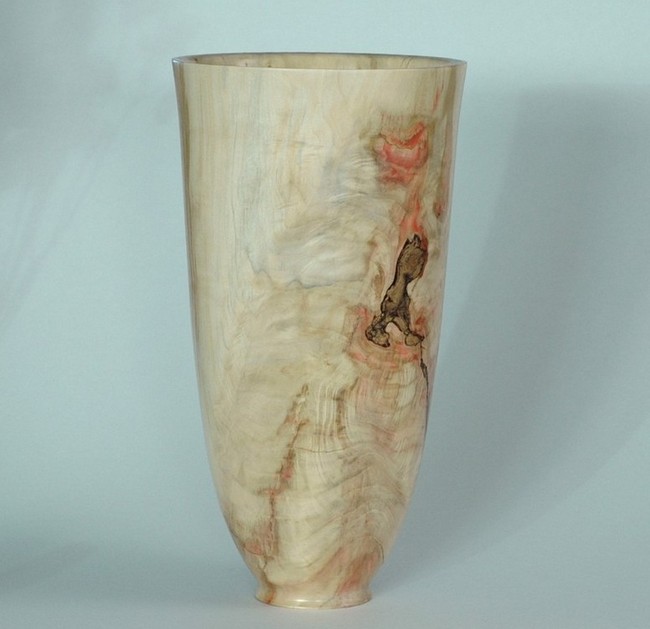
Box Elder Vase
Leah's Russian Olive Vase

On the left, another piece of box elder. As I have stated before, I like bell shapes, and this is very minimally a bell shape. I also left a foot on this one as it just seemed to fit with the shape. Box elder will often have lovely red colors shooting through it, but the red will turn to a rich brown at some point in the future. The red color can be retained longer by using a water base urethane finish which has UV protection in it. This piece is 12" tall and 5" in diameter.

The piece on the right was made for the daughter of neighbors who died a few years ago. I removed the Russian olive tree from the yard of her parents and made her the vase as a keepsake and reminder of her parents who died within two weeks of each other. The piece is 12" tall and 6" in diameter.