
2010 Turnings |
|---|
I will try to maintain the page throughout the year, so come back often to check it out.
There is an extra feature on this page about harvesting wood. People are always asking, "Where do you get your wood?" so I thought I'd show you. Here is the link.
Before you start on this page, one of the first things I did in 2010 was fix a bassoon, an orchestra instrument often referred to as a "bed-post".
I thank you for visiting, and please let me know you were here. I love hearing from people who visit the site. I might even write you back.
If you saw my 2009 page, you see that I said I would try to continue with 2010 and keep it up to date during the year. So, it is now the 29th of April, 2010, the 2009 page is done and this page contains the first few turnings of 2010. Therefore, all those kind people that have written me, "Herm, have you stopped turning?" can now rest. I am, unfortunately, as hooked as always on woodturning.
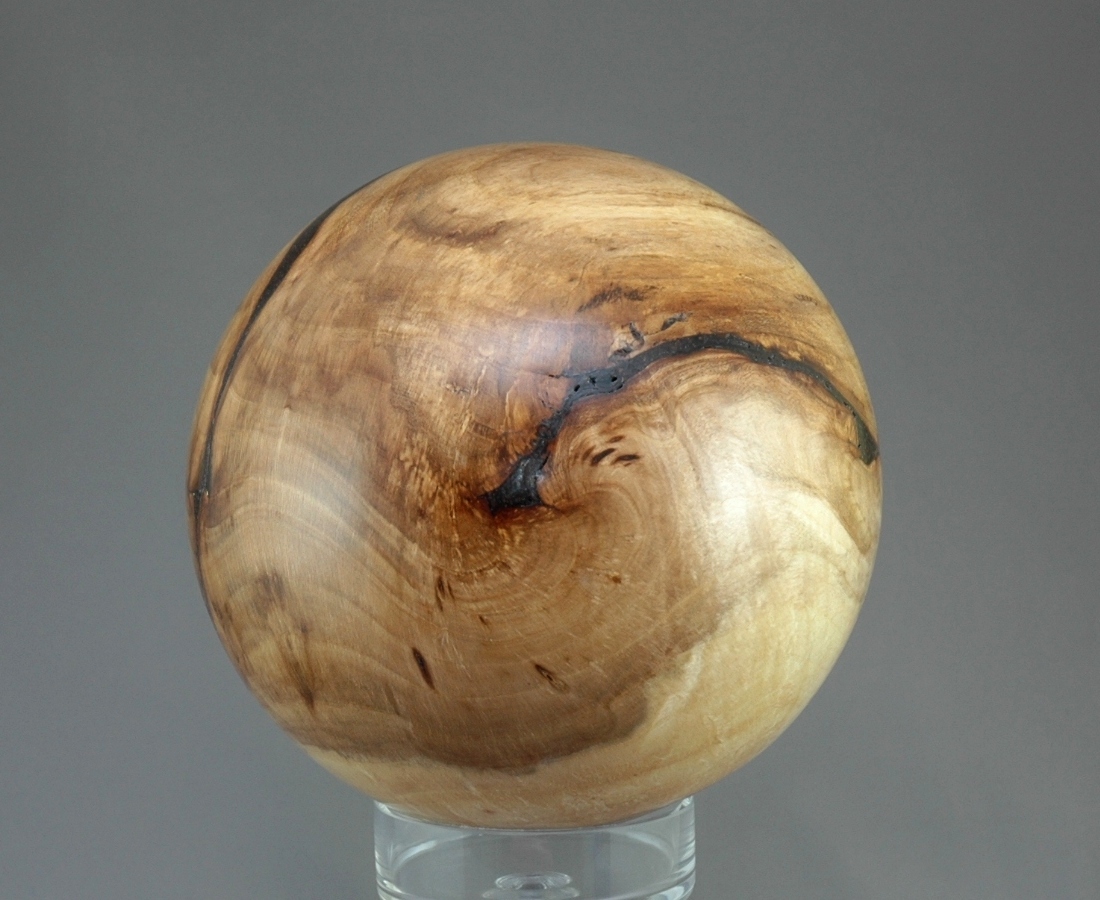
This seems a fitting way to open my 2010 page, as it was one of the more challenging and interesting pieces I made, and it comes with a history.The history is a story about how an elm burl came into my possession - a rare occurrence in the City of Winnipeg where Dutch elm disease has threatened many of the gorgeous mature elms that shade many of our streets in a green cathedral effect every summer. I created a separate web page about the harvesting and processing of the burl, which you can see by clicking here. This ball is 11" in diameter and it is hollow. The wall is about ¼" thick and I put a couple of ball bearings inside to prove it is hollow. The way I did it is profiled on another page which you can reach by clicking here. I started turning spheres in earnest in 2010 and quickly realized how much fun they are to turn and how nice they feel in your hands when finished. This one was an idea I got from the lady who wanted a simple ball as payment for letting me store and cut up the elm burl on her property. I find that the balls are a perfect way to display the beauty of grain, color and figure in wood, and I think this sphere is a good example.
 |
|---|
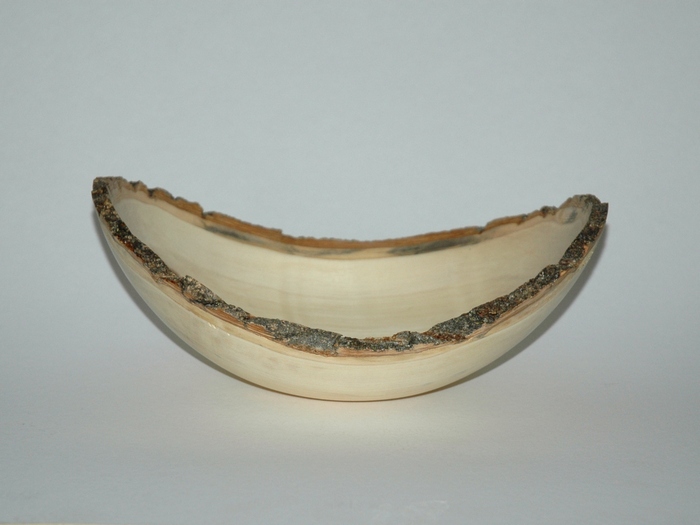 |
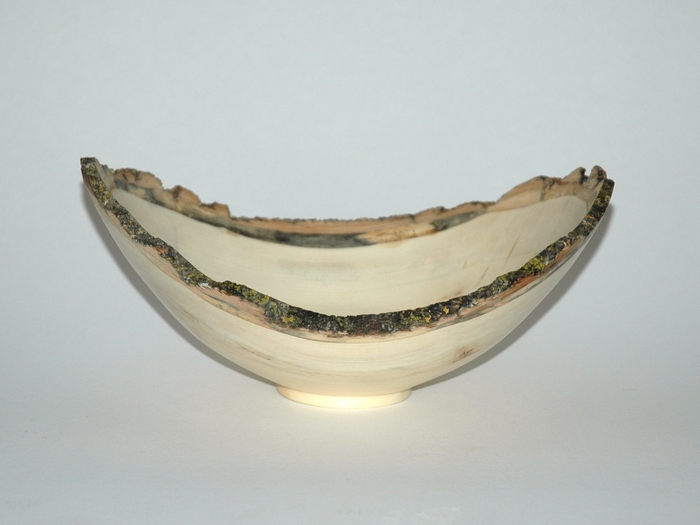
People are always asking for natural edge bowls, and the more I make the less I like to make them. After a while, they just get boring. I have decided, however, that I am going to look at other ways to do natural edge bowls in 2010, and the first example of my experiment follows in the next frame.I am putting these two in this frame, both made from the same box elder log, to show what happens to the design when you add a foot. I'm not sure which I like better, although I think I lean toward the upper one without a foot. These are both about 11" long and 4" tall. The finish, as it is with most of my box elder pieces, water borne urethane to protect the light color of the wood.
| ||
 |
|||
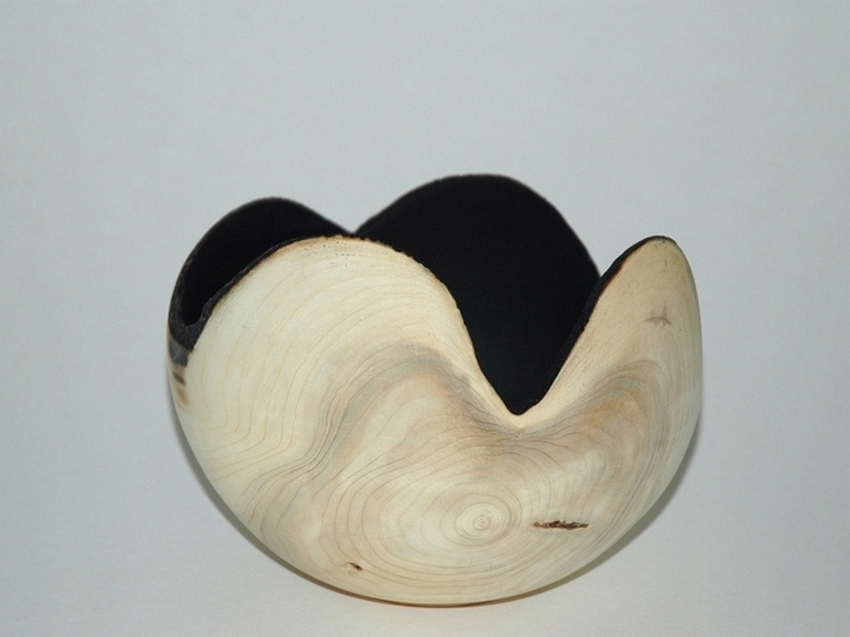 |
This bowl is poplar, and the pith, or center of the log, runs right through the center of it. This is a difficult way to turn wood, since the pith of a log is the first to crack and check. Also, as a bowl dries, the pith tends to push out and form ugly lumps on the side of the bowl. If a woodturner knows what will happen and designs the bowl to warp and twist, that's fine, but in most cases, I want the bowl to stay round.However, poplar is one of the more lenient woods when it comes to cracking and shape-shifting, and the pith does form a nice feature in the bowl. This wood came from a crotch where some branches came off the tree and it seemed logical to leave the natural scalloped edge. Since poplar bark is very thin, I removed it and used a burner to scorch the edge. The interior is painted flat black and the exterior finished with water based urethane. The bowl is about 9" by 9".
| ||
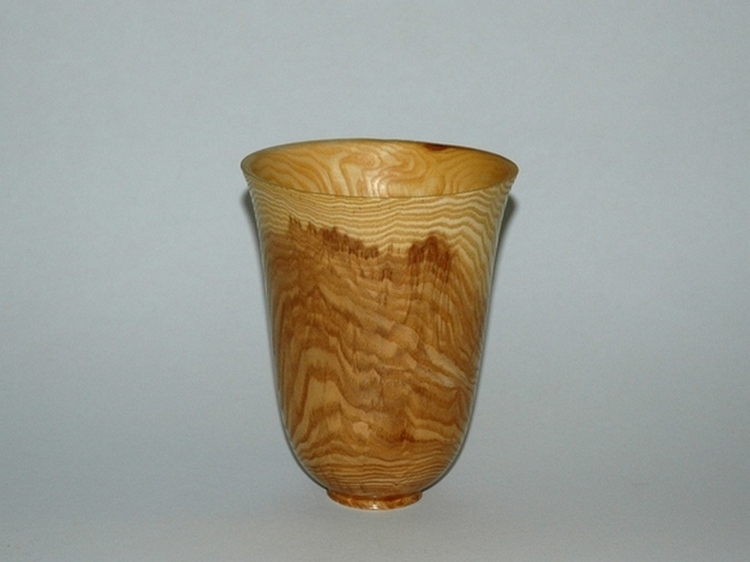 |
The piece on top is an ash vase with the sapwood at the top of the piece. I love turning ash. We have lots of it here in Manitoba, and if you can find a large piece with a nice thick sapwood (wood just under the bark) layer, there are some nice things you can do with it. Since this vase is about 10" tall, and the center of the tree is below the bottom of the piece, you can calculate that the tree was at least 24" or so in diameter. The bowl has tung oil on it and is buffed.
| ||
 |
|||
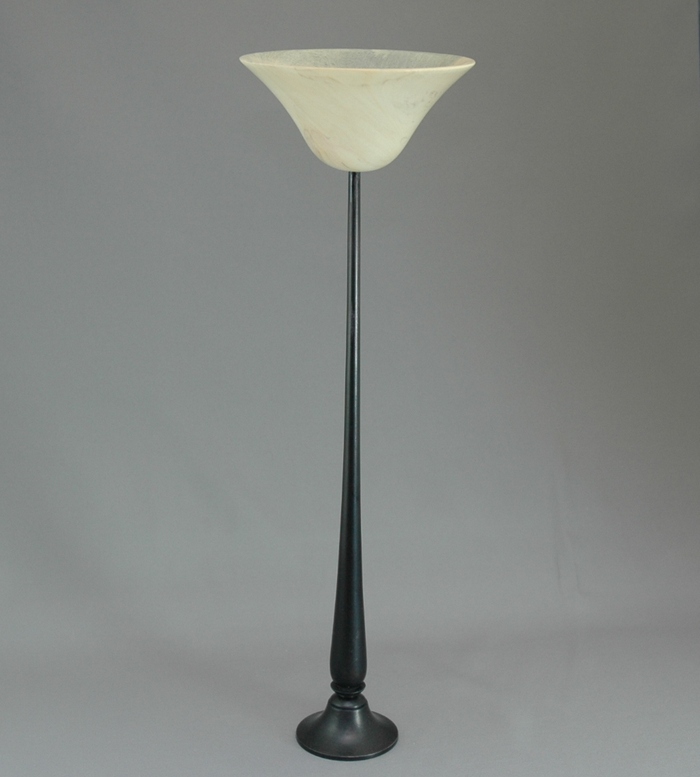 |
This funny little piece was done as a challenge for our woodturning club. The challenge was to turn some kind of thin finial or spindle, so I decided to make a very long stem and save it for some future use. I then saw a little unfinished goblet top on the workbench and thought, "hey, that will work on top of this long spindle! All I need to do is make a base." After I made the base and perched the little cup on top of it, I thought it looked strange, so I dyed the maple base black. It matched the dark grain of the buckeye, and I liked it.The piece is about 16" tall overall, and the goblet is only about 3½" in diameter.
| ||
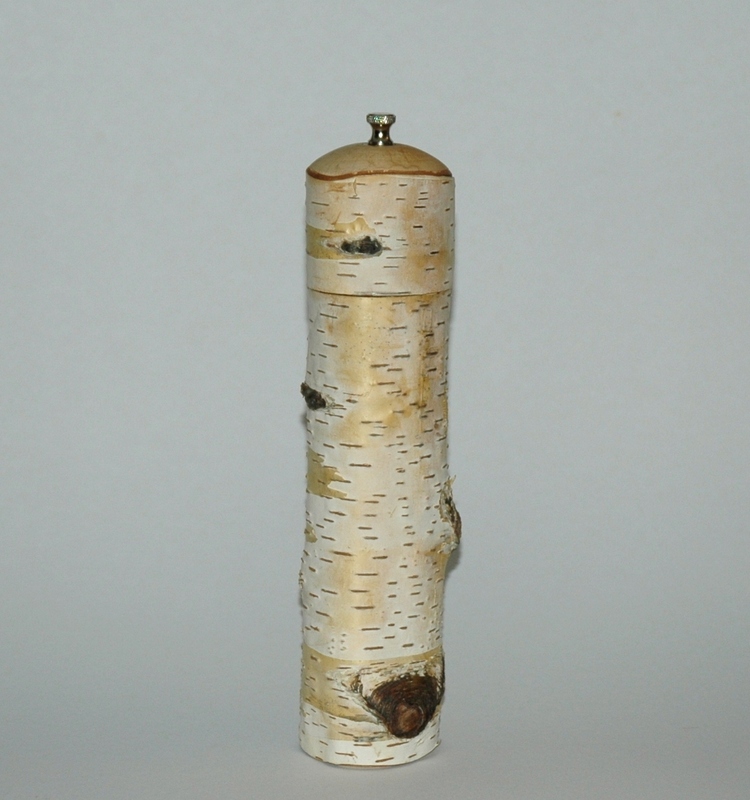 |
I can't believe the response people have had to this peppermill. I thought I'd give this a shot when I spotted a piece of paper birch in my woodpile and it gave me an idea. After all, for an outdoor barbeque or a camper or cabin, this might be quite the conversation piece.The mill is 12" tall, and judging from the response, I'm going to make some more of them. They are certainly easy enough and quick enough to make, and there are lots of interesting fence posts that could be used.
| ||
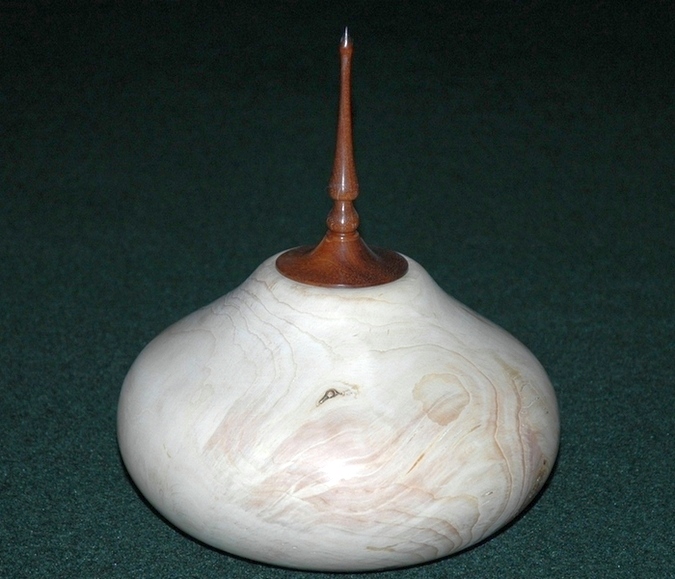
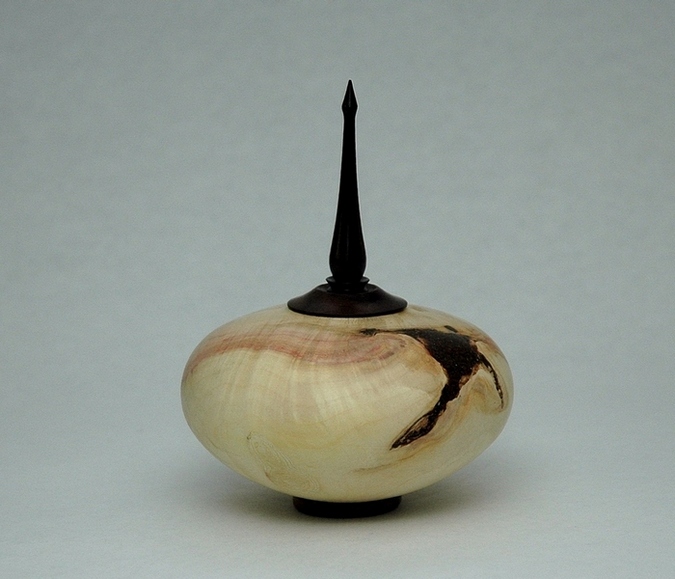
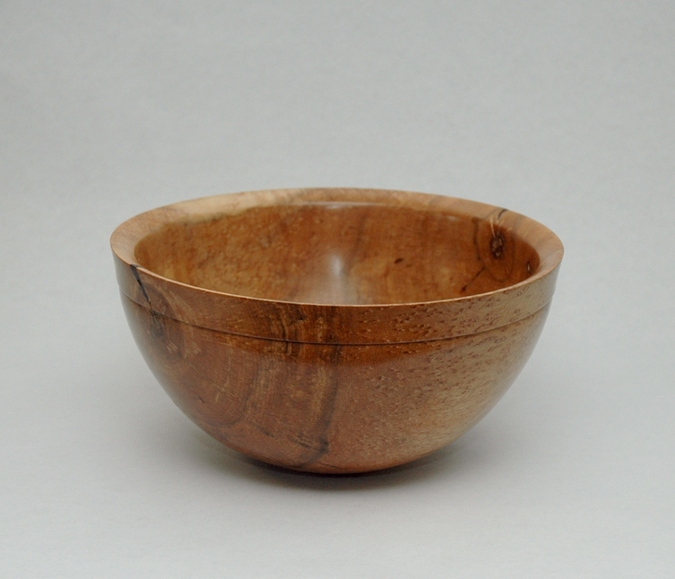
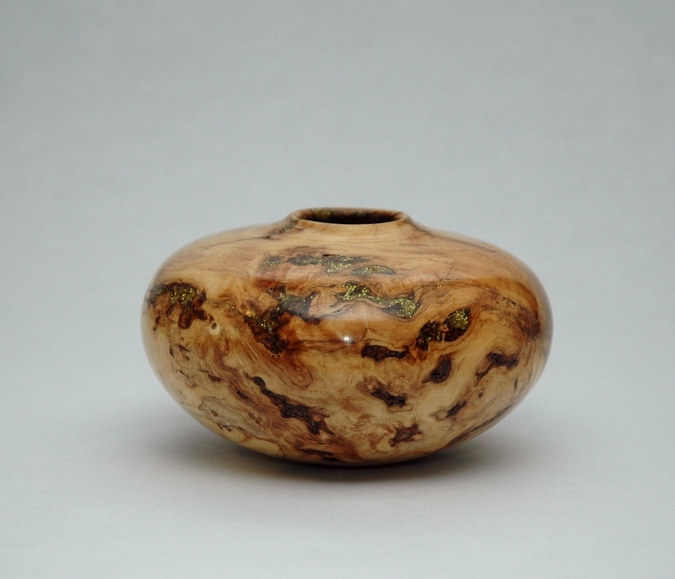
The piece on the top left is the first spruce piece I ever turned. Spruce, in my view, is a terrible wood to turn due to its high pitch content which gets sticky goo all over your tools and hands. Yuck! It also has rather uninteresting grain. However, this was a very dry burl, given to me by my friend, Mike, and the sticky sap was minimal. I decided to turn this 12" urn out of part of the burl, and I think it turned out nicely. It originally had a glossy finish, which I removed and re-did with a matte urethane finish. The cap and finial are of Rosewood.The piece opposite it is a small, about 4" diameter, Manitoba Maple keepsake box. These are a lot of fun to make, and out of every ten I do I manage to get at least one of them just right. It is a much harder form to get perfect than one might think, as is the perfect match of cap and finial. The cap and finial on this piece are of ebony. On the bottom left is a small bowl of birdseye maple. It is about 10" in diameter and is finished with rub-on poly. The bottom right is a small hollow form that I turned back in about 1997. It was a very punky piece of maple, full of holes and hardly "turnable". I remember treating it with Polyall 2000 and filling the holes with brass shavings and epoxy. Karen took the little piece to work with her and I forgot all about it. When she retired, she brought the 5" diameter piece home with her, and I remembered it. However, the finish was pretty sub-standard, so I took it and refinished it with rub-on poly.
    | |||||
|---|---|---|---|---|---|
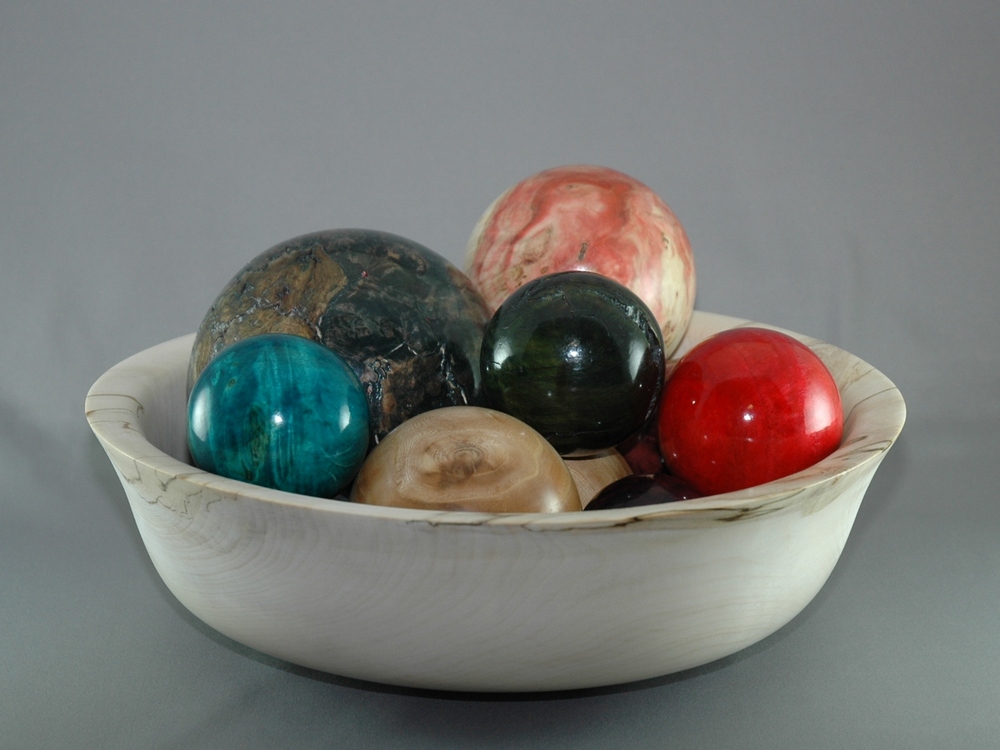 |
These are a blast to make, and, as you can see I got out some of my colors. I use the double cup method for turning these, and they are all perfectly round. I've given many of these away to people that just like to hold them and roll them around in their hands. They would be great on a desk as a stress reliever. There are a variety of woods shown here, and a variety of coloring techniques.Starting with the top ball and going clockwise, they are:
The bowl is about 12" in diameter and is of Manitoba Maple, finished with water based urethane. The bowl was made of very soft and punky wood but stabilized with Polyall 2000 before finish turning. As with most of my Manitoba Maple pieces, I prefer a matte finish.
| ||
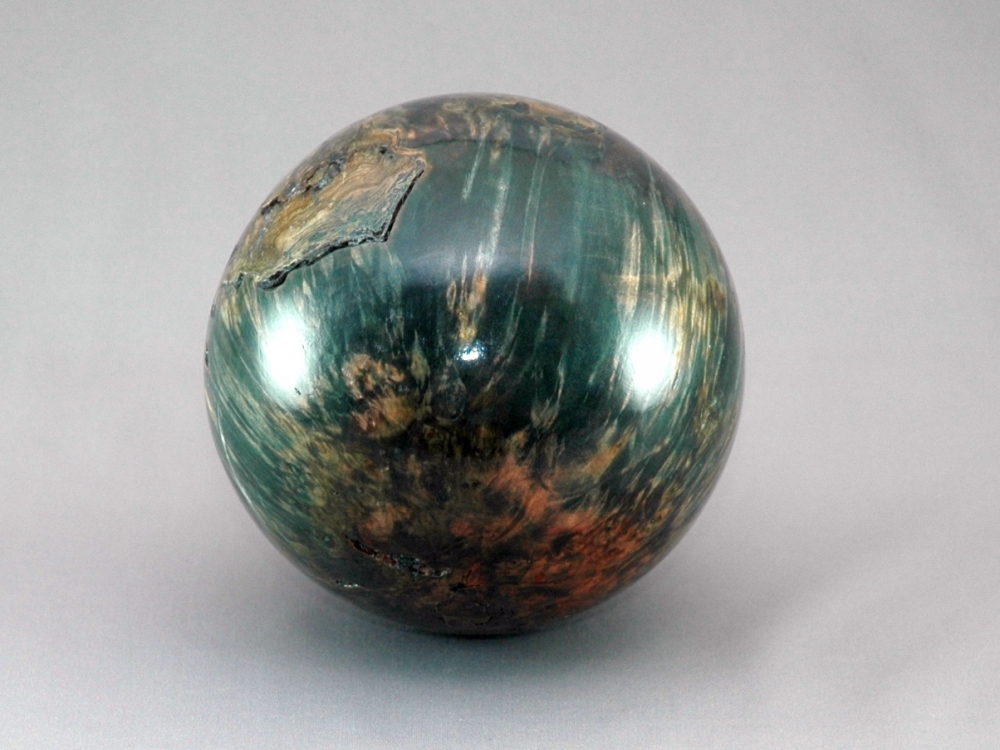 |
The Elm burl ball on top is from a giant root burl that I harvested in early 2010. You can see some of the photos and read the story by clicking on this link. As time goes on I will link other pieces from this burl. This is one of the few that I decided to dye - the bright red one in the bowl is another dyed elm piece. I have only recently started to add color to more of my pieces, mainly for interest, although I do not like to color woods that have a lot of figure to them. Sometimes, though, the color will "pop" the figure. This piece is about 5" in diameter.
| ||
 |
|||
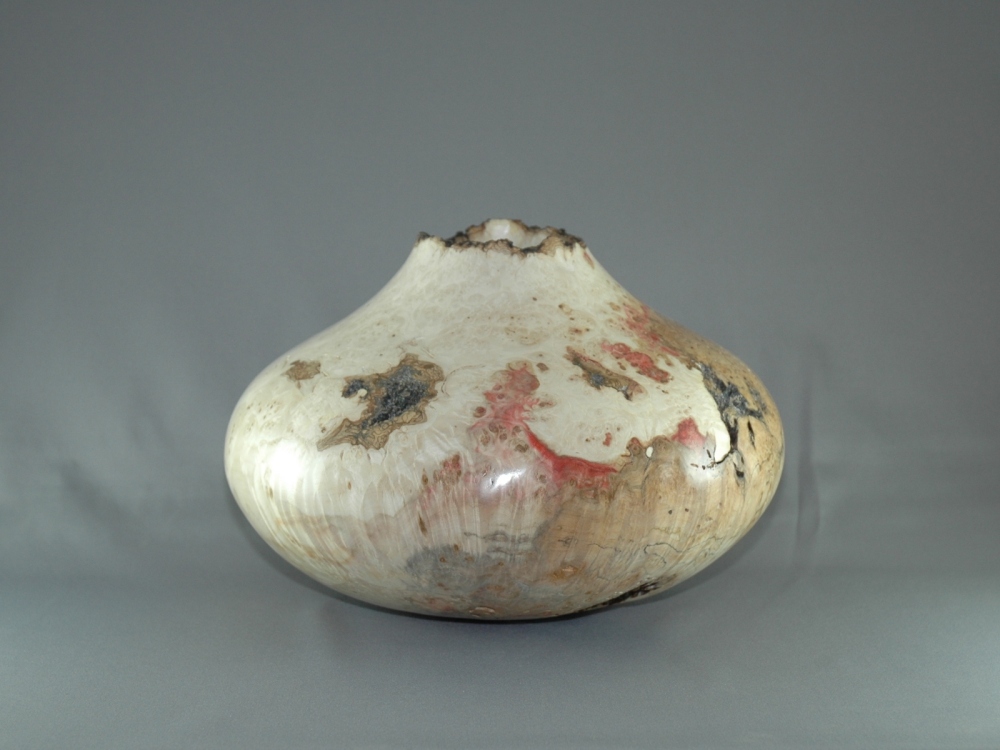 |
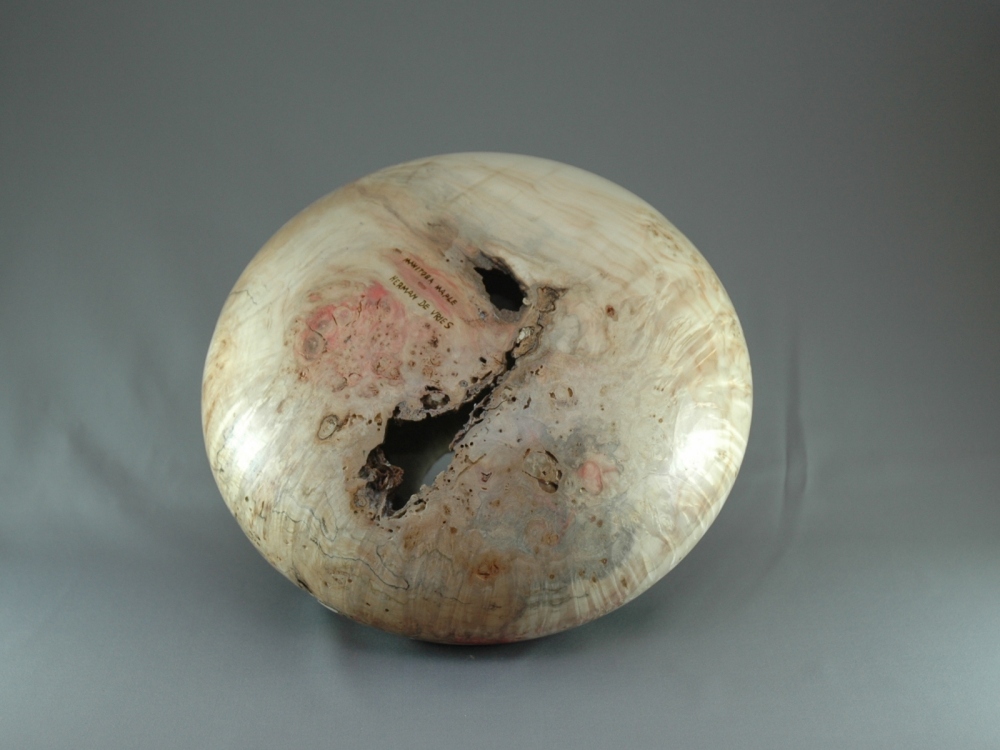
By now, if you have been perusing this site, you will recognize that I use "Manitoba Maple" and "Box Elder" interchangeably.Box Elder is actually a species of maple, and is probably most commonly known as Manitoba Maple. It grows in abundance here in Manitoba and sometimes forms beautiful root burls with incredible color and grain. I love the wood - it is a pleasure to turn and is easy and quick to dry. However, unless it is burl or figured wood, the character of the wood is rather non-descript. That's why I like to get my hands on burl wood. The biggest problem is that, by the time a tree shows signs of sickness or age, it is generally hollow and soft. This piece was from a tree that had started to go soft, and it was incredibly hard to turn. It is very thin and light, although it is not a small piece. It measures about 11" in diameter and is almost 6" in height. . It is one of the pieces I finished with gloss water base urethane but then cut back to a soft sheen finish.
| ||
 |
|||
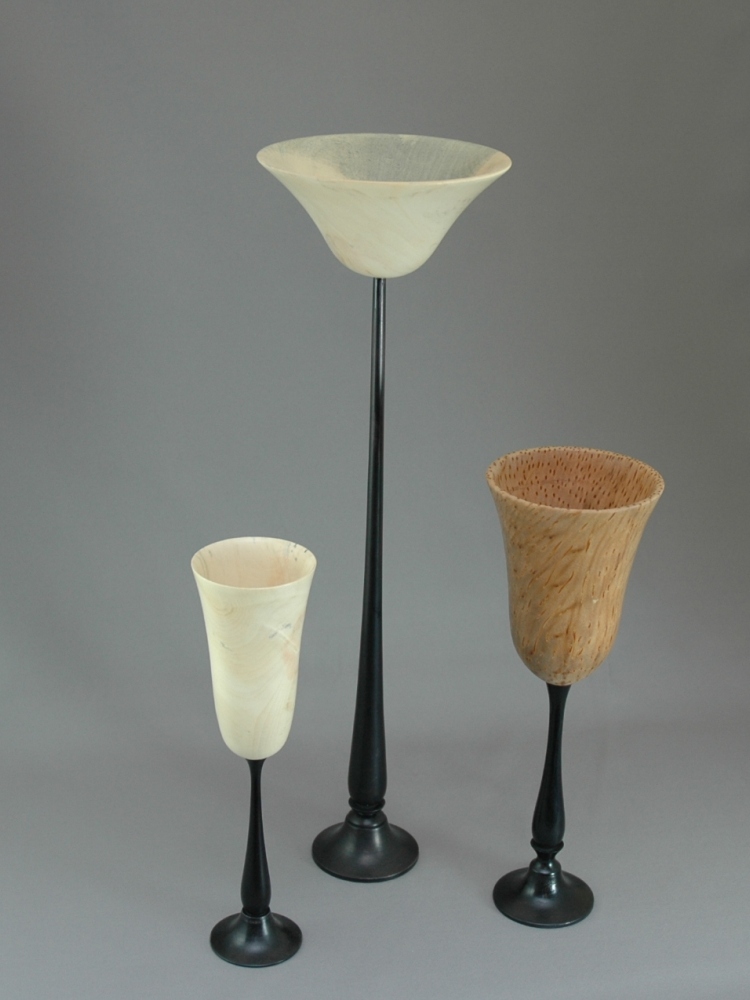 |
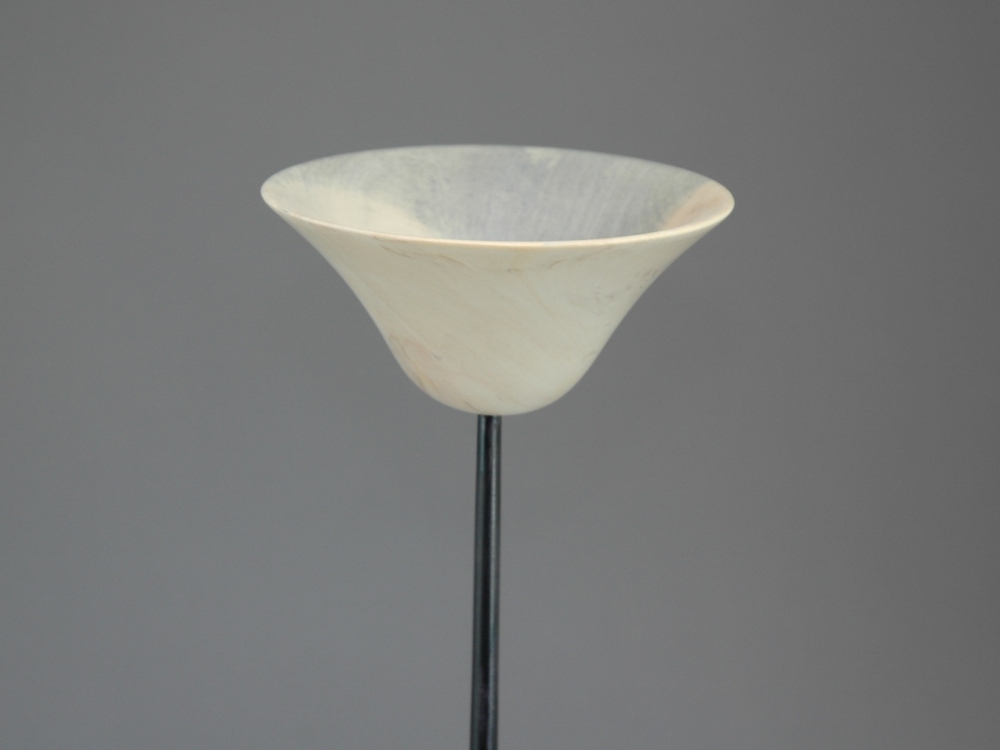
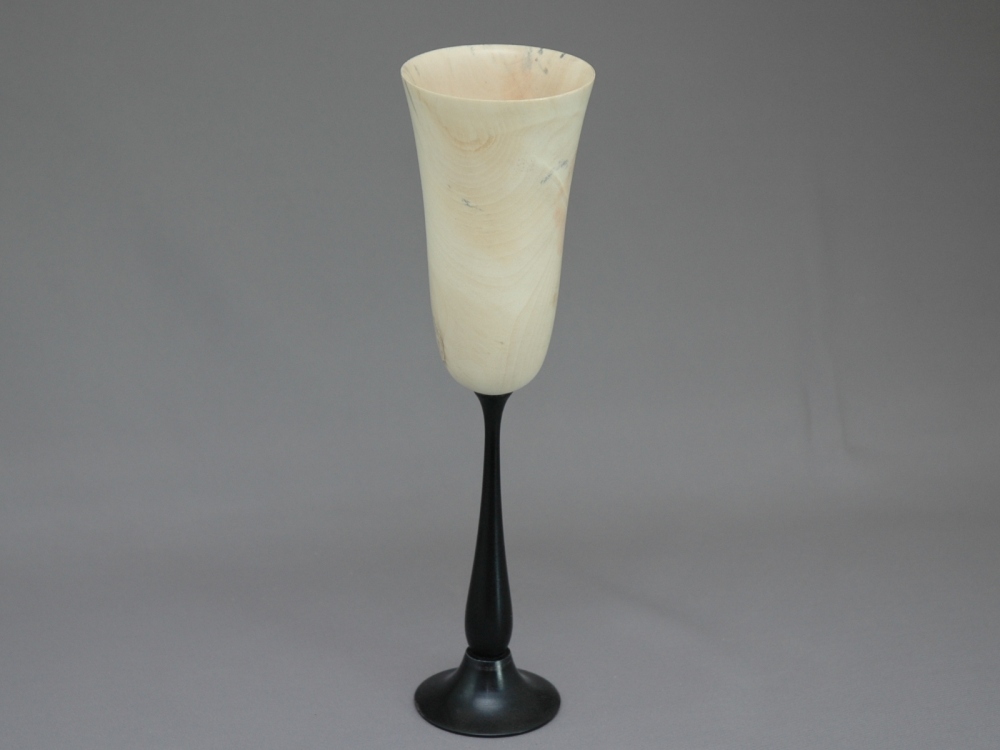
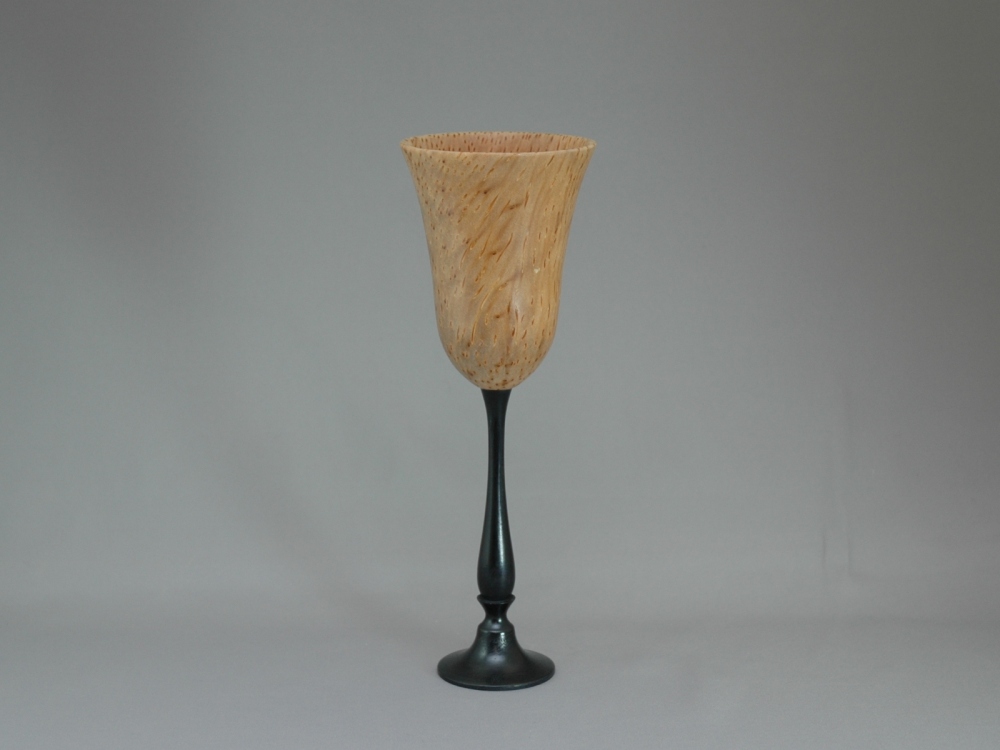
Buckeye is a lovely wood, and I like turning it. The colors of black and green that are common in buckeye are very unusual, and the buckeye burl is outstanding in its beauty. This goblet is about 4" in diameter but the stem is very long. It stands about 14" tall. The goblet is finished with water base urethane to keep the colors true, and it has been rubbed down to a soft sheen finish.
This piece is about 9" tall.
   | |||||||||||
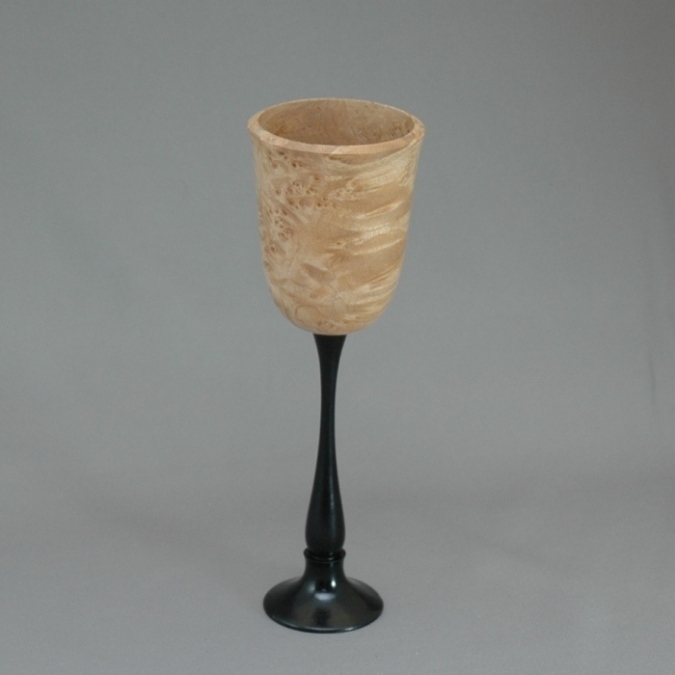
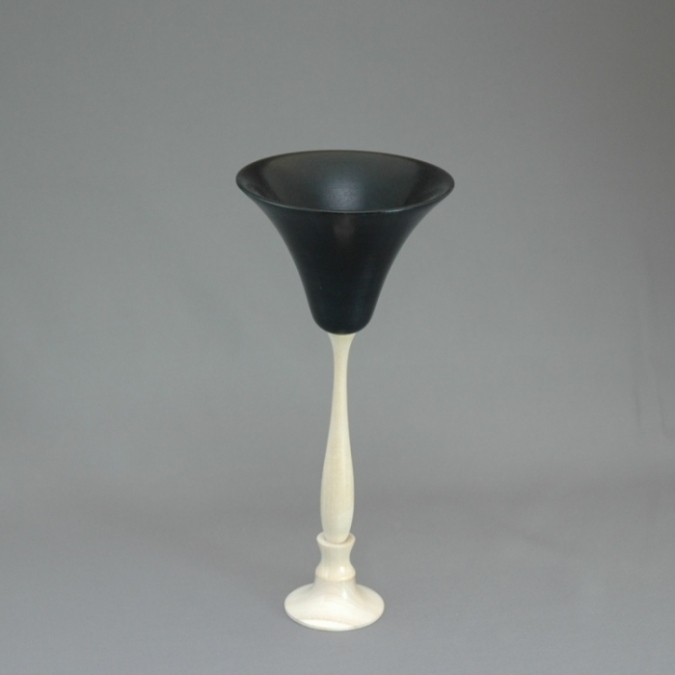
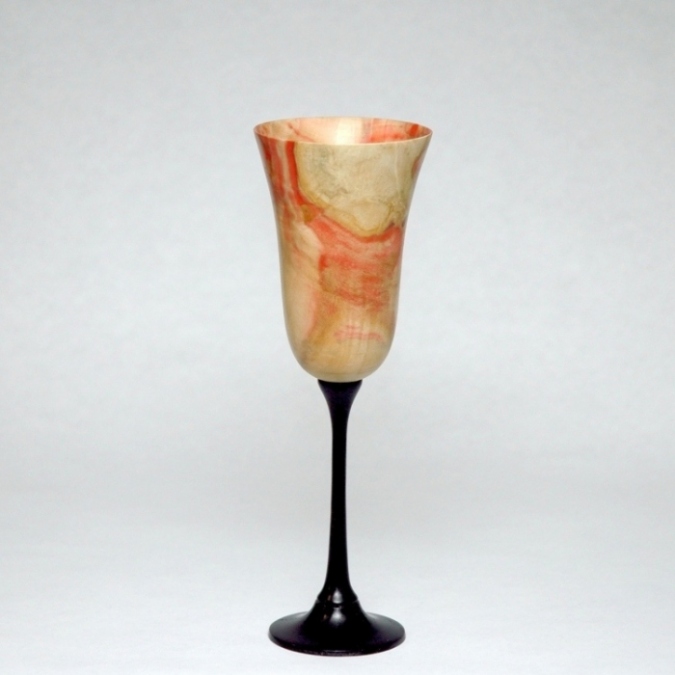
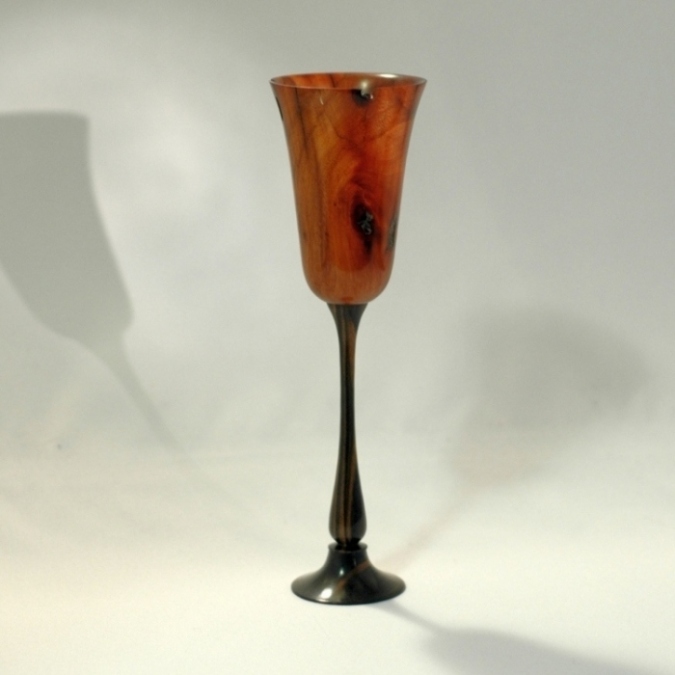
Four little goblets here.The first, top left, is big leaf maple. It is part of some wood that I bought from Tim Shipp in Oregon more than 12 years ago. I have a bit of it left, one large piece that will likely end up as an urn. This goblet is 3" in diameter and finished with Danish oil. The base is ebony. The piece on top right is 3" in diameter. It is made of cherry dyed black with leather dye before several coats of Danish Oil. It was then buffed. The base is holly. The piece on the bottom left is of Manitoba Maple, about 2½" in diameter. The base is ebony. The piece on the bottom right is of an unknown wood, and if anyone recognizes it they can email me. My friend John Wiebe came to spend an afternoon with me in my shop and brought this little stick of wood with him. I think he got it in Paraguay. He wondered what could be made of the little stick, so I made this. It is about 2" in diameter and has one coat of Danish oil and then buffed. The base is ebony.
    | |||||
|---|---|---|---|---|---|
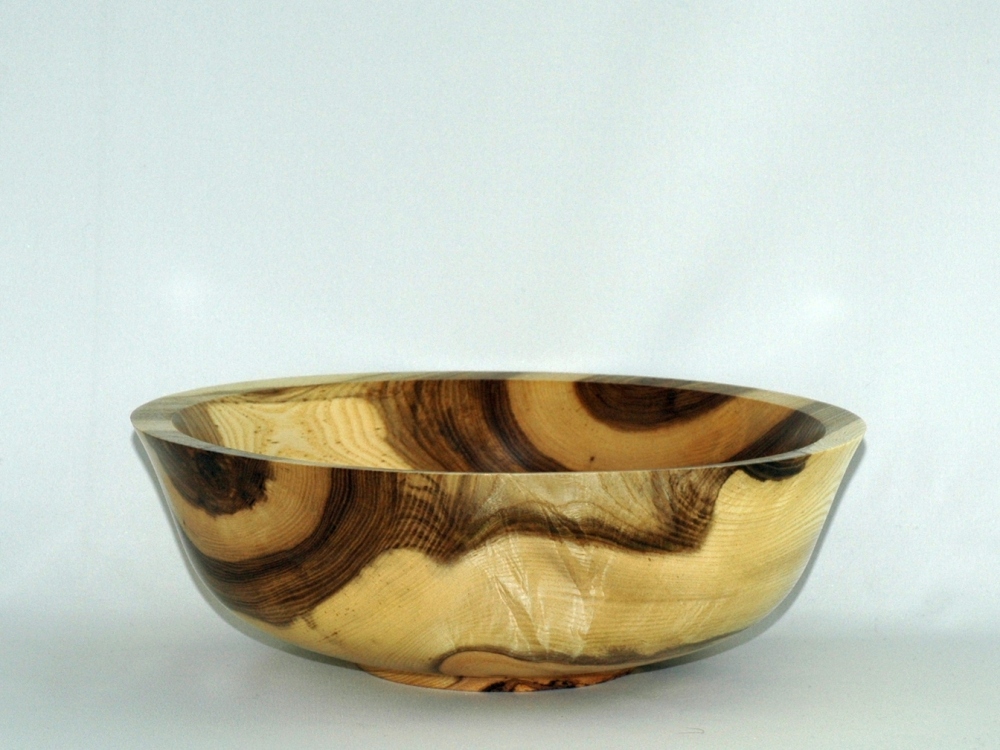 |
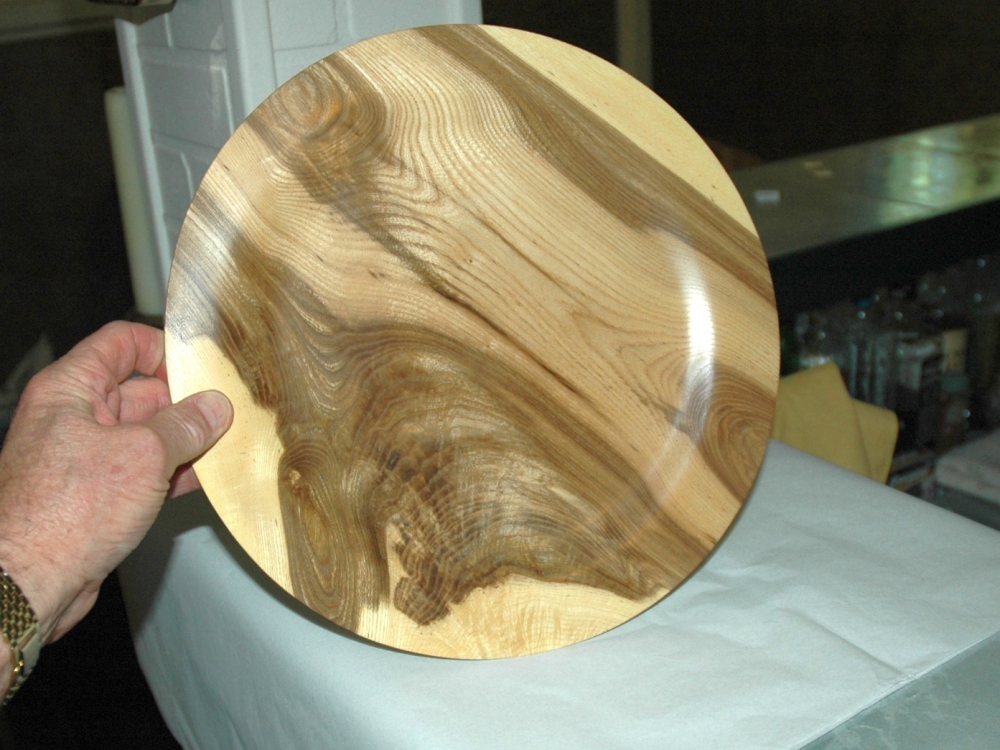
Here in Manitoba? "Yep" That's what the fellow from the Forestry Association told our club. He said there was a large hackberry tree along Lake Manitoba that was coming down and might be of interest. So, my buddy Jesse went and hauled a load back to Winnipeg. I got several pieces from him and was amazed at the color and character of the wood. This top piece is just a simple bowl with clean lines to just show the wood grain and not detract from it. The bowl is about 13" in diameter and 4" deep.
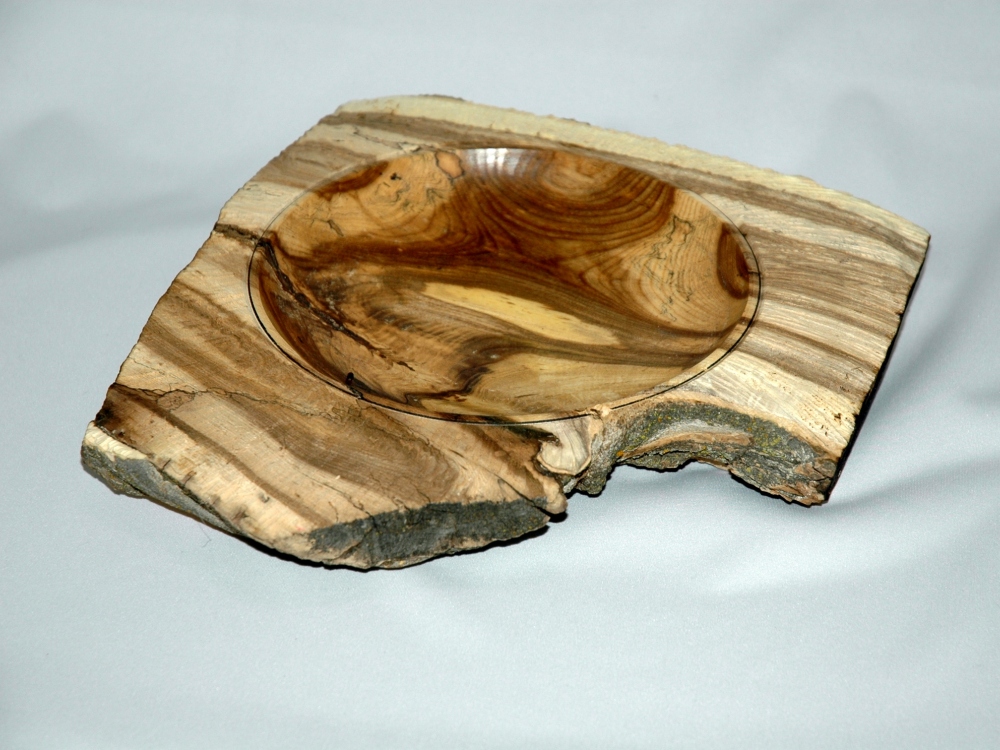
It is about 14" square and 3" deep.
All of these pieces are finished with Danish Oil and buffed.
  | ||||||||
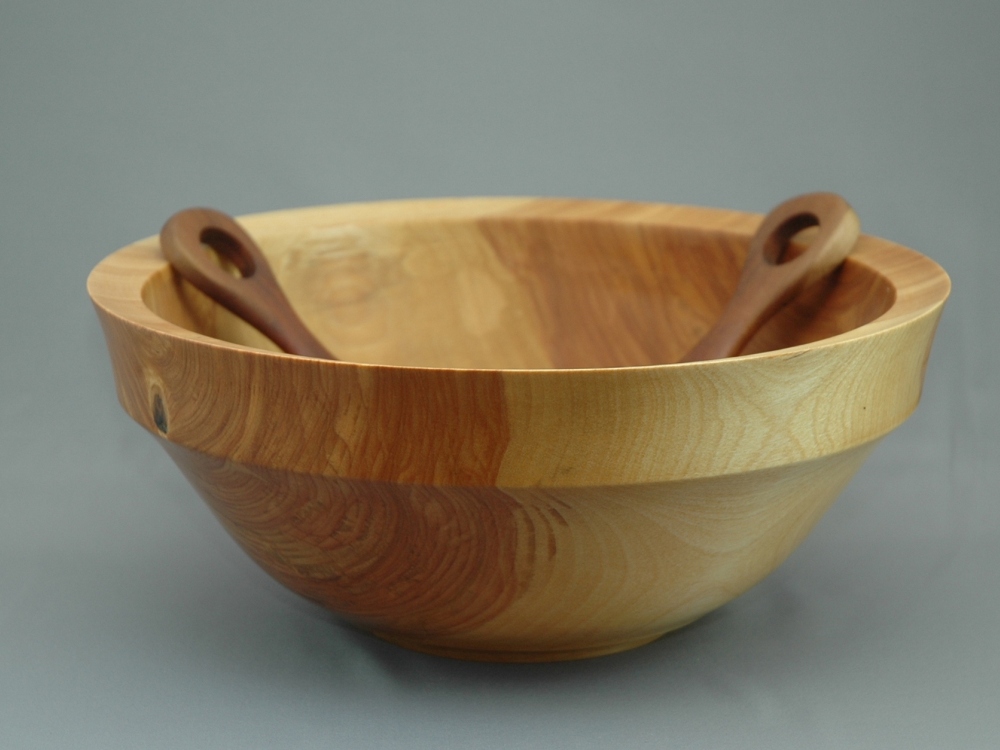 |
I do make stuff for our own household. When my friend Larry called and said he had some birch I kept one of the big bowls for our own use. I include it here to show the beautiful patina the bowl has developed over a year or so of constant use.Karen was remarking, just the other day, that no often she leaves the bowl with some olive oil in it, the oil is still being absorbed into the wood. The color has gotten deeper and deeper. Can't beat birch for a good salad bowl. This one is finished with Danish on the outside and buffed. It is maintained with the occasional waxing with a good paste wax. I use "Tried and True", double boiled linseed oil from Lee Valley Tools, on the inside. We usually wipe out the bowl with a paper towel after used and give it a good coat of salad oil before storing it. There is usually a little puddle of olive oil left in the bottom. Every once in awhile we wipe it out with a soapy dishcloth, rinse the inside and dry it before putting it away with olive oil. Olive oil is better because it will stay fresh without going rancid far longer than other oils. Besides, it is what is used in most salad dressings. This bowl is 15" in diameter and we use it almost daily.
| ||
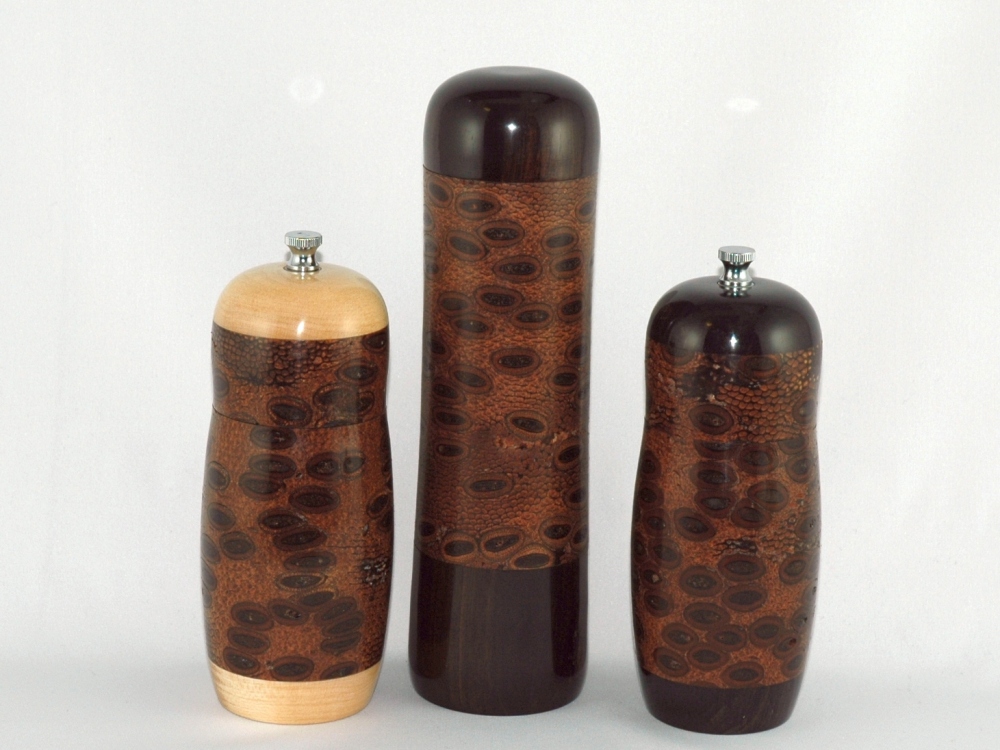 |
What good is a salad in a nice bowl unless you have some freshly ground pepper and freshly ground sea salt to go with it.You saw the tall peppermill featured just above, but the other two in this photo are a set. Obviously, the one with the black is for pepper and the one with the white is for salt. The ceramic grinders work well for salt as they do not rust or corrode as a metal grinder would do. These are made just like the tall mill - holes filled with coffee and epoxy. Finish is Danish Oil. The small mills are about 6" high and we use them on our table when company comes.
| ||
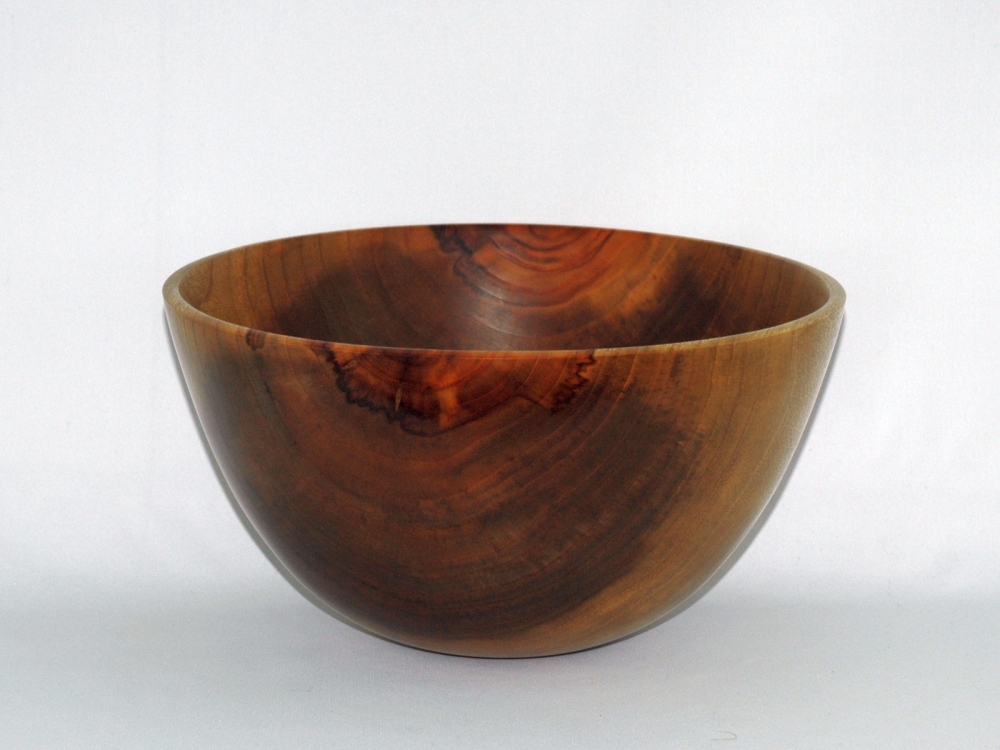 |
A friend from California, Brad Adams, sent me a piece of camphor laurel a long, long time ago. I rough turned it way back in about 2003 and it sat on a shelf, forgotten in the busy-ness of life, for several years.I found it one day and decided to finish it. By now it was completely dry, but it still turned like silk. Camphor is a delight to turn if you have a stuffy nose or a cold. The shop smells like Vapor Rub. I like the smell but found that you do have to get the shavings out of the house after turning. This is designed as a salad bowl, but I'm wondering if that is a mistake. The camphor smell is still evident and I am concerned that it might impart a flavor to the salad. It sure is beautiful wood, though, and I guess it could be used for a chip or popcorn bowl. It is about 12" in diameter and 7" deep.
| ||
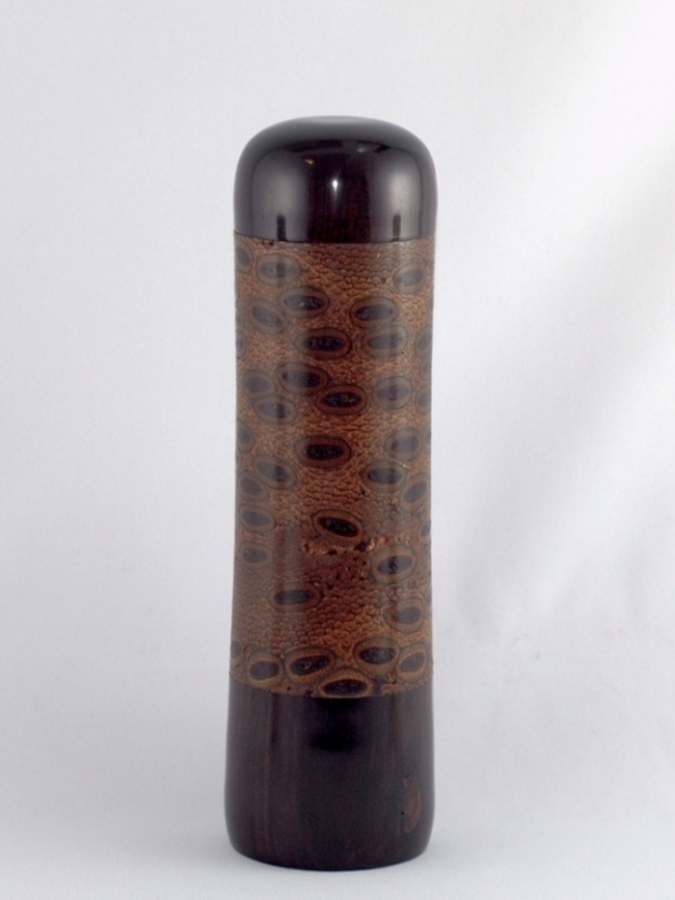
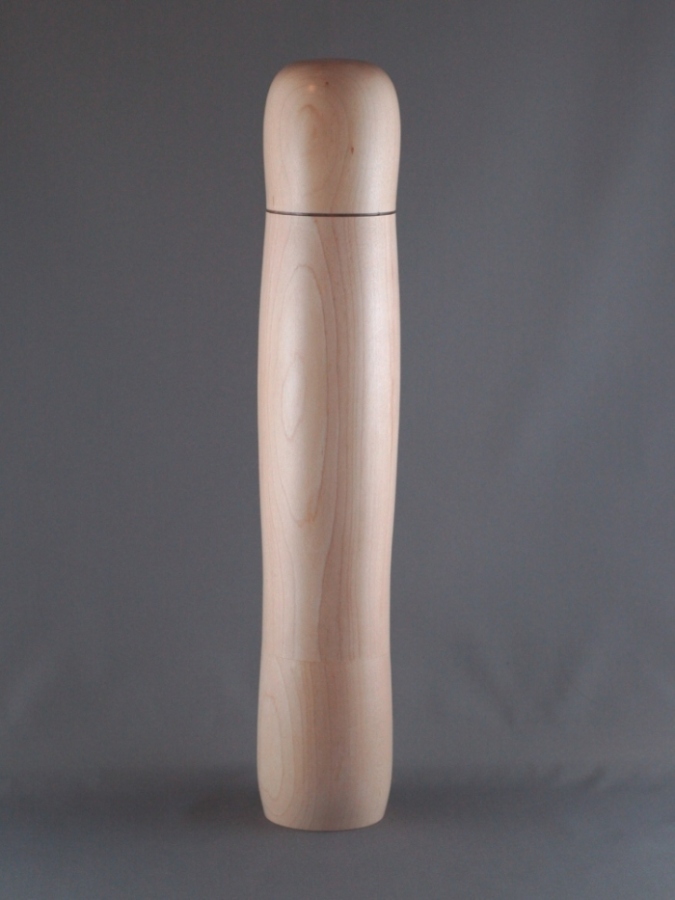
Here's a pair of peppermills. Both of these mills feature the Crush Grind mechanism, which is a ceramic mechanism that works without the center shaft that most peppermills have. It works by holding the bottom of the mill and rotating the body to grind the pepper. The mechanism is far superior to other types of grinders.The mill on the left was interesting to make. It is from a banksia pod, which comes from Australia. This is probably one of the most miserable natural products in the world to turn. It is extremely dusty, crumbly and dirty. It has all those holes in it, and the surface is covered with fine fuzz after turning. The only way I have found to deal witht the fuzz is to harden it with CA glue before finish turning. The only reason I turn it is because it looks so interesting when it is finished. And then, it has all those holes in it. For a peppermill, this is not a good thing as all the peppercorns fall out. My solution was to fill each of the holes with epoxy mixed with ground coffee. The color of the epoxy is a splendid complement to the color of the banksia. The final finish is WOP (wipe on poly) and then buffed. The lid is of ebony. The second mill is simply a baseball bat blank turned into a 14" mill. A point of interest is the thin band of walnut that separates the lid from the body. Both of these have lids that thread in place using modified plumbing PVC threaded fixtures.
  | |||
|---|---|---|---|