2005 Turnings

Well, it is December of 2005, and time for me to put up the page of what I've been up to this year.

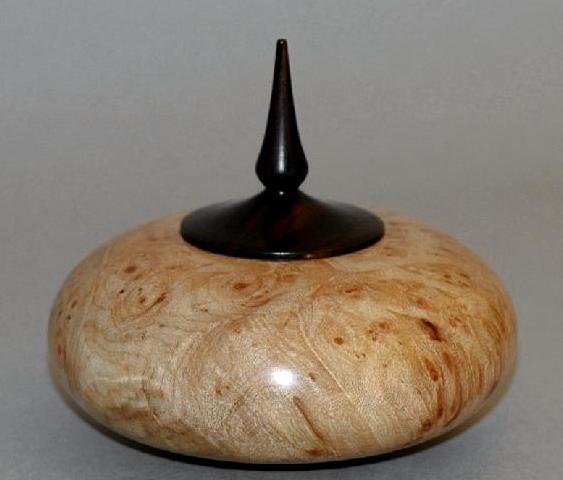
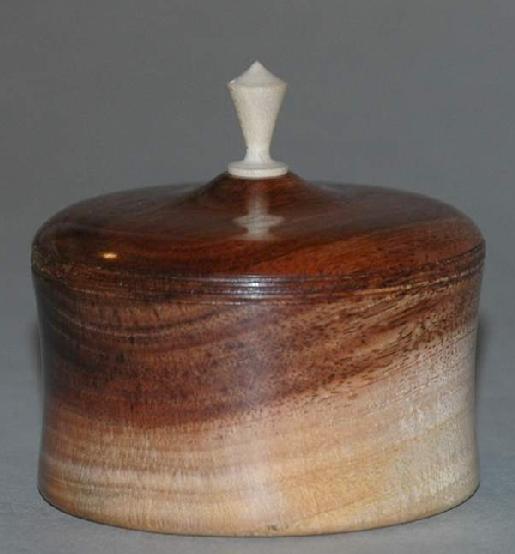
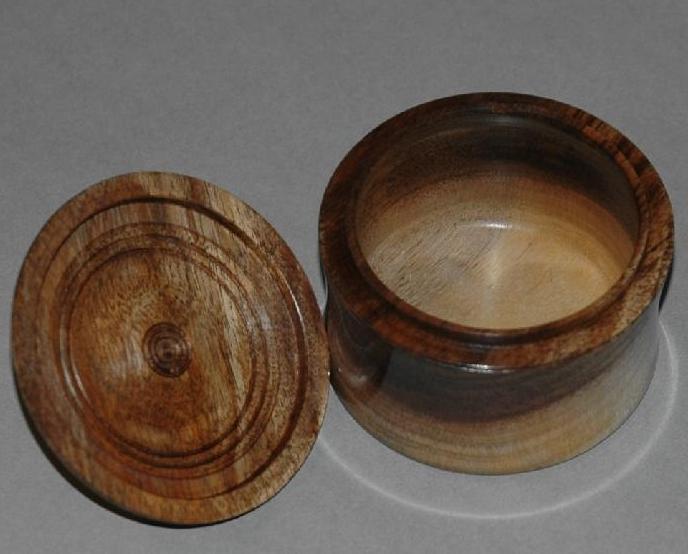
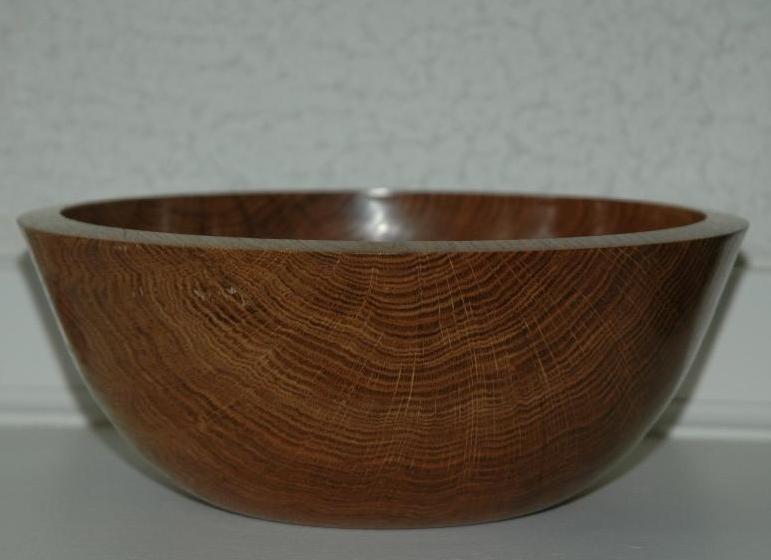
Last year I told you that a 26" vase was on the lathe as I was putting 2004 work on the site. Well, that roughed out vase is still sitting in the garage, drying. I hope to complete it, and the file documenting its making, in the next couple of months. The biggest event in my life this year was my retirement at the end of March. I am just starting to get used to retirement, although I still wake up on Monday mornings with a gloomy feeling until I realize, "wait - I'm retired." I didn't do much turning during the summer time, but once colder weather set in the shop has been a pleasant place to pass my time. You'll see that a lot of recent turning has been small stuff. The reason for this is that a shop accumulates tons of small pieces of wood that I can't bear to throw into the fireplace box. I think most woodturners and woodworkers are pack rats when it comes to wood and tools. Someone had come to my house and wanted to buy the little ring boxes that I had purchased from Pam Riley, a friend from Minnesota. I would not sell them and they asked if I could make ring boxes like that. I said I would make some for them, and that's how it started. Once I made a couple I decided to keep making them to use up the small pieces of wood. Besides, they are fun to make. So, you will see quite a few of them. I never did get started on burning and coloring on my pieces, but I did go so far as to buy a wood burner and an air tool for carving. One of these days I will get the nerve to start doing the carving.

Something I did do this time is include a few of my songs. People have written me, expecting they would hear some of my singing. Well, I finally put some musical pieces on the music page, so if you go there you'll find them. Enjoy the work. Again, thank you for visiting, and please let me know you were here. I love hearing from people who visit the site.

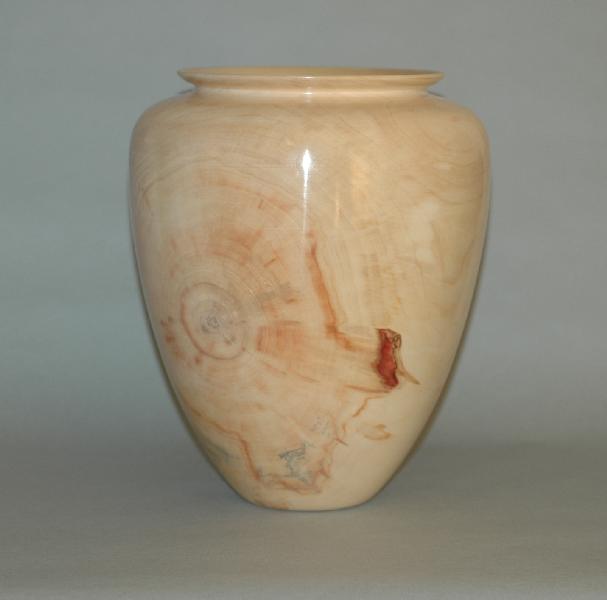
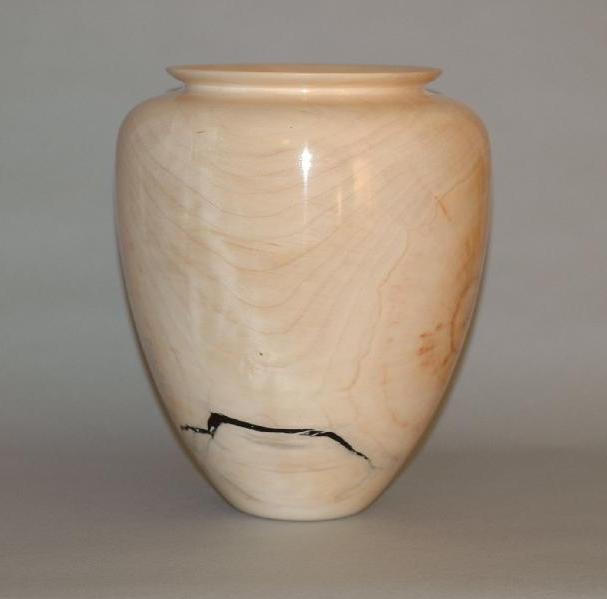
Maple Vase - front

We'll start with this little piece. Actually, it is not so little. it is about 12" high by 6½" in diameter.

The wood is Manitoba Maple, AKA box elder. It is a lovely wood, with so many variations in color and texture. The top photo shows one side of it with the creamy white, almost bland, wood. The only area of interest is the crack in the piece, which I filled with epoxy colored black with copy machine toner.

However, turn it 180 degrees and the other side reveals some of the color and figure that box elder can contain. Sometimes, the tree center is completely taken over with the brilliant red that shows in the little spot toward the bottom right. There's also a hint of green and some brown streaks as well. As you can tell, the center of the tree, or the pith, runs dead center through the vase. This is not done often, as pith can develop some nasty checks, or radial cracks. The Manitoba Maple is one of the woods that one can often use in this way.

Maple Vase - back

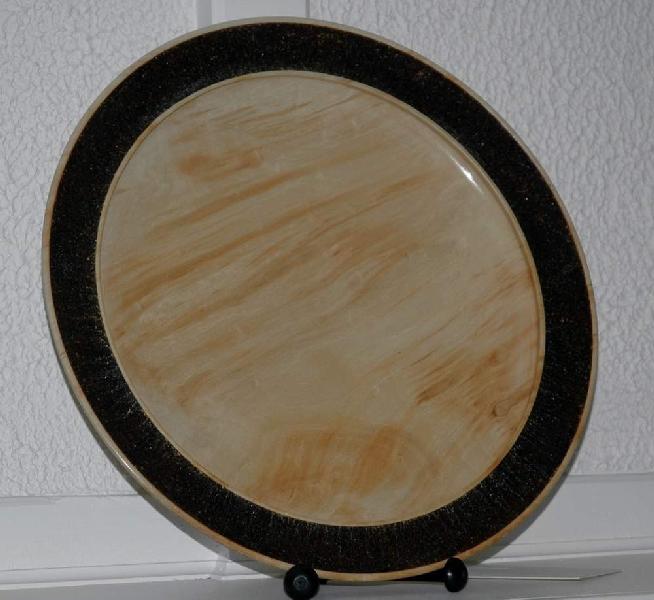
Maple Platter with Coffee Rim

Coffee has lots of uses. Mostly, you grind it up, run boiled water through it and drink the result.

But, if you are a woodturner, you never throw anything away. Who knows, those coffee grounds might end up on the rim of a platter. I first did this last year with a cherry platter, which can be seen in my 2004 work.

I like working with the coffee because its color usually fits so well with wood, and the coarse ground coffee lends a nice texture to the rim. Then, there is the smell - Mmmmmmm. I often find myself reaching for my little jar of coffee grinds whenever there is a void or a crack to fill, as I did with the cherry vase immediately following.

This piece is large, about 16" in diameter. It is finished with urethane that has been wet sanded to a glass like finish, and then waxed.

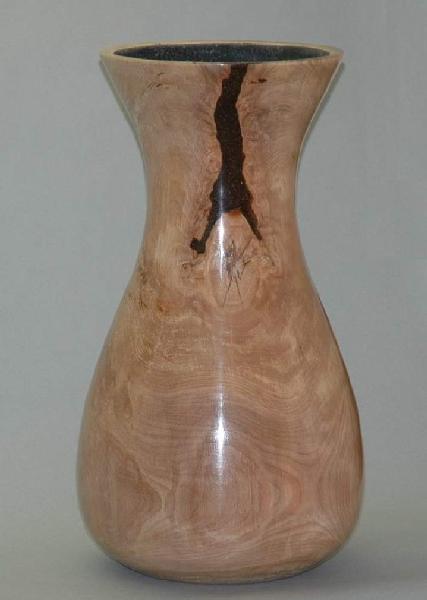
Large Cherry Vase

Jennifer was here to clean the house. She had come into the shop to see me, and spotted a junked out cherry vase lying on the floor.

"What's that?

"Well, Jennifer - that's a dead cherry piece that I make some mistakes on and I'm waiting for inspiration about what to do with it. Right now, it is still looking like firewood because the shop is getting crowded and I need to throw some stuff away. However, it is such a lovely piece of cherry, and I have so many hours into it already, that I am procrastinating. The outside of the piece is round, but the inside is not. It is kind of oval. I turned it when the wood was wet, and as it dried it warped into an oval shape. I could turn the outside round again, but at the neck of the vase it got too thin. If I tried to turn the inside round I would go right through the side of it. So, there it lies."

Jennifer then told me about a wooden vase she had that had broken. She had tall dried flowers in it, and it stood on the floor. "Could you finish that piece for me?"

Since she did not care what the inside was like, I told her I could, and I would finish the inside with stone paint. It also had a large void in the side of it which I filled with epoxy and - naturally - coffee.

This is the end result. A 19" tall cherry vase, perfect for what she wanted it for. And the base is left heavy enough so that it will not tip over easily. I could have sold this piece for quite a lot, but Jennifer, sweet lady that she is, ended up taking it home.

The piece is finished, like so many of mine are, with water borne urethane, buffed out and waxed.

Enjoy, Jen!

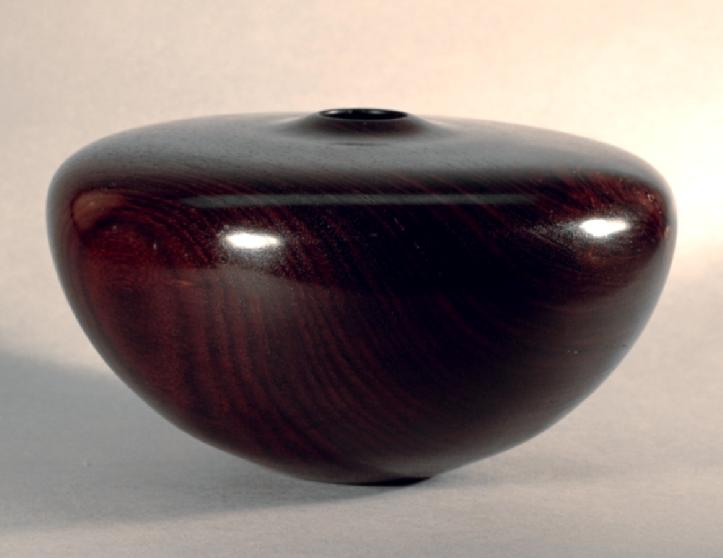
Rosewood Hollow Form

Pat Mulligan, from the wonderful state of New York, sent me a beautiful surprise. A lovely piece of rosewood.

I had turned a couple of small pieces of rosewood before, but this was a much larger piece.

It's strange, but I find that when I get a nice piece of wood like this it sits around for quite awhile before I have the nerve to cut into it. So, the rosewood sat around for about a year, and then I saw what I wanted to do with it. I thought it needed a wide expanse of surface at the top to reveal the lovely color and grain of the wood and that meant hollowing it through a small hole in the top. In this case, the entry hole is just a smidgen over 1", and the entire piece is about 10" in diameter and 5½" high.

The finish is Waterlox tung oil, which was then buffed and waxed. I hope to be able to get a better photo of the piece and post it.

The piece in the bottom photo was taken from one of the four corners of the square block from which the round rosewood form was cut.

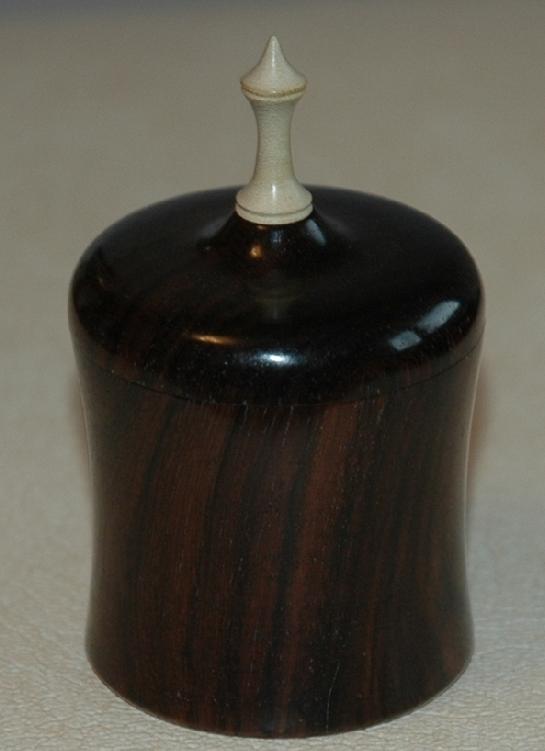
This is a little box with a fitted lid, about 3" tall. It has a finial on top made of holly wood.

Rosewood Ring Box

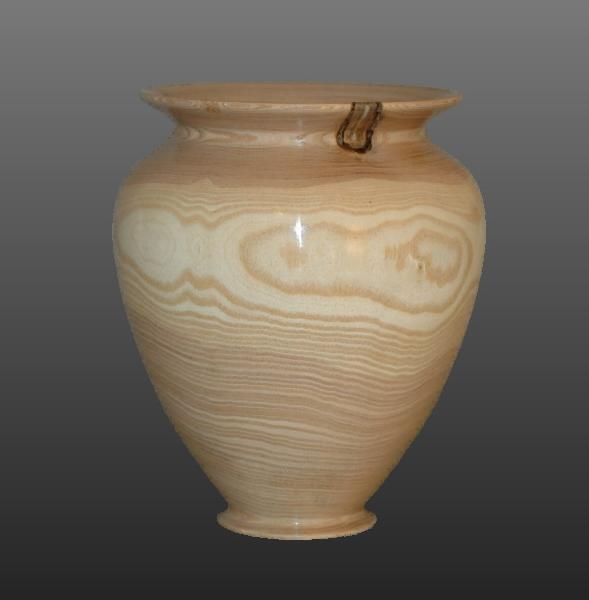
Manitoba Ash Vase

I was visiting with Murray Leckie and he showed me a piece of ash that he had been trying to turn. He was having a lot of trouble turning this piece due to the limitations of his lathe. He said, "see what you can do with this."

Manitoba has many fine wood species, and the local ash is about the finest I have seen. Along our rivers are many huge ash trees, and I love to go to my friend's property along the river and scrounge through the fallen logs of ash, maple and oak to see what can be salvaged. This piece came from Murray's property somewhere around MacGregor, Manitoba, and this vase, about 12" tall and 10" in diameter was the end result. It now resides in a friend's home.

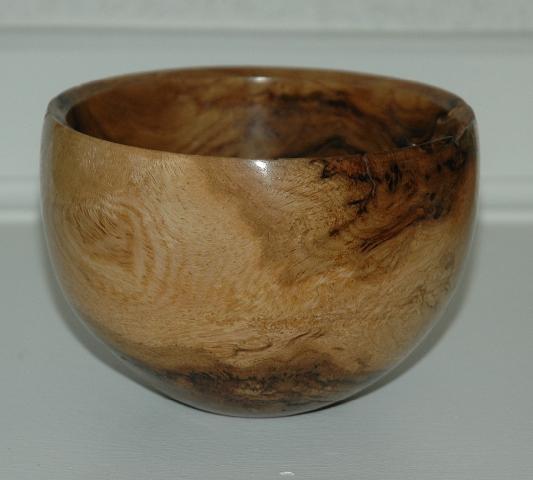
The bottom piece is of Manitoba oak burl. Roy Johnson runs the Kildonan Tree Service here in Winnipeg, and, although he makes his living taking down trees, he is also a tree hugger and a wood lover. He does fine carving, but is not a wood turner. Sometimes he finds unusual pieces of wood and keeps them.

This piece started out as one of his "finds" and I wish now I had taken a picture of it before I started cutting into it. It looked like a piece of wood with a large horn, like a rhinoceros horn, growing out of the end of it. It sat around for years because I did not know what to do with it. That happens a lot to wood turners, and sometimes it is the best way to approach a project. Just allow the piece of wood to sit in a corner and at some point a light bulb will come on (usually in the middle of the night) about what to do with it. The subconscious mind works in wonderful ways.

Finally, I saw a shape in the odd piece of wood, so I put it on the lathe and just started cutting into it. It was like an autopsy, as I discovered that the horn was growing in the middle of a branch that was hollowed out by fire. The exterior of the burl was there, the interior of the branch was full of charcoal, and the branch had then continued to grow through the middle of the charcoal. Then, years later, it had just died away.

Manitoba oak is a fine wood that is under rated. It grows very slowly, and the closeness of the growth rings belies the fact that it is an open grain wood. It can be finished to an astonishing smoothness. However, it is a cantankerous wood to work with and is guaranteed to split and crack as it is dried. The best way to treat it is to rough turn it as soon as the tree is felled and then let the rough bowl dry very, very slowly over several years. Even then, it will likely crack, and even after finishing will continue to move and change shape.

This little bowl, 5" high and 6" in diameter, will be OK because it is a burl and the grain runs in many different directions. Besides, it is exceedingly dry and should not move any more. It is finished with tung oil, buffed and waxed. It now resides with my ex-in-laws in Iowa.

Burnt Oak Burl Bowl

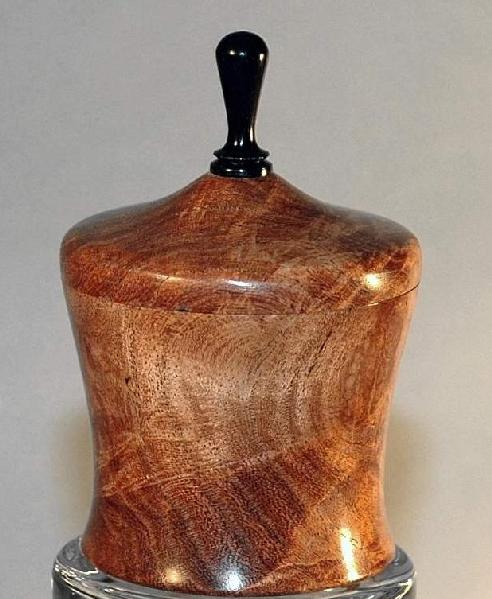
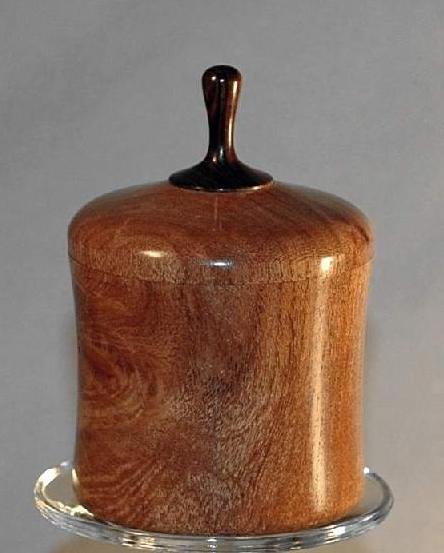
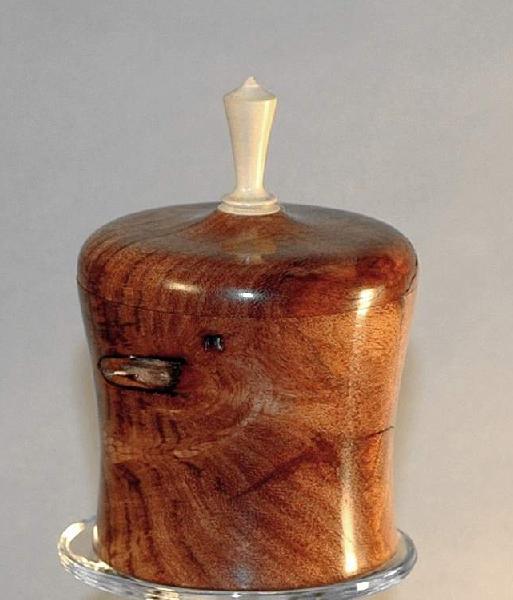
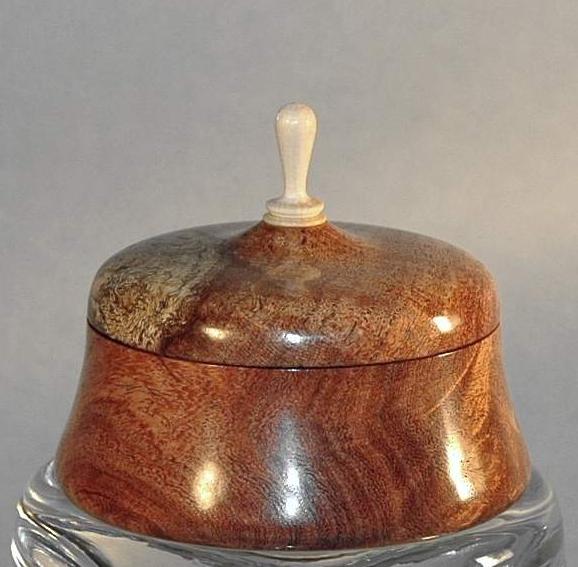
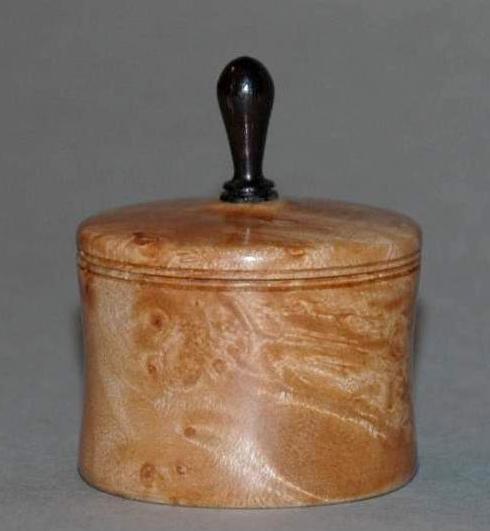
Mesquite Box One

Karen and I were at a table at a banquet in Kansas City last summer. It was the annual Symposium of the American Association of Woodturners, and there were about 1000 people in the room.

There was a turner from Texas at the table - Jimmie Arledge, and his wife was seated beside me. She has a sparkling personality, full of Southern charm, and she likes to talk. I had a wonderful time talking with her. She was very proud of Jimmie's accomplishments as a turner, and bragged about his fine work with mesquite.

When I told her I had never turned mesquite, but had heard that it was a wonderful wood to work with, she said, "Oh Jimmie has tons of it and he'll send you some." I jumped at the offer and gave her my address. Bless his heart, he followed through on the promise and, one day a piece of mesquite arrived in the mail.

I started to turn a single platter from the piece of wood, but almost as soon as I started I changed my mind. Instead I cut it up into smaller pieces, and reserved the corners for little boxes. These four boxes are what I was able to make from those little pieces.

These little boxes have suction fit lids and are topped off with little finials of rosewood and holly. Three of them are around 3" in height and 2" in diameter and the fourth is 2" in height and 3" in diameter. They are all finished with tung oil, buffed and waxed.

Mesquite Box Two
Mesquite Box Three
Mesquite BoxFour

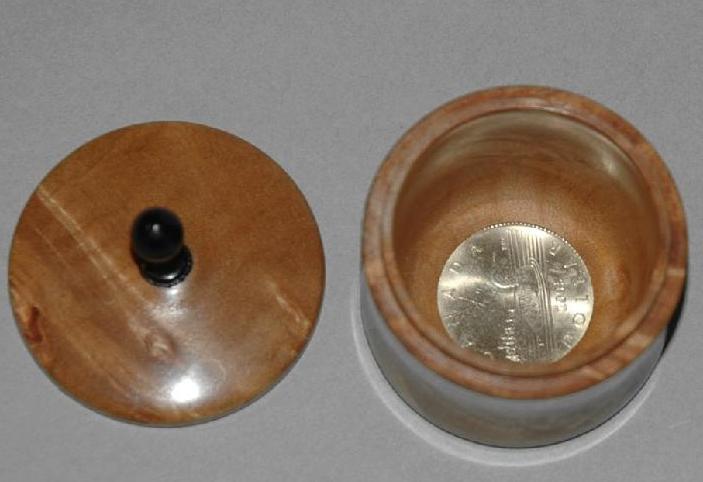
Looney Ring Box
Looney Ring Box Open

The one-dollar coin in Canada is called a "Looney". That's because the entire population of Canada thought we were loony to even consider doing away with the paper dollar bills. I believed that all of the vending machines and things like parking meters would immediately take advantage of the change to raise their rates - that is, to use multiples of dollar coins instead of quarters. I was right, of course, it only took a year or two and there wasn't a vending machine anywhere that took less than a dollar to buy anything.

Actually, though, the name comes from the image of the loon that is engraved on the coin. The loon is a wonderful, beautiful bird (if you've ever heard one on a misty morning by a quiet lake you will never forget it) and it's a shame that it has become associated with something as tawdry as a unit of exchange. Anyway, my feelings aside, that's why it is called a loonie.

It has uses though, other than "filthy lucre". For example, it comes in handy when a woodturner blows a hole in the bottom of a project. This was only a small project, a little box about 2½" high and 2" in diameter. The wood was pretty, big leaf maple burl, and I did not want to waste it. Besides the top was already completed and I had put a bit of time into the project.

So - the loonie came in handy. If you look at the tall cherry vase in my 2004 work, you will find that a "toonie" (yes, we now have a two dollar coin - any ideas about the vending machines now?) ended up in the bottom of that vase, too. For the same reason, I might add.

This little box ended up as a door prize at our staff Christmas party, and now Mrs. Budd owns it. She was delighted to win it, and now, if she reads this page, she will know the whole story.

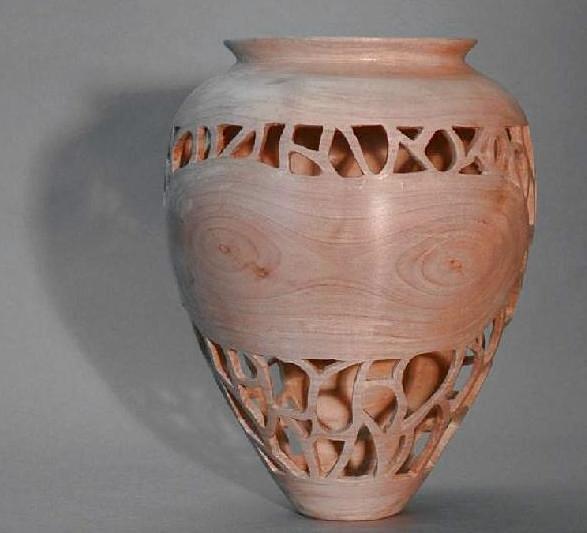
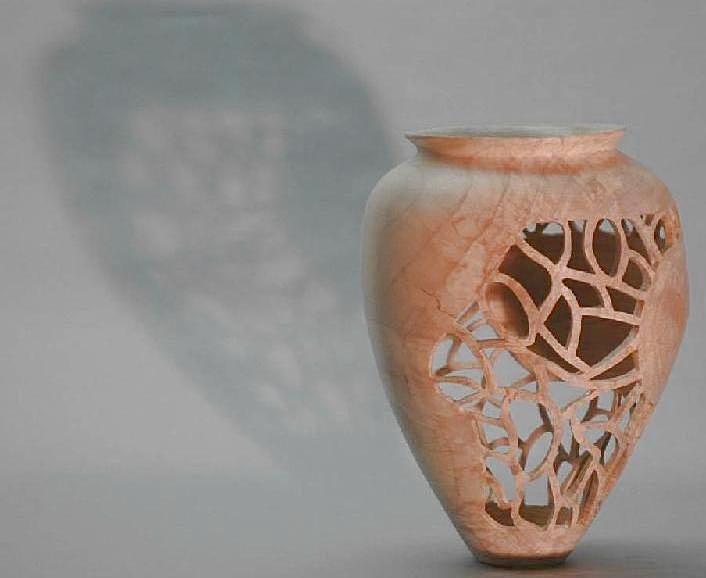
Pierced Maple Vase
Pierced Maple Vase

Two views of an experiment.

This was my first real attempt at "piercing", which simply means cutting holes in the side of a vessel. In this case, I used a random design that follows the grain lines in the wood to outline the "Lone Ranger's Mask" I saw in the grain pattern.

The piercing was done with an air drill, similar to a dentist's drill. Karen hates going to the dentist, and whenever I use the tool she has to close her ears or go to a far part of the house so she can't hear it. It does a fine job of cutting through the wood, although I left the walls too thick and it was heavy going for the little tool. The wall is about 3/16" thick and would be far easier to pierce if it were less than 1/8".

The piece is very, very light, as the thin-ness is uniform. Even the bottom is pierced. A lot of people find this piece interesting, but I still have it. It is about 9" tall and 6" in diameter.

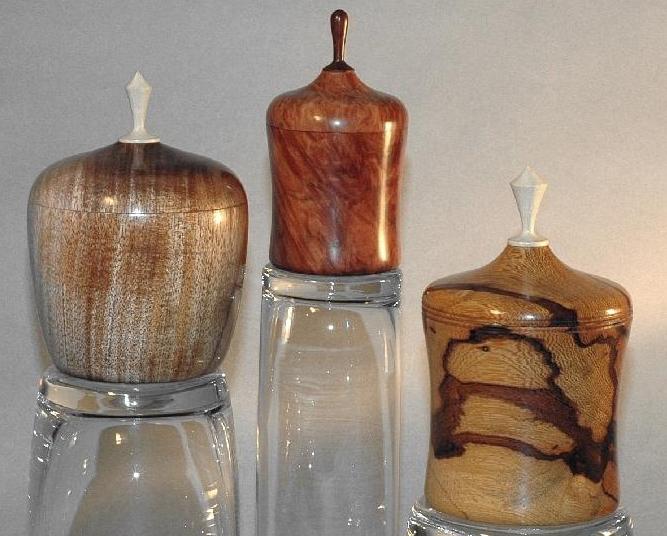
Three Boxes
tasmanian Blackwood Box

I made a lot of little boxes in 2005. Early in the year I invited Pam Reilly, a wonderfully talented turner from Minnesota, to come up to Winnipeg and do a demonstration for some woodturner friends. We all met in Mike Walters shop and had a wonderful evening watching and listening to Pam as she turned a small box.

I have a couple of Pam's boxes, and someone once insisted I sell her one of them. I would not do that, so she asked if I could make some boxes for her. I thought of all the little unused odds and ends of wood I had lying about the shop and agreed. Once I got into it, I found I liked doing the little boxes, so I now have dozens on the go.

The three on the left are, from left to right, Tasmanian Blackwood (3½" tall, 2½" diameter), Mallee burl (3" tall, 2" diameter) and Tigre Caspe (4½" tall, 2½" diameter).

I got the Tasmanian Blackwood, also called black acacia, from my friend Brad Adams in California. Apparently, he gets tons of the stuff down there and I envy him. The Mallee burl I bought at the AAW Symposium in Kansas City in July of 2005.

The Tigre Caspe is another story. Jim King is a member of my World of woodturners site, and he lives in Peru. He is engaged in a business to try to introduce the fine, unheard-of species of hardwoods found in Peru to the rest of the world. There are many unknown species in the forests, and he and his gang of helpers salvage downed trees and stumps and prepare the wood for export to woodturners, carvers and craftsmen in North America. Jim sent me a sample package of some of his woods, and this Tigre Caspe, very aptly named, was among them. It is a very unusual, somewhat difficult wood to work with, but the end result was worth it. I have a couple of small pieces left.

The picture on the right is a close up of the Tasmanian Blackwood box.

Round Bottom Walnut Bowl

Have you ever spent minutes desperately trying to find the open end of a garbage bag new out of the box, or tried to separate the pages of a book you are reading, only to find that the inanimate object refuses to cooperate? Have you ever had a project that seemed hell-bent to defy you - that after the first try took on a resistance that seemed insurmountable no matter how hard you tried? How about the object that falls on the floor in plain sight, and then disappears? Or, the golf ball that you SAW land in fairway but is never seen again in this life? Is it only me that loses his temper at an inanimate object? Am I the only idiot that does that?

Well, the round walnut bowl (6" diameter, 3" high), top photo, did everything possible not to exist. In the first place, it was a part of a block that had split off from the main piece. Then it detached itself from the lathe several times while I turned it, once along a split, once off the glue block I put it on after it split off, and then finally as I was finishing off the bottom. That last time, it cracked.

So, I took it to Kansas City as a throwaway for Andi Wolfe to use in her wood burning demonstration. She rejected it. I felt bad for the little bowl, despite it's obstinate nature.

On the way home from Kansas City we stopped to visit with my college vocal coach, Stanley and Alice Jo DeFries. During this wonderful reunion with old friends, after 32 years, I brought out a few of the wood turned pieces I had in the car. Alice Jo liked the little walnut reject, so I offered it to her. However, I felt bad about giving her a cracked and unfinished bowl, so I told her I'd take it home and try to finish it properly, crack and all.

Guess what, it detached itself from the lathe again while I was trying to finish the bottom. So, I TAPED it to the lathe while I worked on it. I glued up the crack and sanded the bowl. During the sanding, the sapwood got paper-thin as it is so much softer than the darker heartwood. I had to reinforce the paper-thin wall to finish it.

Whew, it was done. Now a few coats of tung oil and some buffing. Right! The buffing wheel grabbed it and flung it to the floor. I almost stomped on it, but in a rational moment I picked it up and examined it. It was fine!

So, as I write this (in February of 2006), I am looking at it. I touch it and it rocks for a moment on its round bottom and then settles back into place. It is very, very thin and very, very light, and the round lip is hollowed on the inside, too. I like it.

It's been finished for a while, and I need to send it to Alice Jo. Only thing - what kind of shenanigans is it going to pull if I stick it in the mail?

No such story on the bottom walnut piece. Just a simple closed form, 5" diameter by 2½"high.
Walnut Form

Red Palm Keepsake Box

I started turning the little "keepsake boxes" in 2004, and they have been quite popular. Some people have used them as urns for pet ashes, and three friends used them to provide a small portion of their father's ashes as a keepsake and memorial for the three of them. One lady keeps her wedding day pearls in the box. Mostly though, they are just to look at.

The top one is of red palm, which is a grass, not a wood. I got the material at the AAW Symposium in Kansas City. It is interesting stuff to turn and finish - very fibrous. I like the way a turning reveals the ends of the fibers on the top of the piece and contrasts with the vertical fiber on the side.

The bottom piece is of big leaf maple burl, from my buddy Tim Shipp in Oregon. Both pieces have ebony lids and finials and sit on a very thin (1/16") foot of ebony. They are both about 5" diameter by 3½" in height, including the finial.

Maple Burl Keepsake Box

Tasmanian Blackwood Box
Tasmanian Blackwood Box Open

Another Tasmanian Blackwood box, closed and open so you can see the detail on the inside. This is beautiful wood to turn, and the photo does not do justice to the extraordinary sheen and finish on this piece.

Oak Salad Bowl

I don't have much luck turning Manitoba Oak. Usually it splits and checks and warps so badly that the bowl cannot be rescued.

But then, every once in awhile I find a piece of oak that will behave itself. This was one of those, and I was able to turn a salad bowl for my daughter to give to her mother-in-law for Christmas. This piece of wood has wonderful rays radiating from the pith. Some of them show in the photo, but not all.

The piece is finished with "Tried and True" boiled linseed oil because it will be in contact with food, then buffed and waxed. The bowl is 12" in diameter and 4½" deep.

ambrosia maple form
Ambrosia Maple Form

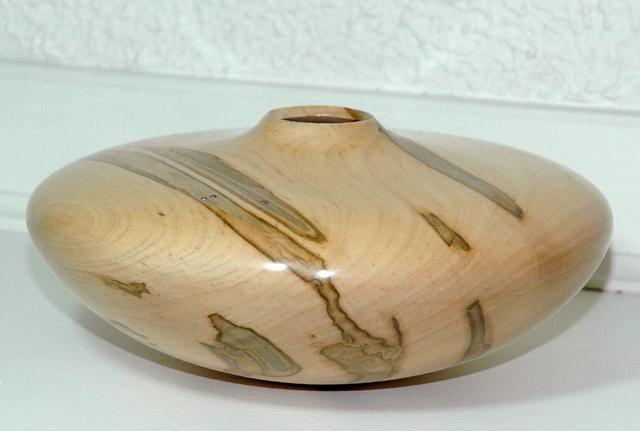
This is the first and only piece of Ambrosia maple that I have turned. I bought the wood when I was at the AAW Symposium in Kansas City last summer and decided to try to use this form to show as much of the figure as I could. It is 9" in diameter and 4" in height.

The colors in the maple are the result of the Ambrosia beetle that bores tiny little pinholes in the wood of recently downed trees. The beetle does not eat the wood, but introduces a staining fungus that causes greenish-gray or bluish-black staining around the pinholes.

This piece is finished with water borne urethane to maintain its color, then wet sanded with 2000 grit wet sandpaper, then waxed and buffed.

Red Mallee Box
Red Mallee Box Open

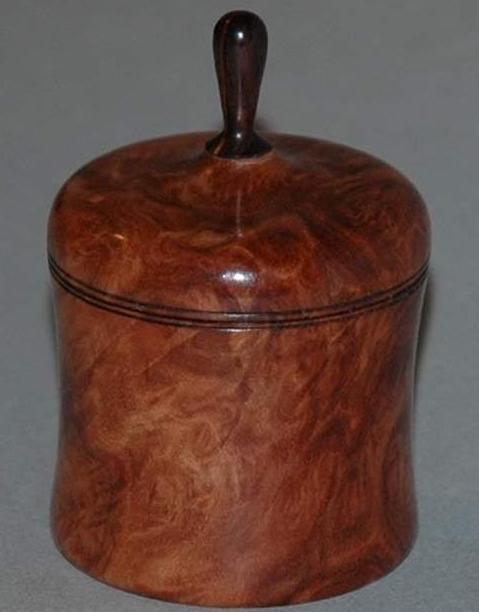
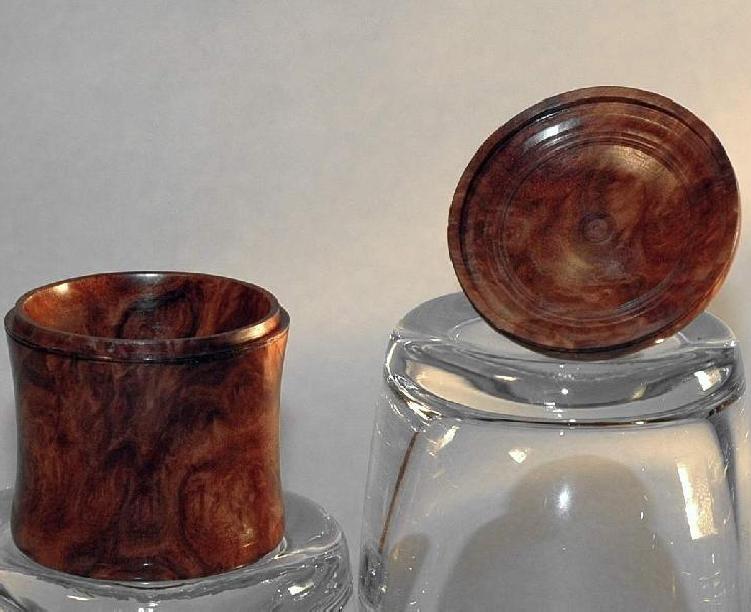
This red mallee burl was also purchased at the American Association of Woodturners Symposium in Kansas City. It is an Australian wood, and is a stunning wood to turn and finish.

This little box is 3½" tall, including its rosewood finial, and about 2" in diameter.

Yellowheart Lidded Vessel

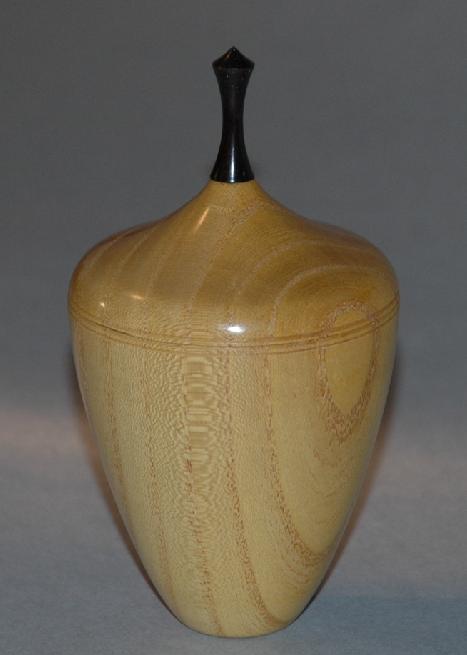
Yellowheart is a very pretty wood, and this little box is the only thing I have ever turned from this species. I will have to do more.

The box is about 4½" tall and 2¼" in diameter. It is finished with tung oil, then buffed and waxed.