1999 Turnings

This is some of my latest work, completed in 1999. Although it's similar to earlier stuff, I’m starting to add more vase forms and larger bowls to my work. I’ve got my eyes open for a large bowl lathe and will likely end up building my own. Space is still a problem, since I’m working out of my basement workshop. With retirement not that far off, Karen and I are now watching for a good rural property with some room to build an outdoor shop. I have this dream of working at my lathe in front of a big window overlooking a nice lake. Ah well -- dream on -- :))

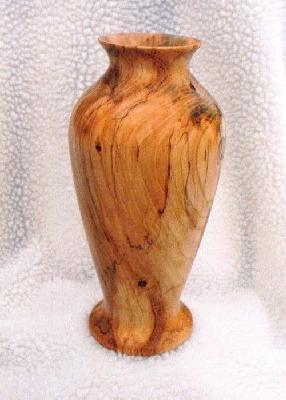
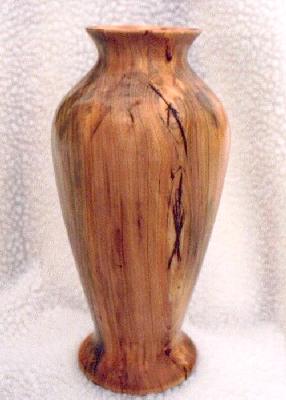
This urn is from an apple tree felled by my brother-in-law. The wood was rotten in places, and required great care to turn green. Apple wood is notorious for warping so I turned it to about 1" in thickness and then submersed it in PEG for about 4 months. Then I treated the rotten spots with Poly 2000 (Lee Valley Tools), and finished the turning.

The urn is very solid, and the contrast in the apple wood is striking. It’s finished with Deft lacquer. The urn is 10" tall and 4" across.


Apple Urn


Apple Urn

This elm urn (vase?) is the deepest vessel I have turned so far, standing at about 13" x 5".

This was turned straight out of the end grain, and presented some challenges. I originally turned it green to 1" and then coated it with wax to dry for about 8 months. At 10% moisture I finished turning it. The vessel is finished with Deft lacquer.


Elm Vase


Elm Vase

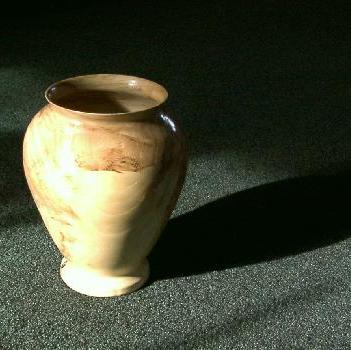
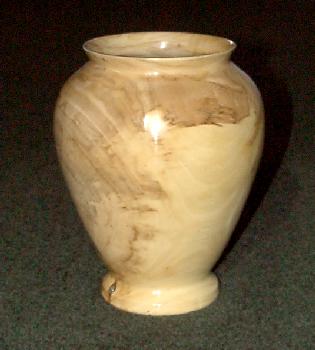
This maple vase is 8¼" tall by 6½" wide. The wall thickness is about 3/16". The lip thins down to about 1/8". It's finished in Deft lacquer.

The vessel was turned, like many others, while the wood was green. I turned this to about 1¼" and coated it with wax to let it dry on a shelf for about 8 months.


Maple Vase


Maple Vase

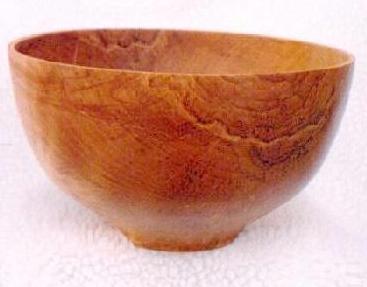
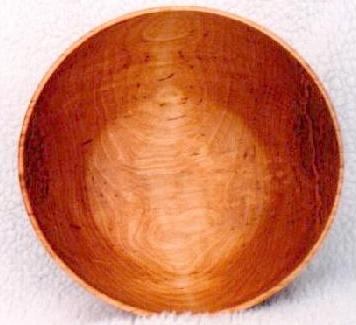
Cherry Fruit Bowl

Cherry Fruit Bowl

This cherry bowl was filled with fruit this Christmas (1999) and given to my daughter, Erynn, as a gift. It's 12½" across and about 7" deep. I found the cherry log attached to a large burl (some of which is evident in the bowl) in Wakefield, Michigan. Wakefield is the home of Garland Miller, a tree-hugger extraordinaire, who simply loves burls. She has collected burls for years, helped by her partner who works in the bush for the government. She is a great person to visit and cares plenty about what is happening to the nation's forests. Last April, when I stopped by her place, I had to wait for her to get back from a visit to Washington where she had gone to protest the federal government's logging policies in federally owned lands.

This bowl was also turned green to 1½" thick, and then simply wrapped with cling-wrap for several months to dry slowly. I was wrapping leftovers in the kitchen when I thought about using cling wrap to dry bowls. It's quicker than wax, and you can still see the bowl through the wrap. The bowl is finished with 4 coats of water-based urethane (Deft brand), then wet sanded and waxed.

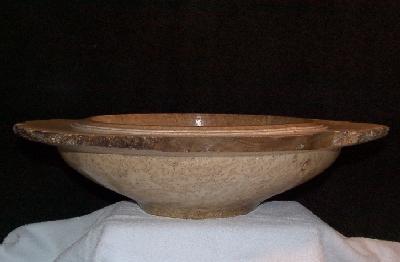
Black Ash Burl Bowl

Black Ash Burl Bowl

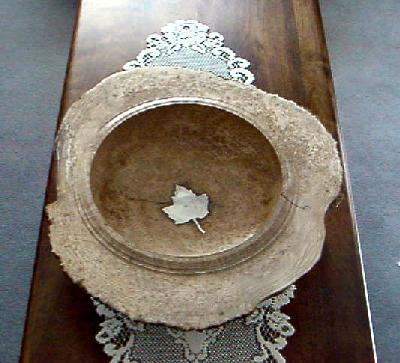
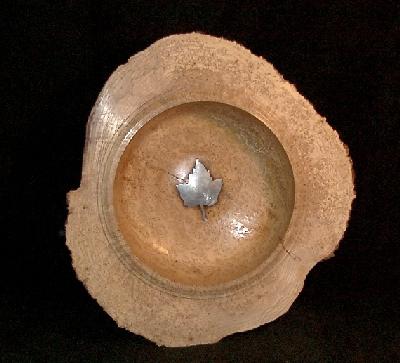
Another burl from Garland Miller in Wakefield, Michigan, turned into this bowl. It's black ash, and probably had been laying around for 15 years or so. The burl was exactly the same shape as the bowl, and I saw the finished form in my mind's eye the instant I saw it.

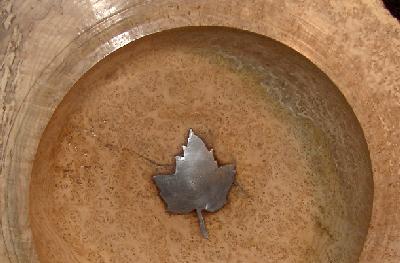
The bowl measures 18" in diameter and is about 8" deep. The Canadian maple leaf was the result of an error that I had to fix, and I was able to turn the mistake into a positive design feature. The maple leaf is pewter, and the wood around it is charred slightly with a torch. I did not want to dull the pewter, so the bottom of the interior of the bowl was not sanded. The finish you see was done only with the chisel.

This is a striking piece, and despite several offers, it still sits on our coffee table. It will be there a long time.

Black Ash Burl Bowl

Black Ash Burl Bowl

 Manitoba Maple Bowl

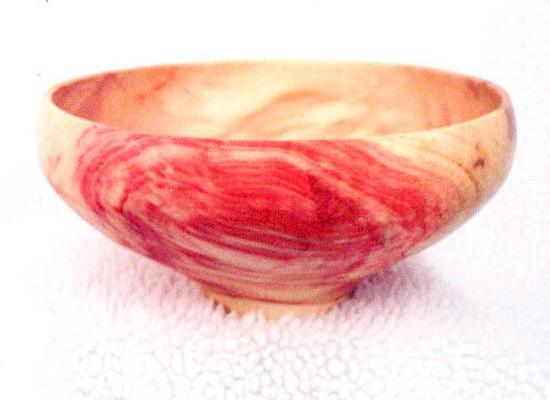
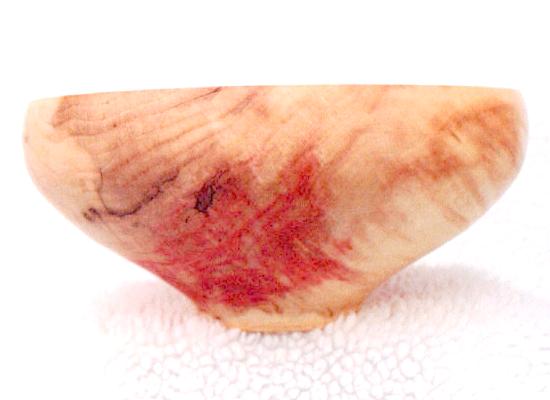
This bowl is an interesting story. I turned it green, and the wood was so rotten in some places I was afraid it would fly apart on the lathe. I thought I'd experiment with it.

I used a product called Poly 2000, a two-part resin that is as thin as alcohol, to penetrate the rotten wood. When it solidified, it left an unsightly residue on the outside of the rough turned bowl. It was ugly as sin.

I was scheduled to do a turning seminar for Lee Valley Tools here in Winnipeg, and I left this "piece of junk" on display there for several weeks. No one could believe that I actually intended to try to turn it into a finished bowl at the seminar.

The results are evident. The resin product really works to stabilize punky wood, and there is no evidence of it in the finished piece. When it was finished, one of the female employees of the store grabbed it and was walking around with it telling anyone who would listen, "Hey, you wouldn't BELIEVE what this looked like before!"

The red colors in this maple bowl are spectacular, and I hope they will stay this vibrant. However, with time they will probably dull and turn brown. If anyone knows how to keep this from happening, I'm all ears.

The bowl is finished with water-based urethane for durability and to keep the wood from darkening too much with the finish.
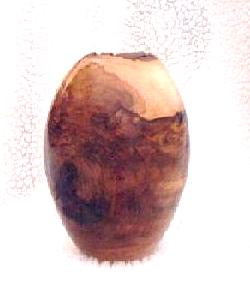
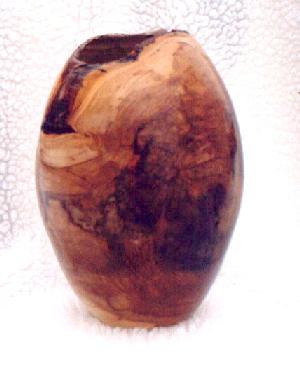
Manitoba Maple Bowl

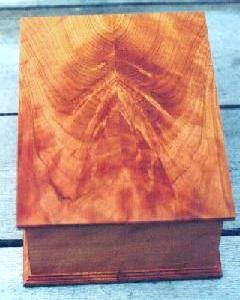
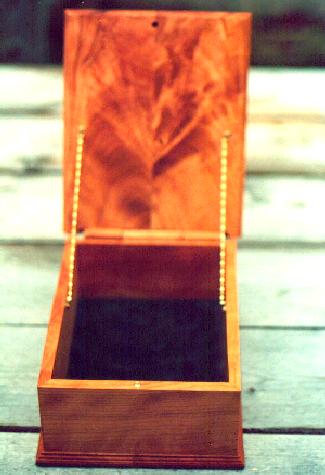
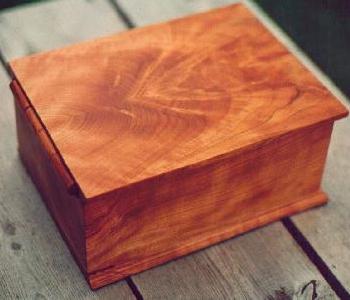
Cherry Box

Cherry Box

Cherry Box

Michael said, "That piece of cherry has been up in the rafters for about 20 years. Tell you what. I won't sell it to you, but I'll give it to you. All I ask is that you make me something from a little piece of it."

I couldn't say yes fast enough, 'cause that hunk of cherry was about 12½ inches across, 2 inches thick and about 7 feet long. One end of it was all crisscrossed with cracks and weird grain, and that was the end I chose to make into a box for Mike. The box is about 6"x 10" and 3½" deep.

It was a bit like a puzzle, trying to get the box out of the cracked and broken end. However, you see the result.

The top was re-sawn and book ended to get the matching grain on both sides. The box is finished with lacquer and with green felt on the inside.

Thanks, Mike, but it might be another 20 years before I develop a project for the rest of the wood.

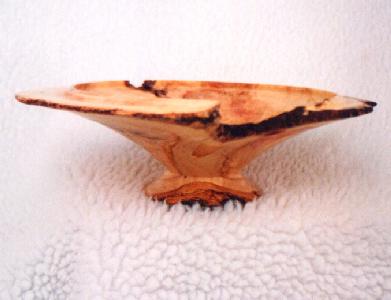
This little spruce burl bowl sat in the shop for almost two years, unfinished. It was incredibly hard to get a smooth cut on the fibrous wood, so I kept shoving it around from place to place. It was in the firewood box more than once but, for some reason, I'd always take it out and put it back on the shelf.

Then, one day Karen came into the shop. She said, "When did you do that one? I haven't seen it before. I really like it." I told her it wasn't finished and that I'd been kicking it around for a couple of years.

The same day, I went ahead and completed the bowl. That evening, some friends came over to see if I had anything they could take as a gift to England for a relative. They looked at everything, and picked out a couple of pieces. Then I remembered this little bowl and brought it out, even though it had no finish on it. They fell in love with it instantly and bought it.

When Karen came home later, she was plenty upset that I had sold it before she even got a chance to say if she wanted it or not. Oh well, Pam and John will enjoy this little (10" x 4") piece of Manitoba.


Spruce Burl Bowl


Spruce Burl Bowl

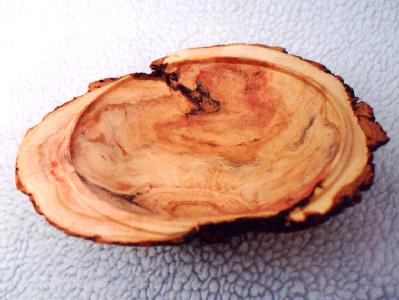
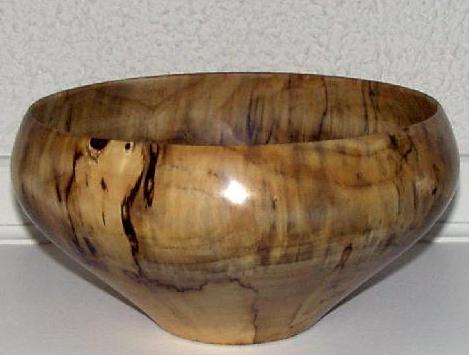
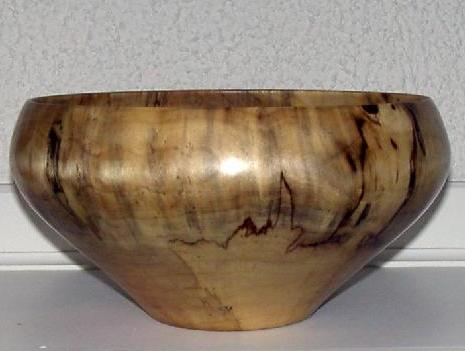
This spalted elm bowl was an accident. I turned this bowl from a green log to about 1¼" thick and then stuck it into a black plastic garbage bag with some shavings. Then I did what is predictable for me - I forgot all about it and left it in a corner of the garage.

Three years later, I was clearing some stuff out of the garage and I ran into the bag. I didn't remember what it was until I opened it and found a blackened, moldy chunk of wood in the shape of a bowl. I was going to throw it but thought I'd let it dry and see what I could do with it.

Well, here's the result - a spalted bowl. Next time you wonder if you can spalt wood, try it. But be patient.

The bowl is about 13" by 6" and is finished with three coats of Danish oil and wax.


Spalted Elm Bowl


Spalted Elm Bowl

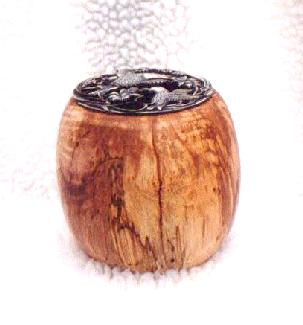
A message in the woodturning newsgroup resulted in a new friend in Nova Scotia. He talked about the unlimited stock of spalted maple he has in his woodlot, and I wrote him asking if he would sell some of it.

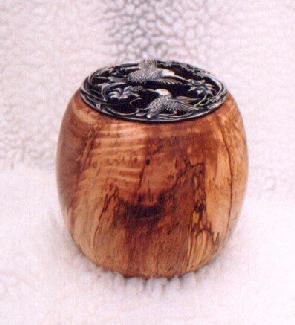
Well, he was kind enough to send me a few small pieces, already turned round and wrapped in plastic. The wood was very wet but I turned this little potpourri bowl wet just to see what it looked like. It's about 4" high and 3" in diameter.

So, Winston Spates, here's what it looks like when it's finished. It's gorgeous wood, but this is about as long as you can let it go. It was a little "punky" in places and had to be treated with Poly 2000. The wood would probably look better if turned in the other axis. This little piece was turned out of the end grain.


Pot Pourri


Pot Pourri

Well, Garland Miller from Michigan will be happy to see some of her precious cherry burls show up on this page. The burls I got from her this spring were still green, so they were turned wet and wrapped in cling wrap through the summer. These three pieces were finished in the month of December, 1999.

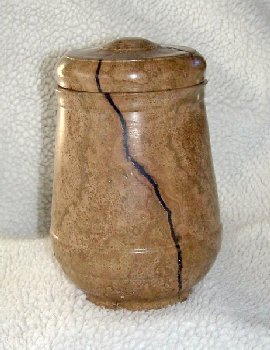
The top one is a lidded vessel about 10" high and 7½" in diameter. It is the first project I have ever made that includes a lid. I had to fill the large natural crack down the side of it so the piece would hold its shape for the fit of the lid. The crack is filled with resin, colored black with toner powder from a used photocopier cartridge.

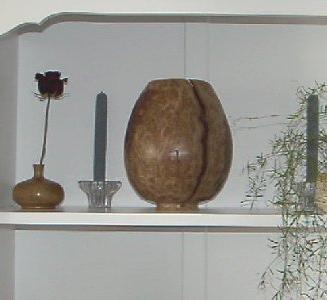
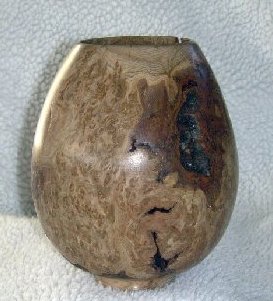
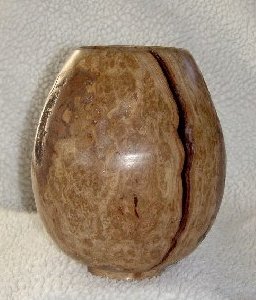
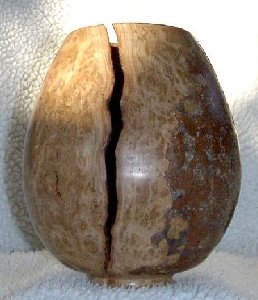
The middle vessel (4 pictures) is one of my favorites. It stands 10½" tall and is 9" in diameter at its widest part. Now, this was a challenge, due to the natural split that runs all the way down to the bottom. I learned the hard way that great care was needed at the lip of the vessel, since it started out about 2 inches higher with a 1½" hole at the top through which it was hollowed. However, in a moment of carelessness I caught the tool and the split caught the shaft of the tool and broke the top off the vessel. I had to change the shape of the foot to compensate, but I think the result was worth the extra grief. Sometimes, the wood just knows best.

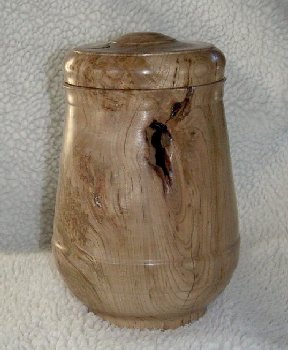
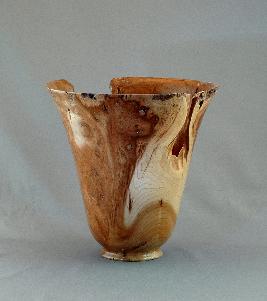
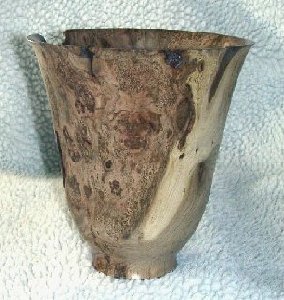
The bottom vases are "sisters". Just simple bell shapes, about 9" by 8" and thin - about 3/16". All of the cherry pieces are finished with three coats of a water-based urethane, and then wet sanded with 600 grit paper and waxed.


Lidded Cherry Burl Vessel


Lidded Cherry Burl Vessel


Cherry Burl Vessel


Cherry Burl Vessel


Cherry Burl Vessel


Cherry Burl Vessel


Cherry Burl Vase


Cherry Burl Vase